2026/07/08

* 메카로 가는 길 (The Road to Mecca) 1954 by Muhammad Asad 1954

Amazon.com.au:Customer reviews: The Road to Mecca

https://archive.org/details/roadtomecca00asad/page/n9/mode/2up

Paperback  Price, $34.95


Read sample

The Road to Mecca
by Muhammad Asad
(Author) 

4.7 4.7 out of 5 stars (374)
===
Contents (audio book chapter)
Glossary
THE STORY OF A STORY (2)
1. THIRST (3)
II. BEGINNING OF THE ROAD (4)
III WINDS (5)
IV. VOICES (6)
V. SPIRIT AND FLESH (7) 
VI. DREAMS (8)
VII. MIDWAY (9)
VIII. JINNS (10)
IX. PERSIAN LETTER (11)
X. DAJJAL (12)
XI. JIHAD (13)
XII. END OF THE ROAD (14)


Illustrations
AUTHOR (1932)
facing page
AMIR FAYSAL
ZAYD
AUTHOR'S ARAB WIFE MUNIRA AND SON TALAL
KING ABD AL-AZIZ IBN SAUD
CROWN PRINCE SAUD
MANSUR
AUTHOR AND NORTH ARABIAN AMIR
THE GRAND SANUSI
SULUBBI
ELSA AND HER SON
MECCA: THE ΚΑΑΒΑ
===

In this extraordinary and beautifully-written autobiography, Asad tells of his initial rejection of all institutional religions, his entree into Taoism, his fascinating travels as a diplomat, and finally his embrace of Islam.

Print length  375 pages

====
Review

"['The Road to Mecca'] combines the adventure and scenic beauty of a good travel book, some unusually informed comments on near Eastern affairs, and a deeply thoughtful account of one man's finding of his own path." --Book of the Month Club, New York

"A book trenchant with adventure magnificently described, and a commentary upon the inner meaning of Arab and Muslim life, helpful to all who would achieve a more accurate understanding of the Arabs and their lands." --Christian Science Monitor

"A very rare and powerful book, raised completely above the ordinary by its candor and intelligence." --New York Post

====
About the Author

From his work as a journalist in the Middle East before his conversion, Muhammad Asad became an author, translator of Islamic literature, and international diplomat. His written works include his famed English translation of the Qur'an and translations of the Prophet's oral teachings.


Product details
Publisher ‏ : ‎ Fons Vitae
Publication date ‏ : ‎ 18 July 2000
Edition ‏ : ‎ 8th Revised edition
Language ‏ : ‎ English
Print length ‏ : ‎ 375 pages

===
From Australia

AmazonAU Customer
5.0 out of 5 stars A classic
Reviewed in Australia on 22 January 2019
Format: PaperbackVerified Purchase
Very well written Autobiography, interesting insights and stories - couldn’t put it down!
Helpful
Report
From other countries

M.K.
5.0 out of 5 stars In my top 3 favorite books of all time
Reviewed in the United States on 23 March 2025
Format: PaperbackVerified Purchase
A truly amazing and accomplished life lived. One of the most influential books I've read in my life and gave me a more enlightened perspective on my own faith. Muhammad Asad's writing and eloquence are unmatched and it comes across in what is essentially an autobiography. I keep going back every few years to read it because it really just is that good!
Report

Safwan Ansari
5.0 out of 5 stars must have
Reviewed in Canada on 14 January 2026
Format: PaperbackVerified Purchase
such a great read!
Report

Rehan Khan
5.0 out of 5 stars Highly recommended
Reviewed in Italy on 23 July 2020
Format: PaperbackVerified Purchase
It Is such a great book , recommended every one to read thus book and delivered in time.
Report

Muhammad Saleh
5.0 out of 5 stars Fantastic tale that has everything you could want in a travel journal
Reviewed in the United Kingdom on 23 March 2021
Format: KindleVerified Purchase
The best books in my opinion are those that touch upon so many different subjects but bring them all together cohesively. This book does just that. Theology, philosophy, politics, culture, geography, friendship... you won't be dissapointed.

Muhammad Asad wrote in a beautiful and poignant manner, detailing his adventures in the near East in a way that makes you feel like you lived them yourself. It is one man's journey of self discovery, and everybody stands to benefit from his critical outlook. Once you get into it, it's very difficult to put it down, and when it ends you'll find yourself wishing that it didn't.
Report

Muslim
5.0 out of 5 stars Islam's gift to Europe...
Reviewed in Germany on 17 March 2011
Format: PaperbackVerified Purchase
Some call him "Europe's gift to Islam", but I don't think that is appropriate. Rather he should be called "Islam's gift to Europe". After I read this book I converted to Islam. His narration of Ad Dajjal is thought provoking, scaring but amazing at the same time. This book should be read by everyone who realizes "the hollowness of material progress for the sake of progress alone"...
Report

Farida begum
5.0 out of 5 stars Must read
Reviewed in India on 15 April 2023
Format: PaperbackVerified Purchase
A book so LIVE , amazing read
Report

Veronica Torres
5.0 out of 5 stars Un gran libro
Reviewed in Mexico on 30 August 2023
Format: PaperbackVerified Purchase
Amo este libro, puesto que deja entender con claridad la cultura, vision y el espíritu árabe y hay muchos aspectos de ese tiempo que siguen vigentes. Una buena referencia para quien tiene curiosidad de adentrarse a ese mundo.
Report
Translate review to English

Sjunaid
5.0 out of 5 stars Review of Road to Mecca
Reviewed in Canada on 20 December 2013
Format: PaperbackVerified Purchase
This book transported me to the PLACES the author was travelling through. The narration of each and every aspect of his life were so well described that I was LIVING his experiences. His style of writing is amazing. I have read other books written my him. Great Scholar as I have also read his interpretation of the Quran. this book is excellent reading for someone who cannot travel to all those places as the author has painted a very VIVID picture.
Report

Dt65
4.0 out of 5 stars A nice classic
Reviewed in Germany on 9 September 2016
Format: PaperbackVerified Purchase
A wonderful story, well written, a great classic to know the musli world better. A great book to discover a great culture.
Report

Mr Tea-Mole
5.0 out of 5 stars Grippingly Interesting!
Reviewed in the United Kingdom on 9 December 2007
Format: PaperbackVerified Purchase
This is a book about travel and the journey of one man through the geographical roads of the material earth, as well as the intellectual and spiritual odyssey he makes through the hills and plains of his own soul. Both journeys culminate in one place: Mecca - where he stays for some years having found the spiritual and intellectual contentment there which had eluded him in Europe. An interesting and inspiring way to learn more about Islam, in a way especially accessible to Westeners, as the author IS a Westerner who chose to accept the faith of Islam, and is thus able to articulate his faith's ideals in language understadable by his native Europeans. Also, this book is an alternative to normal introductory texts on Islam, as the basic precepts of the faith are clothed in the narrative discourse of the author's life himself. A good read, even if only as a book on travel and culture - highly recommended!
Report

CA Akram Siddiqui
5.0 out of 5 stars Its truly a great spiritual experience
Reviewed in India on 21 December 2015
Format: PaperbackVerified Purchase
Its truly a great spiritual experience . u will love it . find a lot of peace in mind .
Report

nadav haber
5.0 out of 5 stars The search for inner peace
Reviewed in the United States on 14 January 2002
Format: PaperbackVerified Purchase
Muhammed Assad was a gifted journalist. This gift makes the reading of his Near East adventures a highly entertaining experience. The son of wealthy Jewish parents, he came to Palestine in the early 1920's, became an Anti-Zionist and fell in love with the Arab world. He returned to Europe after many adventurous journeys, married a woman 14 years older then he was, became a Muslim, and went back East. The story is told through the memories entertained during a camel ride to Mecca in the early 1930's (although written about 20 years later).
Asad was a fearless man (he once walked from Haifa to Damscus without a passport, and later dodged bullets while trying to advise the Sanusi rebels in Libya against fascist Italy). He had an enormous talent for languages - he could speak fluent Arabic and Persian, in addition to the European languages and Hebrew.
He was immediately attracted to Islam. Even before becoming a Muslim he had nothing but praise for it. According to him, Islam is completely class -less, accommodating spiritual and physical needs perfectly.
Asad's criticism of the Western value system seems relevant today at least as it was then. We might not share his conclusion and choose Islam, but we cant deny that there is something wrong in the Western way of life.
The book DOES NOT include Asad's Indian and Pakistanian years. I do not know what book this information is from, and I would really want to get it, as I heard Asad WAS one of the people behind the estblishment of Pakistan.
I recommand this truly extraordinary and enlightening book to everyone interested in what is really going on in the world.
Report

Amazon Customer
5.0 out of 5 stars Five Stars
Reviewed in Canada on 22 February 2018
Format: PaperbackVerified Purchase
A wonderful book about a man's journey to Arabia and his discovery of Islam
Report

fatma mira
5.0 out of 5 stars Enchanting!
Reviewed in the United States on 6 March 2011
Format: PaperbackVerified Purchase
This is one of the best books written by a Muslim convert,and I have to say that I was blown away by the amount of enlightening comments and views that Mr.Asad has included in his journey to becoming a Muslim.It is so bewildering to read and understand how a religion like Islam,so profound and dignified, could change a person like Mr.Asad to change his religion and ,ultimately,his ideas about life,God and people.This book is interesting to read because the style of writing is easty to understand,the description he uses to include the reader in the events is quite vivid and the personal remarks about people,places and politics are worth considering.In my opinion,this is not only a book,it is a treasured narrative that seems like a running documentary about a foreigner discovering the Middle East with all its grandeur and tragedies.
Report

Sarfraz Ahmed
5.0 out of 5 stars Five Stars
Reviewed in India on 12 November 2014
Format: PaperbackVerified Purchase
Masterpiece
Report

Bilal Ahmad
5.0 out of 5 stars Amazing read
Reviewed in the United Kingdom on 22 June 2024
Format: PaperbackVerified Purchase
If you put aside the literary mastery aside from Mohammad Asad, the valuable content on offer alone is worth a read at least once!
Report

mohammed akram
4.0 out of 5 stars Four Stars
Reviewed in the United Kingdom on 28 August 2014
Format: PaperbackVerified Purchase
Good value
Report

Kiran Sharif
5.0 out of 5 stars Takes you through the life of the author in a way you would not imagine.
Reviewed in Canada on 23 August 2020
Format: KindleVerified Purchase
Takes you through the life, struggles and evolution of the author. The descriptions in this boom are impeccable and truly well written.
Report

Thomas Notini
4.0 out of 5 stars A Minor Classic
Reviewed in the United States on 30 March 2012
Format: PaperbackVerified Purchase
Muhammad Asad's book is indeed a minor classic within its field. Written by a European intellectual who embraced Islam as a young man, this book can help us to achieve a better understanding of a religion and a religious-cultural complex that has, to such a great extent, become a matter of controversy in our present time. Along with Nasr's more recent "Islam in the Modern World" it is a "must" to anyone who wishes to deepen his knowlede on the subject. I read the book already when I was very young, in a translation into my native Swedish, and I was happy to rediscover it in its original English now, some 50 years later.
Report

Sandra
4.0 out of 5 stars the road to Mecca
Reviewed in Canada on 24 January 2011
Format: PaperbackVerified Purchase
Very nicely written biography of a man's journey in discovering Islam. I enjoyed it very much as an insight into the culture of the middle east of the day and its beauty. The descriptions of the desert and the effect it has on the people who live there were fascinating. I highly recommend reading it.
Report

Placeholder
4.0 out of 5 stars Four Stars
Reviewed in India on 2 December 2015
Format: PaperbackVerified Purchase
the book took me through the ARABIAn culture and the 20th century politics thereat. The writer took my heart.
Report

Bessma
5.0 out of 5 stars A Wonderful Book!
Reviewed in the United Kingdom on 25 December 2014
Format: PaperbackVerified Purchase
This is unquestionably a wonderful book! The author is a very clever and talented writer you find yourself reading a book that is valid for all times and generations. A book full of information and knowledge in different fields of life. In this book Mohamed Asad built a strong bridge to connect the westerns to the beautiful religion of islam. I really enjoyed reading this book very much and I definitely recommend it.
Report

Mehrab
5.0 out of 5 stars Wonderful Journey Told in Beautiful Language
Reviewed in the United States on 6 December 2022
Format: PaperbackVerified Purchase
Muhammad Asad is a very gifted writer. I found so many wonderful examples of writing on almost every page. His story and journey is worth reading because there are so many lessons within it about life, spirituality, the nature of human beings, and history. I enjoyed it very much.
Report

Rehan Khan
5.0 out of 5 stars Beautiful transformative prose
Reviewed in the United Kingdom on 30 June 2018
Format: KindleVerified Purchase
The desert is a place of change and this transformative travel account is a beautifully written piece of prose. Asad was a true intellectual giant of his age and his writings are as fresh and relevant today, in 2018, as they were in the early half of the twentieth century.
Report

Maram
5.0 out of 5 stars I love Muhammad Asad
Reviewed in Canada on 26 September 2014
Format: PaperbackVerified Purchase
I love Muhammad Asad, his writing will engulf you in his story and you feel a pull to be there, where he is.
A classic.
Report

Sergey Shyndriayev
5.0 out of 5 stars Great Reading
Reviewed in the United States on 1 August 2013
Format: PaperbackVerified Purchase
Interesting story how I was introduced to this unusual book: our leader of “Islam 101” group in local mosque Pakistani by nationality mentioned Muhammad Asad name once. I found his biography in Wikipedia. I finished his book in three evenings, it was more interesting to me than Three Musketeers that I read in my childhood. His story is so unbelievable... He was born as Jew in Lvov, worked in Germany and finally became Muslim. "Islam appears to me like a perfect work of architecture. All its parts are harmoniously conceived to complement and support each other; nothing is superfluous and nothing lacking; and the result is a structure of absolute balance and solid composure.” I am not Muslim, but have Muslim’s friends and read whole Quran twice; I’m Christian and like to have conversations with Muslims. It still amazed me how Jew converted to Islam became one of the founders of Pakistan. This book is great reading, full of adventures, stories about Arabs. Just enjoy reading. His another work is "The Message of the Qur'an", a translation and commentary of the sacred book of Islam, the Qur'an. I read it partially, somehow in my group his translation was not recommended for study.
Report

awz1
5.0 out of 5 stars A must read
Reviewed in the United Kingdom on 1 September 2019
Format: PaperbackVerified Purchase
An amazing book. Much better than I expected. Asad takes you into a world full of wisdom, beauty and danger.
Report

Saadia Khan Saadia I Khan
5.0 out of 5 stars An amazing Spiritual journey, and travelogue of an Austrian Journalist, through Europe and the Middle East.
Reviewed in the United States on 19 December 2014
Format: KindleVerified Purchase
An inspiring book of how a European man of Austrian and Jewish descent, found the faith of Islam. His spiritual journey, as well as the actual journeys he undertook, He travelled all over Europe and the middle East i.e. Arabia, Syria,Egypt,Turkey,Iran, Afghanistan & the Indo-Pak subcontinent etc. He has the ability to make people and places come to life, so that it feels like the reader is actually with him during his journeys. His personal life & experiences, his friendships with kings and leaders, as well as the poor and Beduins in Arabia, are sad & joyous, always soul stirring & quite amazing, like life itself. Overall, a remarkable book. A must read for all who want to understand the tensions between the West and the Muslim world today, as well as the fascinating history of the middle East and Europe in the twentieth century.
Report

Gary Paterson
5.0 out of 5 stars this is the best of reads
Reviewed in Canada on 11 January 2018
Format: KindleVerified Purchase
Not often a book sweeps you away, this is the best of reads!
Report

SSH
5.0 out of 5 stars An adventure
Reviewed in the United Kingdom on 11 June 2017
Format: KindleVerified Purchase
An excellent account of Weiss' journey through life, and a life transforming physical and spiritual journey at a time when the centre of Islam, Arabia, was going through political unrest.
Report

M A S M
5.0 out of 5 stars Five Stars
Reviewed in Canada on 14 November 2015
Format: PaperbackVerified Purchase
Great book
Report

Human
5.0 out of 5 stars Must Read
Reviewed in the United States on 21 November 2012
Format: PaperbackVerified Purchase
In this extraordinary and beautifully-written autobiography, Asad tells of his initial rejection of all institutional religions, his entree into Taoism, his fascinating travels as a diplomat, and finally his embrace of Islam. Can a modern/secular mind find it way into Islam and appreciate its truth? And if so how is this possible? As I was born in and raised into a Muslim society, I took it for granted that Islam was the true calling of God. At one point in my life, I did some soul searching into what I really believed and found that while I was strong in my faith, I needed help understanding more things about Islam. I found several books that helped but this bok expressed how I really felt. Asad's experience is the perfect testimony of the modern reason finding its way into Islam and at the same time reconstructing the message and significance of Islam for the modern Muslim. It helps us understand the relevance of Quranic message for modernity.
Report

AJ
5.0 out of 5 stars A man's search for purpose and inner peace
Reviewed in the United States on 28 December 2023
Format: KindleVerified Purchase
An excellent book for any individual searching for the purpose of life and inner peace. The book is an English language master class. The words spark such vivid imagery. You feel as if you are walking side-by-side with the author. I just could not put this book down. Plan to re-read it soon.
Report

charisma enam
5.0 out of 5 stars great over view
Reviewed in the United States on 7 April 2024
Format: KindleVerified Purchase
A nice overview of the authors experiences in Arabia and how he viewed Arabs without any biases. Recommend reading for all intersex to know how Bedouin life morphed into the present Saudi Arabia.
Report

G Martin Qalbun Saleem Shafer
5.0 out of 5 stars The Man behind the translation
Reviewed in the United States on 19 February 2020
Format: KindleVerified Purchase
Muhammad Asad's translation I have learned is considered one of the best translations of Al-Qur'an.

Reading this semi autobiographical book, gives the picture of the author and his passion to create the best translation that was possible in his era. Much of what he feels about the path of Islam in his time, the weakness of man, the willingness of man to no longer strive for the highest ideals set forth by the Qur'an, which is even more apparent now. There is no book like Al-Qur'an. His story, somehow for me makes Al-Qur'an even better.
Report

hassan almustaneer
5.0 out of 5 stars A beautiful self soul searching …
Reviewed in the United States on 23 January 2020
Format: KindleVerified Purchase
Intriguing and full of adventures. It gives a good historical background on the middle east a century ago. Emotional in a good way, and reasonable at the same time. The author succeeded in reflecting a good understanding of islam and its morals. The book shows Arabia in its virgin state and the start of the current Saudi Arabia. The author succeeded also in reflecting the Beduin culture and their habits and way of life. I highly recommend the book.
Report

khwaja Zaid Sediqi
5.0 out of 5 stars Excellent
Reviewed in the United States on 4 December 2024
Format: PaperbackVerified Purchase
Excellent
Report

k iwasa
4.0 out of 5 stars charm of the middle east
Reviewed in the United States on 5 November 2015
Format: PaperbackVerified Purchase
This book gives an interesting insight into the conditions of the middle east in late 1920's. A restless and very talented Viennese author joins his secular Jewish cousin at Palestine initially intended for just a half year or so, and fascinated by the Arabs. Based on his experience and knowledge, he started to write newspaper articles to supplement his living expenses in Cairo and ending up a reporter for Frankfurter Zeitung...
Report

FATOU DIALLO
5.0 out of 5 stars Interesting book
Reviewed in the United States on 11 April 2024
Format: PaperbackVerified Purchase
Very interesting and instructive book.
Report

A person in the Work
5.0 out of 5 stars Non-Muslim impressed by Muslim biography
Reviewed in the United States on 17 June 2010
Format: PaperbackVerified Purchase
I was required to read Asad's book "Road to Mecca" for a class. I'm not a Muslim and the book is not small and I dreaded it. That changed when I got into it. Amazing book! VERY well written, this personal journey of a European news investigator who spent years in Saudi Arabia and converted to Islam is full of adventure, history, intrigue, philosophy, culture and sociology and all manner of insights. It gives a rare deep view to Westerners of the world of the Middle East.
Report

Larissa
5.0 out of 5 stars You will learn so much
Reviewed in the United States on 4 March 2021
Format: KindleVerified Purchase
If the Islamic world/Arabian lands interest you this is a great book. I learned so much! It’s well written. I took longer to read just because it became a companion, I didn’t want to let it go.
Report

Kindle Customer
4.0 out of 5 stars Recommended
Reviewed in the United States on 31 March 2020
Format: KindleVerified Purchase
Very good, just a bit lengthy, with many anecdotes and overly detailed descriptions I could have done without. Still would recommend.
Report

Javed Choudry
5.0 out of 5 stars Great Book on Islam and History of The Middle East
Reviewed in the United States on 14 October 2016
Format: KindleVerified Purchase
The book presents a unique perspective about Islam, the Qur'an, and the Middle East. The author, Muhammad Asad, was born in Europe in a Jewish family and converted to Islam after living among the Arabs for few years. His reading of the Qur'an and understanding of Islam is based on reasoning not on a dogma or blind faith.
Report

Ehab A. Ali
5.0 out of 5 stars Best true adventure story
Reviewed in the United States on 26 December 2011
Format: PaperbackVerified Purchase
This man, Leapold Weis, or Muhammad Asad was truly a great human being. The way he explained his thoughts as he went about telling his story is something to be experienced. You will have a hard time putting this book down until you've finished reading it from cover to cover. I highly recommend this for those interested in the middle eastern culture and religion.
Report

Panda
5.0 out of 5 stars I enjoyed reading this book
Reviewed in the United States on 26 April 2016
Format: PaperbackVerified Purchase
I enjoyed reading this book, but it did take some effort as the author was very descriptive about his experiences and feelings. It made me want to have lived during that time to see some of the things he saw, as I know that the countries he visited are so very different today.
Report

Dana
5.0 out of 5 stars yet I knew I can never be like him! May the Creator be pleased with his ...
Reviewed in the United States on 10 February 2018
Format: PaperbackVerified Purchase
A man who was a true human, and his true spiritual journey through physical journey. It made me to be jealous of him, and his adventures, yet I know I can never be like him! May the Creator be pleased with M. Asad.
Report

David Hitt
5.0 out of 5 stars Great piece of history
Reviewed in the United States on 13 September 2020
Format: KindleVerified Purchase
Remarkable account of early 20th century Arabia. What Islam has done for the world is remarkable. Those Men were true Men.
Report

Syed Najib Syed Abd Bahari
5.0 out of 5 stars Great storyteller of Mohd Asad
Reviewed in the United States on 23 May 2019
Format: PaperbackVerified Purchase
Great storyteller of Mohd Asad on his spiritual journey to reach the house of God in Mecca. Inspiring and a lifetime dream to visit His house of Kaaba.
Report

Amazon Customer
5.0 out of 5 stars Epic
Reviewed in the United States on 10 May 2017
Format: PaperbackVerified Purchase
Was a wonderful journey I took with the writer, a great writer, into the depth of their grappling with the existential. Worth your time people. Praise be to the Most High!
Report

Ree
5.0 out of 5 stars One of the most underrated books of all time...
Reviewed in the United States on 9 October 2017
Format: PaperbackVerified Purchase
A fascinating historical account of the middle and near east, written by an Austrian journalist. Gives one last glimpse of the region before oil took over and became king.
Report

Charles Gladman
4.0 out of 5 stars Muhammad's teachings
Reviewed in the United States on 21 December 2013
Format: PaperbackVerified Purchase
I started this book, but I am reading Martin Luther King Jr.'s book right now, so I will read this book later. I pray and I am glad to have The Road to Mecca.
Report

Abdulghani Daraiseh
5.0 out of 5 stars Excellent read
Reviewed in the United States on 31 March 2022
Format: PaperbackVerified Purchase
Excellent read
Report

Guillermo Martin Saiz
4.0 out of 5 stars Very interesting
Reviewed in the United States on 3 May 2013
Format: PaperbackVerified Purchase
A very good book about the experience of conversion to Islam and a very interesting book about Islam from the personal view of one of the most important Muslim intellectuals of the 20th century.
Report

drnuroz
5.0 out of 5 stars I loved it so much that I'd probably read it again ...
Reviewed in the United Kingdom on 26 October 2016
Format: PaperbackVerified Purchase
A must read! Fascinating story. I read it twice. I loved it so much that I'd probably read it again at some point. He is a prolific writer.
Report

Amazon Customer
5.0 out of 5 stars A Great Experience
Reviewed in the United States on 16 October 2015
Format: KindleVerified Purchase
It's an outstanding Journey to MAKKAH by the Author who embrased to Islam. Muhammad Assad writes about his Experience. It is a must read for Muslim as well as Non Muslim
Report

Matt
5.0 out of 5 stars Indiana Jones on intellectual overdrive.
Reviewed in the United States on 11 August 2015
Format: KindleVerified Purchase
A glimpse into the last romantic era of Arabia-- before big oil and modern materialism. An epic tale of the crossroads of the past and the modern.
Report

mmubar
5.0 out of 5 stars Worth reading!!!
Reviewed in the United States on 3 May 2015
Format: PaperbackVerified Purchase
Excellent book! Author expresses everything in great detail and clarity. Selection of words is extremely impressive. More importantly, the book clearly conveys the core message of religion.
Report

vinnyb
4.0 out of 5 stars nice book
Reviewed in the United States on 2 January 2013
Format: PaperbackVerified Purchase
nice book about one of Islam pillars. i recommend it for muslims and none muslims, everyone would enjoy this book.
Report

DOTX
5.0 out of 5 stars Traveler of the world
Reviewed in the United States on 16 March 2019
Format: KindleVerified Purchase
Can’t beat a book on Muhammad Saad, what a badass
Report

Ali
5.0 out of 5 stars Get it you don’t regret
Reviewed in the United Kingdom on 14 January 2020
Format: PaperbackVerified Purchase
A fascinating story and very enjoyable to read
Report

Z. Elsahli
5.0 out of 5 stars Mesmerising
Reviewed in the United Kingdom on 16 July 2015
Format: KindleVerified Purchase
This is possibly the most interesting life story I have ever read. It makes me feel we are not living but rather dead ... Walking dead...
Report

Phamily
2.0 out of 5 stars The author had a huge bias toward Christianity. It ...
Reviewed in the United States on 15 May 2017
Format: KindleVerified Purchase
The author had a huge bias toward Christianity. It was not a fair view for both Islam and Christianity. The book is very heavy to read when the author tried to put so many details of history into it.
Report

kathleen
5.0 out of 5 stars Wonderful Book
Reviewed in the United States on 10 September 2013
Format: PaperbackVerified Purchase
One of the best books I have ever read, Mohammed Asad is a wonderful writer and takes you right to that time and place in Arabia.
Report

kareem m. Alkhas
5.0 out of 5 stars Great inspiration
Reviewed in the United States on 18 February 2014
Format: PaperbackVerified Purchase
A great read gives insight to that period of history of Arabia and the Middle East in full detail. basically a great inspiration
Report

Kate Andalusia
5.0 out of 5 stars Five Stars
Reviewed in the United States on 4 February 2015
Format: KindleVerified Purchase
So glad a kindle version came out that is fully readable. This is a journey of a book.
Report

Hello
5.0 out of 5 stars Great Book
Reviewed in the United States on 15 July 2013
Format: PaperbackVerified Purchase
love it and useful

excellent quality, still being used like new 2 years later, i would recommened this product

thanks
Report

TheDude78
5.0 out of 5 stars Amazing life of Asad
Reviewed in the United States on 3 December 2012
Format: PaperbackVerified Purchase
Full story about man who converted to Islam and who dedicated his life to find solution for most problems that region face today ......
Report

Abdillahi alawy
5.0 out of 5 stars Five Stars
Reviewed in the United States on 10 June 2016
Format: KindleVerified Purchase
excellent read. Heavy on the Shiite thinking but author is excellent
Report

Haitham
5.0 out of 5 stars Very good read
Reviewed in the United States on 8 October 2014
Format: KindleVerified Purchase
Very great read for those who are interested in the ideology that created the current Saudi Arabia.
Report

Numan
5.0 out of 5 stars Five Stars
Reviewed in the United States on 4 October 2014
Format: PaperbackVerified Purchase
very nicely put biography. there is much excitement when I read the book.
Great, Love it...
Report

Swaema
5.0 out of 5 stars Amazing
Reviewed in the United Kingdom on 16 July 2019
Format: PaperbackVerified Purchase
Amazing book fast delivery
Report

Hilal Bassam
5.0 out of 5 stars Brilliant read.
Reviewed in the United Kingdom on 6 August 2018
Format: PaperbackVerified Purchase
Reconnect with yourself and your Creator. Enjoy!
Report

Mohammad Abdo
5.0 out of 5 stars Great Book
Reviewed in the United States on 21 February 2013
Format: PaperbackVerified Purchase
A truly refreshing take on Islam and life as a whole. Could not put the book down, a must read.
Report

Jomama
5.0 out of 5 stars Five Stars
Reviewed in the United States on 10 April 2018
Format: PaperbackVerified Purchase
Excellent
Report

SQ
5.0 out of 5 stars Five Stars
Reviewed in the United States on 21 January 2015
Format: PaperbackVerified Purchase
This is a very gripping narrative. I read it in a single weekend!
Report

Rana
5.0 out of 5 stars Five Stars
Reviewed in the United States on 26 December 2014
Format: PaperbackVerified Purchase
A great read. gives to insight in to so many things first hand.
Report

Positively Punny
5.0 out of 5 stars very good intro to Islam
Reviewed in the United States on 26 December 2010
Format: PaperbackVerified Purchase
This book can serve a very good introduction to Islam. I highly recommend this book for people wanting to learn about middle east and islam
Report

br. T
5.0 out of 5 stars "Europe's gift to Islam"
Reviewed in the United States on 18 December 2009
Format: PaperbackVerified Purchase
The road he took to reach Mecca is such an insightful one that it will keep you wanting to take the journey over and over again...
Report

Amazon Customer
5.0 out of 5 stars Five Stars
Reviewed in the United Kingdom on 30 June 2017
Format: PaperbackVerified Purchase
The way this author writes is truly a work of art
Report

REEM
5.0 out of 5 stars Five Stars
Reviewed in the United States on 9 August 2017
Format: KindleVerified Purchase
Amazing
Report

Susan Marie
5.0 out of 5 stars Five Stars
Reviewed in the United States on 18 February 2015
Format: PaperbackVerified Purchase
Excellent book and history of Islam and one mans journey.
Report

Tariq K.
5.0 out of 5 stars Five Stars
Reviewed in the United States on 4 February 2016
Format: KindleVerified Purchase
Great book from a great scholar.
Report

Mrs R
5.0 out of 5 stars A book full of insights
Reviewed in the United Kingdom on 30 November 2013
Format: PaperbackVerified Purchase
An unusual personal journey that allows a glimpse into an Islamic world that changed the perspective and life of the writer.
Report

Akin
5.0 out of 5 stars Five Stars
Reviewed in the United States on 1 February 2016
Format: PaperbackVerified Purchase
great reading
Report

Hazem H.
5.0 out of 5 stars Excellent read
Reviewed in the United States on 21 October 2014
Format: PaperbackVerified Purchase
An amazing journey. Excellent insight.
Report

Amro Shadi
5.0 out of 5 stars Five Stars
Reviewed in the United States on 7 November 2014
Format: PaperbackVerified Purchase
A Gem. Enough said
Report

Sarah C
5.0 out of 5 stars So wonderful!
Reviewed in the United States on 7 November 2014
Format: PaperbackVerified Purchase
Beautiful, moving, heart-feeding.
Report

Carter
5.0 out of 5 stars What an interesting life
Reviewed in the United Kingdom on 18 January 2015
Format: KindleVerified Purchase
Now thats an interesting life...
Report

David Creelman
5.0 out of 5 stars A Great Adventure Story
Reviewed in the United States on 10 September 2003
Format: PaperbackVerified Purchase
This is a great adventure story from the glorious days of Arabia. It's also the best introduction to Islam I've ever read.
Report
To see more,  search or filter all reviews.
===

===

메카로 가는 길 (The Road to Mecca) 요약


1. 사막의 여정과 회상

이 책은 1932년 늦여름, 저자가 동행인 자이드와 함께 아라비아 사막을 가로질러 메카로 향하는 23일간의 낙타 여정을 기본 축으로 삼는다. 끝없이 펼쳐진 사막의 고독과 침묵 속에서 저자는 자신의 지난 삶을 촘촘히 회상한다. 유럽의 유대인 지식인 레오폴드 바이스가 어떻게 아랍의 사막을 사랑하게 되었고, 마침내 무함마드 아사드라는 이름의 무슬림으로 거듭났는지에 대한 정신적 영적 연대기가 사막의 물리적 여정과 교차하며 전개된다.
 
2. 유럽에서의 뿌리 상실과 지적 방황

저자는 오스트리아-헝가리 제국의 유대인 가문에서 태어나 헤브라이어 성경과 탈무드를 배우며 자랐다. 그러나 1차 세계대전 이후 유럽 사회를 지배하던 지적 회의주의와 도덕적 공백, 그리고 물질주의적 가치관에 깊은 환멸을 느꼈다. 빈 대학에서 철학과 역사를 공부하고 베를린에서 저널리스트로 활동하면서도, 근대 서구 문명이 이룩한 풍요의 이면에 숨겨진 인간 소외와 영적 갈증을 채울 길을 찾지 못해 방황했다.
 
3. 아랍 세계와의 만남과 문화적 충격

1922년, 예루살렘에 사는 외삼촌의 초대로 시작된 중동 여행은 그의 인생을 뒤바꾸는 계기가 되었다. 그는 그곳에서 시오니즘이 원주민인 아랍인들에게 행하는 도덕적 부당함을 목격하는 동시에, 아랍인들의 삶에서 서구 사회가 상실한 독특한 가치를 발견했다. 그것은 물질적 소유에 집착하지 않는 내면의 평화, 영혼과 육체가 분리되지 않은 삶의 통합성, 그리고 일상에 깊이 뿌리내린 신앙이었다. 프랭크푸르터 자이퉁의 특파원이 되어 카이로, 다마스쿠스, 바그다드, 페르시아, 아프가니스탄 등 이슬람 세계 전역을 탐해하며 그의 관점은 더욱 깊어졌다.
 
4. 코란의 발견과 개종

그는 아랍인들의 삶을 지탱하는 근원이 무엇인지 탐구하기 시작했고, 그것이 바로 코란의 가르침임을 깨달았다. 코란은 서구 기독교처럼 영혼과 육체, 성과 속을 대립시키지 않고 삶의 모든 영역을 하나의 유기적 전체로 통합하는 종교였다. 1926년 베를린 지하철에서 물질적 풍요 속에서도 영혼이 죽어 있는 현대인들의 불행한 얼굴을 본 직후, 코란의 타카투르 수라(물질적 탐욕을 경고하는 구절)를 읽고 이것이 인간의 저작이 아닌 신의 계시임을 확신하게 된다. 그는 즉시 이슬람으로 개종했다.

5. 사막이 준 영적 지혜와 종장

개종 후 메카로 성지순례를 떠난 아사드는 사우디아라비아의 이븐 사우드 국왕과 깊은 우정을 나누며 사막의 베두인들과 동고동락했다. 사막은 그에게 신 앞에서의 절대적 고독과 인간의 왜소함을 가르쳐 주는 영적 훈련소였다. 이 책은 메카의 성스러운 카바 신전에 도착해 전 세계 무슬림들이 인종과 계급을 초월하여 하나의 형제애로 결속되는 장엄한 광경을 목격하는 것으로 끝을 맺는다.
평론: 근대성의 문턱에서 사막의 일신교를 사유하다

무함마드 아사드의 <메카로 가는 길>은 20세기 이슬람 문학의 이정표이자, 서구 중심적 근대성에 대한 가장 우아하고 날카로운 지적 반론이다. 이 책은 한 이방인이 낯선 종교에 귀의하는 단순한 개종기를 넘어, 영적 파산 상태에 직면한 서구 문명에 대한 처절한 문화 비평이자 보편적 진리를 찾아 나선 세계인의 위대한 여정이다.

저자가 이슬람을 선택한 과정은 감정적 매료나 현실 도피가 아니었다. 그것은 철저히 합리적이고 지적인 사유의 결과였다. 아사드가 보기에 근대 서구는 기술적, 물질적 정점에 도달했으나 영혼의 나침반을 상실한 상태였다. 반면 사막의 아랍인들은 비록 물질적으로는 빈곤했을지언정, 신과 자연, 그리고 자기 자신과 완벽한 조화를 이루고 있었다. 아사드는 이슬람이 과학과 이성, 육체적 삶의 기쁨을 부정하지 않으면서도 인간에게 영적 구심점을 제공하는 가장 균형 잡힌 생활 양식임을 간파했다.

이 책의 문학적 가치는 사막이라는 공간을 영적 캔버스로 변모시킨 뛰어난 서사력에 있다. 낙타를 타고 사막을 걷는 물리적 이동은 저자의 내면 깊은 곳으로 걸어 들어가는 정신적 탐색과 절묘하게 중첩된다. 사막의 잔혹한 더위와 갈증, 그리고 그 끝에 만나는 오아시스는 영적 방황 끝에 다다른 이슬람이라는 안식처의 은유다. 또한, 서구 유대인 지식인의 눈으로 포착한 베두인 문화와 이븐 사우드 국왕의 인간적 면모는 오리엔탈리즘적 편견을 걷어내고 이슬람 사회의 역동성과 도덕적 깊이를 생생하게 증명한다.

결론적으로 <메카로 가는 길>은 귀속감과 정체성의 문제를 거시적 관점에서 재정의한다. 아사드는 자신이 태어난 유럽의 민족적, 종교적 울타리에 갇히기를 거부하고, 인류 보편의 도덕적 가치와 영적 진실이 살아 숨 쉬는 곳을 향해 스스로 망명을 선택했다. 지리적 경계와 문화적 장벽을 뛰어넘어 오직 영혼의 자유와 신 앞에서의 정직함을 추구한 그의 삶은, 물질적 풍요 속에서 여전히 방향을 잃고 방황하는 현대인들에게 삶의 진정한 중심이 어디에 있는지를 묵직하게 되묻는다.

====================

<무함마드 아사드, 『메카로 가는 길』(The Road to Mecca, 1954)>은 단순한 여행기가 아니다. 이 책은 오스트리아 유대계 지식인 레오폴트 바이스가 무함마드 아사드가 되어가는 회심 자서전이며, 동시에 20세기 초 서구 문명 비판, 아랍 세계 체험기, 이슬람 입문서, 사막의 영성 기록을 한데 묶은 독특한 고전이다. 토마스 머튼의 『칠층산』이 현대 서구인의 영적 공허가 가톨릭 수도원으로 향하는 과정을 보여준다면, 『메카로 가는 길』은 유럽 근대의 지적·도덕적 불만이 이슬람이라는 다른 문명적 중심을 찾아가는 과정을 보여준다.

아사드는 본래 레오폴트 바이스라는 이름으로 1900년 오스트리아-헝가리 제국의 렘베르크에서 태어났다. 유대교 전통을 가진 가정에서 자랐지만, 그의 가정은 엄격한 종교적 정통성보다는 지적 자유와 교양을 중시했다. 젊은 그는 빈에서 공부하다가 대학을 그만두고 베를린으로 가 언론인이 된다. 이때의 그는 전형적인 유럽 근대 청년이었다. 종교에 깊이 속하지 않았고, 예술과 철학, 정치와 문학에 끌렸지만, 동시에 유럽 문명 전체에 어떤 피로와 공허가 있다고 느꼈다.

그의 운명을 바꾼 것은 예루살렘 방문이었다. 외삼촌이 예루살렘에 살고 있었고, 바이스는 그곳에서 처음으로 팔레스타인 아랍인들의 세계와 만난다. 여기서 그는 시온주의에 대해 비판적인 태도를 갖게 된다. 그에게 문제는 유대인의 고통이나 유럽 반유대주의를 부정하는 것이 아니었다. 문제는 유대인의 민족적 구원이 팔레스타인 아랍인들의 삶을 희생시키는 방식으로 이루어지고 있다는 점이었다. 그는 처음부터 시온주의를 도덕적으로 불편하게 느꼈고, 아랍인들의 일상, 환대, 언어, 종교적 생활에 점점 끌리게 된다.

이 책의 구성은 단순한 연대기적 자서전이 아니다. 현재의 사막 여행 장면과 과거 회상이 교차한다. 독자는 아사드가 낙타를 타고 아라비아 사막을 통과하는 장면을 따라가다가, 어느 순간 그의 어린 시절, 유럽 생활, 예루살렘 체험, 언론인 생활, 이슬람에 대한 지적 탐구로 돌아간다. 이 구조는 매우 효과적이다. 왜냐하면 아사드의 회심은 한순간의 감정적 사건이 아니라, 긴 여행과 관찰, 우정과 사유, 문명적 불만이 누적된 결과이기 때문이다. 제목의 “메카로 가는 길”도 실제 순례의 길이면서 동시에 존재론적 귀향의 길이다.

아사드가 이슬람에 매혹된 첫 이유는 교리보다 삶이었다. 그는 아랍인들의 태도에서 유럽인이 잃어버린 어떤 직접성, 단순성, 하나님 앞의 평등감, 삶과 종교의 통합을 보았다. 그의 눈에 유럽의 근대인은 풍요롭지만 불안했고, 자유롭지만 중심이 없었으며, 지적으로 세련되었지만 영적으로 분열되어 있었다. 반면 이슬람 세계, 특히 사막의 사람들은 가난하고 정치적으로 약할 수는 있어도 삶 전체가 하나의 방향을 향해 있었다. 아사드는 그 방향을 “하나님에 대한 의식”으로 이해했다.

그의 회심에서 중요한 장면은 베를린 지하철에서 현대인의 불행한 얼굴을 본 뒤, 꾸란의 수라 <타카수르>, 곧 “더 많이 가지려는 경쟁”을 읽는 경험이다. 그는 경제적 번영 속에서도 불만과 초조에 사로잡힌 유럽인들의 얼굴을 보았고, 그 직후 꾸란이 인간의 무한한 소유욕과 죽음, 책임을 말하는 것을 보고 충격을 받는다. 그는 이것이 단순한 고대 아라비아인의 문장이 아니라 시대를 초월한 계시라고 느낀다. 여기서 아사드에게 이슬람은 과거의 종교가 아니라 현대 문명의 병을 진단하는 살아 있는 언어가 된다.

『메카로 가는 길』의 가장 아름다운 부분은 아라비아 사막과 베두인 세계에 대한 묘사다. 아사드는 사막을 낭만적 배경으로만 그리지 않는다. 사막은 죽음의 위험, 목마름, 길 잃음, 고독의 장소다. 그러나 바로 그렇기 때문에 인간은 자기 한계를 절감한다. 그는 사막에서 인간이 자연을 지배한다는 근대적 환상을 버리게 된다고 본다. 광대한 하늘, 끝없는 모래, 물 한 모금의 절대적 가치, 길동무와 낙타에 대한 의존은 인간을 하나님 앞에 세운다. 그래서 그는 일신교가 사막과 깊은 관련이 있다고 느낀다. 고대 히브리인과 이슬람이 모두 사막적 감각 속에서 형성되었다는 그의 설명은 다소 단순화의 위험이 있지만, 종교적 상상력으로서는 매우 강력하다.

또 하나 중요한 대목은 이븐 사우드와 사우디아라비아 초창기에 대한 기록이다. 아사드는 압둘아지즈 이븐 사우드를 직접 만났고, 그의 궁정과 정치 세계를 가까이서 경험했다. 그는 이븐 사우드를 탁월한 지도자, 엄격하지만 인간적 매력이 있는 통치자로 묘사한다. 이 부분은 역사적 자료로서 흥미롭지만, 오늘의 독자는 비판적으로 읽을 필요가 있다. 아사드는 사우디 국가 형성의 안정성과 공공질서를 높이 평가하지만, 그 권위주의적 성격, 종교적 엄격주의, 부족정치의 폭력성, 여성과 소수자 문제에 대해서는 충분히 비판하지 않는다. 그의 사우디 서술에는 체험자의 생생함과 동시에 초기 회심자의 이상화가 함께 들어 있다.

이 책의 장점은 문장과 통찰의 힘이다. 아사드는 뛰어난 기자였고, 관찰력이 예리했다. 그는 풍경을 묘사할 때도 단순히 아름답다고 말하지 않고, 그 풍경이 인간의 내면에 어떤 변화를 일으키는지 보여준다. 또 사람을 묘사할 때도 정치적 지위보다 눈빛, 말투, 환대의 방식, 침묵의 의미를 포착한다. 그래서 이 책은 여행문학으로도 뛰어나다. 그러나 그것은 단순한 이국 취미가 아니다. 아사드는 동방을 서구인의 환상 속 장식품으로 소비하지 않으려 했다. 그의 초기 저서 제목이 “낭만적이지 않은 동방”이라는 뜻이었다는 점도 상징적이다. 그는 동방을 낭만화하지 않으려 했지만, 동시에 어떤 대목에서는 이슬람과 아라비아를 도덕적으로 이상화한다. 이 긴장은 이 책 전체를 관통한다.

신학적으로 보면, 아사드의 이슬람 이해는 매우 윤리적이고 합리주의적이다. 그는 이슬람을 기적과 신비주의의 종교라기보다, 하나님 중심의 삶, 책임, 공동체, 균형, 절제, 정의의 종교로 이해한다. 그의 이슬람은 반지성주의가 아니다. 오히려 그는 꾸란을 인간 이성과 도덕적 직관을 깨우는 계시로 본다. 이런 점에서 그는 후대의 많은 서구 무슬림 지식인들에게 큰 영향을 주었다. 그의 꾸란 번역과 주석 『꾸란의 메시지』가 중요한 것도 이 때문이다. 그는 이슬람을 서구인에게 설명하되, 서구 기준에 맞추어 희석시키지 않으려 했다.

하지만 이 책의 한계도 분명하다. 첫째, 아사드는 무슬림 사회의 현실적 모순을 비판하면서도, 그 원인을 종종 “참된 이슬람에서 멀어졌기 때문”으로 설명한다. 이것은 종교개혁적 언어로서는 힘이 있지만, 사회과학적으로는 부족할 수 있다. 식민주의, 경제구조, 계급, 국가폭력, 젠더질서, 국제정치 같은 요소들이 충분히 분석되지는 않는다. 둘째, 그는 아랍 세계와 이슬람 세계를 깊이 사랑했지만, 바로 그 사랑 때문에 어떤 폭력과 억압을 덜 보거나 덜 강조하는 경향도 있다. 셋째, 그의 회심 서사는 유럽 근대의 공허와 이슬람의 충만함을 대비시키는데, 이 대비는 문학적으로 강렬하지만 때로는 지나치게 이분법적이다.

그럼에도 『메카로 가는 길』은 여전히 강력한 책이다. 이 책은 “왜 한 서구 지식인이 이슬람을 선택했는가”라는 질문에 대한 가장 설득력 있는 답변 중 하나다. 아사드에게 이슬람은 혈통이나 관습의 종교가 아니라, 삶 전체를 하나의 중심으로 묶어주는 질서였다. 그는 유럽에서 지적 자유를 배웠고, 중동에서 신 앞에 선 인간의 단순성과 책임을 배웠다. 그의 회심은 서구를 버리고 동양으로 도피한 사건이 아니라, 서구 근대의 문제를 더 넓은 종교적 지평에서 다시 해석하려는 시도였다.

결국 『메카로 가는 길』은 세 겹의 책이다. 

  • 첫째, 한 인간의 회심 자서전이다. 
  • 둘째, 20세기 초 아랍·이슬람 세계에 대한 생생한 여행기다. 
  • 셋째, 근대 문명의 영적 위기에 대한 비판서다. 

그래서 이 책은 이슬람 입문서로도 읽히고, 여행문학으로도 읽히며, 문명비판으로도 읽힌다. 특히 오늘날처럼 소비, 속도, 정보, 경쟁이 인간의 내면을 끊임없이 분산시키는 시대에는, 아사드가 베를린 지하철에서 보았던 “풍요 속의 불행한 얼굴들”이 더욱 낯설지 않다. 이 점에서 『메카로 가는 길』은 1954년의 책이지만, 아직도 현재형의 질문을 던진다. 인간은 무엇을 향해 가는가. 더 많이 갖는 것이 삶의 목적이 될 수 있는가. 그리고 한 삶을 지탱하는 중심은 어디에서 오는가. 

아사드의 대답은 분명하다. 그 중심은 하나님이며, 그 길은 메카로 향하는 길, 곧 인간이 자기 욕망의 중심에서 벗어나 궁극적 진리 앞에 서는 길이다.

===


===
Search palestine(31 results)
===

Page 54 — That man, Abraham, did not really belong in Ur. His was but one among many Arabian tribes which at one time or another had wound their way from the hungry deserts of the Peninsula toward the northern dreamlands that were said to be flowing with milk and honey — the settled lands of the Fertile Crescent, Syria and Mesopotamia. Sometimes such tribes succeeded in overcoming the settlers they found there and established themselves as rulers in their place, gradually intermingling with the vanquished people and evolving, together with them, into a new nation — like the Assyrians and Babylonians, who erected their kingdoms on the ruins of the earlier Sumerian civilization, or the Chaldeans, who grew to power in Babylon, or the Amorites, who later came to be known as Canaanites in Palestine and as Phoenicians on the coasts of Syria. At other times the oncoming nomads were too weak to vanquish those who had arrived earlier and were absorbed by them; or, alternatively, the settlers pushed the nomads back into the desert, forcing them to find other pastures and perhaps other lands to conquer. The clan of Abraham — whose original name, according to the Book of Genesis, was Ab-Ram, which in ancient Arabic means "He of the High Desire" — was evidently one of those weaker

Page 85 — A FEW DAYS LATER wc landed at Alexandria and the same afternoon I went on to Palestine.

Page 99 — What did the average European know of the Arabs in those days? Practically nothing. When he came to the Near East he brought with him some romantic and erroneous notions; and if he was well-intentioned and intellectually honest, he had to admit that he had no idea at all about the Arabs. I, too, before I came to Palestine, had never thought of it as an Arab land. I had, of course, vaguely known that "some" Arabs lived there, but I unagined them to be only nomads in desert tents and idyllic oasis dwellers. Because most of what I had read about Palestine in earlier days had been written by Zionists — who naturally had only their own problems in view — I had not realized that the towns also were full of Arabs — that, in fact, in 1922 there lived in Palestine nearly fiive Arabs to every one Jew, and that, therefore, it was an Arab country to a far higher degree than a country of Jews.
Page 100 — This argument was far from satisfactory to me. From the very beginning I had a feeling that the whole idea of Jewish settlement in Palestine was artificial, and, what was worse, that it threatened to transfer all the complications and insoluble problems of European life into a country which might have remained happier without them. The Jews were not really coming to it as one returns to one's homeland; they were rather bent on making it into a homeland conceived on European patterns and with European aims. In short, they were strangers within the gates. And so I did not find anything wrong in the Arabs' determined resistance to the idea of a Jewish homeland in their midst; on the contrary, I immediately realized that it was the Arabs who were being imposed upon and were rightly defending themselves against such an imposition.
Page 100 — In the Balfour Declaration of 1917, which promised the Jews a "national home" in Palestine, I saw a cruel political maneuver designed to foster the old principle, common to all colonial powers, of "divide and rule." In the case of Palestine, this principle was the more flagrant as in 1916 the British had promised the then ruler of Mecca, Sharif Husayn, as a price for his help against the Turks, an independent Arab state which was to comprise all countries between the Mediterranean Sea and the Persian Gulf. They not only broke their promise a year later by concluding with France the secret Sykes-Picot Agreement (which established French dominion over Syria and the Lebanon), but also, by impli-
Page 101 — cation, excluded Palestine from the obligations they had assumed with regard to the Arabs.
Page 101 — Although of Jewish origin myself, I conceived from the outset a strong objection to Zionism. Apart from my personal sympathy for the Arabs, I considered it immoral that immigrants, assisted by a foreign Great Power, should come from abroad with the avowed intention of attaining to majority in the country and thus to dispossess the people whose country it had been since time immemorial. Consequently, I was inclined to take the side of the Arabs whenever the JewishArab question was brought up — which, of course, happened very often. This attitude of mine was beyond the comprehension of practically all the Jews with whom I came in contact during those months. They could not understand what I saw in the Arabs who, according to them, were no more than a mass of backward people whom they looked upon with a feeling not much different from that of the European settlers in Central Africa. They were not in the least interested in what the Arabs thought; almost none of them took pains to learn Arabic; and everyone accepted without question the dictum that Palestine was the rightful heritage of the Jews.
Page 101 — I still remember a brief discussion I had on this score with Dr. Chaim Weizmann, the undisputed leader of the Zionist movement. He had come on one of his periodic visits to Palestine (his permanent residence was, I believe, in London), and I met him in the house of a Jewish friend. One could not but be impressed by the boundless energy of this man — an energy that manifested itself even in his bodily movements, in the long, springy stride with which he paced up and down the room — and by the power of intellect revealed in the broad forehead and the penetrating glance of his eyes.
Page 101 — He was talking of the financial difficulties which were besetting the dream of a Jewish National Home, and the insufficient response to this dream among people abroad; and I had the disturbing impression that even he, like most of the other Zionists, was inclined to transfer the moral responsibility for all that was happening in Palestine to the "outside world." This impelled me to
Page 102 — "Well — how can you ever hope to make Palestine your homeland in the face of the vehement opposition of the Arabs who, after all, are in the majority in this country?"
Page 102 — "But you have been away from Palestine for nearly two thousand years! Before that you had ruled this country, and hardly ever the whole of it, for less than five hundred years. Don't you think that the Arabs could, with equal justification, demand Spain for themselves — for, after all, they held sway in Spain for nearly seven hundred years and lost it entirely only five hundred years ago?"
Page 102 — "Forgive me," I retorted, "but it seems to me that there is some historical oversight here. After all, the Hebrews also came as conquerors to Palestine. Long before them there were many other
Page 103 — Semitic and non-Semitic tribes settled here — the Amorites, the Edomites, the Philistines, the Moabites, the Hittites. Those tribes continued living here even in the days of the kingdoms of Israel and Judah. They continued living here after the Romans drove our ancestors away. They are living here today. The Arabs who settled in Syria and Palestine after their conquest in the seventh century were always only a small minority of the population; the rest of what we describe today as Palestinian or Syrian 'Arabs' are in reality only the Arabianized, original inhabitants of the country. Some of them became Muslims in the course of centuries, others remained Christians; the Muslims naturally intermarried with their co-religionists from Arabia. But can you deny that the bulk of those people in Palestine, who speak Arabic, whether Muslims or Christians, are direct-line descendants of the original inhabitants: original in the sense of having lived in this country centuries before the Hebrews came to it?"
Page 103 — How was it possible, I wondered, for people endowed with so much creative intelligence as the Jews to think of the Zionist-Arab conflict in Jewish terms alone? Did they not realize that the problem of the Jews in Palestine could, in the long run, be solved only through friendly co-operation with the Arabs? Were they so hopelessly blind to the painful future which their policy must bring? —
Page 104 — By that time my absorption in the political scene in Palestine was grounded not merely in my sympathy for the Arabs and my worry about the Zionist experiment, but also in a revival of my journalistic interests: for I had become a special correspondent of the Frankfurter Zeitung, then one of the most outstanding newspapers in Europe. This connection had come about almost by accident.
Page 105 — Despite my year's work at the United Telegraph, I had no direct connection with any important newspaper, and as I had never yet pubHshed anything in my own name, it was entirely unknown to the daily press. This, however, did not discourage me. I wrote an article on some of my impressions in Palestine and sent copies of it to no less than ten German newspapers with a proposal to write a series of articles on the Near East.
Page 105 — I NOW HAD many friends in Palestine, both Jews and Arabs. The Zionists, it is true, looked upon me with some sort of puzzled suspicion because of the sympathy for the Arabs which was so
Page 106 — apparent in my dispatches to the Frankfurter Zeitung. Evidently they could not make up their minds whether I had been "bought" by the Arabs (for in Zionist Palestine people had become accustomed to explain almost every happening in terms of money) or whether I was simply a freakish intellectual in love with the exotic. But not all Jews living in Palestine at that time were Zionists. Some of them had come there not in pursuit of a political aim, but out of a religious longing for the Holy Land and its Biblical associations.
Page 107 — Jacob de Haan's political views naturally made him most unpopular with the Zionists (indeed, a short time after I left Palestine, I was shocked to learn that he had been shot down one night by terrorists). When I knew him, his social intercourse was limited to a very few Jews of his own way of thought, some Europeans, and Arabs. For the Arabs he seemed to have a great affection, and they, on their part, thought highly of him and frequently invited him to their houses. As a matter of fact, at that period they were not yet universally prejudiced against Jews as such. It was only subsequent to the Balfour Declaration — that is, after centuries of good-neighborly relations and a consciousness of racial kinship — that the Arabs had begun to look upon the Jews as political enemies; but even in the changed circumstances of the early Twenties, they still clearly differentiated between Zionists and Jews who were friendly toward them like Dr. de Haan.

Page 113 — I FIRST BEGAN TO realize this in Palestine, in 1922, when I observed the equivocal role of the British administration with regard to the conflict between the Arabs and the Zionists; and it became fuUy obvious to me early ui 1923, when after months of wandering all over Palestine I came to Egypt, which at that time was in almost continual upheaval against the British "protectorate." Bombs were often bemg thrown at public places frequented by British soldiers, to be answered by various repressive measures — martial law, political arrests, deportations of leaders, prohibitions of newspapers. But none of these measures, however severe, could deaden the people's desire for freedom. Through the entire Egyptian nation went something like a wave of passionate sobbing. Not in despair: it was rather the sobbing of enthusiasm at havmg discovered the roots of its own potential strength.

Page 114 — My coming to Egypt in those days had been due to my wish to extend the scope of my work for the Frankfurter Zeitung to other countries besides Palestine. Dorian's circumstances did not permit him to finance such a tour; but when he saw how strongly I desired it, he advanced me a small sum sufficient for the railway journey from Jerusalem to Cairo and a fortnight's stay there.

Page 114 — After a week or so, my cash was approaching its end. As I did not want to return so soon to Palestine and the safety of my uncle's house, I began to look around for some other means of subsistence.

Page 118 — Through my good friend Jacob de Haan I became acquainted with Amir Abdullah of neighboring Transjordan, who invited me to visit his country. There I saw for the first time a true beduin land. The capital, Amman — built on the ruins of Philadelphia, the Greek colony of Ptolemaeus Philadelphus — was at that time a little town of hardly more than six thousand inhabitants. Its streets were filled with beduins, the real beduins of the open steppe whom one rarely saw in Palestine, free warriors and camel breeders. Wonderful horses galloped through the streets; every man was armed, carried a dagger in his sash and a rifle on his back. Circassian oxcarts (for the town had been originally settled by Circassians who had migrated there after the Russian conquest of their homeland in the nineteenth century) plodded heavily through the bazaar, which in spite of its smallness was full of a bustle and commotion worthy of a much larger city.

Page 121 — I DID NOT INTEND to remain indefinitely in Palestine; and it was again Jacob de Haan who helped me. Himself a journalist of estabHshed reputation, he had many connections all over Europe. His recommendation secured for me contracts with two small newspapers, one m Holland and the other in Switzerland, for a series of articles to be paid in Dutch guilders and Swiss francs. As these were provincial newspapers of no great standing, they could not afford to pay a large remuneration; but to me, whose habits were simple, the money I received from them appeared ample to finance my planned journey through the Near East.

Page 122 — for another passport from the Austrian consulate in Cairo (for at that time there was none in Palestine) and for further driblets of money from Holland and Switzerland.

Page 124 — The northernmost point in Palestine was the Jewish colony of Metulla, which, I had learned earlier, was a kind of gap between British-administered Palestine and French Syria. On the basis of an agreement between the two governments, this and two neighboring colonies were shortly to be incorporated into Palestine. During

Page 132 — I began, "From Metulla . . . ," but the policeman was shaking his head unbelievingly. Then he whispered something to the driver; I could make out the words, "English soldier, deserter." And for the first time it dawned upon me that my blue overalls, my brown kujiyya with its gold-threaded igal and my military-type knapsack (which I had bought in a junk shop in Jerusalem) closely resembled the outfit of the Irish constabulary employed in those days by the government of Palestine; and I also remembered that there was an agreement between the French and British authorities to extradite their respective deserters. . . .

Page 133 — Started the car and disappeared from view. . . . The inspector was out for the time being but, I was told, would be back any moment. I had to wait in a room which contained only a bench and, apart from the main entry, two other doors. Over one of them was mscribed Gardien de Prison and over the other simply Prison. Amid these very unpropitious surroundings I waited for over half an hour, each minute more and more convinced that this was my journey's end: for "inspector" sounded much more ominous than simply "officer." If I were now discovered, I would have to spend some time, perhaps weeks, in jail as under-trial prisoner; then I would receive the customary sentence of three months; after serving it I would have to march on foot — accompanied by a mounted gendarme — ^back to the frontier of Palestine; and, to top it all, I might expect an eviction from Palestine as well for breaking passport regulations. The gloom in the waiting room was nothing compared with the gloom within me.

Page 199 — And so I go on, telling Mansur of my first journey to the Near East — of how in the Desert of Sinai I had my first impression of the Arabs; of what I saw and felt in Palestine, Egypt, Transjordan and Syria; of how in Damascus I had my first premonition that a new, hitherto unsuspected way to truth was slowly unfolding before me; and how, after visiting Turkey, I returned to Europe and found it difficult to live again in the Western world: for, on the one hand, I was eager to gain a deeper understanding of the strange uneasiness which my first acquaintance with the Arabs and their culture had produced in me, hoping that it would help me better understand what I myself expected of life; and, on the other hand, I had reached the point where it was becoming clear to me that never again would I be able to identify myself with the aims of Western society.

Page 208 — I HAD BEEN IN CAIRO for nearly six weeks when I suffered a recurrence of malaria, which had first attacked me in Palestine the previous year. It began with a headache and dizziness and pains in all my limbs; and by the end of the day I was flat on my back, unable to lift my hand. Signora Vitelli, my landlady, bustled around me almost as if she were enjoying my helplessness; but her concern was genuine. She gave me hot milk to drink and placed cold compresses

Page 245 — From behind Ibn Saud's words I could hear jumbled, ghostly sounds — the rolling and rushing of railroad trains which, though still imaginary, might easily become real tomorrow: the specter of a British railroad running from Haifa to Basra. Rumors of such a plan had been rampant for years. It was well known that the British were concerned about securing the "land route to India": and this, indeed, was the meaning of their mandates over Palestine, Transjordan and Iraq. A railroad from the Mediterranean to the Persian Gulf would not only form a new, valuable link in Britain's imperial communications but would also afford greater protection to the oil pipeline that was to be laid from Iraq across the Syrian Desert to Haifa. On the other hand, a direct rail connection between Haifa and Basra would have to cut across Ibn Saud's northeastern provinces — and the King would never even entertain such a suggestion. Was it not possible that the building of forts along the Iraq-Najd frontier, in flagrant contravention of all the
===

요청하신 무함마드 아사드의 <메카로 가는 길 (The Road to Mecca)> 중 팔레스타인 관련 대목(<팔레스타인에 대한 아사드의 기록>)에 대한 요약과 평론입니다. 

팔레스타인 편 (Asad on Palestine) 요약

1. 1922년 예루살렘 도착과 첫인상

1922년 봄, 22세의 청년 기자 레오폴드 바이스(무함마드 아사드)는 예루살렘에 거주하던 외삼촌 도리안의 초대로 팔레스타인 땅을 밟았다. 유럽에서 시오니즘 선전문구를 통해 '황폐하고 텅 빈 땅'으로 교육받았던 그의 눈앞에 펼쳐진 현실은 전혀 달랐다. 예루살렘은 수천 년의 역사를 간직한 생명력 넘치는 도시였고, 올리브 나무와 석조 가옥 사이에는 대를 이어 살아온 아랍 원주민들이 활기찬 일상을 영위하고 있었다.

2. 시오니즘의 인공성과 도덕적 부당성

아사드는 유럽에서 유입되는 시오니스트 이주민들이 팔레스타인의 역사적, 지리적 맥락에서 완전히 유리되어 있음을 직관적으로 포착했다. 그들은 현지 풍토나 원주민과의 공존에는 전혀 관심이 없었으며, 서구 열강(영국)의 제국주의적 군사력과 정치적 후광(밸푸어 선언)을 등에 업고 땅의 주인을 밀어내려는 정복자의 태도를 취하고 있었다. 아사드는 유대인이 겪은 유럽 내 박해의 고통을 아무런 죄가 없는 팔레스타인 아랍인들에게 전가하고 그들의 땅을 박탈하는 시오니즘 기획의 근본적인 도덕적 결함을 고발했다.

3. 하임 바이츠만과의 논쟁

저자는 당시 시오니즘 운동의 최고 지도자이자 훗날 이스라엘 초대 대통령이 되는 하임 바이츠만(Chaim Weizmann)과의 결정적인 대화를 회고한다. 아사드가 "그렇다면 이 땅에 이미 살고 있는 아랍인들은 어떻게 됩니까?"라고 묻자, 바이츠만은 "그들이 무슨 상관인가(What Arabs?)"라는 태도로 일관하며 원주민의 존재 자체를 무시했다. 이 만남을 통해 아사드는 시오니즘이 이상주의적 민족 구원 운동이 아니라, 타자의 존재와 기본권을 완전히 부정하는 차가운 정치적 민족주의이자 식민주의적 폭력임을 확신하게 되었다.

4. 아랍 민중과의 교감과 이슬람적 영성의 태동

유럽인들의 배타적인 정착촌과 대조적으로, 팔레스타인 아랍인들은 이방인인 아사드에게 조건 없는 환대와 인간적 온정을 베풀었다. 시장 상인, 농부, 베두인들과 교류하며 그는 아랍인들의 내면에 깃든 고결함과 내면의 평화를 발견했다. 알악사 모스크에서 울려 퍼지는 기도 소리와 무슬림들의 일상에 스며있는 절대자에 대한 신뢰는, 서구의 물질문명과 민족주의적 광기에 환멸을 느끼던 청년 아사드에게 깊은 영적 전율을 안겨주며 훗날 이슬람으로 개종하는 결정적 계기가 되었다.

평론: 시오니즘의 맹점을 꿰뚫어 본 예언자적 통찰

<메카로 가는 길>에 수록된 팔레스타인 기록은 20세기 중동 현대사의 비극을 목격한 가장 정직하고 예리한 증언록이다. 유대인 랍비 가문 출신의 지식인이었던 아사드가 시오니즘의 최전선에서 그 본질을 꿰뚫어 보고 아랍 민중의 편에 서게 된 과정은, 그가 지닌 보편적 인권 의식과 타협 없는 지적 정직성을 보여준다.

아사드의 비판이 갖는 독보적 가치는 '민족'이나 '국가'라는 닫힌 범주를 넘어 보편적 정의의 관점에서 사태를 직시했다는 점에 있다. 그는 당시 유럽 유대인 지식인 사회를 휩쓸던 시오니즘 열풍에 휩쓸리지 않고, "한 민족의 권리가 다른 민족의 존재를 지우는 방식으로 정당화될 수 있는가"라는 근본적인 윤리적 질문을 던졌다. 바이츠만과의 대화에서 드러나듯, 서구 제국주의의 힘을 빌려 원주민의 권리를 침탈하는 방식은 필연적으로 끝없는 증오와 비극을 낳을 것이라는 그의 경고는 오늘날 팔레스타인이 겪고 있는 현실을 정확히 예견한 통찰이었다.

더불어 이 기록은 오리엔탈리즘의 편견을 전복하는 문화적 복원의 텍스트다. 서구 시오니즘 담론이 유포한 '사람 없는 땅에 땅 없는 사람들을'이라는 허구적 신화를 현장의 생생한 풍경과 사람들의 숨결로 반박했다. 그가 예루살렘의 골목과 시골 마을에서 만난 아랍인들은 미개한 대상이 아니라, 자연과 영성, 인간에 대한 예의를 온전히 보존하고 있는 문명적 주체였다.

결국 아사드의 팔레스타인 체험은 단순한 정치적 비판에 머물지 않고, 서구 근대 민족주의의 한계를 넘어 인류 보편의 형제애를 지향하는 영적 전회의 출발점이 되었다. 국가주의적 광기와 민족적 배타주의가 극에 달했던 20세기 전반기에, 자신이 속한 혈통의 울타리를 벗어나 억압받는 타자의 고통에 응답했던 그의 기록은 오늘날에도 여전히 퇴색하지 않는 양심의 이정표로 남아있다.

혹시 팔레스타인 관련 챕터의 특정 일화(예: 메나헴 우시슈킨과의 대화나 현지 아랍인들과의 구체적 만남 등)에 대해 더 자세히 살펴보고 싶은 부분이 있으신가요?

===

<Asad on Palestine in The Road to Mecca / 『메카로 가는 길』 속 팔레스타인 관련 대목>은 무함마드 아사드가 1920년대 초 팔레스타인에서 체험한 시오니즘, 영국 위임통치, 아랍 민족의 처지, 그리고 자신의 반서구적·친아랍적 각성이 어떻게 형성되었는지를 보여주는 발췌 자료입니다. 전체 책의 요약이라기보다, <The Road to Mecca> 안에서 “팔레스타인”이라는 말이 나오는 대목들을 모아 놓은 5쪽짜리 검색 결과입니다. 따라서 이 자료만으로는 책 전체를 논할 수는 없고, “아사드가 팔레스타인 문제를 어떻게 보았는가”에 초점을 맞추어 읽어야 합니다.

이 자료의 핵심은 명확합니다. 아사드는 팔레스타인을 처음부터 <아랍의 땅>으로 보았습니다. 그는 팔레스타인에 오기 전까지는 그곳을 막연히 “아랍인들이 사는 곳” 정도로만 알고 있었다고 말합니다. 그러나 실제로 와서 보니, 1922년 기준으로 팔레스타인에는 유대인 한 명당 거의 다섯 명의 아랍인이 살고 있었고, 따라서 팔레스타인은 유대인의 나라라기보다 훨씬 더 강하게 아랍인의 나라였다고 판단합니다. 이 판단은 그의 이후 정치적 입장의 기초가 됩니다.

아사드가 시오니즘을 반대한 이유는 단순한 감정적 친아랍주의가 아니었습니다. 그는 유대계 출신이었지만, 시오니즘을 “유럽에서 온 이주민들이 외국 강대국의 도움을 받아, 오랫동안 그 땅에 살아온 주민들을 밀어내고 다수가 되려는 운동”으로 보았습니다. 그에게 문제는 유대인의 고통이나 유대인의 역사적 기억이 아니었습니다. 문제는 그 고통의 해결을 팔레스타인 아랍인에게 전가하는 방식이었습니다. 그는 “유대인들이 자기 고향으로 돌아오는 것”이 아니라, 유럽적 문제와 유럽적 목적을 팔레스타인에 옮겨놓는 일이라고 보았습니다.

가장 날카로운 대목은 밸푸어 선언에 대한 비판입니다. 아사드는 1917년 밸푸어 선언을 “분할하여 지배하라”는 식민주의 원리의 냉혹한 정치 책략으로 봅니다. 그는 영국이 1916년에 메카의 샤리프 후세인에게 오스만 제국에 맞서는 대가로 아랍 독립국가를 약속했으면서, 동시에 프랑스와의 사이크스-피코 협정으로 시리아와 레바논을 나누고, 결국 팔레스타인을 아랍인에 대한 약속에서 사실상 제외했다고 지적합니다. 여기서 아사드에게 팔레스타인 문제는 단순한 유대인-아랍인 갈등이 아닙니다. 그것은 영국 제국주의가 만들어낸 구조적 배신의 산물입니다.

아사드는 자신이 유대계임에도 처음부터 시오니즘에 강한 도덕적 반감을 가졌다고 말합니다. 그는 팔레스타인의 유대인 시오니스트들이 아랍인을 제대로 알려 하지 않았고, 아랍어를 배우려는 노력도 거의 하지 않았으며, “팔레스타인은 유대인의 정당한 유산”이라는 명제를 너무 쉽게 받아들였다고 비판합니다. 이것은 단순히 정치적 비판이 아니라 도덕적 비판입니다. 아사드에게 시오니즘의 문제는 타자의 현실을 보지 않는다는 데 있었습니다. “우리가 고통받았다”는 자기서사가 “그러므로 다른 사람의 땅을 차지해도 된다”는 권리 주장으로 바뀌는 순간, 도덕적 눈이 멀게 된다는 것입니다.

자료의 중심 장면 중 하나는 하임 바이츠만 Chaim Weizmann과의 대화입니다. 아사드는 바이츠만의 에너지와 지성을 인정합니다. 그러나 그와의 대화에서 깊은 불편함을 느낍니다. 바이츠만은 유대인이 팔레스타인을 떠난 지 거의 2천 년이 되었더라도 그곳은 여전히 유대인의 고향이라고 주장합니다. 이에 아사드는 아랍인들도 과거 스페인을 700년 가까이 지배했으니, 같은 논리라면 오늘날 스페인을 요구할 수 있지 않느냐고 반문합니다. 이 반문은 역사적 권리 주장의 위험성을 잘 드러냅니다. 먼 과거의 지배나 거주를 근거로 오늘의 정치적 소유권을 주장하면, 세계는 끝없는 보복적 역사청구권의 전쟁터가 됩니다.

아사드는 또한 팔레스타인 아랍인의 역사적 연속성을 강조합니다. 그는 바이츠만에게, 히브리인들이 오기 전에도 팔레스타인에는 아모리인, 에돔인, 블레셋인, 모압인, 히타이트인 등이 살았고, 그 후손들이 계속 그 땅에 살았으며, 오늘날 아랍어를 쓰는 팔레스타인 사람들 상당수는 바로 그 원주민들의 후손이라고 말합니다. 여기서 그는 “아랍인”을 단순히 7세기 이후 아라비아반도에서 온 정복자의 후예로 보지 않습니다. 오히려 팔레스타인 아랍인은 언어와 종교 면에서는 아랍화·이슬람화되었지만, 역사적으로는 그 땅의 오래된 주민이라는 것입니다.

이 논리는 오늘날에도 매우 중요합니다. 시오니즘 담론은 종종 “유대인은 고대의 원주민이고, 아랍인은 나중에 온 정복자”라는 식으로 단순화합니다. 아사드는 이미 1920년대 체험 속에서 그런 서사를 거부합니다. 그의 눈에는 팔레스타인 아랍인들이야말로 그 땅에 연속적으로 살아온 사람들이며, 유럽에서 온 시오니스트들은 그 현실을 무시하고 있었습니다.

또 흥미로운 점은 아사드가 모든 유대인을 시오니스트와 동일시하지 않았다는 사실입니다. 그는 팔레스타인에 있던 유대인 중 일부는 정치적 목적이 아니라 성지에 대한 종교적 그리움 때문에 온 사람들이었다고 말합니다. 특히 야콥 데 한 Jacob de Haan 같은 반시오니스트 유대인 인물을 언급하면서, 당시 아랍인들이 유대인 일반을 미워한 것이 아니라 시오니스트 정치운동과 유대인을 구분했다고 설명합니다. 그는 밸푸어 선언 이후에야 아랍인들이 유대인을 정치적 적으로 보기 시작했다고 말합니다. 이것은 아사드의 관점이 단순한 반유대주의가 아니라, 정치적 시오니즘 비판임을 보여주는 중요한 대목입니다.

아사드가 보기에 비극은 유대인들이 아랍인과 협력할 수 있는 길을 보지 못했다는 데 있었습니다. 그는 “창조적 지성을 가진 유대인들이 왜 이 문제를 유대인의 관점에서만 보았는가”라고 묻습니다. 팔레스타인 문제는 장기적으로 아랍인과의 우호적 협력 없이는 해결될 수 없는데, 시오니스트들은 그 길을 보지 못했고, 그 정책이 가져올 고통스러운 미래에도 눈이 멀었다고 말합니다. 이 문장은 예언적입니다. 1950년대에 쓴 회고록 안에서 아사드는 1920년대 자신의 우려가 이후 실제 역사로 전개되었음을 알고 있었습니다.

자료 후반부에서는 팔레스타인 문제와 더 넓은 아랍 민족주의가 연결됩니다. 아사드는 1922년 팔레스타인에서 영국 행정이 아랍인-시오니스트 갈등에서 한 모호한 역할을 관찰했고, 1923년 이집트에서 영국 보호령에 반대하는 대중의 저항을 보면서 제국주의 지배의 본질을 더 분명히 깨달았다고 말합니다. 이집트에서 그는 폭탄, 군사 통치, 정치적 체포, 지도자 추방, 신문 금지 같은 억압 조치를 보았지만, 그런 억압이 자유에 대한 열망을 꺾지 못한다고 느꼈습니다. 여기서 팔레스타인 체험은 아사드의 반제국주의적 각성으로 확대됩니다.

또한 그는 팔레스타인 체험이 자신의 기자적 관심을 되살렸다고 말합니다. 그는 <Frankfurter Zeitung>의 특파원으로 활동하게 되었고, 팔레스타인에 관한 인상기를 여러 독일 신문에 보내려 했습니다. 시오니스트들은 그가 왜 그렇게 아랍인에게 동정적인지 이해하지 못했고, 돈을 받고 아랍 편을 드는 것인지, 아니면 이국적인 것에 빠진 별난 지식인인지 의심했다고 합니다. 이 장면은 아사드가 이미 당시부터 양쪽 세계 사이의 경계인으로 살았음을 보여줍니다. 유럽 유대인 출신이지만 시오니즘에는 반대하고, 아직 무슬림은 아니지만 아랍 세계에 깊이 끌리고 있었습니다.

평론적으로 볼 때, 이 자료의 가장 큰 가치는 아사드가 팔레스타인 문제를 매우 이른 시기에 <식민주의와 원주민 권리의 문제>로 파악했다는 데 있습니다. 오늘날 팔레스타인 문제를 둘러싼 논쟁에서는 1948년, 1967년, 난민, 점령, 정착촌 문제가 중심이 됩니다. 그러나 아사드는 이미 1920년대 초부터 그 문제의 뿌리가 “유럽 유대인의 민족문제를 팔레스타인 아랍인의 땅 위에 해결하려는 시도”에 있다고 보았습니다. 이 진단은 지금 보아도 매우 날카롭습니다.

둘째, 아사드의 비판은 도덕적 균형을 갖고 있습니다. 그는 유대인의 역사적 고통을 조롱하지 않습니다. 오히려 유대인 내부자의 위치에서, 그 고통이 다른 민족의 권리를 침해하는 정치 프로젝트로 바뀌는 순간을 비판합니다. 이것은 강한 윤리적 입장입니다. 피해의 기억이 반드시 정의로운 정치로 이어지는 것은 아닙니다. 피해자가 다른 사람에게 가해자가 될 수도 있습니다. 아사드는 바로 그 위험을 본 것입니다.

셋째, 그는 아랍인을 수동적 희생자로만 보지 않습니다. 그는 아랍인의 저항을 정당한 자기방어로 봅니다. 당시 유럽인들은 아랍인의 저항을 후진적 폭력이나 비문명적 반응으로 보기 쉬웠지만, 아사드는 오히려 그들이 자기 땅과 생존을 지키고 있다고 보았습니다. 이 점에서 그는 오리엔탈리스트적 시선을 상당히 벗어나 있습니다.

하지만 한계도 있습니다. 첫째, 이 발췌문은 아사드 자신의 회고적 서술입니다. 그는 훗날 무슬림이 된 뒤, 자신의 초기 팔레스타인 체험을 하나의 영적·정치적 각성의 서사로 재구성하고 있습니다. 따라서 1920년대 당시의 감정과 1950년대 회고의 해석이 섞여 있을 가능성이 있습니다. 이것은 회고록의 일반적 한계입니다.

둘째, 아사드는 시오니즘의 도덕적 문제를 매우 정확히 보았지만, 유럽 유대인들이 왜 시오니즘에 끌렸는지, 반유대주의와 민족국가 시대가 그들에게 어떤 절박함을 만들었는지는 상대적으로 덜 분석합니다. 그는 시오니즘을 식민주의적 프로젝트로 보는 데 강하지만, 유대인의 공포와 역사적 불안까지 충분히 공감적으로 분석하지는 않습니다. 물론 그의 목적은 시오니즘의 정당화가 아니라 팔레스타인 아랍인의 권리 옹호였으므로, 이 한계는 어느 정도 이해할 수 있습니다.

셋째, 아사드는 아랍-유대 협력의 가능성을 중요하게 보지만, 그것이 실제로 어떤 정치제도로 가능했을지까지는 충분히 설명하지 않습니다. 이중민족국가, 연방제, 시민국가, 공동체 자치 같은 구체적 모델은 여기서 나오지 않습니다. 그는 도덕적으로 협력을 말하지만, 역사적으로 그 협력이 왜 실패했는지에 대한 구조적 분석은 더 필요합니다.

그럼에도 이 자료는 매우 강한 현재성을 가집니다. 아사드는 유대계 출신으로서 시오니즘을 비판했고, 유럽인이면서 제국주의를 비판했으며, 회심 전부터 아랍인의 역사적 권리를 인정했습니다. 이 점 때문에 그의 팔레스타인론은 단순한 이슬람주의적 반이스라엘 담론과 다릅니다. 그것은 더 깊은 도덕적·식민지비판적 통찰에서 나옵니다.

결론적으로, 이 발췌문은 <The Road to Mecca> 속에서 아사드가 왜 서구 문명에 더 이상 자신을 동일시할 수 없게 되었는지를 보여주는 결정적 자료입니다. 팔레스타인은 그에게 단순한 여행지가 아니었습니다. 그곳은 유럽의 민족문제, 영국 제국주의, 시오니즘, 아랍인의 권리, 역사적 정의가 충돌하는 현장이었습니다. 그는 그 현장에서 “서구의 문명”이 실제로는 약속을 배반하고, 타자의 땅을 재배치하며, 보편주의의 이름으로 식민주의를 수행할 수 있음을 보았습니다. 그래서 팔레스타인 체험은 그의 이슬람 회심 이전부터 이미 시작된 문명적 전환의 핵심 계기였습니다.

===

Lao Tse
5 results
===
Page 77 — I saw how confused and unhappy our life had become; how little there was of real communion between man and man despite all the strident, almost hysterical, insistence on "community" and "nation"; how far we had strayed from our instincts; and how narrow, how musty our souls had become. I saw all this: but somehow it never seriously occurred to me — as it never seems to have occurred to any of the people around me — that an answer, or at least partial answers, to these perplexities might perhaps be gained from other than Europe's own cultural experiences. Europe was the beginning and the end of all our thinking: and even my discovery of Lao-tse — at the age of seventeen or so — had not altered my outlook in this respect.

Page 77 — It was a real discovery; I had never before heard of Lao-tse and had not the slightest inkling of his philosophy when one day I chanced upon a German translation of the Tao-te-king lying on the counter of a Viennese bookshop. The strange name and title made me mildly curious. Opening the book at random, I glanced at one of its short, aphoristic sections — and felt a sudden thrill, like a stab of happiness, which made me forget my surroundings and kept me rooted where I stood, spellbound, with the book in my hands: for

Page 78 — From that time onward, for several years, Lao-tse was to me a window through which I could look out into the glass-clear regions of a life that was far away from all narrowness and all self -created fears, free of the childish obsession which was forcing us, from moment to moment, always to secure our existence anew by means of "material improvement" at any price. Not that material improvement seemed to be wrong or even unnecessary to me: on the contrary, I continued to regard it as good and necessary: but at the same time I was convinced that it could never achieve its end — to increase the sum total of human happiness — unless it were accompanied by a reorientation of our spiritual attitude and a new faith in absolute values. But how such a reorientation could be brought about and of what kind the new valuations were to be was not quite clear to me. It would certainly have been idle to expect that men would change their aims — and thus the direction of their endeavors — as soon as someone started preaching to them, as Lao- tse did, that one should open oneself up to life instead of trying to grab it to himself and thus to do violence to it. Preaching alone, intellectual realization alone could obviously not produce a change in the spiritual attitude of European society; a new faith of the heart was needed, a new burning surrender to values which tolerated no Ifs and Buts: but whence to gain such a faith. . . ?

Page 78 — It somehow did not enter my mind that Lao-tse's mighty challenge was aimed not merely at a passing and therefore changeable intellectual attitude, but at some of the most fundamental concepts out of which that attitude springs. Had I known this, I would have been forced to conclude that Europe could not possibly attain to that weightless serenity of soul of which Lao-tse spoke, unless it summoned the courage to question its own spiritual and ethical roots. I was, of course, too young to arrive consciously at such a conclusion: too young to grasp the challenge of the Chinese sage in

Page 79 — And so, although his voice was never quite silenced, Lao-tse receded, step by step, into the background of contemplative fantasies, and in time ceased to be more than the bearer of lovely poetry. One continued to read him ojff and on and felt each time the stab of a happy vision; but each time one put the book away with a wistful regret that this was only a dream call to some ivory tower. And although I felt very much at odds with the discordant, bitter, greedy world of which I was a part, I did not wish to live in an ivory tower.
===


===
===
Martin Kramer on the Middle East


The Road from Mecca: Muhammad Asad

Martin Kramer, “The Road from Mecca: Muhammad Asad (born Leopold Weiss),” in 
The Jewish Discovery of Islam: Studies in Honor of Bernard Lewis, ed. Martin Kramer (Tel Aviv: The Moshe Dayan Center for Middle Eastern and African Studies, 1999), pp. 225-47. (Here for version as published.) 
Reprinted in Europe’s Gift to Islam: Muhammad Asad (Leopold Weiss), ed. M. Ikram Chaghatai (Lahore: The Truth Society and Sang-e-Meel Publications, 2006), vol. 1, pp. 239-61.
===
In August 1954, there appeared in America a remarkable book, written by an author named Muhammad Asad and bearing the title The Road to Mecca. The book, a combination of memoir and travelogue, told the story of a convert to Islam who had crossed the spiritual deserts of Europe and the sand deserts of Arabia, on a trek that brought him ultimately to the oasis of Islamic belief. The book immediately won critical acclaim, most notably in the prestige press of New York, where Simon and Schuster had published it. One reviewer, writing in The New York Herald Tribune Book Review, called it an “intensely interesting and moving book.”1 Another reviewer, on the pages of The New York Times, placed the book in the pantheon of Arabian travel literature: “Not since Freya Stark,” he wrote, “has anyone written so happily about Arabia as the Galician now known as Muhammad Asad.”2

Muhammad Asad (1900-92) was a converted Jew, named Leopold Weiss at birth. He was no ordinary convert. Asad not only sought personal fulfillment in his adopted faith. He tried to affect the course of contemporary Islam, as an author, activist, diplomat, and translator of the Qur’an. Muhammad Asad died in February 1992 at the age of ninety-one, so that his career may be said to have paralleled the emergence of every trend in contemporary Islam.

As yet, however, there is no biography of Asad, and considerable obstacles await all who would attempt one. The most formidable of these is that the principal source for Asad’s life remains Asad. No doubt this obstacle might be overcome, and this essay makes use of several additional sources for Asad’s life. But the purpose here is more modest. It is to draw a very general sketch of Asad’s life, and to place some emphasis upon the Jewish dimension of Muhammad Asad. For while Asad obviously distanced himself from Judaism, he adhered to a set of ideals that suffused the Jewish milieu from which he emerged. His failure to impart these ideals to contemporary Islam, and a repetitious pattern of rejection by his Muslim coreligionists, made of him a wandering Muslim, whose road from Mecca traversed an uncomprehending Islam before winding back to the refuge of the West.
The Drift from Judaism

Leopold Weiss was born on 12 July 1900, in the town of Lvov (Lemberg) in eastern Galicia, then a part of the Habsburg Empire (Lvov is today in Ukraine). By the turn of the century, Jews formed a quarter to a third of the population of Lvov, a town inhabited mostly by Poles and Ukrainians. The Jewish community had grown and prospered over the previous century, expanding from commerce into industry and banking. Weiss’s mother, Malka, was the daughter of a wealthy local banker, Menahem Mendel Feigenbaum. The family lived comfortably, and, wrote Weiss, lived for the children.3

From Weiss’s own account, his roots in Judaism were deeper on his father’s side. His paternal grandfather, Benjamin Weiss, had been one of a succession of Orthodox rabbis in Czernovitz in Bukovina. Weiss remembered his grandfather as a white-bearded man who loved chess, mathematics and astronomy, but who still held rabbinic learning in the highest regard, and so wished his son to enter the rabbinate. Weiss’s father, Akiva, did study Talmud by day, but by night he secretly learned the curriculum of the humanistic gymnasium. Akiva Weiss eventually announced his open break from rabbinics, a rebellion that would presage his son’s own very different break. But Akiva did not realize his dream of studying physics, because circumstances compelled him to take up the more practical profession of a barrister. He practiced first in Lvov, then in Vienna, where the Weiss family settled before the First World War.

Weiss testifies that his parents had little religious faith. For them, Judaism had become, in his words, “the wooden ritual of those who clung by habit—and only by habit—to their religious heritage.” He later came to suspect that his father regarded all religion as outmoded superstition. But in deference to family tradition and to his grandfathers, young Leopold—”Poldi” to his family—was made to spend long hours with a tutor, studying the Hebrew Bible, Targum, Talmud, Mishna, and Gemarra. “By the age of thirteen,” he attested, “I not only could read Hebrew with great fluency but also spoke it freely.” He studied Targum “just as if I had been destined for a rabbinical career,” and he could “discuss with a good deal of self-assurance the differences between the Babylonian and Jerusalem Talmuds.”4


Nonetheless, Weiss developed what he called “a supercilious feeling” toward the premises of Judaism. While he did not disagree with its moral precepts, it seemed to him that the God of the Hebrew Bible and Talmud “was unduly concerned with the ritual by means of which His worshippers were supposed to worship Him.” Moreover, this God seemed “strangely preoccupied with the destinies of one particular nation, the Hebrews.” Far from being the creator and sustainer of mankind, the God of the Hebrews appeared to be a tribal deity, “adjusting all creation to the requirements of a ‘chosen people.'” Weiss’s studies thus led him away from Judaism, although he later allowed that “they helped me understand the fundamental purpose of religion as such, whatever its form.”5

But this early disillusionment with Judaism did not lead to the pursuit of spiritual alternatives. In 1918, Weiss entered the University of Vienna. Days were given to the study of art history; evenings were spent in cafés, listening to the disputations of Vienna’s psychoanalysts. (“The stimulus of Freud’s ideas was as intoxicating to me as potent wine.”)6 Nights were given to passions. (“I rather gloried, like so many others of my generation, in what was considered a ‘rebellion against the hollow conventions.'”)7 But as his studies progressed, the prospect of a life in academe lost appeal. In 1920, Weiss defied his father’s wishes and left Vienna for Berlin to seek a career in journalism. There he joined the littérateurs at the Café des Westens, sold a few film scripts, and landed a job with a news agency.
Eastern Exposure

In the midst of this fairly unremarkable climb, Leopold Weiss took an unexpected detour. Early in 1922, a maternal uncle, Dorian Feigenbaum, invited Weiss to visit Jerusalem. Dorian, a psychoanalyst and pupil of Freud, had initiated Weiss to psychoanalysis a few years earlier in Vienna. Now he headed a mental institution in Jerusalem. Weiss accepted the invitation, arriving in Egypt by ship and then in Palestine by train. In Jerusalem, he lived in Dorian’s house, situated inside the old city a few steps from the Jaffa Gate. It was from this base that Leopold Weiss would first explore the realities of Islam. But his exploration would be prefaced by another discovery, of the immoralities of Zionism.

This stand was not a family inheritance. Although Dorian did not consider himself a Zionist, Weiss had another uncle in Jerusalem who was very much an ardent Zionist. Aryeh Feigenbaum (1885-1981), an ophthalmologist, had immigrated to Palestine in 1913, and became a leading authority on trachoma whose Jerusalem clinics were frequented by thousands of Arabs and Jews. In 1920, he founded the first Hebrew medical journal; from 1922, he headed the ophthalmologic department at Hadassah Hospital.8 Weiss later omitted all mention of his Zionist uncle from The Road to Mecca—one of many suggestive omissions, hinting that the distancing from family and Zionism was linked.

But Weiss always presented his anti-Zionism as a simple moral imperative. “I conceived from the outset a strong objection to Zionism,” Weiss would later affirm. “I considered it immoral that immigrants, assisted by a foreign Great Power, should come from abroad with the avowed intention of attaining to majority in the country and thus to dispossess the people whose country it had been since time immemorial.”9 This moral position was bolstered by a flash of insight Weiss experienced near the Jaffa Gate while observing a bedouin Arab, “silhouetted against the silver-grey sky like a figure from an old legend.” Perhaps, he fantasized, this was “one of that handful of young warriors who had accompanied young David on his flight from the dark jealousy of Saul, his king?” Then, he says, “I knew, with that clarity which sometimes bursts within us like lightening and lights up the world for the length of a heartbeat, that David and David’s time, like Abraham and Abraham’s time, were closer to their Arabian roots—and so to the beduin of to-day—than to the Jew of today, who claims to be their descendant.”10

In Jerusalem, Weiss began to confront Zionist leaders with the Arab question at every turn. He raised it both with Menahem Ussishkin (1863-1941) and Chaim Weizmann (1874-1952), and soon gained a reputation as a sympathizer of the Arab cause. Weiss also credited a new friend with assisting him greatly in Jerusalem: the Dutch poet and journalist Jacob Israël de Haan (1881-1924). By this time, De Haan’s strange career had already taken its many turns: he had gone from socialist agitator to religious mystic, from ardent Zionist to fervent anti-Zionist. The Haganah later assassinated De Haan in 1924. De Haan fed Weiss’s rejection of Zionism with grist, and also helped Weiss find journalistic work. And it was through De Haan that Weiss met the Emir Abdallah (1882-1951) in the summer of 1923—his first in a lifetime of meetings with Arab heads of state.

In Palestine, Weiss became a stringer for the Frankfurter Zeitung, where he wrote against Zionism and for the cause of Muslim and Arab nationalism, with a strong anti-British bias. He published a small book on the subject in 1924,11 and this so inspired the confidence of the Frankfurter Zeitung that it commissioned him to travel more widely still, to collect information for a full-scale book. Weiss made the trip, which lasted two years. At its outset, he found a new source of inspiration, during a stay in Cairo: Shaykh Mustafa al-Maraghi (1881-1945), a brilliant reformist theologian who later became rector of al-Azhar.12 This was Weiss’s first contact with Islamic reformism, and it left a profound impression upon him. Weiss concluded that the abysmal state of the Muslims could not be attributed to Islam, as its Western critics claimed, but to a misreading of Islam. When properly interpreted, in a modern light, Islam could lead Muslims forward, while offering spiritual sustenance that Judaism and Christianity had ceased to provide. Weiss spent the better part of the next two years traveling through Syria, Iraq, Kurdistan, Iran, Afghanistan, and Central Asia, growing ever more fascinated by Islam in its myriad forms.
The Conversion

Upon concluding his travels, Weiss returned to Frankfurt to write his book. There he also married Elsa, a widow, “probably the finest representative of the pure ‘Nordic’ type I have ever encountered,” a woman fifteen years his senior, whom he had met before his last travels.13 He was now settled into a comfortable routine. Yet he made no progress on his book: he was preoccupied and distracted, unable to put pen to paper in a summation of his travels. A quarrel with the editor of the Frankfurter Zeitung over his writer’s block culminated in his resignation, and he moved to Berlin, where he took up Islamic studies and wrote as a stringer for lesser newspapers.

It was there, in September 1926, that Weiss experienced his second epiphany. He had had a flash of insight near the Jaffa Gate: the Arabs were the heirs of the biblical Hebrews, not the Jews. Now, on the Berlin subway, he had another flash. Watching the people on this train, in their finery and prosperity, he noticed that none smiled. Although positioned at the pinnacle of Western material achievement, they were unhappy. Returning to his flat, he cast a glance at a copy of the Qur’an he had been reading, and his eye settled upon the verse that reads: “You are obsessed by greed for more and more / Until you go down to your graves.” And then later, in the same verse: “Nay, if you but knew it with the knowledge of certainty, / You would indeed see the hell you are in.”14 All doubt that the Qur’an was a God-inspired book vanished, wrote Weiss. He went to the leader of the Berlin Islamic Society, declared his adherence to Islam, and took the name Muhammad Asad.

Why the conversion? In 1934, Asad wrote that he had no satisfactory answer. He could not say which aspect of Islam appealed to him more than another, except that Islam seemed to him “harmoniously conceived… nothing is superfluous and nothing lacking, with the result of an absolute balance and solid composure.” But he still found it difficult to analyze his motives. “After all, it was a matter of love; and love is composed of many things: of our desires and our loneliness, of our high aims and our shortcomings, of our strength and our weakness.”15 In the Feigenbaum family, it was more commonly thought that Asad’s conversion stemmed from a hatred of his father, generalized to a contempt for the faith and people of his birth. Asad wrote to his father informing him of his conversion, but got no answer.


Some months later my sister wrote, telling me that he considered me dead…Thereupon I sent him another letter, assuring him that my acceptance of Islam did not change anything in my attitude toward him or my love for him; that, on the contrary, Islam enjoined upon me to love and honour my parents above all other people… But this letter also remained unanswered.16

Asad’s wife Elsa converted to Islam a few weeks later, and in January 1927 they left for Mecca, accompanied by Elsa’s son from her previous marriage. On arrival, Weiss made his first pilgrimage; a moving passage at the end of The Road to Mecca describes his circumambulation of Ka’ba. Tragically, Elsa died nine days later, of a tropical disease, and her parents reclaimed her son a year later.
Asad of Arabia

So began Asad’s Saudi period, which would form him as a Muslim. His six years in Saudi Arabia are recounted in The Road to Mecca in selective detail. Asad portrayed himself as a member of the inner circle of King Ibn Saud (1880-1953), dividing his time between religious study in Medina and palace politics in Riyadh. This intimacy with Ibn Saud can be confirmed in broad lines by an independent source. In late 1928, an Iraqi named Abdallah Damluji, who had been an adviser to Ibn Saud, submitted a report to the British on “Bolshevik and Soviet penetration” of the Hijaz. It represents perhaps the most succinct confirmation of the role played by Asad in Saudi Arabia:


Before concluding, I must bring attention to the person known as Asadullah von Weiss, formerly an Austrian Jew, now a Muslim, who resides presently near the holy shrine in Mecca. This Austrian Leopold von Weiss came to the Hijaz two years ago, claiming he had become a Muslim out of love for this religion and in pure belief in it. I do not know why, but his words were accepted without opposition, and he entered Mecca without impediment. He did so at a time when no one like him was allowed to do the same, the Hijaz government having recently passing a law providing that those like him must wait two years under surveillance, so that the government can be certain of their Islam before their entry into Mecca. Since that time, Leopold von Weiss has remained in Mecca, wandering the country and mixing with people of every class and with government persons. He then traveled to Medina, and stayed there and in its environs for several months. Then he was able—I have no idea how—to travel to Riyadh with King Ibn Saud last year, and he stayed in Riyadh for five months, seeing and hearing all that happened, mingling with the people and speaking with persons of the government. He does not seem to me to be a learned or professional man. His apparent purpose is to obtain news from the King, and especially from Shaykh Yusuf Yasin, secretary to the King [and editor of the official newspaper Umm al-Qura]. Asadullah uses this news to produce articles for some German and Austrian newspapers, in reply to the distasteful things written by some European newspapers on the Hijazi-Najdi court. This is the occupation of the Austrian Jew Leopold von Weiss, now Haj Asadullah the Muslim. What is the real mission which makes him endure the greatest discomforts and the worst conditions of life? On what basis rests the close intimacy between him and Shaykh Yusuf Yasin? Is there some connection between von Weiss and the Bolshevik consulate in Jidda? These are mysteries about which it is difficult to know the truth.17

For British intelligence of the time, Bolshevism was an obsession, and Damluji’s insinuation can be discounted. But from this account, it is clear that Asad did have exceptional access to the court of Ibn Saud. It is also clear that his status was not that of an adviser, but of a privileged observer, admitted to the court as part of the earliest Saudi efforts at public relations. Ibn Saud kept Asad close to him because this useful convert wrote flattering articles about him for various newspapers in continental Europe. (These newspapers, Asad wrote, “provide me with my livelihood.”)18

According to Asad, he did finally become a secret agent of sorts: Ibn Saud employed him on a clandestine mission to Kuwait in 1929, to trace the funds and guns that were flowing to Faysal al-Dawish, a rebel against Ibn Saud’s rule. Asad determined that Britain was behind the rebellion, and wrote so for the foreign papers, much to Ibn Saud’s satisfaction.19 Asad also began to settle down. He married twice in Saudi Arabia: first in 1928 to a woman from the Mutayr tribe, and in 1930, following a divorce, to Munira, from a branch of the Shammar. They established a household in Medina, and she bore him a son, Talal. Arabia was his home, so he worked to persuade himself: the Arabian sky was “my sky,” the same sky that “vaulted over the long trek of my ancestors, those wandering herdsmen-warriors”—”that small beduin tribe of Hebrews.”20
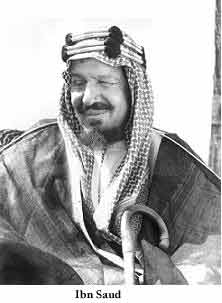

Arabia’s sky enchanted Asad—but Arabia’s ruler did not. Asad had shared the hope that Ibn Saud would “bring about a revival of the Islamic idea in its fullest sense.” But as Ibn Saud consolidated his power, lamented Asad, “it became evident that Ibn Saud was no more than a king—a king aiming no higher than so many other autocratic Eastern rulers before him.” Asad’s indictment grew long, and he later made it public in The Road to Mecca. True, Ibn Saud had established order, but he did so “by harsh laws and punitive measures and not by inculcating in his people a sense of civic responsibility.” He had “done nothing to build up an equitable, progressive society.” “He indulges and allows those around him to indulge in the most extravagant and senseless luxuries.” He had “neglected the education even of his own sons and thus left them poorly equipped for the tasks that lie before them.” And he was incapable of self-examination, while the “innumerable hangers-on who live off his bounty certainly do nothing to counteract this unfortunate tendency.” Asad’s final verdict was that Ibn Saud’s life constituted a “tragic waste”:


Belying the tremendous promise of his younger years, when he appeared to be a dreamer of stirring dreams, he has broken—perhaps without realizing it himself—the spirit of a high-strung nation that had been wont to look up to him as to a God-sent leader. They had expected too much of him to bear the disappointment of their expectations with equanimity; and some of the best among the people of Najd now speak in bitter terms of what they consider a betrayal of their trust.

Ibn Saud, in sum, was “an eagle who never really took to wing,” a king who never rose beyond “a benevolent tribal chieftain on an immensely enlarged scale.”21

Disappointed with Ibn Saud, Asad commenced a quest for the ruler, state, or society which would embody his ideal Islam. He briefly pinned his hopes on the Sanusi movement in Cyrenaica:


Like so many other Muslims, I had for years pinned my hopes on Ibn Saud as the potential leader of an Islamic revival; and now that these hopes had proved futile, I could see in the entire Muslim world only one movement that genuinely strove for the fulfillment of the ideal of an Islamic society: the Sanusi movement, now fighting a last-ditch battle for survival.22

According to Asad, he went on a secret mission to Cyrenaica on behalf of the Grand Sanusi, Sayyid Ahmad (1873-1932), then in exile in Saudi Arabia, to transmit plans for continuing the anti-Italian struggle to the remnant of the Sanusi forces. But the mission, in January 1931, was a futile one: Italian forces crushed the last of the Sanusi resistance later that year.23

By this time, Asad had fallen from favor. He gave no explanation in The Road to Mecca for his break with Ibn Saud, except his personal disappointment with the monarch. But other explanations also gained circulation. Some claimed that his last marriage proved his undoing: members of his wife’s family were suspected of intrigues against Ibn Saud. Others pointed to his Jewish origins as a growing liability after 1929, when Arab-Jewish tensions in Palestine exploded in violence. What is certain is that he left Saudi Arabia in 1932, with the declared aim of traveling through India, Turkestan, China, and Indonesia.
Passage to India

Asad began with a “lecture tour” to India. According to British intelligence sources, Asad had linked up with an Amritsar activist, one Isma’il Ghaznavi, and intended to tour India “with a view to get into touch with all important workers.” Asad arrived in Karachi by ship in June 1932, and left promptly for Amritsar.24 There and in neighboring Lahore, he involved himself with the local community of Kashmiri Muslims, and in 1933 he made an appearance in Srinagar, where an intelligence report again had him spreading Bolshevik ideas.25

For Asad, the real attraction of Kashmir would have resided in its predicament as contested ground, where a British-backed maharaja ruled a discontented Muslim population. Beginning in 1931, Kashmiri Muslims in Punjab organized an extensive “agitation” in support of the Muslims in Kashmir. Hundreds of bands of Muslim volunteers crossed illegally from Punjab into Kashmir, and thousands were arrested. By early 1932, the disturbances had subsided, but the Kashmir government remained ever-wary.26 Just what Asad did in Kashmir is uncertain. But on learning of his presence, the Kashmir government immediately wanted him “externed,” although the police had no evidence to substantiate the intelligence report, and there appeared to be legal obstacles to “externing” a European national.27
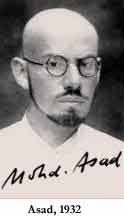

With or without such prompting, Asad soon retreated from Kashmir to Lahore. There he met the poet-philosopher Muhammad Iqbal (1876-1938), himself of Kashmiri descent, who persuaded Asad to remain in India and work “to elucidate the intellectual premises of the future Islamic state.”28 From this point forward, Asad would be a Muslim intellectual, thinking, lecturing and writing on Islamic culture and law. In March 1934 he published a pamphlet entitled Islam at the Crossroads, his first venture into Islamic thought. This work can only be described as a diatribe against the materialism of the West—as Asad put it, a case of “Islam versus Western civilization.” Here Asad developed themes which would become widespread later in Islamic fundamentalist thought. Asad drew a straight line between the Crusades and modern imperialism, and held Western orientalists to blame for their distortions of Islam. This text went through repeated printings and editions in India and Pakistan. More importantly, however, it appeared in an Arabic translation in Beirut in 1946. Under the Arabic title al-Islam ‘ala muftariq al-turuq, it was published in numerous editions through the 1940s and 1950s. This translation had a crucial influence upon the early writings of the Islamist theoretician Sayyid Qutb (1906-66), who drew extensively upon Asad in developing the idea of “Crusaderism.”

In 1936, Asad found a new benefactor. The Nizam of Hyderabad had established a journal under his patronage entitled Islamic Culture, first edited by “Mohammed” Marmaduke Pickthall (1875-1936), a British convert to Islam.29 Pickthall, best known for his English translation of the Qur’an, died in 1936, at which point Asad assumed the editorship of the journal. This placed Asad in touch with a wide range of orientalist and Indian Muslim scholarship, and he himself began to write scholarly pieces and translate texts.30
Intrusion of War

But another obligation began to assert itself—an obligation from the past. In The Road to Mecca, Asad wrote that his relationship with his father was resumed in 1935, after his father had come to “understand and appreciate the reasons for my conversion to Islam.” Although they never met in person again, wrote Asad, they corresponded continuously until 1942.31 However, Asad did return to Europe in the spring of 1939, with the intention of saving his endangered family. Nazi Germany annexed Austria in March 1938, enforcing the Nuremberg Laws in May. The life of Viennese Jewry became a succession of confiscations, persecutions, pogroms, and deportations. In October 1938, Asad resigned the editorship of Islamic Culture, and then left India. In April 1939, his Austrian passport was visaed in Vienna for entry to Britain and British India.32 Afterwards he arrived in London, where he asked that this visa be extended: “I beg you to give me a prolongation of this visa till the end of this year as my parents will come in about 4 to 5 months. I have to settle many things for them.”33 (“Parents” was Asad’s shorthand for his father and stepmother; his own mother had died in 1919.) This evidence hints that Asad made an eleventh-hour attempt at rescuing his Jewish family before returning to India in the summer of 1939.

But whatever the scope of these efforts, they ended abruptly with the German invasion of Poland and the British declaration of war against Germany in September 1939. Asad was detained immediately in India as an enemy national, and he spent the next six years in internment camps with Germans, Austrians, and Italians who had been collected from all over British-ruled Asia. Asad’s camp, he wrote, was peopled by “both Nazis and anti-Nazis as well as Fascists and anti-Fascists.”34 During his internment, he established contact with his uncle in Jerusalem, Aryeh Feigenbaum, who sent him food, clothes, and money.35 Asad was only released in August 1945. By then, the worst had befallen his family in Europe: his father, stepmother, and a sister were deported from Vienna in 1942, and they perished in the camps.

Asad never wrote of his long years of detention. He was the only Muslim in his camp, and it seems he deliberately detached himself from his surroundings and the war, by thinking only of the “cultural chaos” into which Muslims had been plunged. “I can still see myself pacing day-in and day-out over the great length of our barrack room,” asking himself why Muslims had failed to reach an “unambiguously agreed-upon concept of the Law.”36 He would not allow Europe’s war to become his war, or the suffering of the Jews to become his suffering, as he moved ever more resolutely to a consolidation of his Muslim identity.

Upon Asad’s release, he wholly identified with the cause of Pakistan, which he saw not simply as a refuge, but as the framework for an ideal Islamic polity. In 1947, Asad became director of the Department of Islamic Reconstruction in the new state, and he gave himself over to formulating proposals for its constitution. Asad’s purpose in these proposals is clear: it is to establish an Islamic state as a liberal, multiparty parliamentary democracy. In the 1930s and 1940s, the idea of the Islamic state, in the hands of many ideologues, had been presented as antithetical to democracy, and similar to the totalitarian states of central Europe. Asad’s work challenged that trend, finding evidence in the Islamic sources for elections, parliamentary legislation, and political parties.


But his own proposals, published in March 1948 as Islamic Constitution-Making, were never implemented. “Only very few, if any, of my suggestions have been utilized in the (now abolished) Constitution of the Islamic Republic of Pakistan; perhaps only in the Preamble, adopted by the Constituent Assembly in 1949, can an echo of those suggestions be found.”37 Pakistan, he later said, did not work out as Iqbal and he had hoped it would. The new state had been “an historical necessity,” and without it, “Muslims would have been submerged in the much more developed and intellectually and economically stronger Hindu society.” But “unfortunately it did not quite develop in the way we wanted it to. Iqbal’s vision of Pakistan was quite different to that of Mohammed Ali Jinnah [1876-1948, first governor-general of Pakistan], who did not in the beginning want a separation.”38 Pakistan became a state for Muslims, but its secular founders put aside its mission as an Islamic state. In 1949, Asad left domestic politics to join Pakistan’s foreign service, eventually rising to the position of head of the Middle East Division of the foreign ministry. His transformation was now complete, down to his Pakistani achkan and black fur cap. In the beginning of 1952, after twenty years of continuous residence in the subcontinent, he came to New York, as Pakistan’s minister plenipotentiary to the United Nations.
The West Again

So began Asad’s road back to the West—a choice that would bring him fame and sever his links to living Islam. He came to New York alone, without his wife and son, and lived in a penthouse in Manhattan, attended by a servant-driver.39 He soon found a new love, a striking contrast to his Arabian wife of over twenty years: Pola “Hamida,” an American woman of Polish Catholic descent who had converted to Islam. Asad’s marriage to Munira now came undone, and he married Pola Hamida before a civil judge in New York in November 1952. He would remain with her for the next forty years, and this marriage to a Western convert presaged his evolving preference for an ideal Islam, distinct from the born Muslims who practiced it.

For some months in New York, Asad also reestablished a tie to his family in Israel. At the time, Aryeh Feigenbaum’s daughter, Hemdah (1916-87), was living in New York with her husband, Harry (Zvi) Zinder (1909-91), press officer at Israel’s information office (and later director of the Voice of Israel). Zinder later told an Israeli journalist the story of how Asad would dine with him in out-of-the-way restaurants, or visit the Zinders’ home in Forest Hills. Asad even attended the bar mitvah of the Zinders’ son, and the Zinders attended his marriage to Pola Hamida. Zinder reported the contents of his table talk with Asad back to Jerusalem. Asad, he noted, remained an unequivocal enemy of Israel, but it might be possible to soften his animosity, and it would be worth the effort, given Asad’s solid standing in the Pakistani foreign ministry. According to Zinder, the Mossad responded by proposing that he try to recruit Asad for pay, a proposal Zinder rejected “with both hands.” “I knew he would refuse any payment,” said Zinder years later, “that he would be enraged by the idea, and that he would sever all contact with me.” In time, the contact weakened anyway; according to Zinder, Pola Hamida disapproved of Asad maintaining close ties with his family in particular, and Jews in general. Still, according to Zinder, Asad continued for some years to correspond with Hemdah on family matters.40

There could be no doubt from Asad’s writing, and from Zinder’s testimony, that Asad remained a fervent anti-Zionist. Yet for many years, Asad left the systematic indictment of the modern-day state of Israel to others. In 1947 he was fully preoccupied with the partition of India, and offered no published comment on the partition of Palestine and the creation of Israel. In the years that followed the 1967 war, he spoke out more frequently, especially on Jerusalem. “We cannot ever reconcile ourselves to the view, so complacently accepted in the West, that Jerusalem is to be the capital of the State of Israel,” he wrote. “In a conceivably free Palestine—a state in which Jews, Christians and Muslims could live side by side in full political and cultural equality—the Muslim community should be specifically entrusted with the custody of Jerusalem as a city open to all three communities.”41 But given the fever of anti-Israel passion in the Arab world after 1967, Asad’s criticism could only be described as restrained. As Pakistan was far removed from the conflict, more would not have been expected of him.

But Asad failed to meet other Pakistani expectations. One of Asad’s colleagues on the Pakistani delegation made a scandal of his romance with Pola Hamida, and Pakistan’s prime minister, Khwaja Nizamuddin, reportedly reacted strongly against the marriage. At the end of 1952, Asad offered his resignation, in the expectation his position would be confirmed. To his surprise, his resignation was accepted. It was not a clean break, and when Nizamuddin fell from power in the spring of 1953, the prospect of Asad’s return to Pakistani service seemed real. But no offer materialized, and Asad was now pressed for funds. Acting upon the advice of an American friend, he proposed to write his story for the New York publisher Simon and Schuster, which offered him a contract and an advance.42

Asad thus began work on the book that would make him famous. The Road to Mecca, written in New York, appeared in 1954, and won widespread praise for its combination of spiritual searching and desert adventure. As a testimony of conversion to Islam, The Road to Mecca is still unsurpassed, and its continued re-publication in Western languages attests to its power, for both general readers and sympathizers of Islam. An example of its influence may be found in the testimony of a twenty-one-year-old American Jewish woman named Margaret Marcus (b. 1934). Asad’s book found a place on the shelves of the public library in Mamaroneck, New York, near her home. Her parents would not let her take out the book, so she read it in the library over and over: “What he could do, I thought I could also do, only how much harder for a single woman than for a man! But I vowed to Allah that at the first opportunity, I would follow his example.”43 The young woman later converted to Islam, took the name Maryam Jameelah, and moved to Pakistan, where she became one of the best-known ideologues of Islamic fundamentalism, famous for her methodical indictments of the West.44

One Western convert, however, took a dim view of Asad’s book: H. St. John (“Abdullah”) Philby (1885-1960). Philby, too, had converted to Islam in 1930, assuming Asad’s place as the convert in the court of Ibn Saud. He, too, had dabbled in exploration and politics, and he had strong views on Asad’s attempts at both. In his review of The Road to Mecca, Philby accused “Herr Weiss” of “vagueness and unusual naiveté.” According to Philby, Asad was no more than a journalist in search of a story, a man without any flair for geographical work or political analysis.


His bazar scenes, religious festivals, desert sunsets, et hoc genus omne of local color suggest a patchwork of newspaper articles or cuttings strung together for a new[s] story, in which the leit-motiv is provided by his own gropings toward an emotional dénouement.

In his most damaging insinuation, Philby wrote that there was “no independent contemporary evidence” that Asad had undertaken “secret missions” for Ibn Saud or the Grand Sanusi.45

If the book’s value as a record of politics and exploration was doubtful, then at least it served as a faithful personal memoir. Or did it? On many points, noted Judd Teller (1912-72) in a review in Commentary, Asad had nothing to say on matters that demanded a say in the personal memoir of any European Jew. One of these was Asad’s experience of Europe’s anti-Semitism, nowhere mentioned by the author.


Yet he was born in Galicia, where the Jews were caught up as scapegoats in the power struggles of the anti-Semitic Ukrainians and Poles and the dubiously tolerant Austrian government. He was brought up in Vienna, when it was the capital of European anti-Semitism. He left Berlin for his first visit to Palestine in the year when racist-nationalists assassinated Walter Rathenau. Did all this leave him untouched?46

Both Philby and Teller complained of the absence of another crucial point: Asad gave no reason for his decision to leave Arabia. (Teller speculated that it stemmed from heightened Jewish-Arab tensions in Palestine.) These criticisms suggested what is now obvious: The Road to Mecca cannot be read as a document of historical truth about Arabia, Ibn Saud, or even the author’s life. It is an impressionistic self-portrait that suggests more than it tells. The face of its subject is in half-shadow.

But the omissions and elisions of the book did not detract from its commercial success. The Road to Mecca was translated from English into the major languages of Europe, and the royalties must have represented a windfall. The book also created demand for Asad’s services as a lecturer, and his reputation in the West reached its pinnacle.

But in Muslim lands, especially among Muslim activists, his choices raised troubling questions. The Pakistani ideologue Maulana Maududi (1903-79), in a letter written in 1961, expressed misgivings:


I have great respect for [Asad’s] exposition of Islamic ideas and especially his criticism of Western culture and its materialistic philosophies. I am sorry to say, however, that although in the early days of his conversion, he was a staunch, practicing Muslim, gradually he drifted close to the ways of the so-called “progressive” Muslim just like the “reformed” Jews. Recently his divorce from his Arab wife and marriage to a modern American girl hastened this process of deviation more definitely….Once a man begins to live the life of a true Muslim, all his capabilities lose their “market value.” It is the same sad story with Muhammad Asad, who had always been accustomed to a high and modern standard of living and after embracing Islam, had to face the severest financial difficulties. As a result, he was forced to make one compromise after another.47

Asad, the critic of Western materialism, stood accused of succumbing to it; Asad, who first sought answers in Islam, now was suspected of questioning it. The disappointment Asad had come to feel for the actual practitioners of Islam had become mutual.
Translator of the Qur’an

Asad relocated to Geneva with Pola Hamida. There he began to contemplate a new project, ambitious in scope and significance: a new English translation of the Qur’an. Asad had not been satisfied with Marmaduke Pickthall’s widely used translation, since Pickthall’s knowledge of Arabic had been “limited.” As Asad later wrote:


Familiarity with the bedouin speech of Central and Eastern Arabia—in addition, of course, to academic knowledge of classical Arabic—is the only way for a non-Arab of our time to achieve an intimate understanding of the diction of the Qur’an. And because none of the scholars who have previously translated the Qur’an into European languages has ever fulfilled this prerequisite, their translations have remained but distant, and faulty, echoes of its meaning and spirit.48
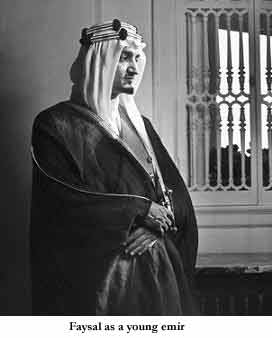

Asad began work on the translation in 1960. Such a large-scale project required the support of a patron, and he eventually appeared in the form of Saudi Arabia’s King Faysal (r. 1964-75). Asad had known Faysal since 1927. He reestablished a link in 1951, when he paid his first visit to Saudi Arabia in eighteen years, and he nurtured the tie as Faysal began his ascent to the throne. Asad became one of Faysal’s most fervent enthusiasts, seeing in him a vast improvement over Ibn Saud. “Whenever I reflect on the manner in which King Faysal rules over his realm,” wrote Asad, “it appears to me as the fulfilment of every promise which the life of his father had held out and left open.”49 Still, Faysal was a dutiful son, and this praise could not cancel out Asad’s stinging indictment of Ibn Saud, made in The Road to Mecca. As it happened, however, this obstacle was not insurmountable: in later editions of the book, Asad completely excised his enumeration of Ibn Saud’s failings, replacing them with a few pages of banal ruminations on the desert.50

Faysal renewed Asad’s Saudi patronage. In 1963, Faysal had the Muslim World League in Mecca subscribe in advance to Asad’s planned translation, which he began to compile in Switzerland. Asad published a limited edition of the first nine surahs in 1964. At about that time, he moved to Tangier, settling in a comfortable villa surrounded by cypress trees and bougainvillaea, where he worked to complete the translation. In 1980, he published the full translation and commentary in Gibraltar, under the title The Message of the Qur’an.

Asad’s translation opened with this dedication: “For people who think.” The spirit of the translation is resolutely modernist, and Asad expressed his profound debt to the reformist commentator Muhammad Abduh (1849-1905). As another convert later wrote: “In its intellectual engagement with the text and in the intimate, subtle and profound understanding of the pure classical Arabic of the Koran, Asad’s interpretation is of a power and intelligence without rival in English.”51 There are many English-speaking Muslims who will attest to the appeal of this translation, and who rely upon it daily.

But the translation created a controversy among some Muslim clerics who disputed Asad’s modernist and allegorical interpretations of some verses. Critics accused him of denying the existence of angels, the permissibility of concubinage, and the bodily ascent of Jesus to heaven.52 In private, there were those who insinuated that the translation reintroduced isra’iliyyat, “Jewish distortions” akin to those allegedly introduced by the first Jewish converts to Islam. In 1974, even before the translation was published in full, it was banned in Saudi Arabia.53 Asad was left to finish the work on his own, supported financially by his friends. Fortunately, Asad had many, including Shaykh Ahmad Zaki al-Yamani (b. 1930), the Saudi minister of oil and natural resources and “my brother-in-spirit,” to whom Asad devoted a collection of his essays a few years later.54

The rejection of his translation was only one sign of the growing climate of intolerance that further disillusioned Asad. “Khomeini is worse than the Shah,” he told journalists after the Iranian revolution. “He has nothing in common with Islam.”55 According to another journalist, Asad took a dim view of fundamentalist chaos, the intolerance of extremists, and the patter about “Islamic science” and “Islamic education.” The Muslims, he opined, had been “low down for so many centuries that now they think they have to assert themselves by saying we are different. They are human beings. They are not different.” In particular, he championed the rights of women and opposed the fundamentalist campaign for the hijab. “Many people think that if you put a veil over a woman’s face and cover her, that is the way to Islam. It is not. In the time of the Prophet Muhammad, no hijab existed except for the Prophet’s wives and it is a wrong inference to say that this holds good for all Muslim women.”56


His own early indictment of the West, Islam at the Crossroads, which found such an echo among fundamentalists, he himself came to regard as a “harsh book.” Likewise, the once-powerful romance of the Arabs no longer held him in its grip. In 1981, he told a journalist that “it is possible that if I would come into contact with Arabs today for the first time, I would no longer be attracted by them.”57 Asad still remained enamored of Islam. Yet this ideal Islam was nowhere to be found in existing Islam, and could just as well be practised in Europe. It is said that Pakistan’s president from 1978, General Zia ul-Haq (1924-88) tried to persuade Asad to return to Pakistan, but without result. In 1982, Asad left Tangier for Sintra, outside of Lisbon. He later moved to Mijas on the Costa del Sol in southern Spain. He remained articulate and lucid in interviews given as late as 1988.58 In these last years, he reportedly began work on a sequel to The Road to Mecca, tentatively entitled Homecoming of the Heart. The title is said to have alluded to his contemplated return to Saudi Arabia at the invitation of Prince Salman (b. 1936), governor of Riyadh and one of Ibn Saud’s sons. It is not clear whether such a return was a realistic prospect, or whether the title hinted at a more spiritual homecoming. For Asad had neither completed this work nor returned to Arabia when he died on 20 February 1992, at the age of 91. He was buried in the small Muslim cemetery in Granada.59
“Struck no root”

Few in the Muslim world took notice of Asad’s passing. He had argued for a rational Islam; he had sought to reconcile Islamic teachings and democracy; he had tried to make the Qur’an speak to modern minds. His project, in fact, encapsulated ideals that drove the reform of Judaism, which by his parents’ generation had largely served to ease Jews out of their faith altogether. Islam provided the last chance to achieve that ideal—the reform of a religion of law so that it could be made to live in a modern age, as a liberal force of continuing faith.

Unlike so many other Western converts to Islam, Asad chose also to live in Muslim societies, and worked to give Islam direction. But by advocating this reform, Asad remained a foreign body in contemporary Islam, a transplant rejected time and again by his hosts. Saudi Arabia declined to keep him as a journalist; Pakistan, which he served as an official and diplomat, also broke with him; and the self-appointed guardians of Muslim orthodoxy shunned him as a Qur’an translator and commentator. Paradoxically, Asad won genuine acclaim in the West. There he found minds open to his ideas, and opportunities to publish and lecture. And there he ultimately found refuge from the late twentieth-century reality of Islam.

Asad’s road to Mecca was the shorter journey, made headlong in the enthusiasm of youth. His road from Mecca was the longer journey, made painstakingly in an awareness of the contradiction between the promise of Islam and its contemporary practice—and his own equivocal position in it. For all Asad’s fervor and belief, his Muslim answer never satisfied his Jewish question, put most poignantly by Asad to Asad: “Why is it that, even after finding my place among the people who believe in the things I myself have come to believe, I have struck no root?”60


===
Notes

1 S.C. Chew, review of The Road to Mecca in New York Herald Tribune Book Review, 15 August 1954.
2 Robert Payne, review of The Road to Mecca in New York Times, 15 August 1954.
3 Details on the family in Lodewijk Brunt, “Een Jood in Arabie; over het leven van Muhammad Asad,” in Neveh Ya’akov: Jubilee Volume Presented to Dr. Jaap Meijer on the Occasion of his Seventieth Birthday, eds. Lea Dasberg and Jonathan N. Cohen (Assen: Van Gorcum, 1982), 182.
4 Muhammad Asad, The Road to Mecca (New York: Simon and Schuster, 1954), 55.
5 Ibid., 55-56.
6 Ibid., 58-59.
7 Ibid., 60.
8 Encyclopaedia Judaica, s.v. “Feigenbaum, Aryeh”; Haviv Kena’an, “Prof. A. Feigenbaum—Hasid ha-dugmah ha-ishit,” Ha’aretz, 7 August 1964. The omission is all the more striking in that, at one point in The Road to Mecca, Asad writes that the eyes of Jerusalem’s Arabs “seemed to remain clear and untouched by age—unless they happened to be affected by trachoma, that evil ‘Egyptian’ eye disease which is the curse of all countries east of the Mediterranean.” Road to Mecca, 92.
9 Asad, Road to Mecca, 93.
10 Ibid, 91.
11 Leopold Weiss, Unromantisches Morgenland; aus dem tagebuch einer reise (Frankfurt: Frankfurter societäts-drukerei, 1924). The book is summarized by Wolf Kaiser, Palästina-Erez Israel: Deutschsprachige Reisebeschreibungen jüdischer Autoren von der Jahrhundertwende bis zum Zweiten Weltkrieg (Hildesheim: G. Olms, 1992), 267-83. Kaiser also discusses some of the contemporary criticism of reviewers. Asad wrote of his book that, “although its anti-Zionist attitude and unusual predilection for the Arabs caused something of a flutter in the German press, I am afraid it did not sell very well.” Asad, Road to Mecca, 185.
12 Asad, Road to Mecca, 188.
13 Ibid., 142.
14 Qur’an, 102 (Surat al-Takathur). The translation is Asad’s.
15 Muhammad Asad, Islam at the Crossroads (1934; reprint, Lahore: Sh. Muhammad Ashaf, 1991), 4.
16 Asad, Road to Mecca, 311.
17 Arabic report (with translation) by Dr. Abdullah Damluji, no date, included in despatch from Political Secretary of High Commissioner for Iraq (Baghdad) to Consul (Jiddah), 18 December 1928, Public Records Office (London), FO967/22. Damluji had left Ibn Saud’s service in September 1928 and returned to Iraq.
18 Asad, Road to Mecca, 48.
19 Ibid., chap. viii, “Jinns.” On the Dawish affair, see Joseph Kostiner, The Making of Saudi Arabia 1916-1936 (New York: Oxford University Press, 1993), 117-40.
20 Asad, Road to Mecca., 49.
21 Ibid., 177-81, for these assessments of Ibn Saud.
22 Ibid, 325.
23 Ibid., chap. xi, “Jihad.”
24 “History sheet of Herr Leopold Weiss Alias Mohmmad Asad Ullah Vyce. An Austrian Convert to Mohammadanism,” prepared by the Intelligence Bureau of the Government of India, included in letter from E.J.D. Colvin, Political Secretary, His Highness’ Government Jammu and Kashmir (Jammu) to Lieut.-Col. L.E. Lang, Resident in Kashmir (Sialkot), 30 January 1934, India Office Records, R/1/1/4670. In The Road to Mecca, Asad dates his last Arabian journey to the late summer of 1932, which would place his final arrival in India at a later date than June.
25 C.I.D. report of 20 November 1933, India Office Records, R/1/1/4670.
26 On the Kashmir “agitation” of 1931-32, see David Gilmartin, Empire and Islam: Punjab and the Making of Pakistan (Berkeley: University of California Press, 1988), 96-99.
27 Lieut-Col. L.E. Lang, Resident in Kashmir (Sialkot) to B. J. Glancy, Political Secretary, Government of India, Foreign and Political Department (New Delhi), 31 January 1934, India Office Records, R/1/1/4670.
28 Asad, Road to Mecca, 2.
29 On the journal, see Peter Clark, Marmaduke Pickhtall: British Muslim (London: Quartet Books, 1986), 61-62.
30 For a sample of his work, see his article “Towards a Resurrection of Thought,” Islamic Culture (Hyderabad) 11 (1937): 7-16.
31 Asad, Road to Mecca, 311 n.
32 India Office Records, L/P&J/7/2678. This includes an extract, from Weiss’s passport, of a visa for the United Kingdom and British India, granted at Vienna and issued on 24 April 1939. The authorization for the visa came directly from the Government of India in New Delhi, 9 February 1939.
33 Weiss, undated note to India Office in London, received at India Office on 8 June 1939; India Office Records, L/P&J/7/2678. Weiss gave his London address as 119, Old Church Street, Chelsea, S.W. 3. [Update: For more on this visit, go here.]
34 Muhammad Asad, This Law of Ours and Other Essays (Gibraltar: Dar al-Andalus, 1987), 1.
35 Yossi Melman, “Goralo ha-Yehudi shel Muhammad Asad,” Ha’aretz, 21 April 1989.
36 Asad, This Law of Ours, 1.
37 Muhammad Asad, The Principles of State and Government in Islam (new ed.; Gilbraltar: Dar al-Andalus, 1980), xi. This book built upon his Islamic Constitution-Making.
38 Mushtak Parker, “Death of a Muslim Mentor,” Middle East, May 1992, 29.
39 Melman, “Goralo ha-Yehudi,” quoting a despatch by Harry Zinder.
40 Ibid., quoting a despatch by Harry Zinder.
41 Asad, This Law of Ours, 169, 173.
42 Harry Zinder (New York) to Abba Eban, 30 April 1953, Israel State Archives, ISA/R693/Box 96, File 14.
43 Maryam Jameelah, Memoirs of Childhood and Youth in America (1945-1962) (Lahore: Muhammad Yusuf Khan, 1989), 109.
44 Oxford Encyclopedia of the Modern Islamic World, s.v. “Jameelah, Maryam.”
45 H. St. John B. Philby, review of The Road to Mecca, in Middle East Journal 9 (winter 1955): 81-82.
46 Judd Teller, review of The Road to Mecca, in Commentary 18 (September 1954): 280.
47 Maududi (Lahore) to Margaret Marcus [Maryam Jameelah], 25 February 1961, in Maryam Jameelah, Correspondence between Maulana Maudoodi and Maryam Jameelah (Delhi: Crescent Publishing, 1969), 15.
48 The Message of the Qur’an, Translated and Explained by Muhammad Asad (Gilbraltar: Dar al-Andalus, 1980), iv-v.
49 From the 1973 postscript to the 4th rev. ed. of The Road to Mecca (Gibraltar: Dar al-Andalus), 378.
50 Cf. 177-81 of the original 1954 ed. with 177-81 of the 4th rev. ed. of 1980.
51 Parker, “Death of a Muslim Mentor,” 28-29.
52 Asad dealt with all these accusations in Arabia, The Islamic World Review (October 1981), 4.
53 Reinhard Schulze, Islamischer Internationalismus im 20. Jahrhundert (Leiden: Brill, 1990), 334 n. 59.
54 Asad, This Law of Ours, dedication page.
55 Quoted by Lisbeth Rocher and Fatima Cherqaoui, D’une foi l’autre: Les conversions à l’Islam en Occident (Paris: Seuil, 1986), 64.
56 Mushtak Parker, “Death of a Muslim Mentor.”
57 Malise Ruthven, “Muhammad Asad, Ambassador of Islam,” Arabia: The Islamic World Review (September 1981): 60, 62.
58 See the video “A Tribute to Muhammad Asad,” filmed in 1988 and distributed by Islamic Publications International of Teaneck, New Jersey.
59 Details on these last years are provided by Mushtak Parker, “Death of a Muslim Mentor.”
60 Asad, The Road to Mecca, 47.


About Martin Kramer


I am a historian of the Middle East at Tel Aviv University (and past director of its Middle East center), and the Walter P. Stern Fellow at The Washington Institute for Near East Policy.

I was the founding president of Shalem College, a liberal arts school in Jerusalem, and first chair of its Middle East and Islamic studies program. I have been a visiting professor or fellow at Brandeis, Chicago, Cornell, Georgetown, Harvard, Johns Hopkins, Pepperdine, and the Wilson Center. I earned my undergrad and doctoral degrees from Princeton, where I wrote my thesis under the supervision of Bernard Lewis.

I am the author or editor of eight books.The most academic: Islam Assembled: The Advent of the Muslims Congresses
The best known: Ivory Towers on Sand: The Failure of Middle Eastern Studies in America
The most recent: The War on Error: Israel, Islam, and the Middle East

This website includes a wide sample of my published work on a broad array of topics. It is also home to my blog Sandbox. Click here to subscribe to new blog posts by e-mail, or subscribe to the feed.

Contact me via the form below.

===


===
회고록과는 다른 정보가 나오는데 요약 평론해주세요

아래 글은 Martin Kramer, <The Road from Mecca: Muhammad Asad>의 요약+평론입니다. 사용자가 말한 대로, 이 글은 아사드 자신의 회고록 <The Road to Mecca>와 상당히 다른 정보를 제공합니다. 핵심 차이는 “메카로 가는 길”이 아니라 “메카에서 돌아오는 길”이라는 제목 자체에 들어 있습니다. 크레이머는 아사드를 이슬람으로 귀의해 정신적 고향을 찾은 인물로만 보지 않고, 결국 무슬림 사회 안에서도 뿌리내리지 못하고 다시 서구로 돌아간 “방랑하는 무슬림”으로 해석합니다.

<요약>

마틴 크레이머의 글은 1954년에 출간된 무함마드 아사드의 회고록 <The Road to Mecca>를 정면으로 다시 읽는 글이다. 크레이머는 이 책이 미국에서 출간되었을 때 큰 찬사를 받았고, 아라비아 여행문학과 이슬람 회심문학의 걸작으로 받아들여졌다고 말한다. 그러나 그는 곧바로 중요한 문제를 제기한다. 아사드의 생애에 대한 거의 유일한 주요 자료가 아사드 자신이라는 점이다. 따라서 아사드의 회고록은 중요한 자료이지만, 동시에 자기연출과 생략, 선택적 기억의 산물이기도 하다.

크레이머가 강조하는 첫 번째 다른 정보는 아사드의 유대적 배경이다. 아사드는 자신의 회고록에서 유대교와 거리를 두고 이슬람으로 향하는 길을 서술하지만, 크레이머는 그의 유년기와 가족사를 더 자세히 복원한다. 아사드, 곧 레오폴트 바이스는 1900년 렘베르크에서 태어났고, 유대인이 인구의 상당 부분을 차지하던 갈리치아 세계에서 성장했다. 그의 친가 쪽에는 정통파 랍비 전통이 있었고, 아버지 아키바 바이스도 원래는 탈무드 공부를 했으나 훗날 법률가가 되었다. 아사드 자신도 어린 시절 히브리어 성경, 탈무드, 미슈나, 게마라를 공부했고, 13세 무렵에는 히브리어를 유창하게 읽고 말할 수 있었다고 한다. 이것은 아사드가 단순히 세속화된 유대인 가정에서 자라 종교를 몰랐던 사람이 아니었음을 보여준다. 그는 유대교를 어느 정도 깊이 알고 있었기 때문에 떠난 사람이었다.

그가 유대교에서 멀어진 이유에 대해 크레이머는 아사드 자신의 말을 따라 설명한다. 젊은 바이스에게 유대교의 하나님은 인류 전체의 창조주라기보다 특정 민족, 곧 히브리인들의 운명에 지나치게 몰두한 “부족신”처럼 보였다. 그는 유대교의 윤리에는 공감했으나, 의례와 선민의식에는 거리감을 느꼈다. 여기서 크레이머는 중요한 해석을 덧붙인다. 아사드는 유대교를 버렸지만, 사실 그가 추구한 합리적·윤리적·개혁적 종교 이상은 근대 유대교 개혁운동의 분위기와 무관하지 않았다는 것이다. 즉 아사드의 이슬람 이해 자체가 역설적으로 유대적 근대성의 산물일 수 있다는 해석이다.

두 번째 다른 정보는 예루살렘 경험과 반시온주의의 배경이다. 아사드는 외삼촌 도리안 파이겐바움의 초청으로 예루살렘에 갔다고 회고한다. 크레이머는 여기에 덧붙여, 아사드에게는 또 다른 삼촌 아리예 파이겐바움이 있었고 그는 열렬한 시온주의자였으며 예루살렘의 유명한 안과 의사였다고 지적한다. 아사드는 <The Road to Mecca>에서 이 시온주의 삼촌을 언급하지 않는다. 크레이머는 이것이 단순한 우연이 아니라, 가족과 시온주의로부터 거리를 두려는 아사드의 자기서사와 관련된 생략이라고 본다.

아사드의 반시온주의는 그 자신에게는 도덕적 직관이었다. 그는 유대인 이민자들이 팔레스타인에 와서 다수가 되고, 결국 원래 살던 아랍인들을 몰아내려는 의도를 갖는 것은 부도덕하다고 보았다. 크레이머는 이 입장을 설명하면서도, 그것이 순전히 추상적 윤리만은 아니었다고 본다. 예루살렘에서 아사드는 야콥 이스라엘 드 한이라는 네덜란드 출신 유대인 반시온주의자와 가까워졌고, 드 한을 통해 아랍 지도자들과 연결되었다. 드 한은 훗날 하가나에 의해 암살되었다. 이 대목은 아사드의 반시온주의가 단순한 개인적 감상이 아니라 당시 예루살렘의 복잡한 유대 내부 정치, 아랍 민족주의, 영국 통치 질서 속에서 형성되었음을 보여준다.

세 번째 다른 정보는 아사드가 단순한 영적 구도자가 아니라 정치적 행위자였다는 점이다. 그는 <프랑크푸르터 차이퉁>의 기자로서 시온주의를 비판하고 아랍·무슬림 민족주의를 지지하는 글을 썼다. 카이로에서는 알 아즈하르의 개혁적 신학자 무스타파 알 마라기를 만나 이슬람 개혁주의의 영향을 받았다. 여기서 아사드는 이슬람의 후진성이 이슬람 자체 때문이 아니라 이슬람의 오해와 왜곡 때문이라고 보게 된다. 제대로 해석된 이슬람은 현대 세계에서도 무슬림을 앞으로 이끌 수 있다는 그의 핵심 사상이 이 시기에 형성되었다.

네 번째 중요한 차이는 회심의 심리적 해석이다. 아사드의 회고록과 1988년 인터뷰에서 회심은 베를린 지하철에서 현대인의 불행한 얼굴을 보고, 꾸란의 “더 많이 가지려는 경쟁”에 관한 구절을 읽으며 계시의 진실성을 깨닫는 사건으로 그려진다. 크레이머도 이 장면을 인정하지만, 여기에 가족사적 해석을 추가한다. 아사드 자신은 1934년에 회심 이유를 명쾌히 설명할 수 없다고 하며, 이슬람이 “조화롭고 균형 잡힌” 종교로 보였다고 말했다. 그러나 파이겐바움 가족 안에서는 그의 회심이 아버지에 대한 반감, 나아가 출생 공동체에 대한 반감에서 비롯되었다고 보는 견해도 있었다고 크레이머는 전한다. 크레이머가 이 견해를 그대로 진실로 확정하는 것은 아니지만, 회심을 순수한 영적 각성으로만 읽는 데 제동을 건다.

다섯 번째 다른 정보는 사우디 시기의 성격이다. 아사드는 사우디아라비아에서 약 6년간 살았고, 이븐 사우드의 궁정에 가까이 있었다. 크레이머는 독립 자료, 특히 1928년 영국 측에 제출된 압둘라 담루지의 보고서를 통해 아사드가 실제로 이븐 사우드 궁정에 특별히 접근할 수 있었음을 확인한다. 그러나 그는 아사드가 이븐 사우드의 고문이라기보다, 유럽 언론에 이븐 사우드에게 우호적인 글을 써주는 유용한 관찰자, 일종의 초기 홍보 자산이었다고 본다. 이 점은 아사드 자신이 느꼈던 궁정 내부자의 지위와는 미묘하게 다르다.

크레이머는 또한 아사드가 1929년 쿠웨이트 비밀 임무, 1931년 키레나이카의 사누시 운동 지원 임무 등에 관여했다고 소개한다. 그러나 이와 관련해 H. St. John Philby는 아사드의 비밀 임무 주장에 독립적 증거가 없다고 비판했다. 따라서 크레이머의 서술은 아사드의 정치적 모험을 인정하면서도, 그것이 어디까지 사실이고 어디부터 자기영웅화인지는 조심스럽게 남겨둔다.

여섯 번째 차이는 이븐 사우드 평가다. 앞의 1988년 인터뷰에서 아사드는 이븐 사우드를 매우 높이 평가했다. 하지만 크레이머가 인용하는 <The Road to Mecca> 초판의 일부 대목에 따르면, 아사드는 한때 이븐 사우드에게 깊이 실망했다. 그는 이븐 사우드가 이슬람적 부흥의 지도자가 될 것으로 기대했으나, 결국 그는 다른 동방 전제군주들과 크게 다르지 않은 왕에 머물렀다고 보았다. 공공질서는 세웠지만 시민적 책임을 길러내지 못했고, 공정하고 진보적인 사회를 만들지 못했으며, 사치와 측근정치에 빠졌다고 비판했다. 심지어 이븐 사우드의 생애를 “비극적 낭비”라고까지 평가했다. 더 흥미로운 것은, 크레이머에 따르면 아사드가 나중에 <The Road to Mecca> 개정판에서 이븐 사우드 비판 대목을 삭제하고 사막에 대한 평범한 회상으로 바꾸었다는 점이다. 이것은 아사드의 자기서사가 정치적 후원관계와도 관련되어 있었음을 보여준다.

일곱 번째 정보는 인도·파키스탄 시기다. 아사드는 1932년 인도에 도착했고, 카슈미르 문제에도 관심을 가졌다. 영국 정보기관은 그를 볼셰비키 사상을 퍼뜨리는 인물로 의심했으나, 크레이머는 그런 보고가 과장되었을 가능성을 인정한다. 그는 라호르에서 무함마드 이크발을 만났고, 이크발은 그에게 장차 이슬람 국가의 지적 전제를 밝히는 일을 하라고 권했다. 이후 아사드는 <Islam at the Crossroads>를 발표했는데, 크레이머는 이 책을 서구 물질주의에 대한 격렬한 비판이며, 훗날 이슬람 근본주의 사상에도 영향을 준 텍스트로 본다. 특히 아랍어 번역을 통해 사이드 쿠트브에게도 영향을 주었다고 설명한다.

여덟 번째 정보는 제2차 세계대전과 유대인 가족 문제다. 아사드는 1939년 유럽으로 돌아가 위기에 처한 가족을 구하려 한 흔적이 있다. 그러나 전쟁 발발 후 그는 영국령 인도에서 적성국 국민으로 억류되어 6년을 수용소에서 보냈다. 그 사이 그의 아버지, 계모, 누이는 1942년 빈에서 강제이송되어 수용소에서 죽었다. 크레이머는 아사드가 이 긴 억류생활과 가족의 유대인 박해 경험을 거의 쓰지 않았다는 점을 중요하게 본다. 그는 아사드가 유럽의 전쟁을 자신의 전쟁으로 만들지 않았고, 유대인의 고통을 자신의 고통으로 만들지 않으려 했다고 해석한다. 이것은 매우 날카롭지만 동시에 논쟁적인 해석이다.

아홉 번째는 파키스탄 건국 이후의 좌절이다. 아사드는 파키스탄을 단순한 피난처가 아니라 이상적 이슬람 정치체제의 틀로 보았다. 그는 1947년 파키스탄의 이슬람 재건부 책임자가 되어 헌법 제안을 만들었다. 그의 목표는 자유주의적·다당제·의회민주주의적 이슬람 국가였다. 이것은 이슬람 국가를 반민주적 전체주의 모델로 이해하던 일부 이념가들과 다른 노선이었다. 그러나 그의 제안은 거의 실현되지 않았다. 그는 파키스탄이 결국 이크발과 자신이 기대한 방향으로 발전하지 못했다고 보았다. 이후 외무부로 옮겨 유엔 대표부에 가지만, 1952년 뉴욕에서 서구 개종자 폴라 하미다와 사랑에 빠지고, 기존 아랍인 아내 무니라와의 결혼이 무너지면서 파키스탄 외교관 경력도 끝나게 된다.

열 번째는 <The Road to Mecca> 자체의 탄생 배경이다. 아사드는 경제적으로 어려워진 상태에서 미국 출판사 Simon and Schuster와 계약해 이 회고록을 썼다. 이 책은 큰 성공을 거두었고, 서구 독자들에게 회심문학과 사막모험담으로 강한 인상을 주었다. 그러나 크레이머는 이 책이 역사기록으로는 조심스럽게 읽혀야 한다고 말한다. 필비는 아사드를 정치분석가나 탐험가라기보다 이야깃거리를 찾는 기자에 가깝다고 혹평했고, 저드 텔러는 아사드가 유럽 반유대주의 경험이나 아라비아를 떠난 이유 같은 중요한 문제를 침묵했다고 비판했다. 크레이머의 결론은 분명하다. <The Road to Mecca>는 아라비아, 이븐 사우드, 심지어 아사드 자신의 삶에 대한 “역사적 진실의 문서”라기보다, 많은 것을 암시하지만 다 말하지 않는 인상주의적 자화상이라는 것이다.

마지막으로 크레이머는 아사드의 꾸란 번역과 말년을 다룬다. 아사드는 1960년대부터 꾸란 영어 번역과 주석 작업을 시작했고, 파이살 왕의 후원을 받았다. 그러나 그의 번역은 근대주의적이고 알레고리적이라는 이유로 일부 성직자들에게 비판받았고, 1974년 사우디아라비아에서 금지되었다. 그는 천사의 존재, 축첩 허용, 예수의 육체적 승천 등에 대한 해석에서 정통주의자들과 충돌했다. 그는 여성의 권리를 옹호했고, 히잡의 근본주의적 강제를 비판했으며, 호메이니에 대해서도 이슬람과 아무 관련이 없다고 강하게 말했다. 말년에 그는 이슬람 자체에 대한 사랑은 유지했지만, 현실의 무슬림 사회와 아랍 세계에 대해서는 크게 실망했다. 1981년에는 오늘 처음 아랍인들을 만났다면 예전처럼 끌리지 않았을지도 모른다고 말하기도 했다.

크레이머의 결론은 냉정하다. 아사드는 합리적 이슬람, 민주주의와 조화되는 이슬람, 현대인의 정신에 말할 수 있는 꾸란을 만들려 했다. 그러나 그는 사우디에서도, 파키스탄에서도, 정통 성직자들 사이에서도 받아들여지지 않았다. 역설적으로 그는 서구에서 더 많은 독자와 지지자를 얻었다. 그의 “메카로 가는 길”은 젊은 날의 짧고 열정적인 여정이었지만, “메카에서 돌아오는 길”은 훨씬 길고 고통스러운 여정이었다. 그 길의 끝에서 아사드는 자신이 믿게 된 것들을 믿는 사람들 사이에 자리를 얻었음에도 왜 뿌리내리지 못했는가라는 질문을 남긴다.

<평론>

이 글의 가장 큰 장점은 아사드를 성인전의 주인공에서 역사적 인간으로 되돌려 놓는다는 점이다. <The Road to Mecca>만 읽으면 아사드는 서구의 영적 황폐함을 꿰뚫어 보고 이슬람의 진리로 귀향한 인물처럼 보인다. 그러나 크레이머의 글을 읽으면, 그의 삶은 훨씬 더 복잡하다. 그는 유대교를 떠났지만 유대적 지적 전통에서 완전히 벗어나지 못했고, 이슬람을 받아들였지만 무슬림 사회에 완전히 받아들여지지 못했다. 그는 아랍 세계를 사랑했지만 아랍 현실에 실망했고, 서구를 비판했지만 결국 서구에서 독자와 안식처를 얻었다.

특히 중요한 것은 회고록의 “침묵”을 읽는 방법이다. 회고록은 무엇을 말하는가만큼 무엇을 말하지 않는가가 중요하다. 아사드는 시온주의 삼촌을 말하지 않았고, 유럽 반유대주의 경험을 거의 말하지 않았으며, 아버지와 가족의 죽음, 전쟁기의 억류생활, 아라비아를 떠난 실제 이유를 충분히 말하지 않았다. 이 침묵들은 우연이 아닐 가능성이 크다. 그는 자기 삶을 “유럽/유대적 과거로부터 이슬람적 중심으로 향하는 길”로 구성하고 싶었고, 그 서사에 맞지 않는 요소들을 뒤로 밀어놓은 것이다.

그러나 크레이머의 글도 그대로 받아들이기에는 조심할 점이 있다. 첫째, 크레이머는 아사드의 유대적 배경을 매우 강하게 해석한다. 그는 아사드의 합리주의적 이슬람 개혁론을 근대 유대교 개혁의 연장선처럼 본다. 이 해석은 흥미롭지만, 자칫 아사드의 이슬람적 자기이해를 다시 유대적 기원으로 환원하는 문제가 생긴다. 아사드가 유대적 세계에서 나왔다는 것은 분명하지만, 그의 이슬람 사유를 단지 “유대적 질문의 연장”으로만 보면 그의 실제 신앙적 선택과 이슬람 내부에서의 지적 노동이 과소평가된다.

둘째, 크레이머의 시각에는 베르나드 루이스 계열 중동학의 냉정하고 회의적인 태도가 있다. 그는 이슬람 개혁주의, 이슬람 정치, 반시온주의를 낭만적으로 보지 않는다. 이 점은 큰 장점이다. 그러나 동시에 그의 서술에는 아사드의 반시온주의를 심리적·가족사적 단절의 문제로 해석하려는 경향도 있다. 아사드의 반시온주의에는 분명 가족사적 요소가 있었을 수 있다. 하지만 팔레스타인 아랍인의 처지에 대한 그의 도덕적 판단 자체를 약화시킬 필요는 없다. 어떤 사람이 심리적 동기를 가지고 있었다고 해서, 그의 정치적 판단이 곧 무효가 되는 것은 아니다.

셋째, 크레이머는 아사드가 결국 “뿌리내리지 못했다”고 본다. 이 말은 매우 강력하지만, 약간 잔인하다. 종교적 회심자는 언제나 두 세계 사이에 산다. 특히 유대계 유럽인이 이슬람으로 귀의해 아라비아, 인도, 파키스탄, 미국, 모로코, 스페인을 오간 삶이라면, 한 사회에 “뿌리내리지 못함”은 실패라기보다 그의 운명적 조건일 수 있다. 오히려 그 뿌리 없음 때문에 그는 이슬람을 혈통과 관습의 종교가 아니라 보편적 진리의 언어로 보려 했다. 바로 그 점이 그의 강점이자 약점이었다.

이 글을 읽고 나면 <The Road to Mecca>의 감동은 사라지는 것이 아니라 성격이 달라진다. 그것은 더 이상 투명한 진실의 기록이 아니다. 하지만 그렇다고 가치가 없어지는 것도 아니다. 그것은 한 인간이 자기 삶을 어떻게 의미화했는가를 보여주는 뛰어난 문학적·영적 자화상이다. 크레이머는 그 자화상의 뒷면을 보여준다. 거기에는 삭제된 가족, 숨겨진 유대성, 정치적 후원, 외교적 실패, 결혼 스캔들, 정통주의와의 갈등, 서구로의 귀환이 있다.

결국 두 텍스트는 서로를 보완한다. 아사드의 회고록은 그가 자기 삶을 어떻게 이해하고 싶었는가를 보여준다. 크레이머의 글은 그 삶이 실제 역사 속에서 어떻게 흔들리고 꺾였는가를 보여준다. 하나만 읽으면 아사드는 너무 순수한 구도자가 되거나, 반대로 너무 계산적인 방랑자가 된다. 둘을 함께 읽으면 그는 훨씬 더 흥미로운 인물이 된다. 그는 이슬람을 사랑했으나 현실의 이슬람에 실망한 사람, 서구를 비판했으나 서구 독자에게 가장 잘 이해된 사람, 유대교를 떠났으나 유대적 질문을 완전히 벗어나지 못한 사람, 그리고 메카에 도착했으나 끝내 “집”을 찾았다고 말하기 어려운 사람이었다.

그래서 이 글의 제목 <The Road from Mecca>는 단순한 말장난이 아니다. 그것은 아사드의 생애 전체에 대한 재해석이다. 아사드의 진짜 문제는 이슬람에 도착했느냐가 아니라, 도착한 뒤 어디에 살 수 있었느냐였다. 그는 계시의 진리를 발견했다고 믿었지만, 그 진리를 구현한 공동체를 찾지 못했다. 바로 그 간극이 무함마드 아사드의 비극이자 매력이다.

크레이머 자신은 시오니스트인가요? 반시오니스트에게는 비판적인 시각?

네. 결론부터 말하면, <마틴 크레이머는 명백히 친시오니스트·친이스라엘 성향의 학자>로 보아야 합니다. 스스로도 “나는 고전적 시오니스트다”라고 쓴 적이 있고, 유대인의 이스라엘 집결을 바람직한 운명으로 본다고 말했습니다. 또한 그는 이스라엘의 샬렘 칼리지 창립 총장을 지냈고, 텔아비브대 및 워싱턴근동정책연구소와 연결된 중동학자입니다. 이 약력 자체가 자동으로 그의 모든 주장을 무효화하지는 않지만, 그의 시각이 어디에 서 있는지는 분명히 알려줍니다. 첨부 PDF의 마지막 약력에도 그가 텔아비브대 중동사학자이며 샬렘 칼리지 창립 총장이고, 버나드 루이스 지도 아래 프린스턴에서 박사학위를 받았다고 소개됩니다.

따라서 크레이머가 반시오니스트에게 비판적인 시각을 갖고 있느냐고 묻는다면, 답은 <그렇다>입니다. 그는 반시오니즘을 단순한 정치적 이견으로 보기보다, 자주 반이스라엘 담론·반유대주의와 겹칠 수 있는 것으로 경계하는 편입니다. 예컨대 그는 “시오니즘은 식민주의인가?”라는 글에서 시오니즘을 식민주의로 규정하는 주장을 “근본적 거짓말”이라고 공격합니다. 또 마틴 루터 킹이 반시오니즘을 반유대주의로 보았다는 논쟁적 문제를 다룬 글도 썼습니다.

이 배경을 알고 크레이머의 무함마드 아사드론을 읽으면, 그의 글의 방향이 더 잘 보입니다. 크레이머는 아사드를 단순히 “시온주의를 비판하고 이슬람으로 간 양심적 유럽 지식인”으로 보지 않습니다. 그는 아사드의 반시오니즘을 부분적으로는 가족사, 유대교와의 결별, 아버지와의 갈등, 유럽 유대인 정체성으로부터의 이탈과 연결해 해석합니다. 즉 아사드의 반시오니즘을 순수한 도덕적 각성으로만 보지 않고, 심리적·전기적 동기가 섞인 것으로 읽습니다.

이 점은 유익하면서도 위험합니다. 유익한 이유는, 아사드 자신의 회고록이 생략한 요소들을 드러내기 때문입니다. 예컨대 크레이머는 아사드가 예루살렘의 시온주의자 삼촌 아리예 파이겐바움을 회고록에서 언급하지 않았다는 점을 지적합니다. 이것은 분명 흥미로운 생략입니다. 또 아사드가 유럽 반유대주의, 가족의 홀로코스트 피해, 전쟁 중 억류생활을 충분히 쓰지 않았다는 지적도 중요합니다. 회고록을 “영적 진실”로만 읽지 않고 “구성된 자기서사”로 읽게 해줍니다.

하지만 위험한 이유는, 크레이머가 아사드의 반시오니즘을 다소 <심리화>하거나 <유대적 자기부정>의 문제로 끌고 갈 가능성이 있기 때문입니다. 아사드가 팔레스타인 아랍인의 처지를 보고 시온주의를 부도덕하다고 판단했다면, 그 판단은 그 자체로도 평가되어야 합니다. 그에게 가족 갈등이나 유대교 이탈의 동기가 있었다고 해서, 팔레스타인 문제에 대한 그의 도덕적 비판이 자동으로 약해지는 것은 아닙니다.

크레이머의 글은 그래서 이중적으로 읽어야 합니다. 자료 발굴과 비판적 전기 서술로서는 매우 쓸모가 있습니다. 그는 아사드가 무엇을 말하지 않았는지, 어떤 대목을 나중에 삭제했는지, 사우디·파키스탄·서구에서 어떻게 받아들여졌는지를 집요하게 추적합니다. 그러나 해석의 기본 정조는 친시오니스트 중동학자의 회의적 시각입니다. 특히 반시오니스트 유대인 개종자를 볼 때, 그는 “양심의 보편주의자”보다는 “자기 출신 세계에서 이탈했지만 새 세계에도 뿌리내리지 못한 사람”이라는 틀을 선호합니다.

제 판단으로는, 크레이머의 글을 이렇게 읽는 것이 좋습니다.

<사실 확인 자료>로는 상당히 중요합니다.
<아사드의 회고록을 교정하는 비판적 주석>으로도 유익합니다.
그러나 <아사드의 반시오니즘과 이슬람 회심의 최종 해석>으로 받아들이기에는 편향이 있습니다.

즉 크레이머는 아사드를 무너뜨리는 데 성공했다기보다, 아사드의 성인전적 이미지를 역사적 인간의 복잡성 속으로 끌어내린 것입니다. 그 작업은 필요합니다. 다만 그가 서 있는 자리도 함께 보아야 합니다. 크레이머는 아사드의 “메카로 가는 길”을 “메카에서 돌아오는 길”로 바꾸어 읽고 싶어 합니다. 그 제목 자체가 이미 해석이고, 그 해석은 친이스라엘·친시오니스트 지식인의 관점에서 나온 것입니다.


===