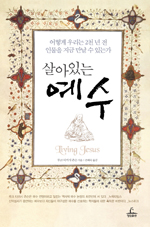
The real Jesus : the misguided quest for the historical Jesus and the truth of the traditional Gospels : Johnson, Luke Timothy : Free Download, Borrow, and Streaming : Internet Archive
The real Jesus : the misguided quest for the historical Jesus and the truth of the traditional Gospels
by Johnson, Luke Timothy
Publication date 1996
Topics Jesus Chri
===

The Real Jesus: The Misguided Quest for the Historical Jesus and the Truth of the Traditional Go Paperback – 4 June 1997
by
Luke Timothy Johnson (Author)
4.2 4.2 out of 5 stars
75 ratingsThe Real Jesus—the first book to challenge the findings of the Jesus Seminar, the controversial group of two hundred scholars who claim Jesus only said 18 percent of what the Gospels attribute to him—"is at the center of the newest round in what has been called the Jesus Wars" (Peter Steinfels, New York Times). Drawing on the best biblical and historical scholarship, respected New Testament scholar Luke Timothy Johnson demonstrates that the "real Jesus" is the one experienced in the present through faith rather than the one found in speculative historical reconstructions. A new preface by the author presents his point of view on the most recent rounds of this lively debate.
==
Top reviews from other countries
watzizname
3.0 out of 5 stars What This Apologist Ought to Apologize For, and What He Needn't
Reviewed in the United States on 5 November 2012
Verified Purchase
Professor Luke Timothy Johnson makes it clear as early as the introduction to REAL that he seriously disagrees with the Jesus Seminar, and that criticism of the Seminar and its output will be a major focus of the book. He is altogether right to do so, and it is to his credit that he tells the reader at the outset where he is coming from. It is appropriate that I do the same at the outset of this review. I joined a Universalist congregation in 1953, and since the merger of the UCA with the AUA in 1961 I have been a UU. As such, I believe in the right and duty of each of us to consider questions of faith and make up our own minds. I believe in, to quote from the Washington Declaration of Faith of the UCA, "the authority of truth known or to be known." This means I hold to no dogma; everything I believe is subject to refutation in the light of new knowledge, or knowledge that is new to me.
The Seminar has discussed each saying attributed to Jesus in the four canonical gospels and the gospel of Thomas, and has placed each in one of four categories, and published a book, The Five Gospels: What Did Jesus Really Say? The Search for the Authentic Words of Jesus , in which sayings are printed in red, pink, gray, or black, based on the degree of confidence the voting members expressed in the authenticity of each saying. (The previous sentence is far from the whole story; a complete and accurate description is far too long to include here, but the process is explained fully in Robert Miller's The Jesus Seminar and Its Critics .
Prof. Johnson begins his case in chapter one, "First, it is a process biased against the authenticity of the Gospel traditions. It is in the very nature of scholars to vie with one another to be `harder graders.' The procedure forces sayings to PROVE their authenticity, rather than their authenticity being assumed and the burden of proof being placed on showing inauthenticity." [p. 5, Emphasis in original, but as italics, which Amazon's text box does not preserve, so I have used caps instead.] Prof. Johnson asserts these three claims without offering a shred of evidence. I can accept the second statement (scholars vie) as very probably true, but I do not believe that the process is biased either for or against authenticity, and I am quite certain that no saying is capable of presenting a rigorous proof of its own authenticity, nor does the Seminar's procedure require such. It is because of the very fact that no rigorous logical proof of the authenticity or inauthenticity of any of the sayings attributed to Jesus is possible, that the Seminar resorted to the voting procedure to arrive at a reasonable estimate of how confident the members are (or aren't) of each saying's authenticity. To assume authenticity is inherently biased in favor thereof, and would be as inappropriate as to assume inauthenticity, which is probably why the Seminar quite properly chose to do neither.
On page 6, Prof. Johnson says of the late Robert Funk, a founder of the Seminar, "More specifically, he objects to the way television evangelists have `preyed on the ignorance of the uninformed.' He sees the work of the Seminar, therefore, as spelling `liberty for . . . millions.' " This sounds to me like an application of John 8:32: "And you shall know the truth, and the truth shall make you free." [NKJV] But Prof. Johnson continues: "From the start, then, we see that the agenda of the Seminar is not disinterested scholarship, but a social mission against the way in which the church controls the Bible . . . ." Note that "television evangelists" have somehow become transformed into "the way in which the church controls the Bible." That Funk hoped the work of the Seminar may help expose fraudulent televangelists (and there is ample evidence that SOME televangelists are fraudulent) does not prove that he or any other Seminar member has his or her own axe to grind. (Neither, of course, does it prove the total absence of axes).
Prof. Johnson makes liberal use of `loaded' words such as `salacious,' or `infamous.' Chapter 2 begins: "For all its notoriety, the Jesus Seminar . . . ." Without actually saying it, Johnson seems to be trying to give one the impression that the Seminar belongs in a class with the yellowest of yellow journalism. He rather strongly suggests that their motives are more commercial and/or egotistical than religious; that they are more interested in money than truth. This is what is called `hostile mind-reading,' and like most hostile mind-readers, he does not present any credentials in mind-reading, or any other evidence of his implicitly claimed ability to read minds other than his own.
Prof. Johnson's confused attack on Bishop John Shelby Spong (and incidentally, on Michael Goulder) is longer on vitriol but than on scholarship. In discussing Spong's book Resurrection : Myth or Reality? Johnson writes: "Bishop Spong is not the first person to overuse a legitimate insight already abused by a well-known scholar (in this case Michael Goulder). In any case, for Spong, everything in the New Testament has now become midrash." Johnson's slight against Michael Goulder is completely unsupported, and the assertion following it is simply not true. Spong explicitly recognized that certain passages in the New Testament (not "everything in the New Testament") bear some similarity to a technique called `midrash.' And this is not in the book Johnson was supposedly discussing, but in Liberating the Gospels: Reading the Bible with Jewish Eyes , which Johnson fails to mention, thus demonstrating a surprising lack of scholarship in his attack on Spong's. First cast out the beam out of thine own eye, Prof. Johnson.
It is perfectly legitimate for a particular discipline to coin a special meaning of a word, e.g. `demand' in economics, but that does not give economists the authority to deny the general public the right to use that word in its ordinary English sense. But that is precisely what Prof. Johnson attempts in chapter 4 with respect to `history' and `historical.' Prof. Johnson writes: "The term `history' CANNOT be used simply for `the past' or `what happened in the past,' any more than `historical' can be used as a synonym for `what was real about the past.' History is, rather, the product of human intelligence and IMAGINATION." [emphasis added] (p. 81). But "the record of past events and times" and "having once existed or lived in the real world, as opposed to being part of legend or fiction or as distinguished from religious belief" are precisely what those words mean in everyday English usage, according to dictionary.reference.com. Nevertheless, Prof. Johnson has the arrogance to deny our right to use them in their normal meaning. A "product of human intelligence and imagination" is not history, albeit it may be "alternate history" such as Kathleen McGowan's Magdalene Line trilogy ( The Expected One: A Novel (Magdalene Line) , The Book of Love: A Novel (The Magdalene Line) , The Poet Prince: A Novel (Magdalene Line) or Eric Flint's 1632 (The Assiti Shards) .
On p. 82, "Our SELECTION and NAMING of something as an `event' is itself constitutive [constituent; making a thing what it is; essential: dictionary.reference.com] of the `event.' " [Italics in original] It would never have occurred to me to claim that by mentioning, say, the discovery of penicillin, I have made myself or my action an essential part of an event that happened about six years before I was born. Really?? I would, of course, be proud of my contribution to it if I had made one, but I didn't.
One final criticism: on page 175: "I have repeatedly challenged the premise that any historical reconstruction CAN, by itself, function as normative. [emphasis added] The premise is technically correct. Of course it CAN so function; the real question is whether it SHOULD. I think Prof. Johnson and I are actually pretty much in agreement that there are very few, if any instances in which it should, and that in nearly every instance when it does so function, it shouldn't. If anything can be misused, someone will probably misuse it.
I might not have been able to offer as many criticisms if Prof. Johnson had included footnotes citing supporting material, but at least he didn't burden readers with notes at the end, imposing on us the nuisance of keeping two places and constantly flipping back and forth. And lest you wonder how I could give this book as much as 3 stars, let me cite some of the instances where Prof. Johnson was quite right, and in one case surprisingly so:
He makes the excellent point that "Historical knowing is like a sieve that catches big chunks but lets much fine stuff slip through." (p. 82)
He is also correct that the many hypothetical reconstructions suggested by members of the Jesus Seminar and others are still historical speculation, educated guesses, and no matter how well supported by evidence, can not reasonably be taken as proven historical fact. (But, as Prof. Johnson correctly points out, neither can the various gospels, canonical or otherwise.)
It is not until the last chapter, 6, that Johnson makes his most telling point: "The `real Jesus' for Christian faith is the resurrected Jesus . . . Christians have always taken the resurrection to be the defining event concerning Jesus, and the fundamental perspective from which to perceive `the real Jesus.' " Thus the questions which the Jesus Seminar has attempted and is attempting to answer are, from this perspective, irrelevant. Ok, so why bother to write this book, if none of it matters? Why not let the Seminar publish their estimates of what Jesus said and did for those of us who are interested in such, and let those to whom it doesn't matter not read those publications? (Prof. Johnson tells why on p. 146. To me at least, his reason seems less than persuasive.) The claim that Jesus was resurrected is not at this time subject to historical proof or disproof, and presumably will not be unless and until the resurrected Jesus actually makes an appearance in which he demonstrates his genuineness beyond any reasonable doubt. Even if that does happen, I am sure many professed Christians, the comfortable ones who have been following Jesus where Jesus never led, will declare him a fraud because he will again do what got him crucified two millennia ago, comfort the afflicted and afflict the comfortable. In any case, Prof. Johnson here establishes the main point of the book, that Christian faith need not be vulnerable to attempts to find the historical Jesus via critical examination of the existing evidence, because the historical Jesus is not the basis of Christian faith.
And finally, one of the most perceptive highlights of the book: on page 63, Prof. Johnson writes: "A more complex pattern of avoidance can be found among those professors of New Testament in conservative seminaries who have managed to combine `critical scholarship' with the demands of traditional authority. A careful reading of their publications reveals that the scholarship is `critical' in form much more than in substance: the paraphernalia of the academy are used--often with considerable cleverness--to support conclusions already determined by doctrine." One wonders whether Prof. Johnson realizes quite how apropos that observation is with respect to this book.
watziznayme@gmail.com
Read less
11 people found this helpful
Report
B. Marold
5.0 out of 5 stars Well stated polemic on misuses of History on Faith
Reviewed in the United States on 27 November 2007
Verified Purchase
`The Real Jesus' by leading Biblical scholar, Luke Timothy Johnson is not another biography of the ancient religious leader, Jesus of Galilee. The subtitle, `The Misguided Quest for the Historical Jesus and the Truth of the Traditional Gospels' tells the fuller story that this is a critique of many (but not all) attempts to nail down the flesh and blood founder and savior for the world's Christians.
For what it's worth, as a liberal Lutheran, I agree with all of Professor Johnson's main points, assuming he has accurately portrayed the positions of his opponents, and I have no reason to believe he has not. And, my agreement is based less on religious doctrines, than on philosophical principals which were old before the dawn of this millennium, but constantly forgotten by scholars who should know better.
Professor Johnson's primary target is a scholarly consortium of several dozen mid-level university teachers calling itself the `Jesus Seminar', plus writers with allied agendas such as John Spong, A. N. Wilson, Stephen Mitchell, Marcus Borg, John Dominic Crossen and Burton Mack. I say `mid-level' because one of Professor Johnson's less important points is that none of these seminar participants are from the leading Theological schools in the country such as Harvard, Yale, Union (NYC), and Chicago. And, compared to the membership of the country-wide Society of Biblical Literature, their membership is relatively small.
Johnson's argument has two general parts. The first part is the evidence that the `Jesus Seminar', author of the book `The Five Gospels, The Search for the Authentic Words of Jesus', adapts several questionable assumptions and agendas before beginning their research. Another criticism of the `Jesus Seminar' is their methodology. In a nutshell, the primary technique is for each member of the Seminar to vote on each statement about or by Jesus, and offer the opinion that the statement is historically likely, unlikely, or indeterminate. Aside from being an unsound scholarly procedure, it has the effect of attracting a lot of media attention to the Seminar's deliberations. And, some pronouncements by the Seminar leaders suggest this attention is actually one of Seminar's objectives.
The second line of argument is much simpler, stronger, and entirely capable of trivializing the work of Johnson's targets. The argument is based on the Seminar premise that a study of the historical Jesus will clarify and improve our Faith. This assumption is simply wrong. The Christian faith based on the resurrection of Christ after his embodying the law, resulting in execution, and creating a new covenant with those who believe has simply nothing to do with whether Jesus argued with a Pharisee named Simon, cured three or thirty epileptics, rode on a donkey or a mule, wore a red or a white robe, and had Joseph of Galilee as his biological father. Of course, Christian statements of faith do include some statements about historical events, but whether those statements are historically true is about as relevant to Christian faith as Lincoln's log cabin childhood and Washington's tree chopping choices are to the lore of American history. On a deeper level, critiquing Jesus statements about Jewish law and using that critique as a determinant of Christian faith makes about as much sense as criticizing Shakespeare's `Henry V' for not giving an accurate transcript of the king's speech before the battle of Agincourt.
To be sure, Professor Johnson presents these arguments in far greater detail and with a much better handle on the proper use of scripture than I can. My primary intention is to line up with Professor Johnson (and many leading scholars) in discrediting this misguided enterprise.
It is important to point out that neither Professor Johnson nor I am devaluing Bible scholarship at several different levels, especially at the level of the accuracy of documents, the meaning of the words, and the historical contexts in which the documents were written. One has a far better understanding, for example, of Luke's concern with the poor of the day when one realizes that virtually everyone was poor, and the government was carried out by a patronage system which today would be equated with graft, extortion, and corruption. Even more important is to realize that Professor Johnson is one of the leading practitioners of this kind of research, having done superior works of exegesis on the Gospel of Luke and the Book of Acts.
I do have two minor criticisms of the book. While I agree with all Johnson's major points, I have to point out that it is a polemic specifically against a class of writers and a trend in scholarship which may be traced back to the Tubingen school of 19th century Germany. This does not mean all Bible scholarship has the same weaknesses. It does not even mean all works on a historical Jesus are equally tainted with theological misdirection. Johnson barely mentions one of the most famous works on this subject, the 1906 `Quest for the Historical Jesus' by Albert Schweitzer (Schweitzer is generally critical of the Tubingen school, especially in his works on Paul). He also makes no mention of important books by leading Biblical historian, E. P. Sanders. His work on the `historical Jesus' has none of the blemishes of those authors Johnson attacks.
As a Lutheran, I also have to chuckle a bit at Catholic Johnson's suggesting that it was Martin Luther who opened the Pandora's Box of critical Bible scholarship. I believe the open discussion of and free access to scriptures is far superior to holding them hostage to interpretation by a few. And, as stated above, Johnson is just as much a practitioner of Luther's tradition as are many other of his scholarly Catholic and Protestant colleagues.
If you find yourself entranced by the siren's song of the `Jesus Seminar' writings, plus similar writings by John Spong, A. N. Wilson, Stephen Mitchell, Marcus Borg, John Dominic Crossen and Burton Mack, I strongly suggest you read this book to get an important perspective on their assumptions, methods, and conclusions.
Read less
16 people found this helpful
Report
Mr. J. Hastings
5.0 out of 5 stars A Breath of Fresh Air
Reviewed in the United Kingdom on 18 August 2015
Verified Purchase
After reading a number of books examining the Historical Jesus which find very little inspiring in him or propose a variety of incompatible reconstructions of his life, this book comes as a breath of fresh air.
Luke Johnson begins by critiquing the “Jesus Seminar” and a number of other authors of works on the so-called ‘Historical Jesus’ for their unsound methodology and consequent faulty conclusions. He continues by pointing out that the available historical evidence about Jesus (essentially the New Testament) is very limited. Nevertheless, he lists seventeen points about Jesus made by the New Testament letters (eight of which are supported by non-Christian writers). He adds that “Even the most critical historian can confidently assert that a Jew named Jesus worked as a teacher and wonder-worker in Palestine during the reign of Tiberius, was executed by crucifixion under the prefect Pontius Pilate, and continued to have followers after his death.” (p 123)
Johnson also points out that, even though Christianity has always claimed Jesus to be a historical figure, Christian faith has always been based on religious claims about Jesus; specifically, that God raised him from the dead and that he shares his new life with believers through the Holy Spirit. Since historical methodology describes events in the past in naturalistic terms, the supernaturalistic claims of Christianity, particularly the resurrection, are by definition not historical. These claims cannot be proved historically; they can be validated only by the witness of authentic Christian discipleship; in lives demonstrating a pattern of faithful obedience and loving service. (p 168)
The author also draws attention to the question of whether the methods of historical criticism taught in universities bear any relation to the needs of student ministers who need to be learning about such matters as preaching, visiting the sick and comforting the grieving. In this he echoes (perhaps unknowingly) the words of C S Lewis to a group of trainee ministers in “Fern Seed and Elephants” (1959, published in, inter alia, “Christian Reflections”, 1998). Johnson says that the effect of the methods he critiques “…is that the New Testament writings – as writings – were neglected” (p 104). C S Lewis said, “These men ask me to believe they can read between the lines of the old texts; the evidence is their obvious inability to read … the lines themselves.” (op cit p 199)
Read more
4 people found this helpful
Report
A. D. Neal
2.0 out of 5 stars Read Living Jesus, not the "Real" Jesus
Reviewed in the United States on 21 March 2006
Verified Purchase
Imagine my absolute and utter sadness when I picked up this book and found myself reading the equivelent of academic trashtalk. I do not agree with many 'findings' of the Jesus seminar, and generally agree with the methodological problems pointed out by Johnson. However, I disagree outright with his basic thesis that the Seminar represents an outright attack on 'true' Christianity. The first 60 pages are extremely polemical, and leave a bad taste in the mouth; sadly, they could have been summed up in less than six pages, except that polemic sells.
The main problem with this book is it is fundamentally hypocritical in its basic function. Most everything that Johnson points out is wrong with the attitudes of the Seminar (especially the seeking of 'limelight' and advertising itself) is reflected directly in Johnson's own writings and career. If anyone is in the position to make claims against self propagandizing, it is not he.
Again, I agree in theory with much of what Johnson says, but his overly reactionary attitude is outright dismissive and brings no truly contemplative thesis to bear. This book is completely de-constructive (which, in defense of Johnson, is his purpose outlined in his preface), but worse is that it borders on character assassination rather than skillful scholarly discourse. I also felt outright insulted by the dismissive attitude of the author, as it seemed like he was saying that I, the reader, have no ability to make up my own mind on these matters and he was going to "school" me, so to speak. This belittling style offends me and almost made me not want to read any of his other books.
If you are interested in this book, look instead at "Living Jesus" the counterpart to this work, also by Johnson, that does not directly attack the Jesus Seminar but rather gives a constructive view into Johnson's own methodological approach. By establishing his own constructive approach, you, the reader, are better able to make up your own mind about the Jesus seminar, rather than being told what to think.
Please don't be won over by hard-nosed polemic, there can be no true discussion if points are made simply by being the most outspoken and one-sided.
Read less
62 people found this helpful
Report
Dr. P. M. Johnson
4.0 out of 5 stars Excellent, but written in the language of a seminarian
Reviewed in the United States on 2 February 2010
Verified Purchase
This is an excellent rebuttal to the numerous misguided attempts to uncover the "Real Jesus." I use the term "misguided" as this is what the author has chosen to describe the newest forms of heresy which are no more true to Christianity than was Marcionism, gnosticism, or any of the other "isms" which have blighted the West since practically the minute after Jesus' resurrection.
The book is well written and clear, but unless one is accustomed to the language of the seminary it takes a little bit of plowing through it to become comfortable with the terminology. Having a dictionary at hand for the first few days of reading is not a bad idea. But this is well worth it as Mr. Johnson is well suited to counter the media-hyped nonsense of so many "enlightened" theologians who are leading people badly astray. One can only benefit from reading this book - time well spent.
3 people found this helpful
Report
===
Profile Image for Skylar Burris.
Skylar Burris
Author
20 books
238 followers
Follow
December 16, 2008
The primary point Luke Timothy Johnson seems to be making in this book is that the "real Jesus" is not the "historical Jesus" at all – for the "historical Jesus" is impossible to reliably reconstruct and has influenced absolutely no one living today. The "real Jesus" is, rather, the living Jesus, Jesus as actually experienced and understood by those whose lives and communities His presence transforms. The author makes a convincing argument against the Jesus Seminar, highlighting its spurious methods of scholarship. While he skewers the Seminar's methods, he also questions its motives: "Is what is claimed to be a pursuit of the historical Jesus not in truth a kind of flight from the image of Jesus and of discipleship inexorably ingrained" in the New Testament? "Instead of an effort to rectify the distorting effect of the Gospel narratives, the effort to reconstruct Jesus according to some other pattern" than the Gospels "appears increasingly as an attempt to flee the" countercultural "scandal of the Gospel."
The gospels are an interpretation of Jesus's historical life, but it is those gospels that, through interpretation, reveal the "real Jesus." The living Jesus, Jesus as understood by those who experienced transformed lives and transformed communities, and who wrote the New Testament, IS the "real Jesus." This is so simplistic, and yet I have to confess that I have quite overlooked this simple concept whenever I am caught up in discussions with people over this or that minor biblical inconsistency, or this or that historical likelihood. How easily Christians allow themselves to be caught up in this "historical proof" of Christ mindset, forgetting, sometimes, that if Christ is truly living, as we Christians claim Him to be, then He cannot be "really" known as a figure in history, anymore than I can be fully understood as a person on the basis of only my first fifteen years of life.
History, the author argues, is a limited mode of knowing, and historical analysis cannot reveal all truth. It is pointless to chop up the gospels into little pieces in an attempt to reconstruct historical truth, because the gospels are written as literary units and are only useful if approached with respect for their literary integrity as interpretive works. Alternative historical theories of who Jesus "really" was are simply not what the earliest Christians (based on the oldest available Christian writings) perceived him to be. Ultimately, any Christian's claim to experience the real Jesus "can be challenged" on moral or religious grounds, "but not historically"—because historical knowledge cannot get at experience (which is necessarily interpretive). The author is not touting some anti-intellectual line; far from it; rather, he is simply insisting that there are limits to historical and material modes of knowing.
This about sums it up: "The claims of the gospel cannot be demonstrated logically. They cannot be proved historically. They can be validated only existentially by the witness of the authentic Christian discipleship." And this authentic discipleship--rather than constantly striving to prove the improvable to skeptical minds—ought to be the Christian's focus. "The more the church has sought to ground itself in something other than the transforming work of the Spirit, the more it has sought to buttress its claims by philosophy or history, the more it has sought to defend itself against its cultured despisers by means of sophisticated apology, the more also it has missed the point of its existence, which is not to take a place within worldly wisdom but to bear witness to the reality of a God who transforms suffering and death with the power of new life."
This was a book that enabled me to think about and appreciate things I already believe from a different and, at the moment at least, more satisfying angle. I recommend the book to any Christian who questions or has ever questioned the value of the gospels for revealing the "real Jesus." The book has its flaws, and it is not precisely quick or poetic reading, but I gave it five stars because it is rare for me to find a book these days that I really feel does something for me both intellectually and spiritually—and this did.
christianity
Like
Comment
Profile Image for Adam Ross.
Adam Ross
750 reviews
95 followers
Follow
January 10, 2016
I read this book in a single day. One might say I devoured it. Johnson is a New Testament scholar in the Roman Catholic tradition, and he is a well-respected one as well. In this book, he takes on the Jesus Seminar for being insufficiently historical and much too confident in their claims about discovering the "historical Jesus."
Principally the book is about the limits of historical research, a matter handled ably by Johnson. The thing about Johnson that is so confounding is that he opposes fundamentalists as well as the progressive Jesus Seminar for completely missing the point of religion. Ultimately, he says, the historical Jesus is lost to us. There are a couple of vague references by Roman and Jewish sources, but the rest come from the post-resurrection documents that make up the New Testament. It is impossible to "get behind" these texts to the real Jesus and any historian claiming with certainty to have unlocked this mystery is a huckster and probably selling a book. His critique in this vein is completely devastating to the Jesus Seminar claims. The central claim of Christianity, he says, is that Jesus is a person in the present, living somehow right now in and around us by way of the Spirit, a claim which is simply beyond the ability of historical research to make any claims about. This is a mystery and beyond human explanation, accessible only by mystical inward experience. He is also not a fundamentalist, carefully distinguishing resurrection (what happened to Jesus) from resuscitation (a dead body returning to human life), and goes to some lengths to show how the New Testament actually treads very lightly on the matter of Jesus's human body, because the point of resurrection is that Jesus is translated and elevated to God and becomes something beyond human comprehension or explanation.
In short, it is a good book worthy of attention. I think he is too hard at times on scholars like Borg, Crossan, and Spong. As Johnson shows, their historical reconstructions of Jesus are spurious, but having read some of their work I find theologically they are not actually very far from Johnson's own views in certain respects.
history
theology
Like
Comment
Profile Image for Aaron Carlberg.
Aaron Carlberg
409 reviews
26 followers
Follow
Read
February 15, 2020
There have been a lot of books that have come out lately dealing with all these ideas about what the REAL JESUS was like, what he did, did he even exist, etc. This is a good book to read to get another historical perspective that can reinforce the historical validity of Jesus.
We must remember that opposite to many religious traditions, Christianity is meant and understood to be a uniquely historical faith. It is founded in real world events that take place in historical context. When some people try to equate it with mythological worldviews they forget that in the actual pages of the biblical books, it dates itself to real world events. When the scriptures use the word "faith" it does not mean a nebulous mustering up of heartfelt emotion about a given belief, the word faith actually meant TRUST.
The body of evidence surrounding Jesus, the early church, and its spread in the world is cause for "faith" in God's promised reconciliation with man.
Show more
Like
Comment
Profile Image for Daniel.
Daniel
72 reviews
Follow
July 10, 2016
An excellent book from Luke Johnson, professor New Testament at Emory University. In this short work, Johnson does an excellent job of explaining how misguided understandings of history, contemporary culture, and poor scholarship has guided the "search for the historical Jesus". He also has an excellent chapter on the limitations of historical study - bringing a solid understanding of what historical study can and cannot do to our understanding of what the limited collection of documents in the New Testament can and cannot tell us. Finally, he provides a much needed call for Christian intellectuals to acknowledge and embrace that the "real Jesus" is the Jesus that did live and die in Palestine in the early 1st century, but is also the Jesus that is still alive and moving in His Church. This perspective is transformative in understanding Jesus. An excellent and well worthwhile read! A bit of a slow read, due to the academic nature, but very well done.
christianity
2 likes
Like
Comment
Profile Image for Gary.
Gary
121 reviews
8 followers
Follow
February 23, 2015
Revelatory analysis of where the Historical Jesus studies of the Jesus Seminar goes wrong; the Gospels and the New Testament writings were never about history (in the sense of what really happened) or story the facts about Jesus. They were written to convey an experience of a living presence felt by a community of people. Cutting up the Gospels and letters that make up the New Testament to try to determine which really happened not only strips them of all meaning, but putting the "real" parts back together becomes a process that says more about the editors beliefs and biases than about anything historic. Recommended for any who have found the Jesus Seminar books interesting but ultimately unsatisfying.
2 likes
Like
Comment
Tim Soper
14 reviews
Follow
January 26, 2017
I enjoyed "The Real Jesus" but unless you are an active observer of the debate over the Jesus Seminar from 20 years ago, I suspect that this book might bore you. Additionally, even though it is a relatively short book at 178 pages, it is not a light or easy read. Based on this being a couple decade old debate and the scholarly quality of writing, I suspect the layman to run out of steam mid-book. The unfortunate consequence of bailing early is that the final chapter reads at breakneck pace and the words rush from the page with the passion of the author. I'm glad my research into the Gospels forced me to stick with this, but know that you'll have to be just as committed to gain the payoff at the end.
christian-scholarship
Like
Comment
Profile Image for Brent Wilson.
Brent Wilson
199 reviews
9 followers
Follow
August 7, 2009
A needed rebuttal/response to the Jesus Seminar. Quickly dated however, since the Jesus Seminar has died out. Johnson's anti-historical Jesus stance is difficult to sustain. I prefer a traditional scholar like N T Wright, who connects the best historical Jesus scholarship to our current demands on faith and church.
religion
Like
Comment
Profile Image for Greg.
Greg
600 reviews
39 followers
Follow
January 26, 2020
A few years ago I was privileged to have taken Luke Timothy Johnson's wonderful lecture series for The Teaching Company on the Gospels. It was because I found that course so fascinating, and its teacher so thoroughly informed, that I recently ordered this somewhat battered used book.
It is a relatively brief book -- about 180 pages --but it requires attentive reading, not because its writing is dense or the arguments bewildering, but because Johnson is a writer who chooses his words carefully and avoids an excess of them (unlike yours truly).
Written in the mid-90s, it is, first of all, a critical reaction to theologians and biblical scholars who, like those participating in the Jesus Seminar, are constantly seeking to tease the "historical Jesus" from the mists of the past.
In the first few chapters, Johnson discusses several of these kinds of books and arguments, showing how, in his opinion, all attempts to do so must wrestle with their own kinds of distortions and questionable assumptions.
While I found this part interesting, I especially enjoyed his chapters on "The Limitations of History" and "The Real Jesus and the Gospels."
In the Limitation of History Johnson's words apply to ALL who attempt historical work, and not just to those who dedicate themselves to biblical inquiry. It is VERY difficult to accurately portray "what happened," even in our modern times when we are likely to have multiple sources of information, much of it recorded. And even when we get the "sequence of events" right, and perhaps identity the person or persons responsible, discovering WHY they did what they did, let alone the true MEANING or INTENTION, is not only very difficult, but it is nearly impossible to do so with accuracy. The reason is that these matters require INTERPRETATION, and that -- notwithstanding the excellence of research or the attempted neutrality of the reporter/observer -- inevitably involves some degree of subjectivity.
Anyhow, this chapter is worth the price of the book alone, for it is a good caveat to all who believe that this or that matter is "settled" beyond a doubt.
He then shows how the most objective and impassive historian has an even much more difficult time with past events, as witnesses may be few and their perspective or interpretation of what happened or what they observed perhaps tainted (and the further back in time we go, the less we can be sure that we are aware of the kinds of biases that might be operative then).
In summary, the things we can KNOW about Jesus with any degree of historical certainty are, in fact, very few, indeed: he did exist, he was born somewhere between 8 and 3 BCE, he had a public ministry of healing and teaching from 1 to 3 years, he was baptized by John, he was a charismatic and divisive individual, and he died a criminal's death through crucifixion.
But there is something else, too, Johnson argues (I think persuasively): we can know something ABOUT who Jesus was by the consistency in which he is portrayed in the Gospels, in Paul's letters, and in some of the (very few) notations about him from secular sources: he was deeply compassionate, a highly educated Jew, and one who taught that we must love each other as we are loved by God.
Almost everything else is either unknowable or is influence by, or dependent upon, one's faith (or lack of it).
For thoughtful people with questions about "who" Jesus was, I believe this book would be highly interesting, perhaps even helpful.
1 like
Like
Comment
Profile Image for Michael Havens.
Michael Havens
57 reviews
3 followers
Follow
May 21, 2009
Luke Timothy Johnson, former Benedictine monk and priest, and now Biblical scholar, takes on a critical analysis of the assumptions and scholarship of the Jesus Seminar.
Who or what is the Jesus Seminar? If you are not familiar with them or the media frenzy their research elicited surprise by many and serious questions and disdain by many within the Biblical scholarship world. The sad fact was, as Professor Johnson points out in this book, that the media not only did not make critical questions as to their claims, such as the majority of scholars in Biblical Studies were in agreement with their findings (see the whole of "The Good News and the Nightly News” for claims by Jesus seminar head, Robert Funk and his connections with the media), such as; looking at the number of Jesus Seminar members as opposed to the total number of scholars worldwide, making this claim more than dubious); the “beaded rating system” in which scholars “voted” through a system of colored beads, what sayings of Christ in the Synoptic Gospels are authentic and which are not. Here is how the system works:
red: That’s Jesus!
pink: Sure sounds like Jesus.
gray: Well, maybe.
Black: There’s been some mistake.
(The Real Jesus, 5)
and ignoring the synoptic gospels in favor of non canonical writings
Much of Professor Johnson’s argument lies here, namely, that the scholars of the Jesus Seminar attempt to trump the Synoptic Gospels in favor of Gnostic gospels in order to weight the balance of their argument and supporting it not with the main text of their objection (the New Testament) as well as using, as seen above, methodology which becomes a self fulfilling argument, never dealing with the New Testament directly, effectively placing the argument ahead of significant evidence, like the proverbial cart before the horse.
Johnson also argues that the Gospels need to be treated as the main or center text, because it is the text that is the heart of Christian belief. Any criticism has to be delivered on the basis of internal evidence. The bias slant that the Jesus Seminar presents is not one of healthy and vigorous debate, one which Professor Johnson believes is important, but is a slant in which the cards are stacked against any claims by the New Testament on the basis that a “historical” Jesus would be devoid of any of the cultural, religious, or social underpinnings that were in existence via 33 C.E. Such a position allows those involved in the Historical Jesus movement to claim that they are really rescuing Jesus from “the Church” and bringing the Church to a healthier appraisal of their faith, one that leaves the “historical” Jesus with no real spiritual referent and no religious connections, in a sense, ignoring Israel’s real religious presence.
Johnson presents a totally opposite perspective. He reasons that all the trappings of scripture, with all the thorny parts be looked at seriously, because it reflects attitudes and a social viewpoint that is unique to ancient Israel. He also argues that the Gnostics, while helpful in a limited way, could not be used as texts par excellence, in the way the Seminar would like to utilize, to the fact that much of the Gnostic Gospels are not only contradicting Jewish tradition and perspective (one of the things many people, even Christians fail to recognize is that Jesus was a Jew) as well as Christian views on the nature of man, but more importantly, the reasons for the Gnostics not included was because many of those texts are fragmentations, sayings (37-39, see also 149-158 for Johnson’s critique of the comparisons between the Gnostics and the Synoptics, in particular, how the Gnostics treat Jesus theologically, what critical things are left out of the Gnostics, and how the Synoptics relate to each other as a whole).
Professor Johnson begins the first half of his position with an impressive Preface/Thesis and builds on his argument, making point by point, the errors found in the Jesus Seminar’s findings and methodology (Chapters ,2,and 3). Chapters 4, 5, and 6 make up his answer to the problem of not only the problematical issues dealing with the findings of the Jesus Seminar, but gives the reasoning from recognized historical methodology in the treatment of the Gospels, ending with his position of how one can find the historical Jesus within the confines of the Synoptic Gospels as well as the rest of Scripture.
Professor Johnson’s scholarship and argument is concise and to the point. It is a small book of only 177 pages, but it would be worth reading it in increments of a chapter a day to really think about what he is presenting. While individuals who like Apologetics would enjoy this work, it ‘s focus is not theological apologia, but rather a defense of biblical scholarship and methodology as opposed to hype and media overselling.
===
Higher Critical Review
Luke Timothy Johnson. The Real Jesus: The Misguided Quest for the Historical Jesus and the Truth of the Traditional Gospels.
San Francisco: HarperCollins 1996. vii + 182 pp. $12.00 (pbk)
Reviewed by Robert M. Price. Institute for Higher Critical Studies
JHC 4/1 (Spring, 1997), 156-158.
This book sometimes sounds like it is trying to debunk the research of the Jesus Seminar and to substitute a different set of more conservative and more balanced critical conclusions. The "real Jesus" of the title would then seem to be a "more realistic" Jesus, one based on a methodologically superior historical study. But this turns out not to be the thrust of Johnson's treatise after all. His criticisms of radical New Testament critics like Burton Mack and the Jesus Seminar (of which I am proud to be a Fellow and in whose deliberations I am privileged to have participated) are finally beside the point.
Johnson gives an altogether false impression that the Seminar uses some far-fetched and idiosyncratic methodology that respectable scholars would not deign to touch with a ten-foot pole. (Incredibly, he actually supplies a list of elite divinity schools whose highly paid professors are the only ones he considers legitimate scholars!) The fact of the matter is that most of the Fellows of the Jesus Seminar are far less skeptical, less methodologically rigorous, than Rudolf Bultmann and the critics of the previous generation. Their methods and assumptions differ little from those Johnson and his allies use. Nor are the results attained by the Jesus Seminar anything particularly new, as anyone familiar with the last few decades' of biblical scholarship will be aware. The only thing new about the Jesus Seminar is that it has made a point of going public with the commonplaces of professional biblical scholarship.
Traditionally, ministers learn at least a smattering of biblical criticism in seminary, but they are careful to keep mum about it in the pulpit lest they arouse the ire of the pious. One suspects that the Jesus Seminar's decision to go public (caricatured by Johnson and his allies as crass publicity-hunger) has put people like Johnson in an uncomfortable position. Those to whom he and his colleagues are accountable never quite understood what was going on in the scholarly guild, and now that the Jesus Seminar has blabbed it, Johnson, Richard Hays, Raymond Brown, and a number of others suddenly find themselves in the role of Peter, denying their former comrades as many times as they can before the cock crows.
Ironically, despite Johnson's tirades against New Testament critics who treat the Gospels and the Acts of the Apostles as fiction, his own lasting contribution to scholarship, his published dissertation The Literary Function of Possessions in Luke-Acts (Scholars Press, 1977), is a brilliant piece of the very sort of literary analysis he fulminates against in The Real Jesus. If he can make the kind of sense he does of the author's intention in Luke and Acts, then Luke and Acts are fiction, not history.
All Johnson's subsequent work has been what James Barr calls "maximal conservatism." In his The Writings of the New Testament, for instance, he argues for the authentic Pauline authorship of the Pastoral Epistles (I and 2 Timothy and Titus), an anachronistic dinosaur of a view rendered pretty much incredible ever since Schleiermacher in the last century. It is clear that he now longs for the pre-critical paradise of traditional beliefs about biblical authorship and accuracy. What happened to change Johnson's scholarly judgment from radical to conservative? Nothing really. And here is where we discover how his criticism of the supposedly unsound methods of modem biblical criticism is just a blind, a smoke screen. Eventually Johnson admits that historical research cannot yield a definite portrait of the historical Jesus. That way lies agnosticism.
But then, as so often happens with religious writers, agnosticism magically transforms itself into fideism, a leap of faith. Instead of trying to build a plausible, historical Jesus construct out of elusive and shadowy evidence, says Johnson, we ought to be satisfied with the Christ of faith, the Son of God character of the Gospels and of Roman Catholic dogma. This is what he means by "the real Jesus" � the one the institutional Church thinks its owns the copyright on.
In short, Johnson has no better theory of the historical Jesus to offer than that of Burton Mack or Robert Funk or John Dominic Crossan. No, he wants something else entirely, the traditional stained-glass savior of Christian dogma. It is for him finally a matter of historic faith, not of historical fact. Of course he feels sure the facts, could they be recovered, would fit the theological Christ, the "real Jesus." But how does he know this? By faith!
And this admission sheds some light on all those neo-conservative traditionalist positions Johnson takes in this book and in his other recent publications. It would seem that he has opted, as a matter of theology, for the traditional, "authorized" version of Christian origins, and so he allows himself in every case to be escorted to amenable conclusions, not by the data but by simple consistency with his traditionalist preferences. It is not so much a matter of scholarly opinion as it is company policy. He has abandoned the task of historical scholarship to serve as an ecclesiastical spin doctor. He has an institution and a party line to defend. Let him defend it. But let us be careful not to confuse the result with historical inquiry.
===