영성, 몸-마음, 젠더, 생태, 평화 Scapbook

Spirituality, Mind-Body, Gender, Ecology, Ageing, Peace, Scrapbook (in English and Korean)

Showing posts with label Quaker. Show all posts

2026/10/30

“Beyond Majority Rule,” Four Decades Later - Friends Journal

“Beyond Majority Rule,” Four Decades Later - Friends Journal

“Beyond Majority Rule,” Four Decades Later

October 1, 2026
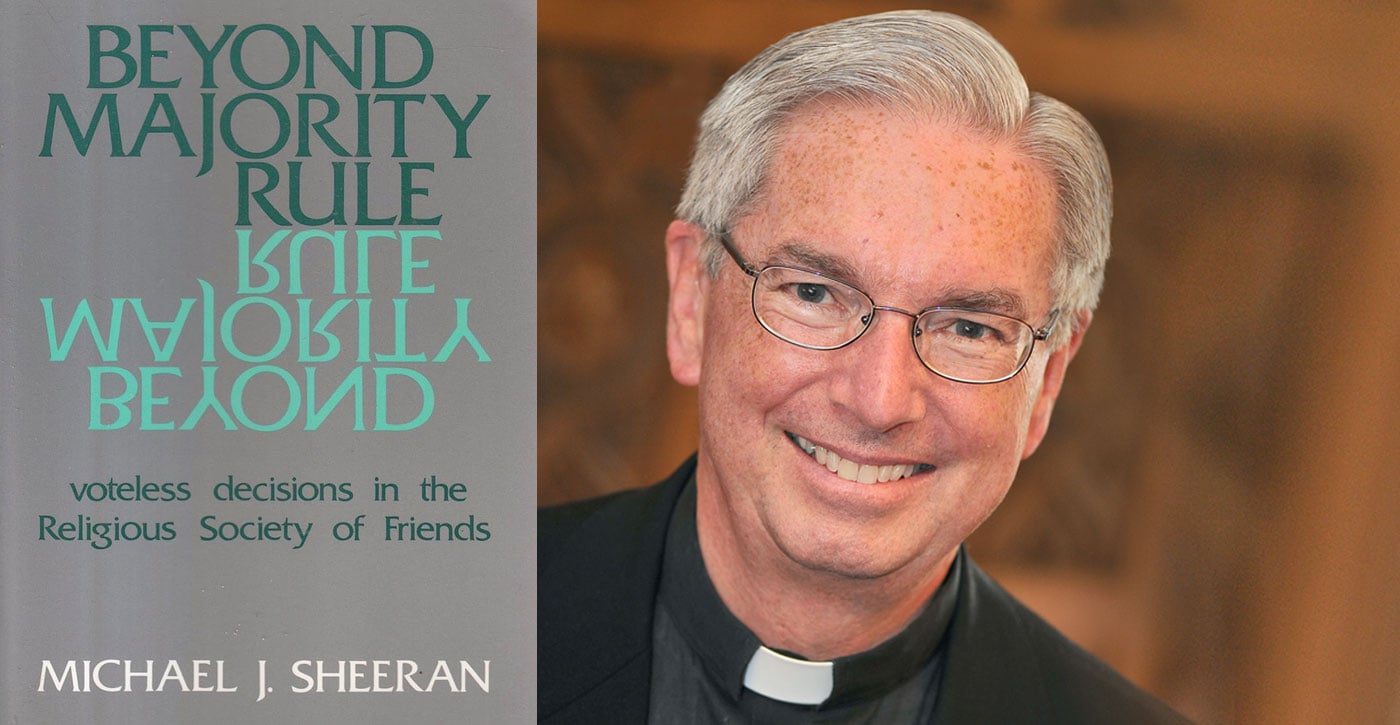
By Alastair McIntosh

Michael Sheeran of the Society of Jesus (Jesuits), author of Beyond Majority Rule. Photos courtesy of the author.

An Interview with Michael J. Sheeran

In 1983, a young Jesuit priest, Michael J. Sheeran, published a seminal study: Beyond Majority Rule: Voteless Decisions in the Religious Society of Friends. Based on his PhD research in the Politics Department of Princeton University in the mid-1970s, the book shed light on communal discernment and impacted a generation of Quakers on both sides of the Atlantic. He became president of both Regis University and the Association of Jesuit Colleges and Universities. Although his book remains in print through Pendle Hill’s bookstore, its importance has slipped from the awareness of many Friends. Might it now be ripe for rediscovery? Father Sheeran is now in his mid-80s and recently semi-retired. Alastair McIntosh, a Scottish Friend of Glasgow Meeting and a writer on community and spirituality, caught up with him.

Alastair McIntosh: Father Sheeran, in the aftermath of the 1960s cultural revolution, what were the circumstances that led you, a young Jesuit priest, to carry out your research with the Quakers of Philadelphia Yearly Meeting?

Michael J. Sheeran: The Second Vatican Council (1962–1965) was a huge reformation within the Catholic Church. It drove my curiosity about the Quakers. In one of its decrees, the Council advised all religious orders to study whether any of the practices of their founders had been lost through the centuries. 

When I started theological training in 1967, various Jesuit seminary teachers were surprised to find that St. Ignatius and his first nine companions spent Lent in 1539 meeting every evening to decide whether God was inviting them to apply to be a religious order marked by vows of poverty, chastity, and obedience. And a record had been kept of their daily process, a procedure which turned out to be suspiciously similar to the meeting for business which would surface when George Fox established Friends one hundred years later.

In short, the Jesuit Order had been founded through the use of what Catholics call communal discernment, but down through the centuries, it had lost its expertise with the practice. 

AM: What caused that loss?

MS: I think it was the tensions between separation and togetherness. When Ignatius Loyola sent Francis Xavier to Japan in 1549 to preach the gospel, a letter took three years to travel one way. This hampered communal discernment. Key people couldn’t readily sit in the same room and share in each other’s inner experience. Accordingly, the superior general, not the scattered group of founders, became the prime decision maker. In contrast, Friends meetings for business were admittedly scattered but within, at most, a few days’ journey. 
AM: In the preface to Beyond Majority Rule, you suggested that Quakers “may be the only modern Western community in which decision making achieves the group-centered decisions of traditional societies.” What led you to us?

MS: By a graced coincidence, just after Vatican II, Philadelphia Quakers were experiencing the talented assistance of Douglas and Dorothy Steere. This was to help the Friends in this yearly meeting to reflect, individually, on their inner experiences: a practice known as spiritual direction. The Steeres started nudging these individuals to spend time at Jesuit retreat houses. Some of the original ideals of discernment had carried over in these houses into what we call “the Ignatian Exercises”: seeking God’s invitations in one’s prayer and retreat experience.

I gather that my late Jesuit colleague Father Gerry Hughes—who was born in Ayrshire in Scotland in 1924—made a similar contribution in the UK with such popular books as God of Surprises. 

In short, I ended up going to Quaker meetings to learn how communal discernment is done well (and badly). Meanwhile, a good number of Friends were returning the gesture by learning individual discernment from Jesuit retreat directors! It made for a moment of significant mutual openness, as each group realized they had only one of the two essential keys for discernment. Jesuits were skilled at reading one’s own internal movements, and Quakers brought the complementary expertise of being able to hear the harmonious chord found in the comments expressed by individual participants.

AM: In what ways did you find that the Quaker tradition shone fresh light on Ignatian spirituality?

MS: To start with some background, in our novitiate training, we learned that we should be alert to each other’s disparate reactions to a situation. We had each grown up in different social classes, parts of the country, educational settings, etc. But somehow, we shared a common sense of calling to serve God together, even calling ourselves brothers in Christ. So, from the novitiate forward, we were trained to listen for each other’s accents of speech, taste in food, and style of humor. We expected that our fellow novices would correct, enrich, and challenge each other, whether in prayerful group discussions, in competitive sports, in music, or whatever contributed to our life together.

This was theoretically important, but we had little if any real training in the practical skills of listening, reflecting, gently disagreeing, and gracefully valuing insights that perhaps we had initially dismissed. For me, my time of sitting in on Friends monthly meetings for worship for business, and especially representative meeting (akin to the original Meeting for Sufferings) was my first regular experience of how a committed group can reach real practical unity, and perhaps do so again and again.

AM: And that pattern and example restored the Society of Jesus, the Jesuits, to its roots? And just like that? I jest, of course!

MS: Hah! Not quite! You see, in retrospect, I blundered. I was so impressed with Quaker method that I presumed my Jesuit brethren would be delighted to explore and incorporate it. I thought that all I had to do was point the way by writing up the process. 

In practice, my dissertation-turned-book seems to have helped Friends appreciate their process and protect it against abuse. But I didn’t get enough copies into the libraries of Jesuit universities, especially Jesuit universities with programs teaching Jesuit spirituality based on the Spiritual Exercises of St. Ignatius. I didn’t find effective ways to get the attention of the scholars in such fields. Unaware of the significance of what was lost from the communal discernment practiced by St. Ignatius and his colleagues in 1539, these scholars didn’t realize that something significant was missing in Jesuit practice today.

When my graduate work was complete, I moved into university administration. There I introduced Quaker decision making to help my staff reach and implement policy decisions. But only in 2013 when Francis, the first Jesuit pope, came along and started requiring the discussion-based listening called “synodality,” was there a new internal discovery that we Jesuits had a lot to learn about the communal discernment process. Our Jesuit superior general in Rome has helped. He has encouraged key meetings of groups like major superiors, secondary school heads, and university leaders to foster  common collaboration. Slowly, we are learning to discern together.

AM: To you, what is discernment?

MS: For me, individual discernment is considering the choices in front of me, while alert to the peace and strength I feel in the presence of God. Personally, I favor both natural law philosophy and scriptural tradition, so I tend towards them both unless the nudge of God’s peace is quite strong in a contrary direction. So, discernment involves reasoning and all the modes of human knowing, but also, it looks for confirmation that springs from the peace of heart: from the sense of God’s presence that one finds in quiet prayer. Moreover, group discernment adds alertness as to whether the direction in which the community is being drawn might confirm my leaning or challenge my leaning.

AM: What makes a conviction to follow the leadings, promptings, calling, or movement of the Spirit of God so important to such a process?

MS: One learns to rely on the quiet Presence, much as one learns to ride a bike. The more one listens, the more reliable the nudges. 

Quakers who feel drawn to the community’s conclusion, but who don’t recognize God within it, might be missing the authority of the call that they experience. It is God that gently reveals himself in those nudges! But the nudges have authority because it is God, not because it is comfortable to our community.

AM: Can you do it just as well without God? For example, in the secular settings of wider social movements and their organizations?

MS: Admittedly, there are lots of listening skills that can be learned in group workshops. There are lots of devices for keeping discussion focused but stress-free. But to reach confidence that this or that particular option is what the individual or group is called to, that is something that extends beyond good group process. It is important that we learn the skills that social science teaches us, but when we experience the invitation of a Presence which seems to hide in each of us . . . then we’re moved beyond mere social science. 

AM: Pope Francis in his Catechesis on Discernment (2022) concluded: “Discernment is not a sort of oracle or fatalism, or something from a laboratory. [Rather] God works through unplannable events, and also through setbacks. [Therefore] discernment is the aid in recognizing the signals [by more deeply] learning to know our heart as it moves.” What does that fine statement say to you—not just about the individual but about the individual in the community; about us one with another; and in ways that can help us to move, as you put it, “beyond majority rule”?

MS: On this one, I think Friends and Catholics tend to have a difference of theological emphasis. When Jesus said, “If you will be my disciple, you will take up your cross daily and follow me” (paraphrased from Matt. 16:24 and Luke 9:23), he was promising his disciple a share in his suffering. That means that an individual or a community can follow God’s invitations and find that they lead through unplannable events and setbacks. In my experience, Friends also find themselves paying a high price when they say yes to such invitations. But Friends are not as blunt as Francis about the cross being part of the faithful person’s life. 

AM: May I draw you out further on that point, that you have perhaps put diplomatically?

MS: My own experience of typical Christians—be they Protestant, Quaker, or Catholic—is that when the cross does enter our lives, we all start by unintentionally holding the same heresy. We complain: I have been doing my best to go to church, pray, and help the poor, so why is God letting me suffer this way? Jesus’s message that the Christian shares Jesus’s cross in his own life is not something we rise to readily! In their bluntness, Pope Francis’s words, like those of Matthew 16:24, go beyond our desire.

AM: How might Quakers, Jesuits, and others of goodwill communicate the charism (gift) of discernment methodology in our world today?

MS: There is significant value in learning from each other. Jesuits have become good at reading their own inner spiritual motions but have to work hard to pay attention to other people’s inner spiritual motions in a group setting. Quakers are perhaps more at home in listening to each other but can have more difficulty in being aware of their inner nudges and adjusting to them.

When members of both communities face a similar issue, added assurance may come from being alert to the other group’s typical way of making decisions. For example, suppose the issue is whether to change presidents at a school that my group sponsors. As a university administrator when in such a position, I have often asked myself whether there were any issues that a Quaker would be raising but that I might not have noticed.

On the other hand, conflicts of theological viewpoint that have not been faced, whether between Quakers and Jesuits or within either community, can frequently prevent emergence of the unity that is the mark of God’s invitation. I’m afraid it will almost always be slower progress towards the agreement that God points to, than the ease of agreement that we might long for.
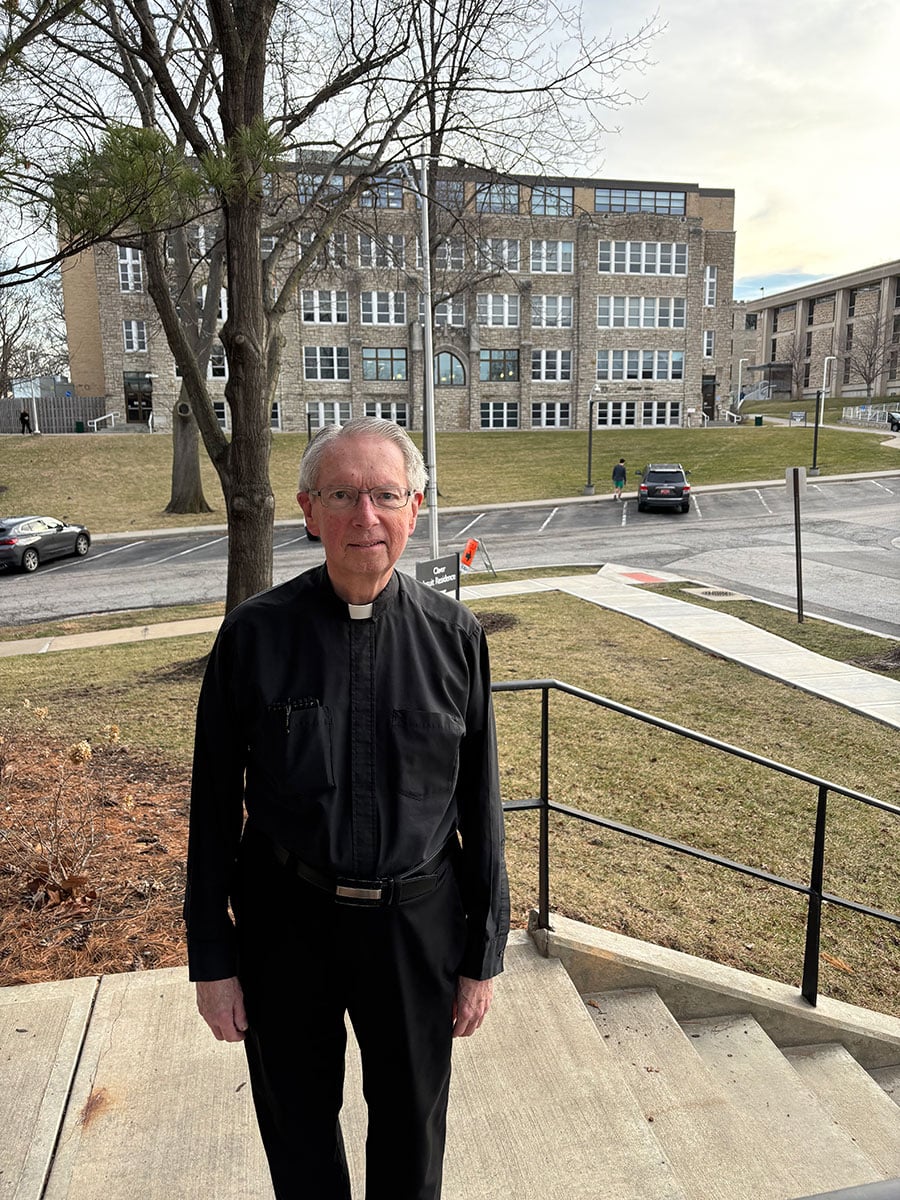
Father Sheeran at the Jesuit residence at Rockhurst University in Kansas City.

AM: In your mid-80s, as you look back on a long, active, and discerned life, what words of encouragement can you offer to your old friends, the Quakers?

MS: Running beneath St. Ignatius’s Spiritual Exercises is the understanding that God made a good but not perfect world. Then, He trusted His human creatures each to bring their own part of that good world closer to perfection. In that sense, He invites each of us to be His co-creator.

A great blessing for me has been learning how Friends discern God’s nudges through the insights their neighbors share in Quaker meetings, and it has been a great blessing to see Friends deepen, through Jesuit spiritual direction, in their ability to discern the reliability of their personal inner spiritual movements. I think what’s next is continued growing interaction that may slowly lead to a fuller harmony in our chorus of complementary voices.


In the spirit of Jesuit discernment, Father Sheeran requested his colleague Phil Boroughs SJ, a former president of Holy Cross College, to review his responses. We are grateful for Father Borough’s time and helpful suggestions and for a similar review by Mike Nellis, an emeritus professor of criminal and community justice, of Glasgow (Scotland) Meeting.
October 2026

October 2026

Online Features

Alastair McIntosh

Alastair McIntosh is a Scottish writer; independent scholar; and activist for social, environmental, and spiritual change. His books include Soil and Soul, Poacher's Pilgrimage, and Spiritual Activism. He is an honorary professor at Glasgow University and has been a Friend since the 1980s, a member of Glasgow Meeting in Scotland.

Posted by Sejin at October 30, 2026
Email ThisBlogThis!Share to XShare to FacebookShare to Pinterest
Labels: Quaker

Beyond Majority Rule: Voteless Decisions in the Religious Society of Friends : Sheeran, Michael J.: Amazon.com.au: Books

Beyond Majority Rule: Voteless Decisions in the Religious Society of Friends : Sheeran, Michael J.: Amazon.com.au: Books


Beyond Majority Rule: Voteless Decisions in the Religious Society of Friends
by Michael J. Sheeran (Author) Format: Paperback
4.8 4.8 out of 5 stars (13)

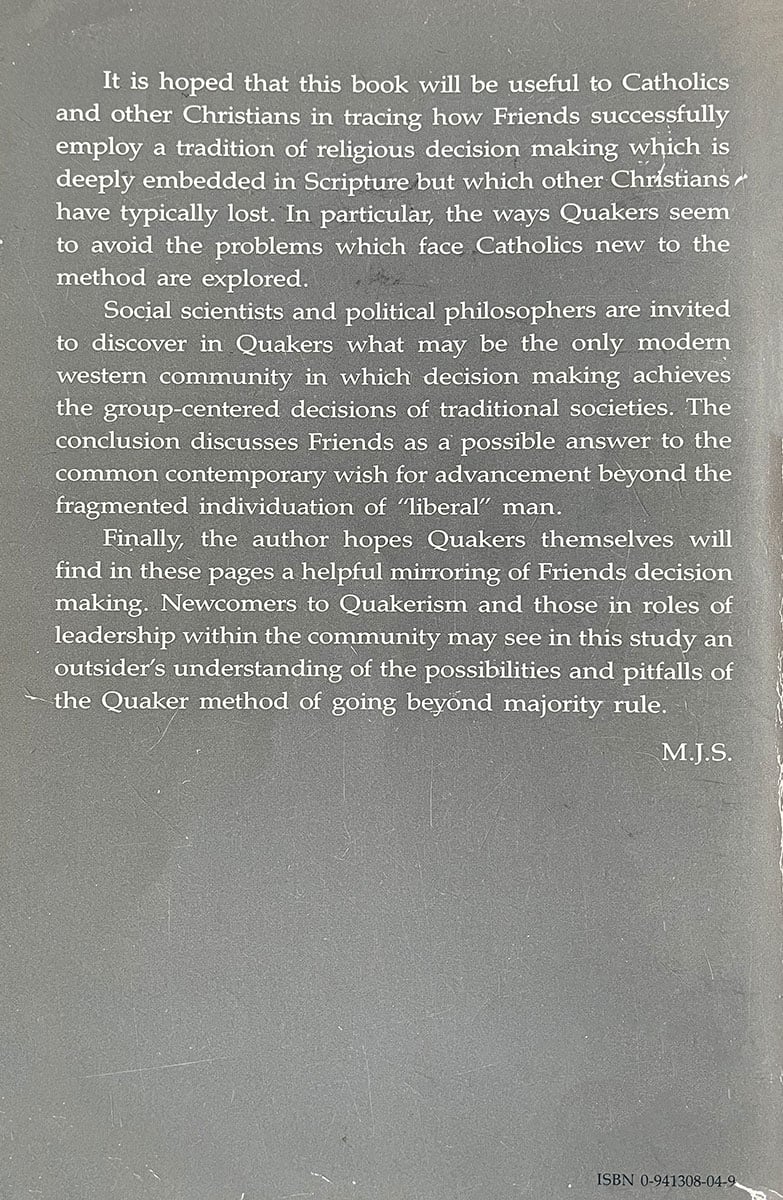
It is hoped that this book will be useful to Catholics and other Christians in tracing how Friends successfully employ a tradition of religious decision making which is deeply embedded in Scripture but which other Christians have typically lost. In particular, the ways Quakers seem to avoid the problem which face Catholics new to the method are explored.nnSocial scientists and political philosophers are invited to discover in Quakers what may be the only modern western community in which decision making achieves the group-centered decisions of traditional societies. The conclusion discusses Friends as a possible answer to the common contemporary wish for advancement beyond the fragmented individualism of "liberal" man.nnFinally, the author hopes Quakers themselves will find in these pages a helpful mirroring of Friends decision making. Newcomers to Quakerism and those in roles of leadership within the community may see in this study an outsider's understanding of the possibilities and pitfalls of the Quaker method of going beyond majority rule.
====

Alastair McIntosh
5.0 out of 5 stars A seminal study of Quaker discernment that influenced the Jesuits
Reviewed in the United Kingdom on 30 June 2025
Format: PaperbackVerified Purchase
This is a very important book, researched in the 1970s originally as a Princeton University PhD and then published in 1983. It describes Quaker discernment process at its best (warts and all), and fascinatingly, in a short introduction Sheeran tells how his topic arose out of the Vatican II reforming process where the Jesuits, like other orders, were advised to review and perhaps renew their original vocational calling. They realised that Ignatius Loyola had been on about discernment, but they'd lost it, and the Quakers seemed to be a group that had cultivated the process. Sheeran's PhD therefore fed into Jesuit process, probably not least because he ended up as president of a major American Jesuit training institution, Regis University. His book is out of print but can be found 2nd hand here or borrowed from the Internet archive library, and though now in his 80s I am engaging with him on an interview to share his thoughts at this stage of his life around discernment, and the calling of the times.
Report

Walter P. Blass
5.0 out of 5 stars How a technique developed for a religious body can be applied to many other groups
Reviewed in the United States on 30 June 2013
Format: PaperbackVerified Purchase
Sheeran's work is remarkable feat of outsider/insider examination of a subtle and demanding
discipline. His title captures the leap from majority rule but the promise of possible change in the next election, to a consensual format where the participants agree to work together to come to agreement. His book explained corporate behavior, but Sheeran points out that this technique can also be utilized in other venues. Quakers are not easy people to understand ( as a convinced Friend, I know ) but Sheeran has done the job magnificently. Interestingly, several international bodies have adopted this technique in lieu of majority voting.
Report

G. Thompson
5.0 out of 5 stars Best Guide to Quaker Decision making available
Reviewed in the United States on 19 June 2015
Format: PaperbackVerified Purchase
Written by a Jesuit priest as a thesis, this is the go-to book to understand the unique way that we Quakers make our decisions as a group. Often mis-described as "consensus," finding the "sense of the Meeting" is a far more subtle process. I served as Clerk of a large urban Quaker Meeting for 10 years and can attest that this book gets it right.
Report

Dr. Samuel Mahaffy
4.0 out of 5 stars Discerning God's Leading Together
Reviewed in the United States on 26 March 2013
Format: PaperbackVerified Purchase
Voting on important decisions leaves winners and losers. It rarely leads to a way forward in organizations committed to carrying a shared vision. Does your nonprofit board still take a vote on decisions? There may be a better way. There is much to learn from the decision making process in the Quaker tradition. This work provides a good starting point and an alternative pathway.
Report

Grandma Lynn
5.0 out of 5 stars Very helpful!
Reviewed in the United States on 13 April 2013
Format: PaperbackVerified Purchase
This dissertation was written well with a Friendly cadence on history and methods. As a new Friends' clerk, it has been very helpful.
Report

Dr. Janet E. Duke
5.0 out of 5 stars Five Stars
Reviewed in the United States on 11 September 2014
Format: PaperbackVerified Purchase
Excellent wel written exploration by a Jesuit of Quaker discernment
Report
==

마이클 J. 시런의 <다수결을 넘어서: 종교친우회의 무투표 의사결정>에 대한 요약 및 평론입니다.

<다수결을 넘어서: 종교친우회의 무투표 의사결정> 요약 및 평론

1. 서지 사항 및 저작 배경

<다수결을 넘어서: 종교친우회의 무투표 의사결정>(Beyond Majority Rule: Voteless Decisions in the Religious Society of Friends)은 예수회 사제이자 정치학자인 마이클 J. 시런(Michael J. Sheeran)이 1983년에 발표한 저서이다. 저자는 프린스턴 대학교 정치학 박사 학위 논문을 위해 1973년부터 1975년까지 2년간 퀘이커(종교친우회) 공동체에 직접 들어가 그들의 회합과 의사결정 과정을 심층 관찰하고 인터뷰를 진행했다. 가톨릭 수도회 소속의 외부 관찰자이면서도 영성적 분별(Discernment)에 익숙한 연구자가 객관적이고 예리한 시선으로 퀘이커의 독특한 '합의 및 무투표 의사결정 방식'을 집대성했다는 점에서 공동체 의사결정학의 고전으로 꼽힌다.

2. 핵심 내용 요약

침묵의 예배와 '내면의 빛'

퀘이커의 사무회의(Meeting for Business)는 세속적인 토론이나 정치적 의회가 아니라 '예배(Meeting for Worship)'의 연장선에 놓여 있다. 퀘이커 신앙의 핵심은 모든 사람 안에 하느님의 불꽃 혹은 진리의 씨앗인 '내면의 빛(Inward Light)'이 존재한다는 믿음이다. 따라서 의사결정의 출발점은 각자의 고집스러운 의견을 개진하는 것이 아니라, 침묵(Waiting Worship) 속에서 내면의 인도를 기다리는 일이다. 침묵은 단순한 정적이 아니라 하나님의 뜻을 집단적으로 감지하기 위한 영적 준비 과정으로 작동한다.

투표 없는 결정과 '회의의 마음(Sense of the Meeting)'

이 책의 중심 주제는 다수결 투표의 배제이다. 다수결은 표면상 민주적이지만 필연적으로 승자와 패자를 가르고, 소수파를 소외시키며, 집단 내 분열을 영속화한다. 퀘이커는 투표 대신 '회의의 마음(Sense of the Meeting)'이라 부르는 집단적 합일점을 도출한다. 이는 세속적인 정치적 타협이나 기계적 절충(Compromise)이 아니라, 참여자들이 함께 진리를 구하며 발견해 낸 '제3의 길'이자 더 높은 차원의 영적 합의다.

서기(Clerk)의 중재 역할

퀘이커 회의에는 위계적 의장이 없으며 대신 '서기(Clerk)'가 존재한다. 서기는 권력을 행사하는 지배자가 아니라 공동체의 청취자이자 촉진자다. 서기는 발언자들의 웅변술이나 감정적 열기, 단순한 머릿수에 휘둘리지 않고 회중 전체에 흐르는 진정한 영적 일치(Sense of the Meeting)를 포착해야 한다. 그리고 이를 간결한 회의록 초안(Minute)으로 정리하여 낭독하며, 회중이 이에 침묵이나 수긍으로 동의할 때 비로소 결정이 공식화된다.

소수 의견 존중과 결정의 유예

만약 한두 명이라도 깊은 영적 양심에 따라 반대하거나 불편함을 느낀다면, 다수가 그들을 힘으로 밀어붙이지 않는다. 반대자는 자신의 견해를 밝힌 뒤 "물러서서 반대하지 않겠다(Stand aside)"고 선언하여 공동체의 결정을 가로막지 않을 수 있다. 그러나 반대가 깊은 양심적 확신에 기초한다면 모임은 조급하게 결론을 내리지 않고 결정을 과감히 유예한다. 다음 모임까지 기도와 대화를 이어가며, 참된 일치가 형성될 때까지 인내하는 것이 퀘이커의 방식이다.

3. 비평적 분석 및 평론

다수결 민주주의의 구조적 맹점에 대한 근본적 대안

시런의 분석이 지닌 탁월한 미덕은 다수결의 효율성 뒤에 가려진 폭력성을 통찰한 데 있다. 현대 민주주의는 51대 49의 수적 우위로 결정을 정당화하지만, 이는 패배한 49의 불만을 억압하여 사회적 양극화를 심화시킨다. 시런은 퀘이커의 무투표 모델이 소외 없는 포용과 집단적 지혜의 발현을 가능케 함을 실증적으로 보여준다. 패자가 없는 결정은 사후 실행 과정에서 강력한 공동체적 동력과 헌신을 이끌어낸다.

'외부자적 시각'이 지닌 탁월한 명료성

저자가 예수회 사제라는 사실은 이 책의 독보적인 강점이다. 내부자들은 당연하게 여겨 말로 표현하지 못하는 관습이나 암묵지를, 저자는 이그나시오식 영성 분별과 비교정치학적 분석틀을 결합하여 명쾌한 개념과 언어로 풀어낸다. 퀘이커 교도들조차 자신들의 의사결정 메커니즘을 제대로 이해하기 위해 이 책을 필독서로 삼는 역설은 저자의 분석이 얼마나 정확하고 깊이 있는지를 방증한다.

현실적 한계와 이상주의적 전제

그러나 시런은 이 방식의 취약점과 이상주의적 한계 역시 냉정하게 짚고 넘어간다. 퀘이커식 무투표 결정이 작동하려면 몇 가지 전제 조건이 필수적이다.

  1. 신뢰와 공동체적 성숙도: 구성원들이 사적 이익이나 승패를 내려놓고 공동의 선을 구하려는 영적·도덕적 규율을 공유해야 한다. 만약 악의적인 구성원이 완고하게 반대를 고집한다면 의사결정은 완전한 마비(Stalemate)에 빠진다.

  2. 시간적 비효율성: 즉각적인 위기 대응이나 긴급한 행정적 결정이 필요한 현대 조직에서는 끊임없이 결정을 유예하는 방식을 전면 적용하기 어렵다.

  3. 암묵적 권력의 위험: 명시적인 투표가 없는 대신, 언변이 뛰어나거나 공동체 내에서 영향력이 큰 원로들의 무언의 압력이 작동할 소지가 존재한다.

4. 종합 평가

<다수결을 넘어서>는 단순한 특정 종교 교단의 회의 규칙 해설서가 아니다. 갈등과 대립, 양극화로 얼룩진 현대 사회의 거버넌스에 "승자독식의 표 대결 없이도 온전한 합의에 도달할 수 있는가?"라는 본질적 질문을 던지는 실천적 정치철학서다. 저자는 퀘이커의 방식을 무비판적으로 찬양하지 않으면서도, 깊은 경청과 인내, 상호 신뢰가 뒷받침될 때 인간 집단이 도달할 수 있는 가장 평화롭고 지혜로운 의사결정의 지평을 설득력 있게 제시한다. 현대의 조직 리더십, 비폭력 대화, 합의제 민주주의를 고민하는 모든 이들에게 강력한 영감을 주는 책이다.

세진님, 혹시 퀘이커의 의사결정 절차가 현대 비영리 조직이나 기업 거버넌스에 적용된 구체적인 사례, 또는 가톨릭 예수회의 공동 분별 방식과의 세부적인 비교 분석에 대해서도 추가로 논의해 볼까요?

==

《다수결을 넘어서: 퀘이커의 투표 없는 의사결정》

Beyond Majority Rule: Voteless Decisions in the Religious Society of Friends · Michael J. Sheeran (마이클 J. 시어런), 1983

약 1,000단어 요약·평론

1. 서론: 민주주의는 반드시 다수결이어야 하는가

마이클 J. 시어런의 《다수결을 넘어서》는 퀘이커의 의사결정 방식을 연구한 종교사회학 및 정치학의 중요한 저작이다. 저자는 예수회 신부이자 정치학자로, 프린스턴대학교 박사과정에서 1973~1975년 필라델피아 연회(Philadelphia Yearly Meeting)의 회의들을 관찰하고 회원들을 면담했다.

이 책의 중심 질문은 간단하지만 근본적이다.

민주적인 공동체가 결정을 내리기 위해 반드시 투표하고 다수결에 따라야 하는가?

현대 민주주의에서는 대체로 다수결을 정당한 결정 방식으로 받아들인다. 그러나 다수결에는 본질적인 한계가 있다. 승자와 패자를 만들고, 소수파의 반대를 남겨둔 채 결정을 강행할 수 있기 때문이다.

퀘이커는 17세기부터 다른 길을 추구해 왔다. 투표로 승패를 결정하는 대신, 침묵과 경청, 공동의 성찰을 통해 공동체가 함께 받아들일 수 있는 방향을 찾는다.

시어런은 이를 단순한 합의 기술이 아니라 독특한 종교적·사회적 질서로 이해한다.

특히 흥미로운 점은 저자가 퀘이커가 아니라 가톨릭 예수회 신부라는 사실이다. 그는 예수회 창설 당시 존재했지만 이후 약화된 공동체적 식별(communal discernment)의 전통을 퀘이커에게서 다시 발견하려 했다.

Quaker Religious Education Collaborative+1

2. 투표 없는 의사결정의 기본 원리

퀘이커의 업무회의(Meeting for Worship for Business)는 일반적인 행정회의와 다르다. 이것은 공동체의 일을 처리하기 위한 회의이면서 동시에 예배이다.

회의의 목적은 각자의 이해관계를 조정하거나 다수의 의견을 확인하는 데 그치지 않는다. 공동체가 지금 무엇을 해야 하는지 함께 식별하는 데 있다.

시어런이 검토하는 퀘이커 의사결정의 특징은 다음과 같다.

  1. 투표하지 않고 공동의 일치를 추구한다.

  2. 회의를 침묵 속에서 시작하며 갈등이 발생해도 침묵으로 돌아간다.

  3. 일치가 이루어지지 않으면 결정을 연기한다.

  4. 모든 참석자가 발언할 기회를 갖는다.

  5. 자신의 의견을 고집하지 않고 다른 사람의 말을 듣는다.

  6. 서기(Clerk)는 회의를 인도하지만 지배하지 않는다.

  7. 공식적으로 누구도 다른 사람보다 높은 지위를 갖지 않는다.

  8. 감정적 대결보다 사려 깊은 판단을 중시한다.

  9. 작은 규모와 지속적인 공동체 관계가 의사결정을 돕는다.

그러나 시어런은 이러한 원칙이 실제로 얼마나 실현되는지 비판적으로 조사한다. 형식적인 평등이 실질적인 평등을 보장하지 않으며, 지도자가 없다는 주장도 실제 영향력의 차이를 감출 수 있기 때문이다.

3. 합의(Consensus)와 일치(Unity)의 차이

이 책에서 가장 중요한 개념은 Sense of the Meeting, 곧 '회의의 뜻' 또는 '공동체의 뜻'이다.

일반적인 합의제는 참여자들이 수용할 수 있는 타협점을 찾는 데 초점을 맞춘다. 반면 퀘이커는 각자의 의견을 넘어 공동체 전체가 옳다고 인식하는 방향을 찾으려 한다.

세 개념을 구분할 필요가 있다.

개념

의미

핵심

다수결(Majority rule)

다수의 선택으로 결정

숫자

합의(Consensus)

참여자가 수용할 결론을 도출

동의와 조정

일치(Unity)

공동체가 옳은 방향을 함께 식별

공동의 분별

퀘이커에게 일치는 반드시 모든 사람이 동일한 의견을 갖는다는 뜻이 아니다.

어떤 회원은 여전히 다른 생각을 가지고 있지만, 공동체가 충분히 숙고했으며 결정 과정이 정당하다고 판단하면 자신의 반대를 유지하면서도 결정에 동참할 수 있다.

이것이 획일적인 만장일치와 구별되는 지점이다.

영국 퀘이커의 공식 신앙과 실천 지침 역시 일치가 단순한 만장일치와 다르며 소수 의견이 여전히 존재할 수 있다고 설명한다.

Quaker faith & practice

4. 침묵과 경청의 사회학

퀘이커 회의에서 침묵은 단순히 발언하지 않는 시간이 아니다.

침묵은 참여자들의 태도를 변화시키는 종교적 실천이다.

일반적인 토론에서는 상대방이 말하는 동안 반박할 논리를 준비하기 쉽다. 그러나 퀘이커는 상대방의 발언이 자기 내면에 어떤 의미를 갖는지 숙고하도록 권장한다.

따라서 회의는 논쟁의 연속이 아니라 발언과 침묵이 교차하는 과정이 된다.

사회학적으로 보면 이러한 관행은 경쟁적 상호작용을 협력적 상호작용으로 전환시키려는 제도적 장치이다.

또한 침묵은 권력의 문제와 관계된다. 말솜씨가 좋거나 적극적인 사람이 회의를 지배하는 현상을 줄일 수 있기 때문이다.

그러나 침묵 자체가 평등을 보장하지는 않는다.

사회적 지위가 높은 사람은 짧게 발언해도 큰 영향력을 행사할 수 있고, 신입 회원은 다른 사람들의 반응을 두려워하여 침묵할 수 있다.

결국 중요한 것은 침묵이라는 형식보다 공동체가 실제로 누구의 목소리를 듣고 있는가 하는 문제이다.

5. 서기(Clerk)의 권한과 숨겨진 지도력

시어런의 분석에서 특히 사회학적으로 흥미로운 부분은 서기의 역할이다.

퀘이커는 위계적 지도력을 경계한다. 서기는 회의를 지배하는 의장이라기보다 공동체의 뜻을 식별하고 표현하도록 돕는 봉사자이다.

그러나 실제로 서기는 상당한 영향력을 갖는다.

서기는 안건의 순서를 정하고, 문제를 어떻게 제시할지 결정하며, 발언을 정리하고, 언제 공동의 일치가 형성되었는지 판단한다.

나아가 회의의 결론을 문서로 작성한다.

이는 단순한 행정적 역할이 아니다. 의제를 설정하고 토론을 해석하며 결론의 언어를 결정하는 일은 상당한 권력이다.

시어런은 퀘이커의 지도력이 공식적으로는 비지배적이지만 실제로는 복잡한 영향력 관계를 포함한다는 사실을 보여준다.

서기가 공동체를 섬길 수도 있지만, 자신의 판단을 공동체의 뜻으로 제시할 위험도 존재한다.

따라서 퀘이커의 평등주의는 지도력의 부재가 아니라 지도력을 지속적으로 검증하고 절제하는 규율에 가깝다.

6. 일치가 이루어지지 않을 때

퀘이커 방식은 모든 문제에 신속한 결론을 내리려 하지 않는다.

중요한 반대가 남아 있다면 결정을 연기하고 다시 숙고할 수 있다.

때로는 새로운 정보가 필요하고, 때로는 개인적 관계의 회복이 필요하다. 공동체가 아직 결정을 내릴 준비가 되어 있지 않을 수도 있다.

이러한 태도는 효율성을 최고의 가치로 여기는 현대 조직문화와 대조된다.

그러나 결정 연기에도 문제가 있다.

지속적인 반대가 사실상의 거부권으로 작용할 수 있으며, 긴급한 문제에서는 지연 자체가 해로운 결과를 낳을 수 있다.

더욱이 공동체의 일치를 지나치게 강조하면 소수자의 정당한 저항이 비협조적인 행동으로 해석될 위험이 있다.

따라서 좋은 퀘이커 회의는 일치를 강요하지 않으면서도 책임 있는 결정을 내려야 한다.

7. 비판적 평론: 퀘이커 민주주의의 가능성과 한계

첫째, 다수결 민주주의를 넘어서는 중요한 대안이다

현대 민주주의는 대체로 선거와 다수결을 중심으로 작동한다.

그러나 민주주의의 본질은 단순히 다수의 뜻을 관철하는 것이 아니라 시민들이 평등한 존재로서 공동의 삶을 결정하는 데 있다.

퀘이커의 의사결정은 민주주의를 투표라는 절차에서 상호 존중과 공동의 판단이라는 관계적 차원으로 확장한다.

특히 소수자의 의견이 다수에게 패배했다는 이유만으로 무시되지 않는다는 점에서 중요한 윤리적 가치를 갖는다.

이런 의미에서 퀘이커의 실천은 숙의민주주의(deliberative democracy)의 선구적인 사례로 평가할 수 있다.

둘째, 일치의 이면에는 권력 문제가 존재한다

그러나 퀘이커의 공동체 역시 사회적 권력에서 자유롭지 않다.

연령, 교육, 계급, 성별, 종교적 경험, 공동체 내 경력 등에 따라 발언의 영향력은 달라질 수 있다.

특히 어떤 회원이 '영적으로 성숙한 사람'이라는 평판을 얻으면 그의 판단이 다른 사람들의 판단보다 우선시될 가능성이 있다.

이 경우 공식적인 위계는 존재하지 않지만 비공식적인 권력구조가 형성된다.

사회학적으로 이는 막스 베버의 권위론이나 피에르 부르디외의 상징자본 개념과 연결하여 분석할 수 있다.

시어런의 연구는 이러한 문제를 인식하게 하지만, 오늘날에는 젠더와 인종, 계급의 관점에서 더욱 체계적인 검토가 필요하다.

셋째, 종교적 일치와 사회적 동조를 구분해야 한다

가장 근본적인 질문은 공동체의 일치가 정말로 영적 식별의 결과인지, 아니면 집단적 동조의 결과인지 하는 것이다.

종교공동체에서는 갈등을 드러내는 행위가 공동체의 평화를 해치는 것으로 여겨질 수 있다.

그 결과 어떤 사람들은 자신의 의견을 철회하기보다 침묵을 선택할 수 있다.

겉으로는 일치가 이루어졌지만 실제로는 소수자의 배제일 수 있는 것이다.

따라서 진정한 일치는 반대 의견을 제거하는 것이 아니라 반대 의견이 안전하게 표현될 수 있는 조건을 필요로 한다.

이 점에서 퀘이커의 평화 증언(Peace Testimony)은 단순히 갈등을 피하는 태도가 아니라 갈등을 진실하고 비폭력적으로 다루는 실천이어야 한다.

넷째, 종교적 기반 없이도 가능한가

퀘이커 의사결정의 중심에는 하나님의 뜻을 공동으로 식별한다는 신앙이 있다.

그러나 현대의 세속적 시민단체나 사회운동에서는 이러한 신학적 전제를 공유하지 않는다.

그럼에도 경청, 침묵, 소수 의견 존중, 비지배적 지도력 등의 실천은 충분히 활용할 수 있다.

다만 종교적 기반을 제거하면 공동체의 일치를 추구하는 궁극적인 이유도 달라진다.

퀘이커에게는 일치가 단순한 효율적 합의 이상의 영적 의미를 갖는다. 세속적 조직에서는 이것을 상호 신뢰, 공동선, 민주적 정당성 등의 개념으로 재해석해야 한다.

시어런 자신도 2026년 10월 《Friends Journal》 인터뷰에서 사회과학적 경청 기술의 가치를 인정하면서, 종교적 식별은 그 이상의 차원을 포함한다고 강조했다.

Friends Journal

8. 종합 평가: 퀘이커는 민주주의에 무엇을 가르치는가

《다수결을 넘어서》의 가장 큰 공헌은 퀘이커의 의사결정을 이상화하지 않고 실제로 작동하는 사회적 과정으로 분석했다는 데 있다.

저자는 퀘이커의 종교적 신념을 존중하면서도 지도력, 영향력, 갈등, 공동체의 압력이라는 현실적인 문제들을 검토한다.

이 책은 종교공동체 연구인 동시에 민주주의의 가능성을 탐구하는 정치사회학 연구이다.

그 한계도 분명하다. 연구 대상은 주로 1970년대 필라델피아 지역의 퀘이커들이므로, 그 결과를 오늘날의 모든 퀘이커 전통이나 대규모 정치공동체에 그대로 적용하기는 어렵다.

또한 공동체가 오랜 기간 신뢰관계를 형성한 소규모 종교집단에서 가능한 의사결정이 이해관계가 첨예하게 대립하는 국가정치에서도 가능할지는 별개의 문제이다.

그럼에도 이 책이 제시하는 통찰은 여전히 중요하다.

다수결은 결정을 내리는 효과적인 방식이지만, 반드시 공동체의 지혜를 만들어내는 방식은 아니다.

퀘이커는 의사결정을 권력의 경쟁이 아니라 공동의 진실을 발견하는 과정으로 이해한다.

그렇다고 투표 없는 결정이 언제나 다수결보다 우월한 것은 아니다. 일치의 이름으로 반대가 억압된다면 오히려 다수결보다 불투명한 권력구조가 만들어질 수도 있다.

결국 퀘이커 민주주의의 가치는 투표를 하지 않는다는 사실보다 다른 사람의 말에 자신이 변화될 가능성을 열어두는 태도에 있다.

이 책의 핵심 교훈은 다음과 같이 정리할 수 있다.

민주주의의 성숙은 얼마나 많은 사람이 내 의견에 동의하는가가 아니라, 나와 다른 사람의 의견을 얼마나 진지하게 받아들이고 그 과정에서 함께 변화할 수 있는가에 달려 있다.

이것이 시어런이 퀘이커에게서 발견한, 다수결을 넘어서는 민주주의의 가능성이다.

참고할 만한 자료

  • 2026년 저자 인터뷰 — Beyond Majority Rule, Four Decades Later

  • 영국 퀘이커 신앙과 실천 — The Sense of the Meeting

  • Pendle Hill — 원서 소개

세진님께 특히 흥미로운 사실이 하나 있습니다. 2026년 10월, 바로 이번 달에 저자 시어런의 새로운 인터뷰가 발표되었습니다. 그는 40여 년이 지난 지금도 퀘이커의 공동체적 식별을 높이 평가하면서, 예수회는 개인의 내면적 식별에 강하고 퀘이커는 서로의 목소리를 통한 공동체적 식별에 강하다고 설명합니다. 두 전통이 서로에게 배울 수 있다는 것입니다.

이는 퀘이커의 의사결정 방식을 종교사회학뿐 아니라 가톨릭의 시노달리티(Synodality, 공동합의성)와 비교하는 데에도 매우 유익한 관점입니다.

==
Posted by Sejin at October 30, 2026
Email ThisBlogThis!Share to XShare to FacebookShare to Pinterest
Labels: Quaker

2023/09/28

The Predicament of Modern Man 1944,

The Predicament of Modern Man

The Predicament of Modern Man by Elton Trueblood


Elton Trueblood is Professor at Large at Earlham College (1944). He is the author of more than twenty books,
including The People Called Quakers and The Lord’s Prayers. Published by Harper and Row in 1944, New
York, N.Y. 10016, this material was prepared for Religion-Online by Ted and Winnie Brock.
To say that no one solution is a panacea is not to deny that some approaches to a problem come
nearer to the center of the difficulty than others do. To say that we shall not make a perfect
society in the next century or the next millennium is no excuse for failure to do our best to
create an order relatively better than the one in which we now live. It is the gospel that can save


Preface

Most of our talk about post-war reconstruction misses the point in that the treaties, political
organizations, and economic arrangements, are only surface phenomena. It is heartening that a
philosophy is emerging to which many are led who are more concerned with the problems at the
center than they are with those at the periphery.


Chapter 1: The Sickness of Civilization
What we seek is a situation in which we so combine scientific and technical skill with moral
and spiritual discipline that the products of human genius shall be used for the welfare of the
human race rather than their harm and destruction.
Chapter 2: The Failure of Power Culture
There can be no enduring or generally satisfying civilization apart from ethical foundations. A
mere power culture will eventually cease to be a culture at all.
Chapter 3: The Impotence of Ethics
The only experience we know that is revolutionary enough both to support the downcast nation
and to chasten the victorious nation is the sense of existing under the eternal Providence of the
Living God. It is religion and religion alone that does this for men. For this reason we can never
have a real civilization without it.
file:///D:/rb/relsearchd.dll-action=showitem&id=532.htm (1 of 2) [2/4/03 1:35:52 PM]
The Predicament of Modern Man
Chapter 4: The Insufficiency of Individual Religion
What is needed is something that can set our souls on fire, and what can do this is that
hypocritical, bickering organization that we call the church.
Chapter 5: The Necessity of a Redemptive Society
We believe that we can survive a civilization gone rotten and that the essential faith of Western
man can be restored to this end. The moral decay of imperial Rome was overcome by the gospel
for that day, and the moral decay of Western civilization will be likewise overcome by the
gospel for our day. If modern man can be made to see and understand the predicament he is in,
that very recognition may be amazingly salutary.
Posted by Sejin at September 28, 2023
Email ThisBlogThis!Share to XShare to FacebookShare to Pinterest
Labels: Elton Trueblood, Quaker

Your Other Vocation : Elton Trueblood : 1952 Internet Archive

Your Other Vocation : Elton Trueblood : Free Download, Borrow, and Streaming : Internet Archive


Your Other Vocation
by Elton Trueblood

Publication date  1952

==
"Dr. Trueblood again shows a keen sensitiveness to currents of thought in the religious field and a special ability to interpret them in a popular way. His central idea is 'Christian vocation' as applied to everyday work. He sees every occupation as a form of Christian ministry, a way of being a co-worker with God in building the kind of world which is in accord with His will." -- Samuel McCrea Cavert
===
Top review from the United States
Glen Thompson
4.0 out of 5 stars From the back cover
Reviewed in the United States on June 16, 2012
Verified Purchase

YOUR OTHER VOCATION invites every Christian to join in building a world which is in accord with God's purpose. The heart of this book is the biblical concept of "lay religion;' the extension of Christian witness to daily work and family life. These are real ministries and, though sometimes overlooked or neglected, constitute that "other vocation" to which all Christians are called. In his characteristic style, simple and direct, the author shows what this vocation means practically in today's world.

===
Profile Image for Ryan.
Ryan
304 reviews
1 follower

Follow
October 31, 2019
The best of Trueblood's books. The difficulty with his work is how closely he associates Christianity with western culture and an American way of life. There are times when he appears to be using these concepts interchangeably (or each one as a subset of the previous). In order to read his book, I find myself trying to mentally quarantine this strand of his writing and look to the basic ideas. His concept of Christian witness/ministry as every Christian's unending, ever flexible, and always urgent vocation is great. His emphasis on the priesthood of all believers really carries this work, and gives it value in spite of being dated.

===
Posted by Sejin at September 28, 2023
Email ThisBlogThis!Share to XShare to FacebookShare to Pinterest
Labels: Elton Trueblood, Quaker

Studies in quaker worship : D. Elton Trueblood 1935 Internet Archive

Studies in quaker worship : D. Elton Trueblood : Free Download, Borrow, and Streaming : Internet Archive

Studies in quaker worship
by D. Elton Trueblood

Publication date 1935

Posted by Sejin at September 28, 2023
Email ThisBlogThis!Share to XShare to FacebookShare to Pinterest
Labels: Elton Trueblood, Quaker

The People Called Quakers: D. Elton Trueblood 1985

The People Called Quakers: D. Elton Trueblood: 9780913408025: Amazon.com: Books


Roll over image to zoom in

The People Called Quakers Paperback – July 1, 1985
by D. Elton Trueblood (Author)
4.3 4.3 out of 5 stars 11 ratings
4.0 on Goodreads
30 ratings

D. Elton Trueblood succeeds here in his attempt to depict the Quaker experiment in radical Christianity, with emphasis on their ways of thinking. He does indeed present the Quaker faith as a live option for contemporary men and women.

"The assets of The People Called Quakers come from the author's acquaintance witih all the major current brands of Quakerism, from his well known facility in writing, and from his repeated use of favorite persons in the history from George Fox to the Gurneys or Rufus Jones."

---Henry J. Cadbury
Read less

Length


298

Editorial Reviews

Review
"Elton Trueblood was one of the most influential Quaker leaders of the past century. The People Called Quakers has enduring value as his vision of what Quakerism has been, is, and can be." - Thomas Hamm, Earlham College Professor of History; Curator of the Quaker Collection and Director of Special Collections --Thomas Hamm, Earlham College Professor of History; Curator of the Quaker Collection and Director of Special Collections

Product details
Publisher ‏ : ‎ Friends United Press (July 1, 1985)
Language ‏ : ‎ English
Paperback ‏ : ‎ 298 pages

Top reviews

Top reviews from the United States


Andrew Talmadge

5.0 out of 5 stars Decades old, but still the best exposition of Quaker thought, practice, and historyReviewed in the United States on November 5, 2013
Verified Purchase
I am writing this review as an actual Friend (Quaker). Though this book was written decades ago, it remains the single best exposition of Quaker thought, practice, and history. Some contemporary Quakers will find some of it objectionable, particularly if they are from meetings that have drifted in the direction of New Age religion, with it's follow-your-own-inclinations, no-rules emphasis. But the truth is that traditional Quakerism has nothing to do with New Age concepts. First, it is deeply Christian. Second, it involves placing limits on one's behavior out of deep empathy for others. Trueblood also reminds us that Quakerism was deeply revolutionary in its inception, and remained so for most of its history. Today's meetings, which tend to place a premium on consensus that allows anyone to not just question but veto the majority, have moved in the direction of quietism. Likewise, the fetish for silence in contemporary meetings contravenes the spirit of earlier meetings that tended to be lively with shared thoughts and feelings. This book could be read profitably not only by Quakers, but by all Christians.

21 people found this helpful


HelpfulReport

David K

4.0 out of 5 stars Four StarsReviewed in the United States on September 11, 2016
Verified Purchase
This is a helpful book for understanding the Quakers historically and theologically.

One person found this helpful


HelpfulReport

B.Peter Brandt-Sørheim

4.0 out of 5 stars Quaker HistoryReviewed in the United States on September 17, 2016
Verified Purchase
Useful detail information but dense composition makes for slower reading.


HelpfulReport

Tyla

5.0 out of 5 stars Rare findReviewed in the United States on November 19, 2019
Verified Purchase
Great book about an important topic.
Used book in good condition


HelpfulReport

William Russell

4.0 out of 5 stars Four StarsReviewed in the United States on April 16, 2015
Verified Purchase
What was expected


HelpfulReport

Keith Little

5.0 out of 5 stars Five StarsReviewed in the United States on December 30, 2014
Verified Purchase
Wonderful!


HelpfulReport

Betsy McConnell

5.0 out of 5 stars Very thorough introduction to QuakerismReviewed in the United States on December 25, 2007

I found this book very informative. It explains various aspects of what Quakers believe and why, and history of the Quaker faith. It discusses silent worship, Quakers view on communion and baptism, the Quaker testimonies, and much more. If you have a questions about what a Quaker believes and why, this is the book to read.

22 people found this helpful


HelpfulReport
Posted by Sejin at September 28, 2023
Email ThisBlogThis!Share to XShare to FacebookShare to Pinterest
Labels: Elton Trueblood, Quaker

While It Is Day: An Autobiography: Trueblood, Elton

While It Is Day: An Autobiography: Trueblood, Elton:
 Amazon.com: Books

https://archive.org/details/whileitisdayauto0000true


While It Is Day: An Autobiography 
1974
by Elton Trueblood (Author)

There is a newer edition of this item:

While it is day: An autobiography
$19.94
(5)
Only 1 left in stock - order soon.
===
Length  170
Publisher ‏ : ‎ Harper & Row; First Edition (January 1, 1974)


Hardcover ‏ : ‎ 170 pages
===
Top reviews from the United States

HelpfulReport

Ralph Lawrence

5.0 out of 5 stars 
A Call to a Life of Integrity and Service
Reviewed in the United States on September 14, 2015

I originally read this book when it was published in 1974, for the simple reason that over two decades earlier Dr. Trueblood had profoundly influenced my life. I write this review with the original copy of 1974 in front of me, which was signed by some of Trueblood's personal friends at Guilford College. 

His lectures at my undergraduate college helped to define the career path which I followed over the next sixty-plus years. What happened with me no doubt was similar to what happened with many other students at that time, as Trueblood focused much attention on traveling widely and lecturing on the campuses of small Christian colleges and universities. He was a product of such an environment, and related well to students in that context. 

He was very welcoming to me personally when I asked to spend some time with him in a one-on-one conversation. No, I did not imitate Trueblood and become a philosophy professor or author of many famous books. 

I even acted against his main thesis, that Christian lay persons must be the leaven within society, for I became an ordained clergy. 

He did promote the idea that pastors and teachers are to be the "coaches" that help all Christians to live effectively in society, equipping all of God's people for their service in the world. 

I tried to follow his advice to do the following things: 

(1) Have intellectual integrity in all that ones thinks and does. 
(2) Practice a deep and genuine spiritual life, and 
(3) Extend one's beliefs in practical application in society - do something hands-on and useful in solving a real problem. 

I make no claim of doing any of this in a perfect way. But the ideal is there all the time. As Trueblood says in this book, "What each person can do, however, is to meditate upon the consequences of the decisions actually made, realizing that each decision leads to much beyond itself." It is now more than four decades since While It Is Day was published, yet its message is as valuable today as it was then. A student of today could benefit much by investigating what Dr. Elton Trueblood represents.

10 people found this helpful
==
랄프 로렌스
별 5개 중 5.0개
성실하고 봉사하는 삶으로의 부르심
검토일: 2015년 9월 14일 미국

나는 이 책이 1974년에 출판되었을 때 처음 읽었는데, 그 이유는 20여 년 전에 트루블러드 박사가 내 삶에 깊은 영향을 미쳤기 때문입니다. 나는 내 앞에 있는 1974년의 원본을 두고 이 리뷰를 작성합니다. 이 원본은 Guilford College에 있는 Trueblood의 개인 친구 중 일부가 서명한 것입니다.

제가 학부에서 한 그의 강의는 제가 향후 60년 이상 따라야 할 진로를 정의하는 데 도움이 되었습니다. 트루블러드가 널리 여행하고 소규모 기독교 대학의 캠퍼스에서 강의하는 데 많은 관심을 집중했기 때문에 나에게 일어난 일은 그 당시 다른 많은 학생들에게 일어난 일과 유사하다는 것은 의심할 여지가 없습니다. 그는 그러한 환경의 산물이었고, 그런 맥락에서 학생들과 좋은 관계를 맺었습니다.

내가 일대일 대화를 통해 시간을 보내자고 요청했을 때 그는 나를 개인적으로 매우 환영했습니다. 아니요, 저는 트루블러드를 흉내내서 철학 교수가 되거나 많은 유명 책의 저자가 된 것이 아닙니다.

나는 심지어 내가 성직을 받은 성직자가 되었기 때문에 평신도는 사회 내의 누룩이 되어야 한다는 그의 주요 주장에 반대하기까지 했습니다.

그는 목사와 교사가 모든 그리스도인이 사회에서 효과적으로 살도록 돕고 모든 하나님의 백성이 세상에서 봉사할 수 있도록 준비시키는 "코치"가 되어야 한다는 생각을 장려했습니다.

나는 그의 조언에 따라 다음과 같은 일을 하려고 노력했습니다.

(1) 자신이 생각하고 행동하는 모든 것에 지적 진실성을 가져라.
(2) 깊고 참된 영적 생활을 실천하며,
(3) 사회에서의 실제 적용에 대한 자신의 신념을 확장하십시오. 실제 문제를 해결하는 데 직접적이고 유용한 일을 하십시오.

나는 이 일을 완벽하게 수행한다고 주장하지 않습니다. 그러나 이상은 항상 존재합니다. Trueblood가 이 책에서 말했듯이, "그러나 각 사람이 할 수 있는 일은 실제로 내려진 결정의 결과에 대해 숙고하고 각 결정이 그 자체를 넘어서는 많은 결과로 이어진다는 것을 깨닫는 것입니다." 지금은 Day Is Day가 출판된 지 40년이 넘었지만, 그 메시지는 당시와 마찬가지로 오늘날에도 가치가 있습니다. 오늘날의 학생은 Elton Trueblood 박사가 나타내는 바를 조사함으로써 많은 유익을 얻을 수 있습니다.


==
HelpfulReport

Scotty

5.0 out of 5 stars Legacy of faith. Thank you EltonReviewed in the United States on March 4, 2021
Verified Purchase
So Thankful for this man. He writes about my grandfather HV Scott in this book. Delighted to find this legacy of faith. I own several copies


Lexxie
5.0 out of 5 stars A great man of GodReviewed in the United Kingdom on July 11, 2016
Verified Purchase

Really enjoyed ' discovering ' this Christian intellectual giant . He covered so many areas and has written this book in such a simple way . Get hold of a copy if you can .
Report
Posted by Sejin at September 28, 2023
Email ThisBlogThis!Share to XShare to FacebookShare to Pinterest
Labels: Elton Trueblood, Quaker

2023/09/27

The Humor of Christ: Trueblood, Elton: 11975

The Humor of Christ: Trueblood, Elton: 9780060686321: Amazon.com: Books


The Humor of Christ Paperback – January 1, 1975
by Elton Trueblood (Author)

4.2 4.2 out of 5 stars 59 ratings

The Humor of Christ inspires Christians to redraw their pictures of Christ and to add a persistent biblical detail, the note of humor. Throughout the Gospels, Christ employed humor for the sake of truth and many of his teachings, when seen in this light, become brilliantly clear for the first time. Irony, satire, paradox, even laughter itself help clarify Christ's famous parables, His brief sayings, and important events in His life. In a valuable appendix 30 humorous Gospel passages are listed for further study.


Length  128
1975


Editorial Reviews

From the Publisher
Shows how Christ used humor in his teachings to bring a fuller appreciation of the Gospel message.

Product details
Publisher ‏ : ‎ Harper & Row; 7/16/75 edition (January 1, 1975)
Language ‏ : ‎ English
Paperback ‏ : ‎ 128 pages
Top reviews from the United States


Dennis A. Hooker

5.0 out of 5 stars Humor of Jesus - awesome!Reviewed in the United States on November 10, 2011
Verified Purchase
I had this book years ago and lost it. Now, I bought it again as reference for a book I'm writing, "Jesus - The Man (What a Guy!)" 

The Humor of Christ is not a "funny" book or book of jokes told by Jesus. 
I take that back - so much of what He said was said "tongue in cheek" but full of Truths. In spite of what we have been told and taught, Jesus told stories - parables, things that were full of irony and various lighter ways to present what we otherwise would overlook or forget. (ie Who can remember the 10 Commandments? - but who can forget the prodigal's son? or man alongside the road, beaten and neglected by all the holy and righteous - but rescued by a plain, simple man with a heart?)

I sometimes fall asleep reading Humor of Christ - but usually go "Wow, I didn't understand that before!" One discovers the meaning of stories that once were obscure - by seeing that they were said with that subtle humor Jesus was a Master at(no pun intended).

I highly recommend this book - it's been around for ages - and will continue to be, I'm sure.

[...]

8 people found this helpful


HelpfulReport

Amazon Customer

3.0 out of 5 stars I did not see or find the humor.Reviewed in the United States on February 25, 2022
Verified Purchase
It is an ok book. I did not find the humor of Christ that I thought I would have found. It was too scholarly for me and I have a Doctorate Degree in Jurisprudence and a minor in psychology. I think I could have written a book that actually found Christ's humorous side. It is there for anyone who actually looks for it.

One person found this helpful


HelpfulReport

Loverofblue

3.0 out of 5 stars Challenging read but glad I finished it.Reviewed in the United States on March 3, 2018
Verified Purchase
Although this is a fairly short book, it wasn't the easiest read. But like other reviewers have stated, I'm glad I finished it. The author sought to show Christ's humor which is often lost in Christendom these days. Overall, I think the author succeeded in his objective. There were a couple of places where I thought the author read humor into stories and the words of Christ where it wasn't present but at the same time, he did open my eyes to see Christ's humor in places I had missed. Jesus did use humor more than many today probably realize. I also appreciated the many insights the author offered about the nature of humor and its importance in life. 3 stars!

8 people found this helpful


HelpfulReport

James D. Reardon

5.0 out of 5 stars Jesus humour made him human, as well as being GodReviewed in the United States on August 2, 2016
Verified Purchase
A rare insight into the personality and humour of Jesus Christ.
Jesus was a prophet, messiah, and a martyr to the renewal of Christian faith.
As such, he was one man fighting agains a huge religious power, as well as a Roman conquerer.
Humour, sarcasm, understatement were all used to combat the bureaucratic, dictatorial rule of the iJewish leaders
the same was true in dealing with the Roman's concern about a possible religious uprising.
In the end, his will and wisdom carried on to the establishment of the new Christianity.
Thank God he was was able to appeal to the innate goodness of those seeking redemption.

7 people found this helpful


HelpfulReport

C. McNair Wilson

5.0 out of 5 stars The use of humor in the BibleReviewed in the United States on March 16, 2013
Verified Purchase
Theologian Elton Trueblood looks at the various (and numerous) forms of humor found in the Old and New Testaments while examining why we have missed or avoided it. This book is thoughtful enough for ministry professionals and engaging and easy to read for the lay person.

It all comes down to the idea that if we mist Christ's humor we will (and have) miss his point.

I have read this book at least three times and keep giving it away. There are other books on humor in the Bible and I have read several. This is my favorite.

12 people found this helpful


Nathaniel Firethorn

5.0 out of 5 stars Jesus was not a somber robot!Reviewed in the United States on August 9, 2007
Verified Purchase
I came across a reference to Trueblood's book in "No More Christian Nice Guy," and immediately had to have it. A lot of what Jesus says in the Gospels can range from baffling to rude -- if you mistakenly deprive him of one of his best evangelistic tools, his wonderful sense of wry wit. There is some reading between the lines, and perhaps Trueblood pushes one or two points too hard. But I'm convinced that this book, and a sense of humor, has helped me to unlock some of the more difficult parts of the Synoptic Gospels.

12 people found this helpful


HelpfulReport

J. Lasswell

5.0 out of 5 stars Very deep, but also funny!Reviewed in the United States on April 24, 2016
Verified Purchase
I ordered this as a replacement for a copy I'd owned in the early 1970's. In spite of it being a very short book which is rendered in a language which even simple people like me can readily understand, I consider it to be one of the most significant theological texts ever written. Also, you'll sometimes laugh as you read it! I may order more copies of it in the future to give my pastors.

10 people found this helpful


P on I
5.0 out of 5 stars A Great Classic Religious TitleReviewed in Canada on July 8, 2017
Verified Purchase

What a great book. I heard of this book many years ago and I waited too long to buy it.
Report


Posted by Sejin at September 27, 2023
Email ThisBlogThis!Share to XShare to FacebookShare to Pinterest
Labels: Elton Trueblood, Quaker

A place to stand by Elton Trueblood | LibraryThing, Wikipedia, archive.org

A place to stand by Elton Trueblood | LibraryThing


https://www.scribd.com/book/230130847/A-Place-to-Stand-A-Practical-Guide-to-Christianity-in-Changing-Times


A place to stand
by Elton Trueblood

Members Reviews Popularity Average rating Conversations
228 None 112,069 (4.5) None

A Place to Stand is addressed to those who recognize the need for a strong stand from which to operate in the confusion of contemporary thought. Ours has become an age, says Trueblood, in which people simply do not know what to think. Trueblood is convinced that there is an objective truth about everything. Here, Trueblood explains what Christians believe and why, exploring through each chapter rational Christianity, a center of certitude, the living God, the reality of prayer, and the life everlasting. He is convinced that part of the weakness of the Christian movement in this age has been the relative lack of emphasis upon belief. However good and important service to humanity is, it loses its motivating power when the sustaining beliefs are allowed to wither. A Place to Stand is a classic text that shows it is possible, without contradiction or confusion, to hold a Christian position which is both evangelical and rational.
===


Main page
Picture gallery (1)
Rating statistics
If you like...

Elton Trueblood (1900–1994)
Author of The company of the committed

Includes the names: E. Trueblood, Trueblood Elton, Elton Trueblood, Elton Trueblood, Elton Trudblood, D Elton Trueblood, D. Elton Trueblood, Elton Troubleblood, Elton D. Trueblood, David Elton Trueblood ... (see complete list)

Members Reviews Popularity Rating Favorited Events
3,989 (4,300) 19 6,242 (3.71) 0

Series
Quaker Lecture of Indiana Yearly Meeting
organize | filterWorks by Elton Trueblood
The company of the committed 368 copies, 1 review
The Humor of Christ 357 copies, 2 reviews
Philosophy of Religion 239 copies
A place to stand 228 copies
The Incendiary Fellowship 220 copies, 2 reviews
The People Called Quakers 172 copies
Alternative to Futility 161 copies
Foundations for reconstruction 155 copies
Your Other Vocation 140 copies
The common ventures of life: marriage, birth, work and death 134 copies
The new man for our time 126 copies
The predicament of modern man 115 copies, 1 review
Confronting Christ 110 copies
The Life We Prize 106 copies
The yoke of Christ, and other sermons 103 copies
The Lord's prayers 92 copies, 1 review
The validity of the Christian mission 85 copies
While it is day; an autobiography 82 copies
Abraham Lincoln : Theologian of American Anguish 81 copies
The recovery of family life 78 copies
Robert Barclay 77 copies, 1 review
Signs of hope in a century of despair 73 copies, 1 review
The future of the Christian 66 copies
Declaration of Freedom 62 copies
The trustworthiness of religious experience 59 copies, 3 reviews
General philosophy 34 copies, 1 review
The essence of spiritual religion 33 copies
Doctor Johnson's Prayers 29 copies
Abraham Lincoln: Lessons in Spiritual Leadership 28 copies, 2 reviews
A Life of Search 27 copies
The Encourager: Insights To Strengthen Christian Faith and Living 27 copies
The meditations of Elton Trueblood 27 copies
The logic of belief; an introduction to the philosophy of religion 25 copies
The Best of Elton Trueblood: An Anthology 24 copies
The Teacher 22 copies
Essays in Gratitude 21 copies
Philosophers Way Essays and Addresses of D Dleton Trueblood 21 copies
An introduction to Quakers (Author) 20 copies
Abraham Lincoln: The Spiritual Growth of a Public Man 17 copies

Abraham Lincoln: A Spiritual Biography 15 copies
Basic Christianity : addresses of D. Elton Trueblood 15 copies
The idea of a college 11 copies
The Prayers of Christ 9 copies
The knowledge of God 9 copies
A radical experiment 8 copies
Problems of Quakerism 8 copies
The conjunct life 7 copies
Our response to seekers 6 copies
Daily Readings in the Prayers of Samuel Johnson 4 copies
Foundations of civilization. 4 copies
The paradox of the Quaker ministry 4 copies
Quaker Religious Thought. Vol. 4, No 2, Autumn 1962 - The Paradox of the… 4 copies
In Deed And Word 4 copies
The Quaker Vision 3 copies
Studies in Quaker worship 3 copies
The Recovery of Discipline: Given at Western Yearly Meeting of Friends,… 3 copies
Studies in Quaker pacifism 3 copies
Byron's political and cultural influence in nineteenth-century Europe : a… 3 copies
The Contribution of Quakerism to the Recovery of Vital Christianity: The… 3 copies
Finding God in the redemptive fellowship : the family, a basic unit (Author) 2 copies
Advance study outlines 2 copies
Friends World Conference 1937; Advance Study Outlines 1 copy
A philosopher's way : essays and addresses of D. Elton Trueblood 1 copy
Elton Trueblood speaks 1 copy
The People Called Qualers 1 copy
A PHILOSOPHER'S WAY 1 copy
Abraham Lincoln - theological of American Auguish 1 copy
People Called Quakers 1 copy
In Deed and Word: Excerpts from “ The Vocation of Witness “ in The… 1 copy
The message of Friends for today 1 copy
Essence of spiritual religion 1 copy
Introduction to Quakers 1 copy
A vida que prezamos 1 copy
Post-Denominational Christianity 1 copy, 1 review
Reality in worship 1 copy
Paradox of the Quaker Ministry 1 copy(show less)
organize | filterAlso by Elton Trueblood
Call to Commitment : The Story of the Church of the Saviour, Washington,… (Foreword) 170 copies, 1 review
Belief: Readings on the Reason for Faith (Contributor) 137 copies, 2 reviews
A serious call to a devout and holy life. Edited and abridged for the… (Foreword) 4 copies

======

D. Elton Trueblood

  • Article
  • Talk
  • Read
  • Edit
  • View history
From Wikipedia, the free encyclopedia

David Elton Trueblood (December 12, 1900 – December 20, 1994), who was usually known as "Elton Trueblood" or "D. Elton Trueblood", was a noted 20th-century American Quaker author and theologian, former chaplain both to Harvard and Stanford universities.

Early life and education[edit]

Elton Trueblood was born December 12, 1900 in Iowa, the fourth of five children, and was graduated from William Penn College in Iowa in 1922. He did graduate study at Brown University, Hartford Seminary, and Harvard University before finishing his PhD at Johns Hopkins University in Philosophy.[1]

Career[edit]

During his career, Trueblood held faculty and chaplain positions at Haverford College, Guilford College, Harvard University, Stanford University, and Earlham College. He then settled in the Quaker community of Richmond, Indiana intending to help spur the growth of Earlham College from a small regional religious school into a nationally recognized institution of higher learning. He was a founder of the Earlham School of Religion, a Quaker seminary in Richmond, and contributed to a renaissance of American Quaker thought and action spurred on partly by the common experiences of Quaker intellectuals as conscientious objectors during World War II (although Trueblood himself was not a pacifist). He actively sought to mentor younger Quakers into his nineties. Trueblood also founded the Yokefellow movement and supported Stephen Ministries. His Yokefellow funders included some of his past students, such as planned community developer Charles Samuel Coble, whom Trueblood taught and also coached in track in the late 1920s at Guilford College.[2]

He was a political conservative who supported Nixon's foreign policy, including the Vietnam War, and gave the invocation at the 1972 Republican National Convention. Nonetheless, he was known for maintaining an internationalist perspective, serving for many years as the permanent representative from the global Quaker community to the World Council of Churches, an organization he helped bring into being. In the 1950s, he served as a senior advisor to President Dwight D. Eisenhower, who created a post for him as Director of Religious Information at the U.S. Information Agency (formerly the Voice of America). Time magazine profiled him in this role on March 15, 1954. During the Nixon Administration he again served as an adviser to the President.

Publications[edit]

Elton Trueblood wrote 33 books, including: The Predicament of Modern Man, Alternative to Futility, Foundations for Reconstruction, Signs of Hope, The Logic of Belief, Philosophy of Religion, Robert Barclay, Abraham Lincoln: Theologian of American Anguish, The Idea of a College, The People Called Quakers, The Incendiary Fellowship, The Trustworthiness of Religious Experience (1939 Swarthmore Lecture), A Place to Stand, Your Other Vocation and The Humor of Christ.

Trueblood's short book, The Predicament of Modern Man, received much attention near the end of World War II for the way it addressed a widespread interest in finding spiritual meaning and morality in the face of such extreme suffering during World War II. In the book he asserted that searching for morality without a foundation in religion was a futile effort, using the analogy of trying to make cut flowers in a vase live forever. Elton wrote a shorter version of this basic thesis for Reader's Digest, which generated volumes of mail; he reportedly responded to every letter.[3]

Some reviewers have considered Trueblood's books, especially The Logic of Belief and Philosophy of Religion, among his most rigorous intellectual contributions to the field of philosophy of religion.

Trueblood's book on Abraham Lincoln caught the attention of Nancy Reagan, who talked about it in an interview with Good Housekeeping in September 1981. It was reissued in 2012 by Phoenix Press with the title Abraham Lincoln: A Spiritual Biography .[4]

Trueblood told several students and reviewers that he sought to provide the general audience with many readable works to promote a depth of religious thought among his readers. One of his final books was an autobiography titled While it is Day, which traced his personal journey from boyhood in Iowa and placed his personal history in the context of the history of his family's long connection with Quakerism.

Friend of Presidents[edit]

Trueblood became a lifetime friend of President Herbert Hoover, who was also a Quaker. They first met when Elton was the chaplain and a faculty member at Stanford University and Hoover had retired to Palo Alto, California. They lived near each other and eventually struck up a friendship that lasted for decades.[5] When Hoover died in 1964 while Trueblood was traveling in southeast Asia, the State Department flew Trueblood back to the United States to perform the funeral service at the request of Hoover's family.[6][7]

Trueblood was also friends with Presidents Dwight D. Eisenhower, Lyndon B. Johnson, Richard Nixon and Ronald Reagan.[8]

Family and retirement[edit]

He had four children (Martin, Arnold, Sam and Elizabeth) with his first wife, Pauline, who died in 1955. Trueblood was remarried in 1956 to Virginia Zuttermeister in ceremonies held at the Washington National Cathedral.

Trueblood retired from Earlham College in 1966, but lived in Richmond, Indiana, for nearly the rest of his life. For many years he also maintained a summer home on Lake Paupac (41°19′28″N 75°15′26″W), a Quaker retreat in the Pocono Mountains near Greentown, PA. He continued to write books and give public speeches in retirement. Trueblood died on December 20, 1994. His obituary was featured in The New York Times.[9] His cremains are interred at his study, Teague Library, on the campus of Earlham College.

References[edit]

  1. ^ "Dr. D. Elton Trueblood, Quaker Scholar, Author". The New York Times. 25 December 1994. Retrieved 14 January 2014.
  2. ^ "The Quaker 1929 yearbook of Guilford College" (PDF). Retrieved 24 October 2017.
  3. ^ Newby 1990, p. 68.
  4. ^ Newby 1990, p. 152.
  5. ^ Newby 1990, p. 53.
  6. ^ Newby 1990, p. 126-29.
  7. ^ Herbert Hoover Presidential Library and Museum
  8. ^ Newby 1990, pp. 102, 108, 148, 153.
  9. ^ Saxon, Wolfgang (23 December 1994). "Elton Trueblood, 94, Scholar Who Wrote Theological Works". The New York Times. Retrieved 14 January 2014.

Further reading[edit]

  • Elton Trueblood. While It Is Day: An Autobiography. Richmond, IN: Yokefellow Press, 1974.
  • Newby, James R. (1990). Elton Trueblood: Believer, Teacher and Friend. San Francisco: Harper and Row.
  • Newby, Elizabeth, ed. A Philosopher's Way: Essays and Addresses of D. Elton Trueblood. Nashville: Broadman Press, 1978.
  • Newby, James R., ed. Basic Christianity: Addresses of D. Elton Trueblood. Richmond, IN: Friends United Press, 1978.
  • The Best of Elton Trueblood, An Anthology. Nashville: Impact Books, 1978.

External links[edit]

Wikiquote has quotations related to D. Elton Trueblood.
  • Biography of Elton Trueblood
  • Text of memorial by U.S. Sen. Richard Lugar in the Congressional Record

=====
https://archive.org/search?query=D.+Elton+Trueblood
====


The future of the Christian
Trueblood, Elton, 1900-
1971
47

Signs of hope in a century of despair
Trueblood, Elton, 1900-1994
1950
9

The incendiary fellowship
Trueblood, Elton, 1900-1994
1967
47

Signs of hope in a century of despair
Trueblood, Elton, 1900-1994
1950
14

Robert Barclay
Trueblood, Elton, 1900-
1968
62

Abraham Lincoln : lessons in spiritual leadership
Trueblood, Elton, 1900-1994
2012
3

Philosophy of religion
Trueblood, Elton, 1900-1994
1957
65

The new man for our time
Trueblood, Elton, 1900-1994
1970
12

The essence of spiritual religion
Trueblood, Elton, 1900-1994
1975
30

The future of the Christian
Trueblood, Elton, 1900-1994
1971
11

The company of the committed
Trueblood, Elton, 1900-1994
1961
26

The trustworthiness of religious experience
Trueblood, Elton, 1900-1994
1939
12

The logic of belief; an introduction to the philosophy of religion
Trueblood, Elton, 1900-1994
Dec 31, 1941
20

Robert Barclay
Trueblood, Elton, 1900-1994
1967
14

The humor of Christ
Trueblood, Elton, 1900-1994
1964
1,232

The validity of the Christian mission
Trueblood, Elton, 1900-1994
1972
37

General philosophy
Trueblood, Elton, 1900-1994
1963
67

A radical experiment : delivered at Arch Street Meeting House, Philadelphia
Trueblood, Elton, 1900-1994
1947
14

Abraham Lincoln; theologian of American anguish
Trueblood, Elton, 1900-1994
1973
45

The Lord's prayers
Trueblood, Elton, 1900-1994
1965
24

The people called Quakers
Trueblood, Elton, 1900-1994
1966
25

The incendiary fellowship
Trueblood, Elton, 1900-
1967
49

Foundations for reconstruction
Trueblood, Elton, 1900-1994
1946
10

The people called Quakers
Trueblood, Elton, 1900-1994
1971
33

Foundations for reconstruction
Trueblood, Elton, 1900-1994
1946
6

The predicament of modern man
Trueblood, Elton, 1900-1994
1944
14

A place to stand
Trueblood, Elton, 1900-1994
1968
106

The knowledge of God
Trueblood, Elton, 1900-1994
1939
24

Current biography yearbook, 1964
1964
136

The book of Jesus : a treasury of the greatest stories and writings about Christ
1998
362

Christian spirituality : the essential guide to the most influential spiritual writings of the Christian tradition
1988
1,144

Act and being
Bonhoeffer, Dietrich, 1906-1945
1962
148

Baker encyclopedia of Christian apologetics
Geisler, Norman L
1999
731

====
Sort by:
Relevance
Toggle options
Title
Toggle options
Creator


Title
Creator
Type
Views

The future of the Christian
Trueblood, Elton, 1900-
1971
47

Signs of hope in a century of despair
Trueblood, Elton, 1900-1994
1950
9

The incendiary fellowship
Trueblood, Elton, 1900-1994
1967
47

Signs of hope in a century of despair
Trueblood, Elton, 1900-1994
1950
14

Robert Barclay
Trueblood, Elton, 1900-
1968
62

Abraham Lincoln : lessons in spiritual leadership
Trueblood, Elton, 1900-1994
2012
3

Philosophy of religion
Trueblood, Elton, 1900-1994
1957
65

The new man for our time
Trueblood, Elton, 1900-1994
1970
12

The essence of spiritual religion
Trueblood, Elton, 1900-1994
1975
30

The future of the Christian
Trueblood, Elton, 1900-1994
1971
11

The company of the committed
Trueblood, Elton, 1900-1994
1961
26

The trustworthiness of religious experience
Trueblood, Elton, 1900-1994
1939
12

The logic of belief; an introduction to the philosophy of religion
Trueblood, Elton, 1900-1994
Dec 31, 1941
20

Robert Barclay
Trueblood, Elton, 1900-1994
1967
14

The humor of Christ
Trueblood, Elton, 1900-1994
1964
1,232

The validity of the Christian mission
Trueblood, Elton, 1900-1994
1972
37

General philosophy
Trueblood, Elton, 1900-1994
1963
67

A radical experiment : delivered at Arch Street Meeting House, Philadelphia
Trueblood, Elton, 1900-1994
1947
14

Abraham Lincoln; theologian of American anguish
Trueblood, Elton, 1900-1994
1973
45

The Lord's prayers
Trueblood, Elton, 1900-1994
1965
24

The people called Quakers
Trueblood, Elton, 1900-1994
1966
25

The incendiary fellowship
Trueblood, Elton, 1900-
1967
49

Foundations for reconstruction
Trueblood, Elton, 1900-1994
1946
10

The people called Quakers
Trueblood, Elton, 1900-1994
1971
33

Foundations for reconstruction
Trueblood, Elton, 1900-1994
1946
6

The predicament of modern man
Trueblood, Elton, 1900-1994
1944
14

A place to stand
Trueblood, Elton, 1900-1994
1968
106

The knowledge of God
Trueblood, Elton, 1900-1994
1939
24

Current biography yearbook, 1964
1964
136

The book of Jesus : a treasury of the greatest stories and writings about Christ
1998
362

Christian spirituality : the essential guide to the most influential spiritual writings of the Christian tradition
1988
1,144

Act and being
Bonhoeffer, Dietrich, 1906-1945
1962
148

Baker encyclopedia of Christian apologetics
Geisler, Norman L
1999
731

Lição 02 – A Deturpação da Doutrina Bíblica do Pecado
11
Posted by Sejin at September 27, 2023
Email ThisBlogThis!Share to XShare to FacebookShare to Pinterest
Labels: Elton Trueblood, Quaker
Older Posts Home
Subscribe to: Posts (Atom)

Search This Blog

Directory Page

  • Home

Blog Archive

  • ▼  2026 (716)
    • ▼  November (39)
      • 팔레스타인 문제에 대한 한국 교회내지 기독교인들의 참회같은 것은 있었나요?
      • 평화나무 - 나무위키
      • 김용민 - 나무위키 PD 겸 시사평론가 겸 목사.
      • 제4회 아메리카 원주민 학살에 대한 기독교인들의 참회 기도회 - YouTube
      • 오세조 · [역사의 무지에 대한 참회 설명]
      • Jae Hyoung Lee - 임윤찬 피아니스트 이야기를 접하면서 올라오는 느낌
      • The Jew in the Lotus: A Poet's Rediscovery of Jewi...
      • 팔레스타인 문제에 대하여 달라이라마는 어떤 발언을 했는가요?
      • 달라이 라마 『새로운 천년을 위한 윤리』 (1999)
      • 달라이 라마 『종교를 넘어서: 온 세상을 위한 윤리』2011
      • 나이칸 상담 | 동양상담학 시리즈 8 | 박성희 | 알라딘
      • 동양 심리치료의 사회문화적 패러다임: 동사섭, 모리타, 나이칸의 종합
      • 모리타 상담 | 동양상담학 시리즈 7 | 박성희 | 알라딘
      • 전통적인 '정'과 '한'의 정서가 현대 한국 청년층 세대에서는 어떤 새로운 심리적 양상
      • 한국 문화와 상담 | 동양상담학 시리즈 11 | 박성희 2008
      • 동사섭 상담 | 동양상담학 시리즈 9 | 박성희 2007
      • 나는 누구인가 - 인문학의 첫 번째 질문에서 얻은 위대한 삶의 지혜| 강신주 외 | 알라딘
      • 한국인, 우리는 누구인가 - ‘나’라는 물음 끝에 다시 던져진 질문 | 권수영 외 2016
      • 나는 어떻게 죽을 것인가 - 아름다운 소멸을 위한 생의 마지막 질문 | 강영안 외 | 알라딘
      • 마음공부 - 잘 생각하고 잘 느끼기 용타 2021
      • 10분 해탈 - 용타 스님의 생활 수행 이야기 | 용타 2008
      • 동화로 열어가는 상담이야기 | 박성희 2007
      • 황희처럼 듣고 서희처럼 말하라 | 박성희 2007
      • 언론에 비친 동사섭 2016
      • 마음 알기 다루기 나누기 - 용타 스님 명상록 2007
      • 어떻게 살 것인가 - 성장하고 치유하는 삶을 위한 근원적 질문 | 고은 외 | 2016
      • 알라딘: 검색결과 '용타'
      • 용타스님의 동사섭, 함께 행복해지는 마음공부 - YouTube
      • Christian, are you missing the point?
      • 海天윤성범의 혜안이 담긴 유교와 기독교와의 대화 - '현장아카데미'
      • Before the Resurrection: Transitions and Endings i...
      • Emily Provance 『A Testimony of Community』2026
      • 그리스 로마신화 | 김준 2026
      • Huyn Jang - 유럽의 신부들은 어떤 이유로 불교연구의 전문가가 되었을까?
      • Primitive Quakerism Revived: Paul Buckley 2018
      • “I’m a Neurosurgeon and I Quit” | Spine Surgeon Re...
      • Why We Should Care When Doctors Suffer Moral Injur...
      • Cosmic Absurdity: Why Are We Even Here? - YouTube
      • I Was An MIT Educated Neurosurgeon Now I'm Unemplo...
    • ►  October (40)
    • ►  September (106)
    • ►  August (73)
    • ►  July (170)
    • ►  June (73)
    • ►  May (31)
    • ►  April (30)
    • ►  March (37)
    • ►  February (69)
    • ►  January (48)
  • ►  2025 (760)
    • ►  December (75)
    • ►  November (17)
    • ►  October (46)
    • ►  September (118)
    • ►  August (94)
    • ►  July (139)
    • ►  June (61)
    • ►  May (30)
    • ►  April (17)
    • ►  March (83)
    • ►  February (68)
    • ►  January (12)
  • ►  2024 (1394)
    • ►  December (21)
    • ►  November (40)
    • ►  October (47)
    • ►  September (82)
    • ►  August (105)
    • ►  July (93)
    • ►  June (46)
    • ►  May (76)
    • ►  April (191)
    • ►  March (241)
    • ►  February (245)
    • ►  January (207)
  • ►  2023 (4089)
    • ►  December (154)
    • ►  November (141)
    • ►  October (313)
    • ►  September (371)
    • ►  August (552)
    • ►  July (585)
    • ►  June (523)
    • ►  May (480)
    • ►  April (341)
    • ►  March (180)
    • ►  February (212)
    • ►  January (237)
  • ►  2022 (3375)
    • ►  December (192)
    • ►  November (159)
    • ►  October (154)
    • ►  September (162)
    • ►  August (358)
    • ►  July (445)
    • ►  June (517)
    • ►  May (560)
    • ►  April (327)
    • ►  March (204)
    • ►  February (78)
    • ►  January (219)
  • ►  2021 (3270)
    • ►  December (154)
    • ►  November (223)
    • ►  October (374)
    • ►  September (316)
    • ►  August (252)
    • ►  July (286)
    • ►  June (272)
    • ►  May (302)
    • ►  April (338)
    • ►  March (316)
    • ►  February (212)
    • ►  January (225)
  • ►  2020 (2421)
    • ►  December (228)
    • ►  November (385)
    • ►  October (417)
    • ►  September (270)
    • ►  August (214)
    • ►  July (71)
    • ►  June (161)
    • ►  May (141)
    • ►  April (98)
    • ►  March (141)
    • ►  February (84)
    • ►  January (211)
  • ►  2019 (1234)
    • ►  December (85)
    • ►  November (8)
    • ►  October (98)
    • ►  September (228)
    • ►  August (50)
    • ►  July (76)
    • ►  June (52)
    • ►  May (55)
    • ►  April (111)
    • ►  March (64)
    • ►  February (152)
    • ►  January (255)
  • ►  2018 (587)
    • ►  December (157)
    • ►  November (28)
    • ►  October (22)
    • ►  September (82)
    • ►  August (59)
    • ►  July (13)
    • ►  June (40)
    • ►  May (53)
    • ►  April (48)
    • ►  March (66)
    • ►  February (18)
    • ►  January (1)
  • ►  2017 (188)
    • ►  December (14)
    • ►  November (19)
    • ►  October (4)
    • ►  September (55)
    • ►  August (11)
    • ►  July (38)
    • ►  June (1)
    • ►  April (16)
    • ►  March (11)
    • ►  February (7)
    • ►  January (12)
  • ►  2016 (987)
    • ►  December (53)
    • ►  November (111)
    • ►  October (267)
    • ►  September (70)
    • ►  August (11)
    • ►  July (41)
    • ►  June (92)
    • ►  May (153)
    • ►  April (123)
    • ►  March (66)
  • ►  2015 (6)
    • ►  August (2)
    • ►  July (3)
    • ►  February (1)
  • ►  2013 (1)
    • ►  October (1)

Labels

  • Ibn Arabi (4)
  • ??? (1)
  • "American Veda" (8)
  • "Body keeps" (642)
  • "centering prayer" (62)
  • "contemplative life" (53)
  • "Esoteric Christianity" (27)
  • "holy obedience" (30)
  • "inner chapters" (5)
  • "inner christianity" (4)
  • "Sejin Pak" (13)
  • "Shall We Live" (4)
  • "spiritual care" (33)
  • "spiritual practice" (297)
  • "study bible" (8)
  • "김시천 노자 강의 " (27)
  • "의식과 본질" (262)
  • "일본으로 건너간 연오랑" (5)
  • [Directory (2)
  • [spiritual journey (1)
  • [아직도 가야 할 길> 요약 (5)
  • ** (222)
  • *** (2)
  • 120 (2)
  • A.C. Graham (9)
  • Abhidharma (119)
  • Acupuncture (1)
  • adhidhamma (161)
  • Adi Da Samraj (12)
  • AFSC (100)
  • ageing (55)
  • Ahmed Deedat (4)
  • Ajita (3)
  • Alastair McIntosh (1)
  • Aldous Huxley (106)
  • Amartya Sen (13)
  • Ambedkar (30)
  • American (1)
  • American Veda (8)
  • American+Veda (8)
  • Andrew B. Newberg (1)
  • anger (4)
  • Anil Seth (5)
  • Anne Bancroft (4)
  • Anne Marie Schimmel (16)
  • Anthony Manousos (3)
  • archetype (1)
  • Arthur Versluis (4)
  • Aurobindo (1)
  • Australia (5)
  • Australian soul (1)
  • Australian spirituality (1)
  • AVP (10)
  • Basham (4)
  • Beatrice Tinsley (10)
  • Before (4)
  • before triology (4)
  • Bessel A. van der Kolk (1)
  • Bessel Van Der Kolk (19)
  • Beyond Majority Rule (6)
  • beyul (13)
  • bhagavad gita (39)
  • Bible as literature (14)
  • Bill Devall (11)
  • biography (5)
  • body (2)
  • Body remembers (17)
  • Body Score (9)
  • bodymind (16)
  • Brain (1)
  • Brian Greene (5)
  • Brief History of Everything (8)
  • Buddha (3)
  • Buddhism (3)
  • C. S. Lewis (165)
  • calling (1)
  • Cambridge Companion to Quakerism (5)
  • Camino (1)
  • Care (1)
  • Carl Jung (170)
  • Carl Jung unconscious (65)
  • Cārvāka (2)
  • Change We Must (3)
  • Charlotte Kasl (11)
  • Chi (2)
  • Chikako Ozawa-de Silva (7)
  • Choan-Seng Song (6)
  • Chopra (3)
  • Chris Hedges (1)
  • Christian mysticism (3)
  • Christian pacifism (8)
  • Christian Zen (16)
  • Christianity Made in Japan (15)
  • Christopher Irsherwood (4)
  • Christopher Isherwood (9)
  • Claude Swanson (10)
  • compassion (44)
  • Confucianism (1)
  • contemplative (102)
  • Contemplative Practices (21)
  • cooperative (1)
  • Courage to Teach (1)
  • Course in Miracles (14)
  • Creel H G (11)
  • critics (4)
  • cult (5)
  • Dalai Lama (38)
  • Damasio (26)
  • Daniel Keown (1)
  • Dao (129)
  • Daoism (62)
  • dark matter (4)
  • David Bohm (73)
  • David Karchere (7)
  • David R. Hawkins (16)
  • de ropp (12)
  • death (9)
  • Deep Ecology (85)
  • Deepak Chopra (4)
  • deepening (50)
  • Dhammapada (85)
  • Diarmuid O'Murchu (8)
  • DISCIPLINE (3)
  • divine design (13)
  • divine ground (42)
  • Divine Light (1)
  • Doctor Zhivago (8)
  • Doctrine of the Mean (14)
  • Dogen (109)
  • Donald W. McCormick (15)
  • Donna J. Haraway (12)
  • Dorothee Solle (7)
  • Dr Wayne W Dyer (4)
  • dying (1)
  • ecology (2)
  • Ehrenreich (25)
  • Einstein (50)
  • Elton Trueblood (7)
  • emdr (24)
  • Emerson (159)
  • Émile Zola (1)
  • Emily Provance (2)
  • Emissaries (73)
  • Emissaries of Divine Light (2)
  • emotion (1)
  • emotionalism (1)
  • energy (1)
  • Energy medicine (2)
  • Engaged Buddhism (86)
  • Enneagram (11)
  • Enomiya-Lassalle (8)
  • Erwin Schrodinger (9)
  • Eternal Promise (1)
  • Ethics for the new millennium (12)
  • Étienne Lamotte (1)
  • existential Jesus (5)
  • faith (50)
  • Feminism (1)
  • Fenelon (3)
  • fingarette (8)
  • Fiona Gardner (15)
  • Fit (2)
  • Forgiveness (1)
  • Francis S Collins (6)
  • Fusus Al-Hikam (1)
  • Gandhi (29)
  • gardening (1)
  • Garfield (12)
  • Garma Chang (13)
  • Gary Burge (6)
  • Gloriavale (3)
  • God (5)
  • Goddess (1)
  • Goddesses (2)
  • Great Courses (93)
  • Great World Religions (1)
  • Gretchen Rubin (5)
  • Grundtvig (61)
  • Grundtvig2 (3)
  • Gut (2)
  • gut microbiome (23)
  • Hakuin (3)
  • Hans-Georg Moeller (14)
  • happiness chemicals (1)
  • Hari Prasad Shastri (3)
  • Head & Heart Together (311)
  • Headspace (1)
  • healing (2)
  • Healing Touch (2)
  • Health (1)
  • Heinrich (9)
  • Henri Nouwen (22)
  • Heup-young Kim (2)
  • Hew Len (4)
  • Hindu (12)
  • Hinduism (69)
  • History of Christian Thought Tillich (14)
  • Ho’oponopono (4)
  • Hoʻoponopono (11)
  • holy indifference (42)
  • holy spirit (99)
  • Homosexuality (8)
  • how to know god (2)
  • Huayen (102)
  • Humor (5)
  • Huston Smith (86)
  • Huxley (1)
  • Hwa Yen (101)
  • Hwa Yen Buddhism (101)
  • Hwayen (102)
  • Hyun Ju Kim (1)
  • Ibn Al-Arabi (2)
  • Ibn Arabi (133)
  • Identity (1)
  • Ikeda (6)
  • ikigai (32)
  • Ilchi (61)
  • Ilia Delio (11)
  • India (17)
  • Indian (16)
  • Indian Cultural History (4)
  • Indian materialism (2)
  • Indian philosophy (81)
  • Indian philosopy (1)
  • indifference (99)
  • indigeneous (4)
  • Inner light (1)
  • Integral theory (11)
  • integrative (2)
  • Integrative Medicine (2)
  • Interbeing (53)
  • interspirituality (4)
  • Intimate Empire (1)
  • Intro 해설 (2)
  • Ishida Baigan (1)
  • Ishvara (1)
  • Islam (421)
  • Israel (1)
  • J Quaker (3)
  • Jamese Forest (8)
  • Japan Quaker (50)
  • Japanese Buddhism (3)
  • Japanese philosophy (72)
  • Jean Améry (7)
  • Jesus (1)
  • Jim Forest (8)
  • Johan Galtung (6)
  • John B Cobb Jr (24)
  • John Carroll (5)
  • John Howard Yoder (2)
  • John Lennon (24)
  • John Lie (1)
  • John O'Donohue (7)
  • John Woolman (19)
  • Jonathan Choi (3)
  • Joseph Goldstein (1)
  • Julie Anderson (6)
  • K. M. Sen (2)
  • Kabat-Zinn (93)
  • Kamiya Mieko (10)
  • Kang-nam Oh (50)
  • Karen Armstrong (41)
  • Karl Rahner (50)
  • Karma (17)
  • Kelly [Book] (1)
  • ken wilber (112)
  • Kenneth Boulding (50)
  • Ki (2)
  • Kohei Saito (8)
  • Komjathy (7)
  • Komjathy. Daoist Tradition (17)
  • Koran (5)
  • Korea (1)
  • Korea Quaker (126)
  • Korean Buddhism (11)
  • kukai (45)
  • Lakota (1)
  • Lame Deer (1)
  • leading (2)
  • Lecture Mystic Traditions (12)
  • Leonard Swidler (10)
  • Lessons In Truth (12)
  • Lessons In Truth Book (13)
  • Life force (10)
  • LIght (1)
  • Lisa Feldman Barrett (7)
  • lokāyata (4)
  • Losing Ourselves (2)
  • Lotus Sutra (28)
  • Louis Massignon (7)
  • Luke Timothy Johnson (24)
  • M. Scott (1)
  • Marcus J Borg (10)
  • Marie De Hennezel (7)
  • Marina Schwimmer (4)
  • Mark Mullins (18)
  • Mark W. Muesse (1)
  • Mary Baker (12)
  • Mary Baker Eddy (39)
  • Mary Magdalene (7)
  • Masao Abe (25)
  • materialism (2)
  • Matt Haig (3)
  • Matthieu Ricard (18)
  • Meaning (1)
  • Meaning of Life (15)
  • Medicine (2)
  • Meditation (1)
  • Meeting for Learning (26)
  • Meister Eckhart (60)
  • Mennonite (91)
  • Merton (1)
  • meta religion (3)
  • Michael Talbot (6)
  • Mieko Kamiya (4)
  • mindbody (11)
  • mindfulness (542)
  • mindfulness* (7)
  • Moana (3)
  • Mondragon (1)
  • Montgomery (5)
  • Moral action (1)
  • Moral Injury (3)
  • Mu Soeng (5)
  • Muhammad (1)
  • Muhammad Asad (27)
  • Mukunda Rao (11)
  • mystical (1)
  • mysticism (4)
  • Nagarjuna (4)
  • Naikan (31)
  • namarupa명색 (2)
  • name of the rose (6)
  • Namgok Lee (124)
  • Namgok Lee 이남곡 (102)
  • Nana Veary (3)
  • Native Indian (1)
  • Nei Gong (33)
  • Neil MacGregor (1)
  • New Thought (118)
  • Nietzsche (2)
  • Nishida Kitaro (1)
  • NK (68)
  • Noah (4)
  • Noble Strategy (51)
  • Non-Believer (1)
  • Non-Duality (1)
  • non-theism (1)
  • Non-violence (1)
  • nontheism (1)
  • nontheism nontheistic (57)
  • Nontheist Quakers (59)
  • nontheistic (1)
  • Nordic (1)
  • nuclear power (100)
  • Nyaya (1)
  • Oliver Sacks (31)
  • Os Cresson (17)
  • Osho (10)
  • Oxford Handbook of World Philosophy (10)
  • Panentheism (1)
  • Panikkar (5)
  • Pankaj Mishra (4)
  • Paramahansa Yogananda (5)
  • Parker Palmer (60)
  • Parkere Palmer selection (14)
  • Patanjali (14)
  • Paul Buckley (1)
  • Peace (14)
  • peace studies (5)
  • People of the Lie (2)
  • perennial (118)
  • perennial phil (1)
  • Perennial Philosophy (1)
  • Perennial Philosophy Bk (33)
  • PerennialSufi (19)
  • Phenomenon of Man (10)
  • Phil Gulley (17)
  • Philip Goldberg (2)
  • Philip Sheldrake (6)
  • Philo Kalia (1)
  • Philo Kalia 심광섭 (32)
  • Pico Iyer (5)
  • Pierre Claverie (5)
  • pilgram (198)
  • Pilgrimages in Japan (1)
  • plague virus pendemic (15)
  • Pleiadian (15)
  • pneuma (48)
  • Prabhavananda (8)
  • prayer (1)
  • Primitive Quakerism (1)
  • pseudoscience (1)
  • psyche (149)
  • qi (1)
  • Qigong (138)
  • Quaker (35)
  • Quaker Australia (1)
  • Quaker indigenous (1)
  • Quaker missionary (1)
  • Quaker retreat (133)
  • Quaker retreat projects (36)
  • Quaker studies (5)
  • Quaker Sufi (35)
  • Quaker universalism (29)
  • Quakerism (68)
  • Quakersufi (2)
  • Quantum mysticism (12)
  • Qui Gong (33)
  • Quran (4)
  • Radhakrishnan (2)
  • Ramakrishna (4)
  • Real Zen for Real Life (13)
  • Rebellion (1)
  • reiki (32)
  • Reincarnation (52)
  • religion (4)
  • Religions of the Axial Age (2)
  • René Girard (1)
  • Rene Guenon (16)
  • Rex Ambler (1)
  • Riane Eisler (4)
  • Richard Rohr (39)
  • Richard Smoley (7)
  • Rick Hanson (1)
  • Rinpoche (55)
  • Road less travelled (7)
  • Robert E. Buswell (13)
  • Robert Powell (10)
  • Robert Wright (42)
  • Rodney Stark (2)
  • Roger Scruton (20)
  • Romain Rolland (6)
  • Rumi (159)
  • SA (2)
  • sabda (2)
  • Śabda Brahman (1)
  • Sacred Texts (9)
  • Sallie B. King (52)
  • Samkhya (6)
  • Samsara (4)
  • Sankara (10)
  • Satish Kumar (15)
  • scandal (3)
  • Schleiermacher (7)
  • Schweitzer (8)
  • science spirituality (125)
  • Scott Jeffrey (7)
  • Scott Peck (51)
  • sefirot (8)
  • SGI (41)
  • shade (1)
  • Shamanism (100)
  • Shankara (10)
  • Shanti Sadan (1)
  • Sheeran (7)
  • Shingon (51)
  • Shingon Buddhism (1)
  • Shinji Takahashi (8)
  • Shinto (12)
  • Shoko Yoneyama (4)
  • Shri Shankara (1)
  • shusaku endo (18)
  • Soil (5)
  • Song of God (9)
  • Spinoza (147)
  • spirit (1)
  • spirit possession (1)
  • spiritual gift (5)
  • spiritual practice (100)
  • Spirituality (213)
  • SQ 21 (2)
  • Starseeds (6)
  • Stefan Zweig (59)
  • Stephen Batchelor (48)
  • Stephen Cope (4)
  • Stephen Mitchell (1)
  • Steve Smith (5)
  • Steve Taylor (55)
  • Steven Katz. (1)
  • Subhash C. Kashyap (1)
  • Sue Hamilton (3)
  • Sufism (334)
  • Sufism and Taoism (4)
  • Sufism Intro (24)
  • Sumanasara (9)
  • Sun Myung Moon (45)
  • Swami Bhaskarananda (2)
  • Swami Mukundananda (1)
  • Swami Rama (9)
  • Swami Tadatmananda (6)
  • Swami Vivekananda (14)
  • Swedenborg (3)
  • Tae-Chang Kim (4)
  • Taechang Kim (36)
  • Tagore (32)
  • Tai Chi (2)
  • Taichi (1)
  • Tajalli (3)
  • Talmud (100)
  • Tao (3)
  • Tao Te Ching translation (12)
  • Taoism (148)
  • Taoism_Intro (15)
  • Teilhard de Chardin (32)
  • Tenzin Palmo (7)
  • Testament of Devotion (9)
  • Testment of Devotion (1)
  • Ṭhānissaro (13)
  • The "Philosophy of the Daodejing" (2)
  • The Body Keeps (2)
  • The Chosen TV drama (10)
  • The Courage to Teach (7)
  • The Meaning of Life (1)
  • The Razor's Edge (9)
  • The Road Less Traveled (2)
  • The Road to Mecca (7)
  • The Springs of Contemplation (1)
  • The Unity of Being (16)
  • The Way of Chuang Tzu (1)
  • The Yoga Sūtras of Patañjali (7)
  • Thich Nhat Hanh (210)
  • third Jesus (1)
  • Thomas Berry (20)
  • Thomas Kelly (1)
  • Thomas Mann (2)
  • Thomas Merton (160)
  • Thomas Moore (9)
  • Thomas R. Kelly (126)
  • Thomas Raymond Kelly (1)
  • Thomas Sowell (6)
  • Thoreau (102)
  • Tibet (1)
  • Timothy Morton (30)
  • Tolstoy (43)
  • Toshihiko Izutsu (113)
  • Toshihiko Izutsu Sufism And Taoism (50)
  • transcendentalism (63)
  • Transpersonal (61)
  • trauma (104)
  • Tuesdays with Morrie (6)
  • Tulshuk Lingpa (4)
  • U. G. Krishnamurti (19)
  • Uddalaka (3)
  • Umberto Eco (6)
  • unconscious (1)
  • unification (1)
  • unitarian (3)
  • unitive knowledge of God (64)
  • Unity (2)
  • Unity Church (2)
  • universalism (1)
  • upanishads (7)
  • Ursula K. Le Guin (1)
  • Val Plumwood (9)
  • Ved Mehta (14)
  • Vedanta (446)
  • Vibrational Medicine (2)
  • Vicki Mackenzie (1)
  • Vipassanā (36)
  • Vivekananda Biography (4)
  • Volunteer (23)
  • volunteer (240)
  • Waḥdat al-wujūd (19)
  • Wahiduddin (5)
  • Wakamatsu Eisuke (1)
  • Wayne Teasdale (4)
  • Welch Jr. (50)
  • Well (1)
  • Western Sufism (2)
  • When Nietzsche Wept (7)
  • Wherever You Go (1)
  • Wild God (2)
  • Will Durant (59)
  • William E. Paden (2)
  • Witness Lee (7)
  • Yalom (34)
  • Yamaga Sokō (1)
  • Yasuo Yuasa (20)
  • Yijing (1)
  • Yoga (93)
  • Yoga sutra (9)
  • Yoga Sutras of Patanjali (9)
  • Yuval Noah Harari (2)
  • zen (1)
  • Zen Buddhism (1)
  • Zhuangzi (5)
  • 가미야 미에코 (11)
  • 강민창 (2)
  • 강상중 (3)
  • 강유원 (1)
  • 개벽 (2)
  • 개벽의 사상사 (1)
  • 격물궁리 (33)
  • 경의 敬義 (1)
  • 고인수 (3)
  • 공 空 (100)
  • 공 空 sunyata (12)
  • 공공철학 (78)
  • 공해 (42)
  • 관념론 (43)
  • 관음 (62)
  • 교토학파 (45)
  • 구카이 (15)
  • 국선도 (54)
  • 권근 (1)
  • 권나영 (1)
  • 귀신사생론 (1)
  • 그룬트비 (61)
  • 근친상간 incest (3)
  • 기공 호흡법 (5)
  • 기세춘 (14)
  • 기수련 (66)
  • 기철학 (10)
  • 기측체의 (1)
  • 기치료 (41)
  • 기학 (2)
  • 길희성 (9)
  • 김낙중 (1)
  • 김덕영 사회학 (3)
  • 김동춘 (12)
  • 김복기 (1)
  • 김상일 (33)
  • 김상준 (3)
  • 김성갑 (5)
  • 김성례 (11)
  • 김성수 (45)
  • 김승혜 (17)
  • 김시천 (35)
  • 김연숙 (3)
  • 김영민 (12)
  • 김용옥 (17)
  • 김용환 (43)
  • 김우창 (9)
  • 김정현 (3)
  • 김조년 (64)
  • 김종건 (3)
  • 김지하 (157)
  • 김태영 (2)
  • 김태완 (3)
  • 김태창 (118)
  • 김태창 일기 (14)
  • 깊은 강 (7)
  • 깊은강 (2)
  • 깨달음 (148)
  • 나우웬 (5)
  • 남명 조식 (7)
  • 내관법 (10)
  • 노길명 (10)
  • 노자 (100)
  • 논어 (1)
  • 농업 (44)
  • 뉴소트 (3)
  • 니꼴라이 체르니셰프스끼 (3)
  • 니시타니 케이지 (1)
  • 니체 (4)
  • 다다 마헤슈와라난다 (1)
  • 다산 (1)
  • 다카하시 신지 (30)
  • 단군 (2)
  • 단월드 (71)
  • 단학 (3)
  • 달라이 라마 (6)
  • 대장암 Bowel cancer (6)
  • 대종경 (1)
  • 대행스님 (6)
  • 데이비드 호킨스 (16)
  • 덴마크 (62)
  • 도덕경 (317)
  • 도마복음 (1)
  • 도법 (190)
  • 도법2 (5)
  • 도사카 준 (4)
  • 도승자 (2)
  • 도영인 (2)
  • 돌봄 (126)
  • 동경대전 (1)
  • 동사섭 (7)
  • 동양포럼 (46)
  • 동학 (2)
  • 동학 사상 (1)
  • 들뢰즈 (4)
  • 러시아적 (3)
  • 로고스 (92)
  • 로카야타 (2)
  • 류경희 (9)
  • 리링 (8)
  • 마고 (1)
  • 마성 (8)
  • 마스노 슌묘 (6)
  • 마음공부 (124)
  • 마이스터 엑카르트 (13)
  • 만달라 (85)
  • 만달라 만다라 mandala (67)
  • 메이지의 그늘 (5)
  • 명리학 (1)
  • 명상 (787)
  • 모리 미키사부로 (10)
  • 모리시타 나오키 (4)
  • 모리오카 마사히로 (20)
  • 목민심서 (1)
  • 몸은 기억한다 (18)
  • 몸은 안다 (13)
  • 몽골생태영성순례 (5)
  • 무교 (1)
  • 무당 (133)
  • 무묘앙 (26)
  • 무함마드 아사드 (15)
  • 문선명 (66)
  • 문선명 사상 (1)
  • 문선명 통일교 (108)
  • 문수신앙 (5)
  • 문화영 (33)
  • 미생물 (103)
  • 밀의 종교 (1)
  • 밀의종교 (1)
  • 바가바드 기타 (44)
  • 박규태 (1)
  • 박길수 (1)
  • 박미라 (5)
  • 박보희 (11)
  • 박석 (37)
  • 박석 인문학 (1)
  • 박성수; 연오랑 (1)
  • 박성준 (23)
  • 박영재 (6)
  • 박재찬 (6)
  • 박정미 (69)
  • 박지원 (6)
  • 박진여 (13)
  • 반성과 행복 (1)
  • 반출생주의 (2)
  • 백낙청 (3)
  • 백낙청-박맹수-김용옥 (6)
  • 백승종 (18)
  • 버스웰 (2)
  • 벌레 이야기 (1)
  • 법구경 (33)
  • 법륜 (49)
  • 법정 (17)
  • 법화경 (21)
  • 베단타 (3)
  • 보은 (1)
  • 보현TV (3)
  • 부도지 (1)
  • 부모은중경(父母恩重經) (4)
  • 북한 (68)
  • 북한농업 (44)
  • 북한지리 (5)
  • 불광선인(佛光仙人) (1)
  • 불교 (2)
  • 불교와 기독교 (1)
  • 불필스님 (1)
  • 비통한 자들을 위한 정치학 (6)
  • 빌게이츠 (5)
  • 빙의 (1)
  • 사상계 (4)
  • 산수화(山水畵) (4)
  • 산자야 (5)
  • 삼국유사 (1)
  • 삼족오 (21)
  • 상카라 (10)
  • 상키야 (6)
  • 생명 (1)
  • 생명농업 (5)
  • 생명운동 (97)
  • 생명평화 (97)
  • 생태신학 (1)
  • 샤만 (1)
  • 샤먼 (1)
  • 샹카라 (10)
  • 서경덕 (19)
  • 서정록 (22)
  • 선과 그리스도교 (2)
  • 선도 (6)
  • 선도체험기 (2)
  • 선도회(禪道會) (3)
  • 선옥균 (2)
  • 선옥균 악옥균 (6)
  • 성덕도 (21)
  • 성령 (150)
  • 성리학 (1)
  • 성학십도 (1)
  • 세피로트 sefirot (15)
  • 소노 아야코 (4)
  • 소태산 (148)
  • 소학 (60)
  • 송규 (7)
  • 송기득 (1)
  • 송정산 (6)
  • 송천성 (6)
  • 수경 스님 (13)
  • 수련문화 (24)
  • 수선재 (20)
  • 수피즘 (118)
  • 수행 (101)
  • 숭산 (26)
  • 슈테판 츠바이크 (34)
  • 스즈키 사다미 (1)
  • 스콧 펙 (44)
  • 스티브 테일러 (8)
  • 스피노자 (152)
  • 신기통 (5)
  • 신내림 (25)
  • 신라불교 (1)
  • 신비 종교 (1)
  • 신비주의 종교 (1)
  • 신선사상 (1)
  • 신승철 (7)
  • 신은희 (4)
  • 심광섭 (32)
  • 심광섭 신비주의 (4)
  • 심상 (40)
  • 심중식 (9)
  • 아나밥티스트 (42)
  • 아베 마사오 (8)
  • 아비달마 (50)
  • 아비담마 (100)
  • 아지타 (3)
  • 아직도 가야 할 길 (14)
  • 아카마쓰 아키히코 (1)
  • 야규 마코토 (66)
  • 야기 세이이치 (1)
  • 야마기시 (76)
  • 야마기시즘 (76)
  • 야마오리 데쓰오 (13)
  • 양명학 (47)
  • 양생도인법 (1)
  • 어윤형 (2)
  • 에너지 의학 (2)
  • 에노미야 라쌀 (8)
  • 에미서리 (4)
  • 엔도 슈사쿠 (37)
  • 역경 (11)
  • 연오랑 (1)
  • 영성 (1)
  • 영성 신학 (2)
  • 영원의 철학 (1)
  • 영혼의 탈식민지화 (16)
  • 예술신학 (1)
  • 오강남 (82)
  • 오구라 기조 (28)
  • 오대산 (5)
  • 오비츠 료이치 (4)
  • 오쓰카 야스오 (4)
  • 오카다 다카시 (8)
  • 오카다 타카시 (11)
  • 와카마쓰 에이스케 (2)
  • 와카마츠 에이스케 (2)
  • 와타나베 쇼코 (3)
  • 외경 畏敬 (2)
  • 요가 (1)
  • 용타 (7)
  • 우리는 누구인가 (13)
  • 웃다라카 (3)
  • 원불교 (239)
  • 원자력 (42)
  • 원전 (79)
  • 원주민 영성 (2)
  • 원톄쥔 (7)
  • 원효 (254)
  • 위안부 (124)
  • 유교페미니즘 (1)
  • 유동식 (72)
  • 유사역사학 (7)
  • 유사종교 (30)
  • 유상용 (15)
  • 유정길 (51)
  • 유지 크리슈나무르티 (22)
  • 윤정현 (13)
  • 윤홍식 (1)
  • 윤회 (67)
  • 율려 (1)
  • 은혜철학 (9)
  • 의식과 본질 (14)
  • 의식의 단계 (149)
  • 의식의 지도 (3)
  • 이기상 (28)
  • 이나모리 가즈오 (5)
  • 이나모리 카즈오 (6)
  • 이남곡 (127)
  • 이대섭 (2)
  • 이도흠 (20)
  • 이만열 (1)
  • 이명권 (5)
  • 이병철 (87)
  • 이부영 (21)
  • 이븐 아라비 (1)
  • 이슈바라 (1)
  • 이승헌 (102)
  • 이시다 바이간 (1)
  • 이시형 (8)
  • 이신(李信) (6)
  • 이은선 (62)
  • 이인우 (4)
  • 이정배 (64)
  • 이정우 (7)
  • 이종만 포럼 (6)
  • 이종철 (3)
  • 이종희 (11)
  • 이즈쓰 도시히코 (98)
  • 이즈쓰 토시히코 (1)
  • 이찬수 (111)
  • 이청준 (1)
  • 이케다 (20)
  • 이케다 다이사쿠 (25)
  • 이키가이 (33)
  • 이해인 (28)
  • 이행우 (17)
  • 이현주 (38)
  • 이황 (12)
  • 인도철학 (50)
  • 인류세 (57)
  • 인중무과론 (1)
  • 인중유과론 (1)
  • 일리아 델리오 (11)
  • 일본 생명관 (1)
  • 일본 이데올로기론 (4)
  • 일본 주자학 (1)
  • 일본 철학 (1)
  • 일본불교 (5)
  • 일본인식 (1)
  • 일본적 영성 (16)
  • 일본종교 (1)
  • 일본철학 (10)
  • 일본퀘이커 (1)
  • 일지 (39)
  • 잃어버린 초월 (1)
  • 임건순 (10)
  • 임상 종교사 (20)
  • 임천고치(林泉高致) (7)
  • 입학도설 (1)
  • 자본론 (7)
  • 자천의학 (5)
  • 장 아메리 (7)
  • 장내미생물군 (23)
  • 장일순 (8)
  • 장자 (364)
  • 장태원 (2)
  • 장회익 (1)
  • 재산 (1)
  • 적의 계보학 (14)
  • 전생 (21)
  • 전창선 (2)
  • 정경희 (3)
  • 정리 (6)
  • 정산종사 (1)
  • 정세윤 Sea-Yun Pius Joung (6)
  • 정약용 (3)
  • 정웅기 (5)
  • 정창용 (2)
  • 정채현 (1)
  • 정호진 (5)
  • 조선사상사 (11)
  • 조성택 (30)
  • 조성환 (121)
  • 조현 이남곡 인터뷰 (12)
  • 종교간 대화 (5)
  • 주역 역경 I Ching (122)
  • 주요섭 (26)
  • 죽음 (31)
  • 죽음 공부 (9)
  • 중용 (14)
  • 지구유학 (1)
  • 지두 크리슈나무르티 (1)
  • 지성수 (9)
  • 진언종 (51)
  • 창가학회 (45)
  • 천부경 (103)
  • 천지인 (1)
  • 천황가 (2)
  • 초기불교 (77)
  • 최민자 (29)
  • 최재목 (16)
  • 최준식 (68)
  • 최진석 (11)
  • 최한기 (82)
  • 최현민 (32)
  • 출가의 공덕 (4)
  • 츠시모토 소군 (5)
  • 친밀한 제국 (1)
  • 침구 (48)
  • 침구학 (14)
  • 카르마 (16)
  • 카마다 토지 (9)
  • 카미야 미에코 (10)
  • 칼 라너 (2)
  • 켄 윌버 (19)
  • 코란 (4)
  • 쿠란스 (9)
  • 쿠바 (3)
  • 퀘이커 (201)
  • 퀘이커 사상 (1)
  • 큐바농업 (17)
  • 크리슈나무르티 (1)
  • 크릴 (8)
  • 타오 (1)
  • 탈무드 (43)
  • 탈원전 (8)
  • 태허설 (1)
  • 텅비움 (2)
  • 통불교 (11)
  • 통일교 (77)
  • 퇴계 (1)
  • 투리야 turiya (5)
  • 트라우마 (116)
  • 파동의학 (1)
  • 파커 파머 (6)
  • 팔정도 (31)
  • 폴 틸리히 (34)
  • 풍류신학 (10)
  • 프랜시스 쿡 (11)
  • 플럼우드 (1)
  • 하늘을 그리는 사람들 (1)
  • 하늘철학 (1)
  • 하시즈메 다이사부로 (5)
  • 하인리히 (5)
  • 한국 메노나이트 (42)
  • 한국 퀘이커 (105)
  • 한국선도 (4)
  • 한국철학 (1)
  • 한국퀘이커 (116)
  • 한살림 (2)
  • 한스-게오르크 묄러 (1)
  • 한윤정 (99)
  • 한일관계 (1)
  • 한자경 (21)
  • 한형조 (1)
  • 함석헌 사상 (1)
  • 함석헌학회 (1)
  • 허우성 (26)
  • 허호익 (40)
  • 헨리 데이비드 소로 (2)
  • 현각 (6)
  • 혜강 (1)
  • 호모 쿠란스 (9)
  • 홍대선 (2)
  • 홍신자 (7)
  • 홍인식 (9)
  • 화엄 (118)
  • 화엄 華嚴 (102)
  • 화쟁 (10)
  • 화쟁2 (1)
  • 화쟁기호학 (1)
  • 환단고기 (37)
  • 후쿠오카 마사노부 (1)
  • 훈육 (3)
  • アルボムッレ・スマナサーラ (15)
  • グルントヴィ (40)
  • バイブレーショナル・メディスン (1)
  • フーゴ・ラッサール (8)
  • ヤマギシ会 (18)
  • 不倫 (8)
  • 井筒俊彦 (87)
  • 大塚恭男 (4)
  • 対本宗訓 (5)
  • 希修 (150)
  • 幻(환) (2)
  • 惠崗 (1)
  • 日本思想 (1)
  • 柳生真 (1)
  • 森岡 正博 (12)
  • 湯浅 泰雄 (1)
  • 神谷美恵子 (16)
  • 空海 (41)
  • 聖德道 (19)
  • 若松 英輔 (24)
  • 訓育 (3)
  • 論語 (4)
  • 論語. 이남곡 (1)
  • 高橋信次 (9)

About Me

My photo
Sejin
View my complete profile

Translate

Simple theme. Theme images by luoman. Powered by Blogger.