2026/05/21

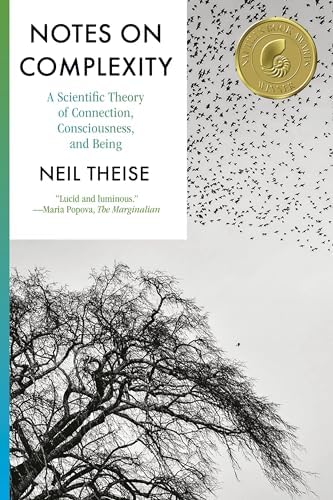
복잡성에 관한 노트: 연결, 의식, 존재에 관한 과학적 이론: Theise, Neil: Amazon

Notes on Complexity: A Scientific Theory of Connection, Consciousness, and Being : Theise, Neil: Amazon.com.au: Books
Sociology  Culture

Kindle$14.99
Available instantly

 Audiobook
Paperback$30.52


Follow the author

Neil Theise

Notes on Complexity: A Scientific Theory of Connection, Consciousness, and Being Paperback – 1 January 2025
by Neil Theise (Author)
4.4 4.4 out of 5 stars (443)


**2024 Nautilus Book Award Winner**

**The Marginalian Favorite Books of 2023**

An electrifying introduction to complexity theory, the science of how complex systems behave, that explains the interconnectedness of all things and that Deepak Chopra says, 'will change the way you understand yourself and the universe'.

Nothing in the universe is more complex than life. Throughout the skies, in oceans, and across lands, life is endlessly on the move. In its myriad forms from cells to human beings, social structures, and ecosystems life is open-ended, evolving, unpredictable, yet adaptive and self-sustaining. Complexity theory addresses the mysteries that animate science, philosophy, and metaphysics: how this teeming array of existence, from the infinitesimal to the infinite, is in fact a seamless living whole and what our place, as conscious beings, is within it.

The implications of complexity theory are profound, providing insight into everything from the permeable boundaries of our bodies to the nature of consciousness.Notes on Complexityis an invitation to trade our limited, individualistic view for the expansive perspective of a universe that is dynamic, cohesive, and alive a whole greater than the sum of its parts. Physician, scientist, and philosopher Neil Theise takes us to the exhilarating frontiers of human knowledge and in the process restores wonder and meaning to our experience of the everyday.


224 pages

Product description

Review


"This is an extraordinary book that will change the way you understand yourself and the universe. It will empower you. We should all be indebted to Neil Theise for this monumental contribution to the science behind all reality."-Deepak Chopra

"Lucid and luminous."--Maria Popova, The Marginalian

"Lucid and accessible . . . This slender work offers a compelling retreat into the exhilarating and oddly reassuring world of complexity."--Washington Post

"Mind-blowing . . . [There is] a very small amount of people we've interviewed who seem to be able to see the entire world in all of its complexity, in one view. . . . Neil might have his arms around perhaps as much of the big picture as one can get their arms around."--Dax Shepard, Armchair Expert Podcast

"Enthusiastic and convincing in [its] demonstrations of the universe's vast interconnectedness. . . . A stimulating read."--Kirkus

"A wide, wise, and warm presentation and evocation of the broad domains of complexity, life, mind, and emergence. Please do read this book. The world is better for it."--Stuart Kauffman, MacArthur Fellow, Fellow of Royal Society of Canada, author of The Origins of Order

"A must-read instant classic for those who are determined to discover the true nature of reality."--Robert Thurman, Jey Tsong Khapa Professor Emeritus, Columbia University

"Engaging, compelling and revelatory, Notes on Complexity takes us inside the cell and outside the galaxy to deepen our understanding of the mysteries of which we are made. It is a fascinating and thought-provoking journey that filled me with wonder."--Mark Epstein, MD, author of The Zen of Therapy: Uncovering a Hidden Kindness in Life

"This timely book invites us on a transformative journey into what is normally hidden from view--the complex, complementary interactions that inform science, art, and religion, and illuminate our existence as conscious and creative beings, inseparable from the totality of life."--Ian A. Baker, PhD, National Geographic Explorer for the Millennium and author of The Heart of the World

"Notes on Complexity gives us a new way to see life and understand our existence."--Daniel C. Matt, author of God & the Big Bang and translator of The Zohar: Pritzker Edition

"Neil Theise takes us through the 'shimmering webs' of complexity--from the womb to the windy mountain rooftops of the world, so that we may come home to the everywhere and the everyone."--Maureen Seaberg, author of Fearfully and Wonderfully Made: The Astonishing New Science of the Senses


About the Author

Neil Theise is a professor of pathology at the NYU Grossman School of Medicine. Through his scientific research, he has been a pioneer of adult stem cell plasticity and the anatomy of the human interstitium. 
He is also a longtime student of Zen Buddhism. Dr. Theise's studies in complexity theory have led to interdisciplinary collaborations in fields such as integrative medicine, consciousness studies, and the science-religion dialogue.
He lives in New York City.

Top
About this itemSimilarFrom the AuthorQuestionsReviewsNotes on Complexity: A Scientific Theory of Connection, Consciousness, and Being

Product details
Publisher ‏ : ‎ Spiegel & Grau
Publication date ‏ : ‎ 1 January 2025
Language ‏ : ‎ English
Print length ‏ : ‎ 224 pages
ISBN-10 ‏ : ‎ 1954118678
ISBN-13 ‏ : ‎ 978-1954118676
Item weight ‏ : ‎ 272 g
Dimensions ‏ : ‎ 13.97 x 1.27 x 20.96 cm
Best Sellers Rank: 10,025 in Books (See Top 100 in Books)1 in Chaos Theory
26 in Ecology (Books)
33 in Sociology of Culture
Customer Reviews:  4.4 4.4 out of 5 stars (443)

About the author
Follow authors to get new release updates, plus improved recommendations.

Follow

Neil Theise


====

네, 세진님. 이 기사의 핵심 연구자이자 뉴욕대 의과대학 병리학 교수인 닐 타이스(Neil Theise) 박사가 직접 쓴 관련 도서가 이미 출간되어 있습니다.

책 제목은 한국어로 번역하면 <복잡성에 관한 노트: 연결, 의식, 존재에 관한 과학적 이론>(원제: Notes on Complexity: A Scientific Theory of Connection, Consciousness, and Being)이며, 2023년에 출간되었습니다.

이 책은 단순히 '간질(Interstitium)'이라는 신체 조직만을 다루는 전문 의학 서적이라기보다는, 이를 확장하여 세상의 모든 것이 어떻게 연결되어 있는지를 다루는 대중 과학·철학서에 가깝습니다.

닐 타이스 박사는 오랫동안 의학 연구와 함께 불교(젠) 명상 및 복잡계 이론을 공부해 온 학자입니다. 그는 이 책을 통해 다음과 같은 흥미로운 이야기들을 펼쳐냅니다.

  • 간질과 신체의 연결성: 기사에서 다루어진 간질의 발견 과정을 포함하여, 우리 몸이 고정된 장기들의 조각보가 아니라 유기적으로 흐르는 하나의 거대한 그물망이라는 사실을 세포학적으로 설명합니다.

  • 복잡계 이론으로 보는 생명: 아주 미미한 세포에서부터 인간, 생태계, 나아가 우주 전체에 이르기까지, 독립된 것처럼 보이는 존재들이 어떻게 스스로 조직화되고 예측 불가능하게 연결되어 움직이는지 규명합니다.

  • 동양 철학과 서양 의학의 만남: 간질의 유체 흐름을 동양의 경락이나 에너지 시스템(차크라)과 연결 짓는 시각을 보여주며, 불교의 '공(空)' 사상이나 상호의존성 개념을 현대 과학의 언어로 풀어냅니다.

간질의 발견이 인류의 신체관과 우주관을 어떻게 확장하고 있는지 더 깊이 고찰해 볼 수 있는 책입니다. 혹시 이 책의 구체적인 내용이나 복잡계 이론과 간질의 연관성에 대해 더 궁금한 점이 있으신가요?

==

<Notes on Complexity: A Scientific Theory of Connection, Consciousness, and Being>는 Neil Theise의 책입니다. 그는 바로 <interstitium> 연구의 핵심 인물 중 한 사람입니다. 2018년 interstitium 논문, 2021년 조직·장기 경계 너머의 interstitial spaces 연결성 논문과도 연결됩니다.

관계는 이렇게 정리할 수 있습니다.

<interstitium>은 그의 “몸 안에서 발견한 연결망”이고,
<Notes on Complexity>는 그 발견을 더 큰 철학·과학 이론으로 확장한 책입니다.

즉 이 책은 단순히 근막이나 간질 공간을 설명하는 의학책이 아닙니다. Theise는 interstitium을 하나의 사례로 삼아, 생명·의식·우주가 모두 <복잡계>라는 관점에서 이해될 수 있다고 말합니다. 책 소개도 세포, 인간, 생태계, 우주까지 복잡계가 어떻게 작동하는지를 설명한다고 되어 있습니다.

그래서 관계는 세 단계입니다.

  1. <해부학적 발견>
    몸은 분리된 장기들의 모음이 아니라 액체와 결합조직의 연결망이다.
  2. <복잡계 이론>
    몸의 기능은 한 부분에서만 생기지 않고, 수많은 요소들의 상호작용에서 emergent하게 생긴다.
  3. <의식·존재론>
    자아도 고립된 실체가 아니라 관계와 연결 속에서 생겨나는 과정이라는 방향으로 논의를 확장한다.

세진님이 보신 뉴욕타임스 기사가 “몸의 숨겨진 통로”라면, 이 책은 “그 통로들이 왜 철학적으로 중요할 수 있는가”를 말하는 책입니다.

다만 주의할 점도 있습니다. 이 책은 엄밀한 의학 교과서라기보다 <과학+철학+명상적 세계관>에 가까운 책입니다. 그래서 interstitium 자체를 더 정확히 알고 싶으면 근막·해부학 책이 낫고, Theise가 왜 이 발견을 <연결성, 의식, 존재>의 문제로 확장하는지 알고 싶으면 이 책이 좋습니다.

==

==

==
Translate all reviews to English
From Australia

mark raymond
5.0 out of 5 stars A Must Read for Curious People Involved in Helping People Change
Reviewed in Australia on 6 April 2025
Format: Hardcover
A Fascinating and Illuminating Book.
This is such a big topic to get your head around but the author does a great job in writing in a clear and straight forward way. I read this book because as a business coach trained in the ontological, systemic team and mindfulness traditions, I wanted to learn about complex systems in different forms and was intrigued (after listening to Theise interviewed) about his perspective, given his training as a pathologist. What I enjoyed most was his perspective - as a medical practitioner steeped in the scientific tradition but not a slave to it - he offers other important perspectives such as Eastern philosophies and challenges some of the deeply held beliefs we have inherited from the scientific tradition, and also highlights where science has been useful. Reading the book, with various detours with Chat GPT, has given me a greater felt sense about how we are all connected, that life is unpredictable and left me in awe of the ability of living systems to adapt and change.
Helpful
Report
From other countries

kd
5.0 out of 5 stars excellent read
Reviewed in Canada on 20 February 2025
Format: PaperbackVerified Purchase
mindfull
Report

Eigg
5.0 out of 5 stars Fascinating
Reviewed in the United Kingdom on 11 September 2025
Format: PaperbackVerified Purchase
This is a fascinating, thought-provoking book that is very clearly written and which I found a great introduction to the topic of complexity.
Report

Julie
5.0 out of 5 stars Loved it!
Reviewed in Germany on 20 August 2023
Format: HardcoverVerified Purchase
I found out about the author listening to an itw of his on the Armchair Expert podcast. Fascinating subject for anyone passionate about understanding the world. Very compelling book, written in a way that it is accessible to anyone who may not be a scientist;)
Report

Stefano Hagen
5.0 out of 5 stars Abrangente e interessante
Reviewed in Brazil on 15 January 2025
Format: HardcoverVerified Purchase
Num ingles claro e compreensivel, inclusive para quem não tem o ingles como língua mãe, o autor constroi o seu argumento de forma clara e abrangente da física quantica aos animais superiores. No seu trajeto visita e contextualiza varios momentos do projeto científico e da filosofia e os integra de forma lógica e com uma leitura original à sua cosmovisão.
Report
Translate review to English

ChelseaYogi
5.0 out of 5 stars a good primer on complexity theory
Reviewed in the United States on 16 June 2023
Format: KindleVerified Purchase
I have a crush on complexity theory. It is the antidote for a childhood steeped in the simplistic and rigid platitudes of organized religion. It doesn’t try to explain the world, giving people a false sense of certainty and superiority. It explores the underlying dynamics of living systems, which are unpredictable by nature. In our lives, we can see patterns and pursue a direction but the outcomes are determined by countless elements that are beyond what we do. As mysterious as this seems, we see examples of it all the time (breakout moments for actors and artists, how candidates as oppositional in nature as Obama and Trump can both be elected, and when music videos go viral). This book extends complexity theory into all the layers of scientific analysis, from the subatomic to the metaphysical. It’s interesting, wise, and also easy to read. In other words…a good book.
Report

Carolyn
5.0 out of 5 stars Notes on complexity
Reviewed in the United States on 19 December 2025
Format: HardcoverVerified Purchase
Very interesting book but very hard to read- had to read it twice not to miss anything
Report

nazutimi
5.0 out of 5 stars 意犹未尽
Reviewed in Germany on 20 June 2024
Format: HardcoverVerified Purchase
意犹未尽 引发多边思考 期待更多作品
Report
Translate review to English

Kate Munn
5.0 out of 5 stars Life changing
Reviewed in Canada on 13 January 2025
Format: HardcoverVerified Purchase
This book was overwhelmingly beautiful. I know I will read it again and again. 1/4 of the way through I ordered another copy to give to my son.
Report

John Sharkey
5.0 out of 5 stars Written with erudite and eloquent articulacy, brilliant.
Reviewed in the United Kingdom on 17 August 2023
Format: HardcoverVerified Purchase
In today's era, exercising caution and vigilance has become essential when engaging with AI.
I am referring to Artificial Information. As we venture into the vast expanse of limitless information, it is imperative that we maintain confidence in the authenticity of our sources. Having delved into the profound insights of "Notes On Complexity: A Scientific Theory of Connection, Consciousness, and Being" by esteemed Pathology Professor Dr. Neil Theise, I can wholeheartedly assure truth-seekers that they are embarking on a secure intellectual journey.
This book navigates intricate subjects such as consciousness, quantum foam, randomness, chaos, and complexity, which inherently carry the risk of ensnaring a broader readership within a labyrinth of convoluted and perplexing language. Yet, this very aspect stands as a testament to the book's remarkable potency. Theise, from the outset, candidly reveals his lifelong passion for amassing captivating facts and theories about the world, a passion that resonates throughout with his erudite and eloquent articulacy of these concepts.
This is a must read.
Report

Piyali Mukherjee
4.0 out of 5 stars An easy and interesting read on metaphysics
Reviewed in the United States on 29 May 2024
Format: KindleVerified Purchase
Starting with basic scientific empirical principles and delving all the way into quantum mechanics and Godelian math, this book is a quick and accessible read to complexity theory. What I appreciate about this book is that it is cohesive: each part makes sense about the next part, which is hard to do in an argument that can easily be waylaid by claims of being too "woo". I really like this authors style and would read again.
Report

Lisa Babiuk
5.0 out of 5 stars A book of hope
Reviewed in Canada on 20 June 2023
Format: HardcoverVerified Purchase
I love this book, I've read it a couple times and will read it again as it contains so much to reflect on. The first reading through gave me hope for what seems to be a chaotic and complicated life, which can be overwhelming, but reading about the complexities that life experiences bring and the randomness brought me comfort. The second time the hope transmuted to appreciation for all experiences even though many are uncomfortable they offer something that brings a greater sense of consciousness and being a part of the whole, we all matter, we all have something to offer and it's more than we will ever comprehend.
Report

Carol B-T
4.0 out of 5 stars Grat hourney; disappointing end
Reviewed in the United Kingdom on 11 May 2025
Format: KindleVerified Purchase
Most of this work is a brilliant overview of complexitytheory and quantum mechanics presented in clear and comprehensible language, with the profound implications of those sciences explored in lucid and convincing terms. Unfortunately, though, Theise then falls into the trap of all meditators: he attributes too much to his own experience. He even acknowledges this, but seems unable to hold back. That's understandable, but not helpful. The inherent problem of certituse based on one's own inner certitude is that it cannot be shared in language, nor can it be definitive. Theise also has not taken into account the qualitative difference between the revealerrs of the great religions (from Krishna and before to Baha'u'llah) and the sages who arise from time to time but make no claim to be mouthpieces of God. In fact Theise never addresses the question of whether or not his Consciousness is or is not what others call God. This whole aspect of the work belongs in another book. Here the exegesis is narrow compared with the broad panorama of its explorations of science.
Report

Andy Milburn
5.0 out of 5 stars Awe-inspring, friendly and timely
Reviewed in the United States on 14 August 2025
Format: KindleVerified Purchase
The tone and careful crafting make this an easy book to engage, even while the topics are profound and complex. Incredibly timely for a world waking up to questions of consciouness and meaning raised by artifical intelligence
Report

BR
3.0 out of 5 stars Duck Soup
Reviewed in the United States on 4 November 2023
Format: KindleVerified Purchase
This book's subtitle claims to be "A Scientific Theory of Connection, Consciousness, and Being."

But it isn't a theory of anything. It's a belief system of Everything. With a bunch of core ideas -- about Life in the Universe and our central place within it -- that pretty much anyone can find something to like and fervently believe.

If you believe in God or believe in Science. If you don't believe in God or believe that Science can't explain everything (or anything). If you're a Buddhist (like myself) or a Hindu or a Sufi or a Christian or a Creationist. If you're a quack like Deepak Chopra (the AIDS virus emits "a sound that lures the DNA to its destruction") or you're into philosophy or quantum physics or metaphysics or creativity or...

Looking for solace or inspiration? Look no further.
Report

Jeannie Fontana
5.0 out of 5 stars A masterpiece
Reviewed in the United States on 3 December 2024
Format: HardcoverVerified Purchase
I LOVE this book and have shared it with soooooo many friends. Neil Theise has an extraordinary gift for explaining massively big concepts that are often a challenge to wrap your head around, particularly in physics and complexity science. Notes on Complexity takes you on a fascinating journey through interconnected systems, making profound ideas accessible and engaging without oversimplifying. His writing is clear, thought-provoking, and deeply inspiring, offering new ways to see the world and our place in it. A must-read for anyone curious about the mysteries of the universe and the elegance of complexity!
Report

Joshua Wright
5.0 out of 5 stars Excellent
Reviewed in the United States on 8 May 2026
Format: PaperbackVerified Purchase
I could feel myself getting smarter with each turn of the page.
Report

Greg
4.0 out of 5 stars How science and religious thought are reconciled
Reviewed in the United States on 5 September 2023
Format: KindleVerified Purchase
A very well done treatment on the connection of science (complexity) and conciousness / being. I’m a scientist and a Buddhist and found the author’s arguments and writing persuasive.
Report

Carol Davis
5.0 out of 5 stars Such a delightful adventure
Reviewed in the United States on 22 June 2023
Format: HardcoverVerified Purchase
This book is difficult to put down.
In short, understandable, paragraphs and chapters Neil Theise takes us on a journey that shows us what is meant when people say “we are all connected.” Across the scale from the tiniest knowable particles and waves out into the cosmos, the author describes the science behind systems organization and leads the way to our understanding of how order always resolves from chaos. The complexity of the science of what we can’t see or measure directly yet is available to us when we recognize the foot prints of this order. This book helps us make larger sense of what we already knew, and we leave it feeling really good about ourselves and in awe of the magnificent mystery behind it all.
Report

Placeholder
5.0 out of 5 stars From Soup to Nuts
Reviewed in the United States on 21 March 2025
Format: KindleVerified Purchase
Theise conveys us on a wild joyride through all the sites of complexity from math and biology to the ground of being. What an invigorating and thrilling ride!
Report

dominic taboada
1.0 out of 5 stars Complexity Theory Nowhere to be Found
Reviewed in the United States on 14 July 2025
Format: HardcoverVerified Purchase
In no ways is this a book an investigation of complexity theory nor even a superficial introduction of it. There is essentially nothing of complexity theory reflected in the book, which comes in three parts:

1) an introductory twenty=page section which, again, does not even serve to introduce very basic fundamental ideas of complexity;
2) a survey of the increasingly microscopic levels of the organization of a human body, which is incredibly superficial and noninformative, but at least unobjectionable until the two physics sections, wherein the author makes a conspicuous demonstration of his abject lack of understanding of the last century of theoretical physics; and
3) an absolutely inane disquisition on zen buddhism and consciousness, complete with a revival of that old hippie trope about how the copenhagen interpretation "proves" his personal spiritual ideas.

this book is a personal spiritual manifesto relying of interpretations of physical theories with which the author is very clearly not even minimally conversant: "my-spirituality-is-true-because-quantum" written by someone painfully out of his theoretical depths.

do not waste your time with this drivel.
Report

Liz McNulty
5.0 out of 5 stars Curious about quantum physics and spirituality explaining consciousness? You’ll love this book
Reviewed in the United States on 9 June 2023
Format: HardcoverVerified Purchase
I devoured this book and it has given me so much clarity about consciousness and is deeply informing my practice as a somatic therapist. It speaks to every part of my being because it weaves science, physics and spiritual truths to explain fundamental awareness. Modern medicine is yearning for a paradigm shift, another lens of understanding our systems and how to facilitate healing in patients and this book is a major tipping point for this shift. Thank you for this gift of a book!
Report

Jessica
5.0 out of 5 stars Great book and thought-provoking
Reviewed in the United States on 5 April 2025
Format: HardcoverVerified Purchase
Great book. Definitely made me think about the world and consciousness a little differently.
Report

John Skutnik
5.0 out of 5 stars A Compelling Interdisciplinary Study
Reviewed in the United States on 9 June 2023
Format: HardcoverVerified Purchase
The book is divided into three sections, and each section is further divided into chapters covering those themes. Dr. Neil Theise, a professor of pathology at the NYU Grossman School of Medicine, surveys the unity of subjects as diverse as biology, physics, math, consciousness, and philosophy. He provides clear explanations and many footnotes. He also includes a bibliography and a list of Further Readings for those who might be interested in exploring these concepts further.
Report

carolpdx
5.0 out of 5 stars One of the best books I’ve read this year.
Reviewed in the United States on 25 March 2025
Format: HardcoverVerified Purchase
Well written and thought-provoking. Excellent subject for a book group interested in exploring ideas.
Report

Val
5.0 out of 5 stars Amazing book
Reviewed in the United States on 7 February 2024
Format: HardcoverVerified Purchase
Very well documented, guiding the reader step by step to the major conclusion of the book.
Loved the complexity theory part. Need to read more about it.
The consciousness part was not so convincing to me, but who am I to deny conclusions of such a beautiful mental construct as this book!
Report

Matthew Perry
5.0 out of 5 stars Short and sweet
Reviewed in the United States on 7 August 2023
Format: HardcoverVerified Purchase
As a layperson in these subjects (complexity theory, mathematics, philosophy, religion, physics) I had doubts that this short book could be accessible. I assumed this book's broad goals would require dense academic jargon. Instead the author manages to pull it off in less than 170 small pages using clear English prose and a few well-designed graphics.
Report

Colleen Bailey
2.0 out of 5 stars Subject matter was great. Author wasn't.
Reviewed in the United States on 1 February 2024
Format: KindleVerified Purchase
The first parts detailing the nature of complex systems were interesting. Some of the assumptions seemed flawed, especially dismissiveness towards the role of hierarchical influence. There seems little doubt that local interactions can explain emergent phenomena, but there is also clearly observable evidence in a significant portion of complex systems that a command and control center influences the nature of the system and what emerges.

The correlaries between quantum physics study derived dualities in nature and mystic traditions are old hash. The author adds nothing to the conversation except reckless leaps of unsubstantiated conjecture that seems more interested in forcing equivalency between rigorous scientific exploration and monastic traditional thought.

Subject matter was great. Author, not so much.
Report

Paul Keogh Amripur Consulting P/L
5.0 out of 5 stars A beautifully clear and concise synthesis of perennial wisdom and modern science
Reviewed in the United States on 30 April 2024
Format: KindleVerified Purchase
A book to read more than once and to use as a guide for personal exploration and investigation of big C and its potentialities for new manifestation and transformative realities.
Report

Amazon Customer
2.0 out of 5 stars Very disappointing
Reviewed in the United States on 9 November 2023
Format: KindleVerified Purchase
I had high hopes for this book, as I read everything I can on Complexity and Systems theory. The first few chapters started off well enough-- in fact, they offer a clear explanation for key elements of complexity. But when the author turns to quantum physics and Gödel, things quickly took an illogical turn. He ends up postulating the position of Idealism, that all consciousness comes from "Big "C" Consciousness" as he calls it. And the reasons he gives have been so thoroughly debunked by actual physicists (of which he is not one) There are so many better books that discuss consciousness and complexity that don't end up disguised as a religious text. I highly recommend "The Romance of Reality" as a better alternative.
Report

MommaDee
5.0 out of 5 stars Essential reading
Reviewed in the United States on 1 November 2023
Format: KindleVerified Purchase
I’m a professor of law and am assigning portions of this remarkable book in one of my courses to expand the awareness of my students in areas outside of “law” into fields that examine the nature of rules in different contexts.
Report

DW Green
5.0 out of 5 stars awesome!
Reviewed in the United States on 19 April 2024
Format: KindleVerified Purchase
Excellent writing. Most interesting subject. “We are stardust,” but even before that we are pure Consciousness, pure awareness. Consciousness as the ground of being Enjoy!
Report

Mark Child
5.0 out of 5 stars A Book Like No Other
Reviewed in the United States on 13 May 2023
Format: HardcoverVerified Purchase
This book will, if you allow it, reveal a beauty and interconnectedness across physics, culture, biology and human creativity. Theise writes as a good friend who has something he wants you to see and understand. A wonderful introduction to Complexity Theory- the repercussions of which can point us to new ways of being.
Report

Walter Parsons
5.0 out of 5 stars this book brings so much together into a clear model
Reviewed in the United States on 18 February 2024
Format: KindleVerified Purchase
This book provides a pathway to understanding consciousness. It’s not an easy path. But it brings so much together in one place that reading it is a revelation
Report

Philip Deibert
5.0 out of 5 stars Wonderful
Reviewed in the United States on 4 September 2024
Format: PaperbackVerified Purchase
This is one of the best explanations I have ever read. Thank You
Report

Fan of Tao
5.0 out of 5 stars Thank you!
Reviewed in the United States on 29 August 2023
Format: KindleVerified Purchase
This is the most enlightening book I have read. Gratitude is the only feeling for the author’s work of lifelong searching and effort! Thank you for giving your talents back to humanity. May it awake the world.
Report

Susan
5.0 out of 5 stars A well conceived and written View
Reviewed in the United States on 18 September 2023
Format: KindleVerified Purchase
A well conceived and written view of the important next step for humanity….an integrated understanding of our true nature. Recommended especially if you already have inquired into non duality.
Report

Susan K. Wetzel
5.0 out of 5 stars Extraordinarily insightful
Reviewed in the United States on 22 May 2023
Format: KindleVerified Purchase
The author gives an elegant offering: the fruits of his years of scientific and spiritual study!
The topics are vast and daunting, his warm wit renders them intimate and approachable.
Readers will be the better for studying with Neil.
Report

Sean
5.0 out of 5 stars Fantastic!
Reviewed in the United States on 2 November 2023
Format: KindleVerified Purchase
This is the book I’ve been hoping to find. So much great information, thoughts and how to integrate these to create a whole.
Report

Kindle Customer
5.0 out of 5 stars Excellent read
Reviewed in the United States on 12 September 2023
Format: KindleVerified Purchase
I thoroughly enjoyed it and wholeheartedly agree. It's very readable and well-integrated. I highly recommend this book. You will be stimulated.
Report

L. Burman
3.0 out of 5 stars A philosophy not a scientific exposition
Reviewed in the United States on 20 August 2023
Format: HardcoverVerified Purchase
The author's purported proofs are set in non-verifiable structures. Not a bad read, but not science.
Report

Christoff von Bingham
1.0 out of 5 stars Sweeping generalizations meet radical simplifications
Reviewed in the United States on 14 June 2023
Format: HardcoverVerified Purchase
Oh, this is really terrible. The worst kind of popular science writing. The usual inch deep drivel on the Copenhagen interpretation of quantum mechanics and Gaia theory. Does the poetically named ‘butterfly effect’ even occur? If so, the chaotic and unexpected outcomes of even as few as 10 butterflies would probably create some kind of inter dimensional portal. Awful. I like the cover art and the paper seems of high quality.
Report

==

==

==

==

==

인간 신체의 숨겨진 경로, 간질을 들여다보다 뉴욕타임스

간질, 해부학적 고정관념 파괴 - Google Gemini
Inside the Interstitium, the Human Body’s Hidden Pathways - The New York Time
Some discoveries change the way we view the human body.
1,000 단어 요약+평론. 이 기사 만이 아니라 이 기사에 대한 반응의 여러 글들을 동원하여 써 주세요.

<인간 신체의 숨겨진 경로, 간질을 들여다보다> 요약 및 평론

요약: 제3의 순환계, 간질의 발견과 의학적 지평

2018년 닐 타이스 교수 연구진의 첫 보고와 2021년 타투 잉크의 이동 경로 연구를 통해, 인간의 신체 내부에서 거대한 그물망처럼 연결된 새로운 공간인 <간질(Interstitium)>의 존재가 규명되었다. 과거 해부학계는 심혈관계와 림프계라는 두 가지 순환계만을 인정해 왔으며, 조직 사이의 미세한 공간들은 서로 분리된 독립된 영역으로 간주해 왔다. 그러나 최신 연구는 피부 아래의 근막과 장기 사이의 공간들이 거미줄처럼 촘촘히 연결되어, 세포 외액이 흐르는 <제3의 순환계>를 형성하고 있음을 증명한다. 간질은 콜라겐 섬유 구조와 히알루론산 겔 성분으로 채워져 있으며, 이 속을 흐르는 유체는 신체 곳곳을 이동한 뒤 다시 림프계와 심혈관계로 유입된다.  
PDF
+ 4

이러한 발견은 현대 의학의 여러 난제를 설명하는 중요한 열쇠가 되고 있다. 첫째, 암세포의 전이 메커니즘이다. 암세포가 림프계에 도달하기 전, 간질의 유체를 타고 마치 물고기가 강물을 거스르듯 이동하며 히알루론산을 분해한다는 사실이 밝혀졌다. 이에 따라 간질 내 암세포 침투를 차단하는 신약인 <나르마포티닙>의 임상 시험이 진행 중이다. 둘째, 염증성 장 질환 환자에게서 나타나는 담관 합병증처럼, 기존의 해부학적 경로로는 설명하기 어려웠던 장기 간 유기적 질병 이동이 간질을 통해 이루어짐이 제시되었다. 셋째, 수천 년간 동양의학에서 다루어 온 <침술과 경락>의 생물학적 실체가 규명되기 시작했다. 침술 자리가 간질의 유체가 흐르는 결합 조직과 일치하며, 실제 추적자 주입 실험을 통해 경락의 경로가 간질의 연결망과 일치한다는 사실이 확인되었다. 나아가 간질은 수억 년 전 초기 다세포 생물과 식물의 <아포플라스트>에서부터 이어진 가장 원초적인 순환 형태임이 시사되며, 인간 신체를 바라보는 패러다임을 근본적으로 바꾸고 있다.  
PDF
+ 4
---
평론: 해부학적 고정관념의 파괴와 동서양 의학의 통합적 모색

본 기사는 현대 의학이 수세기 동안 맹신해 온 해부학적 경계가 얼마나 불완전한 것이었는지를 날카롭게 폭로한다. 윌리엄 하베이가 심혈관계를 정립한 이래 인체는 정교하게 분리된 방들과 파이프라인의 집합체로 인식되어 왔다. 그러나 간질의 발견은 인체를 <조각보 이불>이 아닌 하나의 연속적인 <소형 니트 담요>로 바라보게 만든다. 이는 서구 의학이 오랜 시간 고수해 온 기계론적·환원주의적 인간 신체관에 대한 중대한 수정 요구이다.  
PDF
+ 2

특히 이 기사에 대한 학계와 대중의 반응은 크게 두 가지 양상으로 갈라지며 뜨거운 논쟁을 낳고 있다. 첫 번째 부류는 의학적 실용주의 관점에서의 열광이다. 암의 미세 전이 경로를 차단하는 <나르마포티닙>의 발견처럼, 간질을 표적으로 하는 치료법이 난치성 질환의 게임 체인저가 될 것이라는 기대감이다. 반면 다른 한편에서는 침술과 경락이라는 동양의학적 개념을 마침내 서구의 바이오메디컬 언어로 번역해 냈다는 점에서 문화적·학제적 충격을 토로한다. 오랜 기간 서구 주류 의학계로부터 '플라시보 효과'나 '비과학적 미신'으로 치부되던 기(氣)의 흐름이, 간질 액체의 역학적 흐름이라는 물리적 실체를 얻게 된 점은 기념비적이다.  
PDF
+ 3

그러나 이 발견을 지나치게 낭만적으로 수용하는 것은 경계해야 한다. 레베카 웰스 교수가 지적하듯, 간질이 동서양 의학의 가교가 되기 위해서는 단순한 위치적 일치를 넘어 유체의 흐름과 면역 반응 사이의 인과관계를 완벽하게 과학적으로 입증해야만 한다. 경락이 곧 간질이라는 등식은 아직 가설의 단계이며, 가설의 매력에 도취되어 성급한 임상적 결론을 내리는 것은 위험하다. 또한 암세포가 간질을 고속도로처럼 활용한다는 점은 역설적으로 인체의 모든 방어벽이 무너져 있음을 의미하기도 하므로, 이에 대한 통제 능력을 갖추기 전까지 간질은 축복이자 동시에 재앙의 통로가 될 수 있다.  
PDF
+ 2

결론적으로 <간질의 발견>은 인간의 몸이 여전히 미지의 대륙임을 증명하는 신호탄이다. 이는 서양의 미시적 세포학적 접근과 동양의 거시적 흐름의 철학이 만나는 거대한 접점이다. 과학은 고정된 진리가 아니라 끊임없이 수정되는 과정임을 본 기사는 훌륭하게 웅변하고 있으며, 향후 질병의 예방과 치료는 인체를 '분리된 장기'가 아닌 '하나로 연결된 유동적 생태계'로 다루는 방향으로 진화해야 할 것이다.  
PDF
+ 2

Gemini is AI and can make mistakes.


==

<요약+평론>

이 글 <Inside the Interstitium, the Human Body’s Hidden Pathways>는 

단순한 의학 기사라기보다, 인간 신체를 바라보는 세계관 자체를 흔드는 과학 저널리즘의 성격을 가진 글이다. 뉴욕타임스는 이 글에서 “interstitium(간질 조직 공간)”을 기존의 림프계·혈관계와 더불어 사실상 “제3의 체액 순환 네트워크”처럼 소개한다. 특히 이 발견이 침술(acupuncture), 암 전이, 염증성 질환, 심지어 동서의학 연결 가능성까지 암시한다는 점에서 큰 반향을 일으켰다.

그러나 이 기사 이후 의학계·과학 커뮤니티·대중 사이에서는 상당히 복합적인 반응이 나타났다. 크게 보면 반응은 네 가지 흐름으로 나뉜다.

1] 진짜 혁신적 발견이라는 반응
2] 과장된 언론 플레이라는 비판
3] fascia(근막) 연구의 재조명이라는 해석
4] 동양의학 정당화로 과잉 연결하는 것에 대한 경계

이 네 흐름을 종합적으로 볼 필요가 있다.

우선 기사 자체의 핵심 주장은 비교적 단순하다. 인간 몸속에는 피부 아래와 장기 주변에 액체가 흐르는 미세 공간들이 존재하며, 이 공간들이 서로 연결된 하나의 거대한 네트워크일 수 있다는 것이다. 기존에는 이 공간들을 각각 독립적인 틈이나 결합조직 정도로 보았지만, Neil Theise와 Rebecca Wells 등의 연구는 이것이 하나의 연속된 구조일 가능성을 제기했다.

기사에서 특히 강조하는 부분은 “몸이 patchwork quilt(조각보)”가 아니라 “knitted blanket(짜인 담요)”처럼 연결되어 있다는 비유이다. 이는 현대 해부학이 지나치게 기관 중심적·분절적이었다는 문제의식을 담고 있다.

이 발견이 큰 관심을 받은 이유는 몇 가지 때문이다.

첫째, 암 전이 설명과 연결된다. 기사에서는 암세포가 림프계를 타기 전에 먼저 interstitium 내부의 유체 흐름을 따라 이동할 수 있다고 설명한다. 이는 암 전이 연구에 새로운 모델을 제공할 가능성이 있다. 특히 췌장암 관련 실험 약물까지 언급되면서 임상적 가능성이 강조되었다.

둘째, 염증성 장질환·자가면역 질환 설명에도 연결된다. 장내 세균 조각이나 면역세포가 interstitium을 따라 간과 담관까지 이동할 수 있다는 가설은 기존의 장-간 축(gut-liver axis) 연구와 연결된다.

셋째, 가장 대중적 반응을 일으킨 부분은 침술 관련 설명이었다. 기사 후반부는 중국 연구진과 Harvard Medical School 연구자의 연구를 인용하며, 침술 경락이 interstitium의 흐름과 관련될 가능성을 언급한다.

바로 이 지점에서 인터넷과 과학계 반응이 폭발적으로 갈라졌다.

일부 동양의학 지지자들은 “서양의학이 드디어 기(氣)의 존재를 인정했다”고 환호했다. 유튜브, 웰니스 블로그, 대체의학 커뮤니티에서는 “침술 경락의 과학적 증명”이라는 식으로 이 기사를 소비했다.

그러나 상당수 의사·생물학자들은 이 해석을 강하게 비판했다.

대표적인 비판은 다음과 같다.

“Interstitium은 새로운 장기(new organ)가 아니다.”

실제로 2018년 최초 논문이 나왔을 때도 많은 해부학자들은 “이미 알려진 결합조직 공간을 새 이름으로 포장한 것”이라는 반응을 보였다. 특히 Science-Based Medicine 계열 필자들과 여러 병리학자들은 언론이 “새로운 장기 발견”처럼 과장했다고 비판했다.

핵심 비판은 이렇다.

1] 조직 사이의 액체 공간 자체는 오래전부터 알려져 있었다.
2] fascia와 extracellular matrix 연구자들에게는 전혀 낯선 개념이 아니다.
3] “새로운 순환계”라는 표현은 아직 과학적으로 과장이다.
4] 침술과 연결하는 것은 증거 수준이 매우 낮다.

실제로 기사가 흥미로운 과학적 가설을 소개하는 것은 맞지만, 엄밀한 의미에서 “제3의 순환계가 완전히 확립되었다”는 수준은 아니다.

특히 skeptics(회의주의 의학 커뮤니티)는 이 기사에 대해 매우 경계했다. 이유는 역사적으로 “양자역학이 기를 증명했다”, “물 기억(memory of water)” 같은 식의 과학 언어 오남용이 대체의학 마케팅에 반복적으로 사용되었기 때문이다.

그들은 다음과 같이 주장했다.

“근막과 조직액 흐름이 존재한다는 것과, 전통적 기(氣) 개념이 과학적으로 증명되었다는 것은 완전히 다른 이야기다.”

이 비판은 상당히 타당하다.

왜냐하면 전통 중국의학의 경락 체계는 상징적·철학적 체계이지, 현대 해부학의 구조물과 일대일 대응 관계로 만들어진 것이 아니기 때문이다.

그럼에도 불구하고 흥미로운 점은, 완전히 회의적인 과학자들조차 fascia 연구 자체는 점점 중요하게 보기 시작했다는 것이다.

특히 최근 10~15년 동안 fascia 연구는 재활의학·통증의학·스포츠의학 분야에서 급속히 성장했다.

과거 의학은 근막을 단순 포장재 정도로 취급했지만, 최근에는 다음과 같은 사실들이 강조된다.

1] 근막은 감각신경이 풍부하다.
2] 만성 통증과 관련될 수 있다.
3] 전신적 연결망처럼 작동할 수 있다.
4] 기계적 긴장(mechanical tension)이 몸 전체에 영향을 줄 수 있다.

이 때문에 일부 연구자들은 interstitium 발견이 “완전히 새로운 것”이라기보다, fascia revolution(근막 혁명)의 일부라고 본다.

흥미롭게도 이것은 현대 의학의 구조적 한계를 보여주는 사례이기도 하다.

20세기 생물의학은 세포·기관·분자 중심으로 엄청난 성공을 거두었다. 그러나 동시에 “연결성(connectivity)”을 과소평가하는 경향도 있었다.

몸을 지나치게 기계 부품처럼 분절적으로 이해했다는 비판이다.

interstitium 논의가 매력적인 이유는 바로 여기에 있다. 사람들은 단순히 새로운 조직을 발견했다는 사실보다, “몸 전체가 연결된 흐름”이라는 이미지에 강하게 반응한다.

이는 현대인의 심리적 욕구와도 연결된다.

특히 만성 통증, 스트레스 질환, 자율신경 문제, 피로 증후군 같은 문제를 겪는 사람들은 기존 병원 시스템에서 “검사상 이상 없음” 판정을 자주 경험한다. 그런 상황에서 interstitium 같은 개념은 “몸의 숨겨진 연결망”이라는 상상력을 제공한다.

따라서 이 기사에 대한 대중 반응에는 단순 과학 이상의 문화적 의미가 있다.

현대인은 지나치게 분절화된 의학에 피로를 느끼고 있으며, “전체성(holism)”에 대한 갈망을 가지고 있다.

다만 여기에는 위험도 있다.

과학적 가능성과 철학적 상상력을 혼동하면, 검증되지 않은 치료법이 “최첨단 과학” 포장을 하게 된다. 실제로 기사 이후 여러 웰니스 산업과 대체의학 마케팅이 interstitium 용어를 적극 차용하기 시작했다.

따라서 가장 균형 잡힌 태도는 다음과 같을 것이다.

1] interstitium 연구는 실제로 흥미롭고 중요하다.
2] fascia와 조직액 흐름 연구는 앞으로 더 커질 가능성이 높다.
3] 암 전이·염증·통증 연구에 새로운 통찰을 줄 수 있다.
4] 그러나 아직 “새로운 장기” 수준으로 확정된 것은 아니다.
5] 침술이나 기(氣)를 과학적으로 증명했다고 말하기에는 근거가 부족하다.

결국 이 논쟁은 단순한 해부학 논쟁이 아니다.

“인간 몸을 어떻게 이해할 것인가?”

라는 철학적 질문에 가깝다.

현대 생물의학은 지나치게 세분화되었고, interstitium 논의는 다시 “흐름”, “연결”, “전체성”으로 시선을 돌리게 만든다. 그런 의미에서 이 기사는 단순한 의학 뉴스 이상의 문화적 사건이었다고 볼 수 있다.

==

==

==
이 주제에 대해서 책이 이미 나왔나요?
==

네, 세진님. 이 기사의 핵심 연구자이자 뉴욕대 의과대학 병리학 교수인 닐 타이스(Neil Theise) 박사가 직접 쓴 관련 도서가 이미 출간되어 있습니다.

책 제목은 한국어로 번역하면 <복잡성에 관한 노트: 연결, 의식, 존재에 관한 과학적 이론>(원제: Notes on Complexity: A Scientific Theory of Connection, Consciousness, and Being)이며, 2023년에 출간되었습니다.

이 책은 단순히 '간질(Interstitium)'이라는 신체 조직만을 다루는 전문 의학 서적이라기보다는, 이를 확장하여 세상의 모든 것이 어떻게 연결되어 있는지를 다루는 대중 과학·철학서에 가깝습니다.

닐 타이스 박사는 오랫동안 의학 연구와 함께 불교(젠) 명상 및 복잡계 이론을 공부해 온 학자입니다. 그는 이 책을 통해 다음과 같은 흥미로운 이야기들을 펼쳐냅니다.

  • 간질과 신체의 연결성: 기사에서 다루어진 간질의 발견 과정을 포함하여, 우리 몸이 고정된 장기들의 조각보가 아니라 유기적으로 흐르는 하나의 거대한 그물망이라는 사실을 세포학적으로 설명합니다.

  • 복잡계 이론으로 보는 생명: 아주 미미한 세포에서부터 인간, 생태계, 나아가 우주 전체에 이르기까지, 독립된 것처럼 보이는 존재들이 어떻게 스스로 조직화되고 예측 불가능하게 연결되어 움직이는지 규명합니다.

  • 동양 철학과 서양 의학의 만남: 간질의 유체 흐름을 동양의 경락이나 에너지 시스템(차크라)과 연결 짓는 시각을 보여주며, 불교의 '공(空)' 사상이나 상호의존성 개념을 현대 과학의 언어로 풀어냅니다.

간질의 발견이 인류의 신체관과 우주관을 어떻게 확장하고 있는지 더 깊이 고찰해 볼 수 있는 책입니다. 혹시 이 책의 구체적인 내용이나 복잡계 이론과 간질의 연관성에 대해 더 궁금한 점이 있으신가요?

==

네, 이미 꽤 많은 책들이 나왔습니다. 다만 중요한 점은, 아직 <“interstitium(간질 네트워크)” 자체만을 중심으로 한 대중적 결정판>은 없고, 대부분은 더 넓은 <fascia(근막)>·<connective tissue(결합조직)>·<bodywide fluid network(전신 유체 연결망)> 연구의 일부로 다루고 있다는 점입니다.

현재 흐름은 대략 세 부류입니다.

1] <정통 의학/해부학 계열>
2] <근막(fascia) 혁명 계열>
3] <동서의학 연결·대체의학 계열>

세진님 관심에는 아마 1]과 2]가 특히 중요할 것 같습니다.

가장 핵심적인 책은 아마 이것입니다.

<Architecture of Human Living Fascia
(살아있는 인간 근막의 구조)>
Jean-Claude Guimberteau · Colin Armstrong

이 책은 지금 이 분야에서 거의 “컬트 고전”처럼 취급됩니다.

프랑스 외과의사 Jean-Claude Guimberteau가 살아 있는 조직 내부를 내시경으로 촬영하면서, 기존 해부학 교과서와 전혀 다른 “액체적·섬유적 네트워크”를 보여준 작업입니다.

핵심 아이디어는:

  • 몸은 딱딱한 기관들의 조립체가 아니다.
  • 전신이 유동적 섬유망(fluid fibrous network)이다.
  • 세포보다 “연결망” 자체가 중요할 수 있다.
  • fascia와 interstitium은 분리된 개념이 아니라 연속적 구조다.

라는 것입니다.

흥미로운 점은 이 책이 단순 의학책이 아니라 거의 철학책처럼 읽힌다는 점입니다.

많은 독자들이 이 책을 보며:

“현대 해부학이 너무 기계론적이었다”

라고 느낍니다.

세진님이 관심 가지실 만한 부분은, 이 흐름이 단순 의료기술 이야기가 아니라 <몸을 보는 세계관의 변화>라는 점입니다.

예전 해부학은:

  • 장기
  • 근육
  • 혈관

같은 “분리된 부품” 중심이었다면,

이 흐름은:

  • 연결
  • 장력
  • 유체 흐름
  • 네트워크
  • 전체성

을 강조합니다.

그래서 일부에서는 이를 “post-mechanistic anatomy(탈기계론적 해부학)”라고 부르기도 합니다.

또 하나 중요한 책은:

< Fascia: The Tensional Network of the Human Body
(근막: 인체의 장력 네트워크) >
Robert Schleip 외

입니다.

이 책은 현재 fascia 연구의 거의 표준 교과서 취급을 받습니다.

다만 일반 독자용이라기보다:

  • 재활의학
  • 물리치료
  • 수기치료
  • 스포츠의학

쪽 전문가용에 가깝습니다.

이 책이 중요한 이유는, “근막은 단순 포장재가 아니다”라는 점을 본격적으로 과학화했기 때문입니다.

예전에는 해부 실습에서 fascia를 그냥 잘라내고 지나갔습니다.

하지만 최근에는:

  • fascia가 감각기관 역할을 한다
  • 통증과 관련 있다
  • 전신 기계적 연결망이다
  • 자율신경계와 관련 있다

는 연구가 늘어나고 있습니다.

사실 interstitium 논쟁은 근막 혁명의 일부라고 보는 편이 더 정확합니다.

그리고 세 번째 흐름으로는 동양의학 연결 계열 책들이 있습니다.

예를 들어:

<JingJin Yoga>

같은 책은 fascia와 침술 경락을 연결하려고 시도합니다.

또 중국 연구자들은 interstitial fluid circulation과 경락 관계 논문들을 계속 내고 있습니다.

하지만 여기서는 조심할 필요가 있습니다.

왜냐하면 이 분야에는:

  • 진지한 연구
  • speculative science(가설적 과학)
  • 웰니스 산업 마케팅
  • 뉴에이지적 해석

이 섞여 있기 때문입니다.

실제로 의학계 내부에서는 아직도:

“interstitium을 새로운 장기라고 부르는 건 과장이다”

라는 견해가 꽤 강합니다.

특히 병리학자·해부학자들 중 일부는:

“이미 알려진 결합조직 공간을 언론이 sensationalize했다”

라고 봅니다.

반면 다른 연구자들은:

“아니다. 기존에는 연결망 전체를 보지 못했다”

라고 주장합니다.

즉 지금은 일종의 <패러다임 전환 초기 단계> 같은 분위기입니다.

개인적으로 흥미로운 점은, 이 흐름이 단지 의학 문제가 아니라 현대인의 세계관 변화와 연결된다는 점입니다.

20세기 과학은:

  • 분석
  • 분해
  • 세분화
  • 전문화

를 통해 엄청난 성공을 거두었습니다.

하지만 동시에 사람들은:

“몸 전체가 어떻게 연결되는가?”

라는 질문에 다시 관심을 가지기 시작했습니다.

그래서 fascia/interstitium 담론은:

  • holistic medicine
  • systems biology
  • embodied cognition
  • complexity theory

같은 흐름과 연결됩니다.

Neil Theise 자신도 complexity theory(복잡계 이론)에 깊은 관심이 있는 인물입니다.

세진님이 만약 이 분야를 깊게 읽고 싶다면, 저는 순서를 이렇게 추천합니다.

1] 뉴욕타임스 기사 다시 읽기
→ 큰 그림 파악

2] <Architecture of Human Living Fascia>
→ 가장 혁명적이고 시각적

3] Robert Schleip 계열 fascia 책
→ 보다 과학적·임상적 접근

4] 그 후에 침술·동양의학 연결 논의 읽기
→ 비판적 거리 유지하면서

이 순서가 좋다고 봅니다.

Notes on Complexity: A Scientific Theory of Connection, Consciousness, and Being ---- 이 책은 어떻게 관계가 있는가요?

네. 아주 직접 관계가 있습니다.

<Notes on Complexity: A Scientific Theory of Connection, Consciousness, and Being>는 Neil Theise의 책입니다. 그는 바로 <interstitium> 연구의 핵심 인물 중 한 사람입니다. 2018년 interstitium 논문, 2021년 조직·장기 경계 너머의 interstitial spaces 연결성 논문과도 연결됩니다.

관계는 이렇게 정리할 수 있습니다.

<interstitium>은 그의 “몸 안에서 발견한 연결망”이고,
<Notes on Complexity>는 그 발견을 더 큰 철학·과학 이론으로 확장한 책입니다.

즉 이 책은 단순히 근막이나 간질 공간을 설명하는 의학책이 아닙니다. Theise는 interstitium을 하나의 사례로 삼아, 생명·의식·우주가 모두 <복잡계>라는 관점에서 이해될 수 있다고 말합니다. 책 소개도 세포, 인간, 생태계, 우주까지 복잡계가 어떻게 작동하는지를 설명한다고 되어 있습니다.

그래서 관계는 세 단계입니다.

  1. <해부학적 발견>
    몸은 분리된 장기들의 모음이 아니라 액체와 결합조직의 연결망이다.
  2. <복잡계 이론>
    몸의 기능은 한 부분에서만 생기지 않고, 수많은 요소들의 상호작용에서 emergent하게 생긴다.
  3. <의식·존재론>
    자아도 고립된 실체가 아니라 관계와 연결 속에서 생겨나는 과정이라는 방향으로 논의를 확장한다.

세진님이 보신 뉴욕타임스 기사가 “몸의 숨겨진 통로”라면, 이 책은 “그 통로들이 왜 철학적으로 중요할 수 있는가”를 말하는 책입니다.

다만 주의할 점도 있습니다. 이 책은 엄밀한 의학 교과서라기보다 <과학+철학+명상적 세계관>에 가까운 책입니다. 그래서 interstitium 자체를 더 정확히 알고 싶으면 근막·해부학 책이 낫고, Theise가 왜 이 발견을 <연결성, 의식, 존재>의 문제로 확장하는지 알고 싶으면 이 책이 좋습니다.

==

경근 요가: 요가와 지압 근육 경락을 결합한 근막 스트레칭: Smith, Deborah Valentine, Piotrowski, Barbara "Teddy": Amazon.com.au: Kindle Store

JingJin Yoga: Fascial Stretches Combining Yoga and Acupressure Muscle Meridians: Smith, Deborah Valentine, Piotrowski, Barbara "Teddy": Amazon.com.au: Kindle Store

Kindle
$11.99


Read sample


Follow the authors

Deborah Valentine SmithDeborah Valentine…
Follow

Barbara "Teddy" PiotrowskiBarbara "Teddy"…
Follow


JingJin Yoga: Fascial Stretches Combining Yoga and Acupressure Muscle Meridians [Print Replica] Kindle Edition
by Deborah Valentine Smith (Author), Barbara "Teddy" Piotrowski (Author) Format: Kindle Edition


4.8 4.8 out of 5 stars (5)
The role of the fascia in the human body has been getting a lot of attention. Its effects are far-reaching because it surrounds and holds every organ, blood vessel, bone, and fiber in place! In short, it is everywhere and affects everything! The trick is to keep the fascia “unstuck” so that it is supple and hydrated and can glide, slide, twist, and bend with movement. Bodyworkers know about it because it is everywhere we touch. Yoga practitioners know about it because their asanas are designed to stretch it. JingJin Yoga is about combining those two Eastern wisdoms: Yoga and Chinese Medicine. Unlike other bodywork methods that use the principal energy pathways of acupressure and acupuncture, it focuses on the pathways that are dedicated specifically to the muscles and fascia - the JingJin.
The authors have used the trajectories of the JingJin to fine-tune the asanas of Yoga and added the mind-body connection with the energy pathways through guided meditation. These deceptively simple stretches profoundly benefit the whole body in many surprising ways. When done regularly the effects are cumulative and endless!


Print length  73 pages
====
About the Author
Deborah Valentine Smith, B.A., Dipl. ABT (NCCAOM(R)), has been a Registered Jin Shin Do(R) Bodymind Acupressure(R) practitioner since 1979 and a senior Authorized JSD Teacher since 1983. She is a licensed massage therapist in New York, and a Certified Instructor with the American Organization for Bodywork Therapies of Asia (AOBTA(R)). She has taught worldwide in massage and bodywork schools, learning centers, and formal training programs. She contributed 3 chapters to "A Complete Guide to Acupressure" by Iona Marsaa Teeguarden, and has written numerous articles for Massage and Chinese Medicine publications. Deborah is especially interested in teaching self-care methods like JingJin Yoga to the public. 

Barbara "Teddy" Piotrowski, RN, HNB-BC, BA, Dipl. ABT (NCCAOM(R)), C-IAYT is a Board-Certified Holistic Nurse with more than 40 years of medical experience. She is a Certified Yoga Therapist, a Diplomate of Asian Bodywork Therapy, with an expertise in Shiatsu and Acupressure, and has been a Reiki Master, for over 20 years. As a Registered Nurse, Teddy saw the benefits of Eastern healing arts and believed it to be crucial to integrate them into everyday living. The self-care they provide is a piece that was missing in her Western based medical training.
Through the years Teddy has assisted individuals in all stages of life; from children and teens, couples working through fertility concerns, to older adults. Along with her own growth and acceptance of Eastern therapeutic ideals, she nourished the growth of her company, Greater Harmony, a business totally dedicated to promoting the benefits of a healthier and a more energetic way of life.
==

From other countries

roz
5.0 out of 5 stars Enlightening and Insightful
Reviewed in the United States on 28 March 2024
Format: KindleVerified Purchase
What a great book! The content is very enlightening, interesting and supported by clear definitions and helpful examples. I’m a visual learner so the graphics and examples modeled were also very helpful to me. The layout and flow of the book’s material was easy to follow and review. That was good because it allowed me to personalize my understanding of what I was reading and trying to learn.

I appreciated the knowledge shared in the book. As a senior citizen, I wish I had been exposed to the information earlier in my life. That said, I can clearly see benefits of receiving the general knowledge and specific application of the information at any stage of life.

For me, the book’s content contains a lot of excellent information. It helped me take a gentle, balanced reading and learning approach. I will re-read, practice and repeat the lessons over time to enhance my comfort level with the mental, emotional and physical skill sets provided.
Report

Jessica Hutter
5.0 out of 5 stars Love this way of seeing yoga!
Reviewed in the United States on 8 April 2024
Format: PaperbackVerified Purchase
The connection of the meridians of Chinese medicine with the practice of yoga is fascinating! My yoga practice has much more depth now. The illustrations were also really helpful.
Report

Pat BB
5.0 out of 5 stars yoga and visualizing flow
Reviewed in the United States on 17 February 2024
Format: KindleVerified Purchase
I loved learning about fascia and using visualization with the stretches I already knew! I will also order the book to have these ideas in my hands (as well as my Kindle which makes following the links a dream). Don’t forget to watch the videos and follow the links. This book is for everyone at every age.
Report
==

데보라 밸런타인 스미스(Deborah Valentine Smith)와 바버라 테디 피오트로프스키(Barbara "Teddy" Piotrowski)의 공동 저서 <경근 요가: 요가와 지압 근육 경락을 결합한 근막 스트레칭(JingJin Yoga: Fascial Stretches Combining Yoga and Acupressure Muscle Meridians)>에 대한 요약과 평론입니다. 요청하신 대로 나를 향하지 않은 본문(요약 및 평론)은 <해라> 체로 작성했으며, 별표 기호는 모두 < >로 대체하였습니다.

<경근 요가: 요가와 지압 근육 경락을 결합한 근막 스트레칭> 요약 및 평론

1. 요약: 동양의 두 지혜가 만난 근막 치유법

<경근 요가(JingJin Yoga)>는 전통 중국 의학(TCM)의 핵심 개념인 '경근(經筋, JingJin)'과 인도 요가의 '아사나(Asanas)'를 결합하여 현대 생체학의 화두인 근막(Fascia)을 치유하는 새로운 self-care(자가 치유) 방법을 제시하는 책이다. 저자인 데보라 밸런타인 스미스는 수십 년 경력의 지압 치료사이며, 바버라 피오트로프스키는 총체적 간호사이자 요가 치료사이다. 이들은 동서양 의학의 공백을 메우기 위해 이 실용적인 가이드를 저술하였다.

1) 경근(JingJin)과 근막의 교차점

전통 의학에서 장부와 연결된 정경(Principal Meridians)과 달리, '경근'은 신체 표면에 흐르는 근육과 근막 체계의 에너지 통로를 의미한다. 현대 의학이 발견한 '근막'은 신체의 모든 장기, 혈관, 뼈, 근육 섬유를 감싸고 지탱하는 그물망 구조의 결합 조직이다. 건강한 근막은 수분이 풍부하여 유연하게 미끄러지고 비틀어지지만, 스트레스나 부상으로 인해 유착되면 통증과 유연성 저하를 유발한다. 이 책은 경근의 에너지 경로가 현대 근막 해부학의 '근막 경선(Fascial Tracks)'과 놀라울 정도로 일치한다는 점에 착안한다.

2) 손과 발에서 시작하는 6쌍의 스트레칭

인체에는 손에서 시작하는 6개, 발에서 시작하는 6개로 총 12개의 경근 통로가 존재한다. 저자들은 이를 머리부터 발끝까지 이어지는 6쌍의 '수/족 경근 조합'으로 재분류한다.

책에서는 복잡한 침구학적 지식 없이도 누구나 따라 할 수 있는 6가지 전신 스트레칭 프로그램을 제안한다. 각 스트레칭은 특정 경근 경로를 자극하도록 정밀하게 조정된 요가 동작으로 구성되어 있으며, 유착된 근막을 해소하고 보호 기운인 위기(衛氣, Protective Qi)와 혈액의 순환을 촉진하는 데 목적이 있다.

3) 심신 연결(Mind-Body Connection)과 명상

이 책의 핵심 차별점은 단순한 물리적 스트레칭에 그치지 않고 '정신적 초점'을 결합했다는 것이다. 독자는 동작을 취하는 동안 에너지가 흐르는 경로를 마음속으로 시각화하는 안내 명상을 수행하게 된다. 의도가 가는 곳에 에너지(Qi)가 흐른다는 동양의 원리를 바탕으로, 마음과 신체를 연결할 때 근막의 이완과 정렬 효과가 극대화된다고 설명한다.

2. 평론: 고대의 에너지학으로 해석한 현대 근막 해부학

1) 융합의 탁월성과 실용적 가치

<경근 요가>는 최근 현대 재활 의학 및 운동 처방에서 가장 주목받는 '근막'이라는 주제를 동양 의학의 경근 이론과 완벽하게 유착시킨 수작이다. 토마스 마이어(Thomas Myers)의 <근막 경선 해부학>이 서양 의학계에 신선한 충격을 주었다면, 이 책은 이미 수천 년 전 동양의 선조들이 '경근'이라는 이름으로 이 유기적 연결망을 이해하고 있었음을 증명한다.

저자들의 전문성(지압과 간호학, 요가 테라피)은 책의 신뢰도를 높인다. 난해하고 추상적일 수 있는 침구학의 에너지 개념을 요가의 직관적인 신체 동작으로 치환함으로써, 일반 독자도 쉽게 접근할 수 있는 실용성을 획득하였다. 특히 병원이나 약물에 의존하지 않고 스스로 신체의 통증을 관리할 수 있는 self-care 도구를 제공한다는 점에서 현대인에게 높은 가치를 지닌다.

2) 구조적 명확성과 시각적 효과

70여 페이지의 아담한 분량이지만, 책의 구조는 매우 직관적이고 군더더기가 없다. 각 스트레칭마다 선명한 사진과 함께 자극되는 경근의 경로를 시각적으로 보여주어, 독자가 올바른 부위에 자극을 느끼고 있는지 쉽게 확인할 수 있다. 행동 지침은 기만적일 정도로 단순해 보이지만, 정기적으로 수행했을 때 누적되는 효과는 강력하다. 만성 통증, 근육 경련, 스트레스로 인한 신체 경직을 겪는 이들에게 훌륭한 대안을 제시한다.

3) 아쉬운 점과 한계

다만, 동양 의학이나 요가에 대한 기초 지식이 전혀 없는 완전한 초심자에게는 경근의 흐름을 시각화하는 과정이 다소 막연하게 느껴질 수 있다. 심신 연결을 강조하는 안내 명상 부분이 활자만으로는 온전히 전달되기 어려운 측면이 있어, QR 코드 등을 통한 오디오 가이드나 동영상 링크가 추가되었다면 더욱 완벽했을 것이다. 또한, 근막 해부학의 최신 과학적 근거를 조금 더 깊이 있게 다루었더라면 지적 호기심이 강한 독자들에게 더 큰 만족감을 주었을 것이라는 아쉬움이 남는다.

4) 총평

<경근 요가>는 신체의 물리적 구조(근막)와 에너지적 구조(경근)가 어떻게 하나로 맞물려 돌아가는지 보여주는 아름다운 안내서이다. 서양의 해부학적 효율성과 동양의 흐름의 철학을 한 권에 담아내었으며, 신체의 정렬을 넘어 마음의 회복 탄력성까지 기를 수 있도록 돕는다. 요가 강사, 보디워커(Bodyworker) 등 전문가뿐만 아니라, 자신의 몸을 깊이 이해하고 스스로 치유하고자 하는 모든 이들에게 일독을 권할 만한 가치 있는 책이다.

세진님, 요청하신 책의 요약과 평론이 도움이 되었기를 바랍니다. 혹시 이 책에 등장하는 구체적인 6가지 스트레칭의 방법이나 특정 경근 경로에 대해 더 자세히 알고 싶으신 부분이 있으신가요?

==

<징진 요가(JingJin Yoga): 근막 스트레칭과 경근(經筋)·지압·요가의 결합>은 서양의 근막(fascia) 연구와 동아시아 전통의 경락·경근 이론을 결합하려는 시도다. 저자인 Deborah Valentine SmithBarbara 'Teddy' Piotrowski는 요가 자세를 단순한 유연성 운동으로 보지 않고, 몸 전체를 연결하는 ‘근막의 연속성’과 중국 전통의 ‘경근(筋經, jingjin)’ 흐름을 동시에 자극하는 방식으로 재구성한다.

책의 핵심은 “몸은 분리된 근육들의 집합이 아니라 연결망”이라는 생각이다. 이는 최근의 근막 연구와도 연결된다. 근막은 단순히 근육을 싸는 포장재가 아니라, 몸 전체를 이어주는 감각·장력·움직임의 네트워크라는 것이다. 저자들은 서양 해부학의 근막선(myofascial lines)과 전통 중국의 경근 체계를 서로 대응시키며, 요가 자세와 지압(acupressure)을 통해 이 흐름을 조절하려 한다.

책은 일반적인 요가 입문서처럼 자세 설명만 하지 않는다. 각 장은 특정 경근 또는 기능적 근막 라인을 중심으로 구성된다. 예를 들어 방광경 계열은 등·후면 사슬(posterior chain)과 연결되며, 간경 계열은 내전근·골반·측면 긴장과 관련된다고 설명한다. 각 흐름에 대응하는 스트레칭 자세와 지압점이 함께 제시된다.

저자들은 특히 “정적인 스트레칭”보다 “연결감”을 강조한다. 팔 하나를 움직여도 허리·골반·발까지 연결된다는 식이다. 이 점은 현대 운동학의 ‘kinetic chain’ 개념과도 상당히 닮아 있다. 요가는 단순히 관절 가동범위를 늘리는 운동이 아니라, 몸 전체의 긴장 패턴을 재조정하는 행위라는 것이다.

책의 구성은 대체로 다음과 같은 흐름을 가진다.

  1. 근막과 경근 이론 소개
  2. 몸의 주요 에너지·긴장 라인 설명
  3. 각 라인에 대응하는 요가 자세
  4. 지압점 활용법
  5. 통증·피로·자세 불균형에 대한 응용

여기서 흥미로운 부분은 “근막”과 “기(氣)”를 직접 동일시하지 않는다는 점이다. 일부 대체의학 서적은 과학과 전통 개념을 너무 쉽게 섞어버리는데, 이 책은 비교적 조심스럽다. 저자들은 완전한 과학적 증명이 끝났다고 주장하기보다, “동양의 경험적 지도와 서양의 해부학적 발견 사이에 공명점이 있다”고 본다.

예를 들어 허리 통증을 단순히 허리 근육의 문제로 보지 않고, 발바닥·햄스트링·척추기립근까지 이어지는 후면 근막선 전체의 긴장으로 해석한다. 이는 실제 물리치료나 현대 재활의학에서도 자주 사용되는 시각이다. 사용자의 나이와 생활 맥락을 고려하면, 세진님처럼 걷기·가벼운 정원 노동·돌봄 노동이 반복되는 삶에서는 이런 “연결된 몸”의 관점이 꽤 실용적일 수 있다.

책은 또한 지압(acupressure)을 보조 도구로 사용한다. 침술처럼 전문 기술을 요구하기보다, 손가락 압박을 통해 긴장을 풀거나 감각을 깨우는 방식이다. 예를 들어 종아리 경직, 어깨 긴장, 골반 불균형 등에 대응하는 압점을 소개한다. 이는 노년층이나 치매 돌봄 상황에서도 비교적 안전하게 활용할 수 있는 접근이다. 실제로 강한 운동보다 “천천히 움직이며 감각을 회복하는 운동”이 고령층에게 더 적합한 경우가 많다.

책의 가장 큰 장점은 “몸을 전쟁터처럼 다루지 않는다”는 점이다. 현대 피트니스 문화는 종종 몸을 관리·통제·개조의 대상으로 본다. 그러나 이 책은 몸을 “듣고 조율해야 할 관계망”처럼 본다. 이는 요가의 명상적 전통과도 연결된다. 특히 호흡과 장력의 관계를 반복적으로 강조하는데, 긴장을 억지로 밀어붙이지 말고 “풀리는 방향”을 찾으라고 권한다.

또한 이 책은 서양 의학과 동양 전통을 이분법적으로 대립시키지 않는다. “과학 vs 비과학” 구도로 몰아가기보다, 서로 다른 언어 체계가 몸의 같은 현상을 다르게 설명할 수 있다고 본다. 예를 들어 근막선과 경근의 유사성은 완전한 동일성이 아니라 “해석상의 평행성”으로 이해된다.

하지만 한계도 분명하다.

첫째, 과학적 엄밀성의 문제다. 근막 연구 자체는 현대 의학에서 점점 중요해지고 있지만, 경락·기·에너지 흐름 개념까지 과학적으로 입증된 것은 아니다. 따라서 독자는 이 책을 “검증 완료된 의학 교과서”로 읽기보다, 경험적 신체 지도와 움직임 철학의 결합으로 읽는 편이 적절하다.

둘째, 일부 설명은 지나치게 포괄적이다. 예를 들어 특정 경근의 불균형이 감정 상태나 장기 기능까지 연결된다고 설명하는 부분은, 실제 임상 근거보다는 전통적 해석에 가까운 경우가 있다. 이런 부분은 비판적으로 읽어야 한다.

셋째, 사진과 자세 설명만으로는 정확한 정렬(alignment)을 이해하기 어려운 독자도 있을 수 있다. 특히 고령자나 관절 문제가 있는 사람은 혼자 무리하게 따라 하기보다, 천천히 범위를 조절해야 한다.

그럼에도 불구하고 이 책은 현대의 “분절된 몸 이해”에 대한 흥미로운 대안이다. 병원은 종종 허리·무릎·목을 각각 따로 본다. 그러나 실제 삶의 몸은 연결되어 있다. 발의 긴장이 허리에 영향을 주고, 스트레스가 호흡을 바꾸며, 호흡이 다시 자세를 바꾼다. 이 책은 바로 그런 전체성을 회복하려 한다.

세진님 관심사와 연결해 보면, 이 책은 단순 운동서라기보다 “몸의 생태학”에 가까운 느낌이 있다. 세진님이 관심을 가진 도시농사·노년 돌봄·걷기·IWT(interval walking training)·몸과 의식의 관계 같은 주제와도 자연스럽게 연결된다. 특히 치매 초기 환자나 고령자 돌봄에서는 격렬한 운동보다, 천천히 반복되는 리듬·촉각·호흡·관절 움직임이 중요할 수 있는데, 이 책은 그런 방향성과 잘 맞는다.

종합하면 <징진 요가>는 “동양적 에너지 지도”와 “서양 근막 과학”을 연결하려는 통합적 몸 철학서다. 과학적으로 확정된 체계라기보다, 경험적 움직임 지혜를 현대 해부학과 대화시키려는 시도에 가깝다. 엄밀한 의학 교재로 읽기보다, 몸을 전체적 연결망으로 다시 느끼게 해주는 실천적 안내서로 읽을 때 가장 가치가 드러나는 책이라 할 수 있다.

Inside the Interstitium, the Human Body’s Hidden Pathways - The New York Times


Inside the Interstitium, the Human Body’s Hidden Pathways - The New York Time
Some discoveries change the way we view the human body.

In 2021, researchers described what they saw when they had examined skin-biopsy samples that included tattoos: The ink particles had traveled deeper than anticipated, through inte
rstitial spaces into the tissue underneath the skin, or the fascia.

“That wasn’t supposed to happen,” Neil Theise, a professor of pathology at New York University and a senior author of the paper reporting the results, told me.

The existence of an apparent conduit between skin and the fascia beneath it — two tissue layers not known to connect with each other in this way — broke accepted anatomic boundaries.

The researchers also found that the same was true for other previously unknown microscopic connections between organs in the abdomen.

That interstitial spaces exist in and under the skin and between and around the body’s organs had been observed going back more than a century, but they were assumed to exist in isolation from one another, like a patchwork quilt.

Theise and his colleagues published their first observations of these spaces in 2018. Their findings in the 2021 tattoo-ink study implied that the body’s interstitial spaces were parts of a vast interconnected whole — what scientists now call the interstitium.

“This is clearly a third bodily system for the circulation of fluids,” in addition to the cardiovascular and lymphatic systems, says Rebecca Wells, a professor of medicine at the University of Pennsylvania and a senior author of the study. The human body suddenly looked less like a patchwork quilt and more like a knitted blanket.

The implications of a new circulatory system — for our health, and for our understanding of our own bodies — are potentially enormous.

=
The Human Body’s Hidden Pathways
By Avraham Z. Cooper
Illustrations by Jérôme Berthier
May 11, 2026
Share full article1.1k

For 400 years, anatomists have understood there to be two systems in the body that function as transportation networks for cells, electrolytes, nutrients and hormones: the lymphatic system and the cardiovascular system.

The lymphatic system, which removes excess fluid from tissues, was observed as early as 1622 by the Italian physician Gaspare Aselli when he vivisected a dog.

The workings of the cardiovascular system, in which the heart pumps blood through arteries, capillaries and veins, were first described in 1628 by the English physician and anatomist William Harvey.

We have also known, starting with its description more than a century ago by an American anatomist and pathologist named Franklin Mall, that a fibrous connective tissue enwraps and undergirds the internal structures in the human body: organs, nerves, blood vessels, bone, muscle.

This ubiquitous fibrous tissue, the fascia, functions in the body the way studs frame the rooms in a house. But these studs and the interstitial spaces inside them weren’t thought to be interconnected within and between organs — to form an interstitium network — until Theise and Wells’s study was published.

To get a sense of the inside of the interstitium, Wells suggests picturing a sheet of chicken wire embedded in a gel.

The chicken wire represents collagen, a type of protein. Inside the interstitium, bundles of collagen interlock with one another, providing strength and structure.

The spongelike gel, able to absorb and store water, is made from hyaluronic acid and fills the spaces between the collagen bundles.

Fluid, cells and other molecules slowly flow through this gel.

In this new view of the body’s interstitial spaces, these microscopic areas connect to one another within a larger web, through which fluid moves before re-entering the lymphatic and cardiovascular systems,

like groundwater flowing through the Earth’s crust before returning to the surface in springs and rivers.
==
Tipping these specialized cells toward the production of more healthy fat could offer a target for potential diabetes therapies.

Wells, who is a gastroenterologist, says that interstitial links may help explain why some patients with inflammatory bowel diseases, particularly ulcerative colitis, develop an autoimmune disease that affects the bile ducts.

It has been theorized that in inflammatory bowel disease immune cells, gut bacteria or bacterial fragments that migrate from the intestines to the liver end up reaching the bile ducts through the interstitium.

An interconnected interstitium also seems to play a critical role in cancer metastasis. It is well established that cancer cells can spread to the rest of the body by hijacking the lymphatic system.

But evidence suggests that tumor cells may reach the lymphatic system by first navigating through the fluid flowing through the interstitium, like fish swimming downstream.

Numerous cancer types have been seen spreading through the interstitium, breaking down hyaluronic acid as they spread. These include breast, lung, colon, pancreatic and skin cancers, among others, according to Theise.

A drug called narmafotinib, which disrupts how tumor cells invade and move through the interstitium, has shown promise in early clinical trials for treating pancreatic cancer, when combined with chemotherapy.

The discovery of a third circulatory system could transform our understanding of how the human body works. And it may also change how we view our own bodies in relation to other biological systems.

Wells points out that hydra — tiny freshwater invertebrates — have fluid-filled connective tissue called mesoglea that, like the interstitium, contain collagen and a gel-like substance similar to hyaluronic acid.

Plants seem to possess their own version of an interstitium, too. It’s called the apoplast, a type of interstitial space that transports water and nutrients outside cell membranes.

These and other examples suggest that fluid moving through interstitial spaces might have represented the first circulatory systems to develop in the earliest forms of complex multicellular plant and animal life, hundreds of millions of years ago.

This relatively recent discovery may have opened up new research frontiers that connect to some of the most ancient life-forms on our planet.
--

Avraham Z. Cooper, a pulmonary and critical care physician, is an associate professor of medicine at Ohio State University.

Jérôme Berthier is a visual artist and illustrator living in Vancouver, Canada, and the author of the comic “Myth.”


2026/05/19

Religious Worlds: The Comparative Study of Religion eBook : Paden, William E.: Amazon.com.au: Books

Religious Worlds: The Comparative Study of Religion  Paden, William E. 
Kindle$19.24
https://archive.org/details/religiousworldsc00pade


Religious Worlds: The Comparative Study of Religion Kindle Edition
by William E. Paden (Author) Format: Kindle Edition

4.4 4.4 out of 5 stars (14)

From Gods, to ritual observance to the language of myth and the distinction between the sacred and the profane, Religious Worlds explores the structures common to all spiritual traditions.


Product description

Review
One of the best thought out and written introductions to the study of religion I have seen thus far. It not only explains but invites discussion and comment. --Charles H. Long, University of California, Santa Barbara

"A good introduction to the phenomenology of religion. Stressing that religions are not just systems of belief, but forms of behavior...Paden focuses on four key complementary categories: myth, ritual, gods and systems of purity." --Choice

"[Religious Worlds] provides clear bases of comparison from all of the world religions." --American Anthropologist

"A richly textured study of religion . . . . erudite and written in a very lucid prose style." --Philosophy East & West

"A useful overview of contemporary trends in the study of the faiths of today's world." --Publishers Weekly

"A work of thoughtful breadth." --Religious Studies Review
About the Author
William Paden is professor of religion at University of Vermont.

Publication date ‏ : ‎ 27 October 2015
Print length ‏ : ‎ 208 pages
Customer Reviews:
4.4 4.4 out of 5 stars (14)


Top
About this itemFrom the AuthorQuestionsReviewsSimilarReligious Worlds: The Comparative Study of Religion


Discover more of the author’s books, see similar authors, read book recommendations and more.

Customer reviews
4.4 out of 5 stars
Review this product
Share your thoughts with other customers
Write a customer review
Click to learn more about this sponsored product


Top reviews from other countries

akingskid
5 out of 5 stars
A must read
Reviewed in the United States on 27 May 2013
Format: Paperback
Verified Purchase


Religious Worlds is a must read for anyone who wants to understand other religions without a pre-conceived slant, and to get a broader perspective on why others believe as they do. I would highly recommend this book to theological and religious studies students.

Report


Alex Galindo
5 out of 5 stars
Brilliant
Reviewed in Brazil on 17 October 2019
Format: Kindle
Verified Purchase


The author presents the different approaches to the comparative religion studies, from the Christian based approach, passing through the rationalist and universalist views for then present this new approach as the religion in his own therms, understanding it by its own language and so having a more precise understanding and a possibly less self biased view on them. I strongly recommend this book!

Report


Mack
4 out of 5 stars
Did it’s job
Reviewed in the United States on 17 July 2023
Format: Paperback
Verified Purchase


Needed this book for a course. Came on time and was as expected. Didn’t quite enjoy the subject matter but eh

Report


AprilB
4 out of 5 stars
Four Stars
Reviewed in the United States on 19 March 2016
Format: Paperback
Verified Purchase


Great read.

Report
See more reviews

Interpreting the Sacred: Ways of Viewing Religion William E Paden 1992

Amazon.com.au:Customer reviews: Interpreting the Sacred: Ways of Viewing Religion


Interpreting the Sacred: Ways of Viewing Religion
by William E Paden
===
Book Description

William Paden’s classic exploration in religious studies, with a new introduction

In the current climate, Interpreting the Sacred provides a fresh, thorough way to consider and compare various religious belief systems. Paden puts forth the idea that our understanding of religion influences our understanding of ourselves and our world. Updated with a new introduction, this book is for anyone who wants to consider and discuss religious beliefs.
===
Patrick Westfall
4.0 out of 5 stars Book Review: Interpreting the Sacred
Reviewed in the United States on 10 October 2025
Format: PaperbackVerified Purchase

Written in 1992, William Paden’s Interpreting the Sacred1 serves as a worthy introduction to the use of interpretive frames. Paden’s thesis is that our lenses shape our worldviews, which in turn shape our views on religion. The author also argues for plurality in our definitions of religion and asserts that we must make wide allowances for cultural differences.
Paden begins this acclaimed academic study by explaining that there are many varied descriptions of reality itself. He introduces the reader to his idea that “scale creates the phenomenon,” (p.4) which suggests that the size and scope of scholarly analysis determines what is observed and identified as religious phenomenon. He discusses various definitions of religion, explores the relationship between cause and meaning, and the use of interpretation as a form of behavior.
Paden moves through the rationalistic criticism of religion, citing Feuerbach, Hume and Marx, with the latter quoted as saying, “religion is the camouflage of social power” and that holy scripture such as the Pentateuch of Moses was written by humans. (p.23) To his credit, Paden also focuses upon the negative consequences of religion, which have included slavery, feminist repression, with some asserting that religion can be intellectually repressive as well. Paden identifies religion as the traditional interpreter of reality, but explains how religious interpretation itself is now open to being re-interpreted.
Paden moves through a brief sociological study of religion, citing Emile Durkheim’s view of religion as “a function of society, of culture, a system of belief and behavior which represented social ideals.” (p.29) He asserts that society creates the roles we play, and that the “gods” were originally social figures, such as patriarchs. Paden then cites Max Weber as teaching that “religion absorbs and then mirrors back the ethical and ideological orientation of different social classes” (p.37) and that the “prophets were manifestations of the capacity of religion to critique religion.” (p.39) Once again, Paden subjects these claims to sound scholarship and finds that Durkheim’s view is problematic because it is not a falsifiable hypothesis. (p.45)
Paden discusses Carl Jung’s “depth psychology” (p.48) and makes various assertions about the nature of the unconscious and the archetypes and gods as its symbols. Jung identifies three key stages as the ego relates to the unconscious: dependency, autonomy, and integration. These correspond to different levels of religious experience. He discusses the self as the ego connecting backward to past factors, and forward to its own transformation (p.54) and equates the Great Mother as the unconscious prior to ego development. Paden describes Jung’s view of YHVH as amoral, lacking in self-reflection, and unconscious. For Jung, YHVH develops morally throughout the biblical story. Paden uses Jung’s view of “the Shadow” to assert that what we dislike in others equates to the Shadow in ourselves, and views the gods as projections of our empowerments, and the demons as embodiments of our fears.
Overall, Paden does an admirable job at describing the underlying challenges of comparative religion, ultimately stating that these competing “perspectives existing side by side do not necessarily conflict until they start denying each other.” (p.126) In other words, religious conflict doesn’t result from what we agree to be true, but what we deny to be true. Paden’s “reciprocity model” appears to seek a middle ground between scientific objectivity and subjective relativity by asserting that interpretation informs meaning just as meaning can inform interpretation.
===
성스러움의 해석 - 종교를 읽는 여러 가지 방법 
윌리엄 페이든 (지은이),이민용 (옮긴이)청년사2005-11-01
원제 : Interpreting the Scared: Ways of Viewing Religion (1992년)

책소개

비교종교학자 윌리엄 페이든의 이 책은 유럽 중심의 종교 해석에서 벗어나 비교 문화적인 관점에서 여러 종교 전통을 살펴봄으로써 기독교 중심적이고 유럽 중심적인 사고방식에서 벗어나 종교와 세계를 바라보는 공정한 시각을 제공한다.

종교를 비판했던 마르크스와 프로이트의 관점과 맥락은 무엇인가? 뒤르켐은 사회인류학적인 틀 속에서 종교를 어떻게 보는가? 또한 심층심리학에서 융은, 비교종교학이라는 틀에서 엘리아데는 종교를 어떻게 해석하는가? 서로 다른 관점들은 상충하거나 모순되지 않는가?

저자는 이런 질문들에 답하면서 각기 다른 관점들이 어떻게 각각 다른 서술 방법을 취하고 만들어지는지에 대한 맥락을 보여준다.


목차
한국어판 서문
2003년판 서문
1992년판 서문

1장 해석의 틀
2장 도전 : 종교에 대한 비판적 해석
3장 종교화 사회의 동반성
4장 정신과 신의 병행성
5장 종교 연구의 비교적 관점
6장 종교에 대한 종교적 해석 : 내부적 관점
7장 해석의 컨텍스트성
8장 다원성 : 주체와 함의

옮긴이의 말
후주
찾아보기

책속에서
종교라는 말은 그 자체가 해석적이고 규범적인 렌즈이다. 다른 정의들은 다른 자료 묶음들과 다른 초점들을 만든다. 종교란 그냥 거기에 놓여 있어 모든 사람이 보게 되어 있는 하나의 독립된 주제가 아니라, 그 말을 사용하는 사람이 일정한 종류의 현상과 연관시키기 위해 선택하는 하나의 용어이다.

만일 당신이 종교를 하나의 사회적 사건으로 생각한다면, 종교의 그러한 측면에 당신의 눈이 끌어당겨질 것이다. 만일 당신이 종교를 관용의 정신이나 신에 대한 경배라고 생각한다면, 그러한 인식이 당신에게 다른 자료의 범위를 만들어 줄 것이다. - 본문 22쪽에서  접기

저자 및 역자소개
윌리엄 페이든 (지은이) 

1967년 클레어몬트Claremont 대학교에서 비교종교학으로 박사학위를 받았으며, 2005년 현재 미국 버몬트 대학교 종교학과 교수로 재직하고 있다. 최근 새로운 비교주의(new comparativism)를 주창하면서 종교 연구에서 매우 중요한 비교 범주들에 대해 많은 글을 발표하고 있다. 저서로는 <Interpreting the Sacred: Ways ofViewing
Religion>(Beacon Press, 1992)이 있고, 주요 논문으로는 <Sacrality as Integrity: 'Sacred Order' as a Model for Describing Religious Worlds> 등이 있다. 접기
최근작 : <성스러움의 해석>,<비교의 시선으로 바라본 종교의 세계> … 총 2종 (모두보기)
===

===

===