2026/07/05

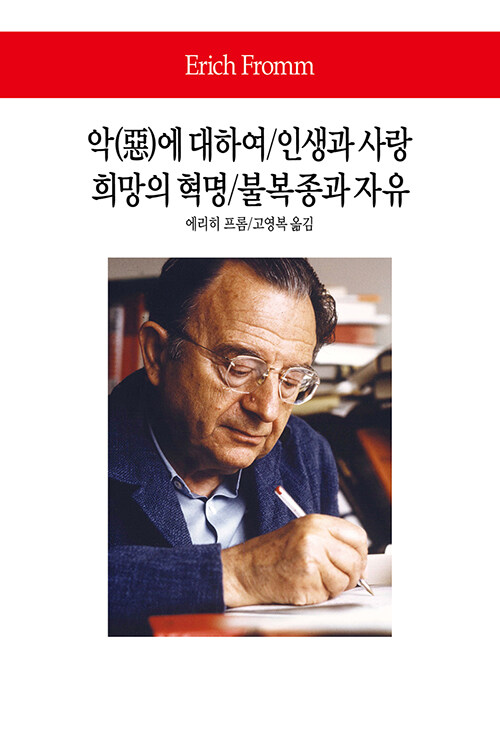
악(惡)에 대하여 / 인생과 사랑 / 희망의 혁명 / 불복종과 자유 | 동서문화사 월드북 291 | 에리히 프롬 | 알라딘

악(惡)에 대하여 / 인생과 사랑 / 희망의 혁명 / 불복종과 자유 | 동서문화사 월드북 291 | 에리히 프롬 | 알라딘


악(惡)에 대하여 / 인생과 사랑 / 희망의 혁명 / 불복종과 자유 | 동서문화사 월드북 291
에리히 프롬 (지은이),고영복 (옮긴이)동서문화동판(동서문화사)2020-04-01


미리보기


책소개
20세기 대표 심리학자 에리히 프롬은 유럽에서 미국으로 삶의 터전을 옮긴 뒤 새로운 사회의 발전과 그 안에서 싹트고 있던 인간 정신과 관련된 심각한 과제에 예리한 분석의 칼날을 들이대어 평생을 ‘인간 탐구 여정’에 바쳤다. 프롬의 중심 사상은 언제나 인간 내면 탐구였다. 즉 인간이 선(善)의 존재가 되느냐 악(惡)의 존재가 되느냐, 또는 장점을 활용하고 잠재된 능력을 실현할 수 있는 정신성 연구였다. 프롬은 끊임없이 인간에게 자유의 의미를 물었으며, 소외를 넘어선 인본주의에 근거한 공동체를 위해 우리 마음속 적과 싸웠다.

학자로서 프롬이 줄곧 찾아 헤맨 것은 “인간이란 무엇인가, 인간의 미래는 어떤 것인가?” 하는 문제였다. 프롬은 “신이 없더라도 인간 내부에 인간을 인간답게 만들고 인간에게 목적을 주는 존재가 있다”고 말한다. 그것이 바로 휴머니즘(인본주의)이다. 한마디로 생명을 사랑하는 것, 삶을 사랑하는 것이다. 생명은 존재 자체로 가치를 지니며, 늘 생성되고 발전한다. 이 생명의 성장을 북돋는 것이 선(善)이고 그것을 방해하는 것은 악(惡)이다.


목차


[컬러화보]
악(惡)에 대하여
1. 인간—늑대인가 양인가 … 23
2. 폭력의 다양한 형태 … 29
3. 죽음을 사랑하는 것과 삶을 사랑하는 것 … 41
4. 개인의 나르시시즘과 사회의 나르시시즘 … 64
5. 근친상간의 성격을 띠는 유대 … 94
6. 자유, 결정론, 양자택일론 … 113

인생과 사랑
머리글
1. 우리 사회의 초과와 권태 … 153
2. 공격이 발생하는 원천 … 190
3. 꿈은 세계적인 인간의 언어 … 210
4. 심리학이 낯선 사람들을 위한 심리학 … 217
5. 삶이라는 이름 … 238
6. 히틀러—그는 누구인가, 이 인물에 맞서는 저항의 의미 … 268
7. 오늘날에도 영향을 미치는 예언자의 글 … 286
8. 인간이란 누구인가 … 292

희망의 혁명
개정판 머리글
머리글
1. 갈림길 … 307
2. 희망 … 312
3. 우리는 지금 어디에 있는가, 그리고 어디로 향하는가 … 329
4. 인간적이란 것은 무엇을 뜻하는가 … 357
5. 인간화로 가는 기술사회의 모든 단계 … 390
6. 우리는 그것을 할 수 있는가 … 430

불복종과 자유
머리글
1. 심리, 도덕과 관련된 문제로서의 불복종 … 448
2. 인본주의에 근거한 정신분석에 응용된 마르크스주의 … 455
3. 예언자와 사제 … 470
4. 세계에 영향을 미치는 인간철학으로서의 인본주의 … 485
5. 인간의 승리를 향해서 … 496
6. 인본주의에 근거한 사회주의 … 510
7. 보장소득의 심리 … 523
8. 일방적 군비축소 … 532
9. 평화의 이론과 전략을 위해서 … 547

프롬 100가지 말
1. 우리는 사랑에 대해서 아무것도 모른다 … 563
2. 사랑은 기술이다 … 570
3. 우리는 자유에 대해서 아무것도 모른다 … 579
4. 참되지 않은 사랑을 버리고, 참된 사랑을 붙잡아라 … 592
5. 어떻게 살까? … 607

에리히 프롬의 생애와 사상 … 615
에리히 프롬 연보 … 674
접기


저자 및 역자소개
에리히 프롬 (Erich Fromm) (지은이)
저자파일
신간알림 신청


독일 태생의 미국 정신분석학자이자 사회철학자다. 1922년 하이델베르크대학교에서 박사학위를 받은 뒤, 뮌헨대학교와 베를린의 정신분석연구소에서 정신분석을 연구했다. 1933년 나치 치하의 독일을 떠나 미국으로 망명할 즈음 정신분석학자로서 높은 명성을 얻었으며, 미국에서는 정통 프로이트학파와 대립하기도 했다. 컬럼비아대학교, 베닝턴대학교, 멕시코국립자치대학교, 미시간주립대학교, 뉴욕대학교 등에서 정신분석학을 강의하면서 인간의 욕망이 만들어낸 사회와 개인 간의 갈등에 주목하는 논문을 발표했다. 프로이트주의, 마르크스주의, 정신분석, 종교... 더보기

최근작 : <사랑의 기술>,<듣기의 기술>,<위기의 휴머니즘> … 총 453종 (모두보기)

고영복 (옮긴이)
저자파일
신간알림 신청

서울대 문리대 사회학과 졸업. 문학박사(서울대). 이화여대 문리대 교수 및 서울대 사회학과 교수를 지냈고, 한국사회학회장․현대사회연구소장 역임. 현재 사회문화연구소장. 국민훈장 목련장 수상. 지은책 《현대사회학》, 《현대사회문제》, 《세계의 사상》, 《철학사상과 사회과학의 만남》, 《사회학설사》, 《사회심리학개론》, 《사회와 양심》 외 다수. 옮긴책 프롬 《자유에서의 도피》, 《사랑한다는 것》, 《정신분석학과 선불교》, 해밀턴《사회구조와 사회의식》 등이 있다.

최근작 : <우리 사회 연구>,<한국사회를 평론하다>,<사상사 개설> … 총 27종 (모두보기)


출판사 제공 책소개
그대 어떻게 살 것인가?
“생명의 성장을 북돋는 것이 선(善)이고
그것을 방해하는 것은 악(惡)이다!”

우리들 마음에는 인간을 인간답게 만드는 것이 있다!
상처받은 삶 어루만지는 깨달음, 그 마음의 처방전!
코로나19 위기시대에도 희망을 잃지 않는 인본주의자 프롬!

인간 탐구에 평생을 바친, 인본주의자 에리히 프롬!
20세기 대표 심리학자 에리히 프롬은 유럽에서 미국으로 삶의 터전을 옮긴 뒤 새로운 사회의 발전과 그 안에서 싹트고 있던 인간 정신과 관련된 심각한 과제에 예리한 분석의 칼날을 들이대어 평생을 ‘인간 탐구 여정’에 바쳤다. 프롬의 중심 사상은 언제나 인간 내면 탐구였다. 즉 인간이 선(善)의 존재가 되느냐 악(惡)의 존재가 되느냐, 또는 장점을 활용하고 잠재된 능력을 실현할 수 있는 정신성 연구였다. 프롬은 끊임없이 인간에게 자유의 의미를 물었으며, 소외를 넘어선 인본주의에 근거한 공동체를 위해 우리 마음속 적과 싸웠다. 학자로서 프롬이 줄곧 찾아 헤맨 것은 “인간이란 무엇인가, 인간의 미래는 어떤 것인가?” 하는 문제였다. 프롬은 “신이 없더라도 인간 내부에 인간을 인간답게 만들고 인간에게 목적을 주는 존재가 있다”고 말한다. 그것이 바로 휴머니즘(인본주의)이다. 한마디로 생명을 사랑하는 것, 삶을 사랑하는 것이다. 생명은 존재 자체로 가치를 지니며, 늘 생성되고 발전한다. 이 생명의 성장을 북돋는 것이 선(善)이고 그것을 방해하는 것은 악(惡)이다.

병든 사회에 던지는 인간 ‘해방의 길’! ‘깨달음의 길’!
프롬에 따르면 인간이 아픈 사회는 정상이 아니며 기계화 사회에 의한 끊임없는 이윤 추구와 상품의 대량생산이 이루어지는 자본주의에서 광기가 비롯된다. 이 자본주의 사회 구조의 작동 원리가 사람들을 ‘인간소외’라 불리는 상태로 떨어뜨려 고뇌, 신경증, 광기를 일으키게 된다는 것이다. 프롬은 자기 자신을 분석하고 자신에게 의식을 향하고 자각하는 것으로써 이런 문제들을 해결할 수 있다고 믿었다. 프롬의 표현인 ‘깨달음’은 현실을 깨닫는 것으로, 이를 그는 ‘깨닫는 것’에 집중하고 주의를 기울이는 상태에서의 인식, 자각이라고 정의했다. ‘깨달음’은 감춰진 것을 깨닫는 것이고 무의식이라는 존재를 알게 되는 것, 표현된 것을 이해함을 뜻한다. ‘깨닫는 것’은 개인의 내면 갈등과 사회 갈등을 밝히는 것이므로 개인은 사회로부터 소외되어서는 안 되고, 사회의 일부가 되어야 한다고 그는 결론지었다. 프롬은 진실을 깨닫는 데는 해방 효과가 있다고 말했다. 에너지를 분출하고 인간의 눈이나 마음을 가린 것을 없애기에 더욱 독립심이 솟아오르고 자신 안에 중심을 가질 수 있어 더 활기가 넘치게 된다는 것이다. 이 책에 실린 프롬의 글들은 진실을 깨달아 인간소외를 넘어서 삶을 해방하는 데 길잡이 역할을 할 것이다.

선악(善惡) 판단 능력은 어디서 오는가? 《악(惡)에 대하여》!
《악(惡)에 대하여》는 프롬의 작품 중 가장 새로운 것으로 프롬의 《The Heart of Man : Its Genius for Good and Evil(인간의 마음 : 선과 악을 판단하는 재능)》을 옮긴 것이다. 프롬은 1925년부터 정신분석학 연구와 임상실험을 했다. 처음에는 카렌 호나이 등과 함께 신프로이트학파를 주도한 인물로 알려졌지만, 이 책에서 그 자신도 말하듯이 오히려 끊임없이 프로이트로 되돌아가서 신프로이트학파의 약점을 극복하려 했으므로, 실제 의미에서 정통파라고 할 수 있다. 그는 임상을 통해서 환자들을 다루는 데 그치지 않고 임상 경험을 사회, 문화 현상에 적용하고자 했다. 오늘날에도 여전히 국가 간 다툼은 끊이지 않고, 개인과 개인 사이의 소통은 갈수록 어려워지고 있으며, 마침내 한 개인의 내부에서조차 분열이 일어나고 있는 듯하다. 그럼에도 프롬이 보기에 인류 전체와 개인이 어울려 살아갈 수 있는 길들은 아직 남아 있다.《악(惡)에 대하여》는 그 길들 가운데 하나를 비춰준다.

인간은 스스로 자기를 완성해 나간다! 《인생과 사랑》!
《인생과 사랑》은 프롬이 그의 생애 마지막 10년 동안 독일에 머물며 남독일방송(SDR)에서 강연한 내용을 책으로 펴낸 것으로 《Über die Liebe zum Leben(삶을 위한 사랑에 관하여)》 독일어판을 옮긴 것이다. ‘우리 사회의 과잉과 권태’, ‘공격이 발생하는 원천’, ‘꿈은 세계적인 인간의 언어’, ‘심리학이 낯선 사람들을 위한 심리학’, ‘삶이라는 이름’, ‘히틀러―그는 누구인가, 이 인물에 대한 저항은 어떤 것이었는가’, ‘오늘날에도 영향을 미치는 예언자의 글’, ‘인간이란 누구인가’ 등 심리학은 물론 가부장제 위기, 종교의 한계, 인간다운 성장의 한계에 이르기까지 강연 내용은 그 폭이 매우 넓고 깊다. 프롬은 초월신에 의한 구원이 아니라 인간 자신이 스스로를 완성함으로써 자기 구원을 이루는 것을 이상(理想)으로 보았다. 따라서 거기에서는 인간의 자유의지가 중요한 요소가 된다. 프롬이 말하듯이 예언자들 또한 결정론과도 같은 예언을 한 게 아니라, 인간 앞에 몇 가지 가능성을 보여주고 선택을 요구한 것이었다. 그렇기에 프롬은 현대 위기의 한복판에 놓인 우리에게도 “희망은 있다” 말한다.

상처받아도 절망하지 않는 삶! 《희망의 혁명》!
《희망의 혁명》은 《The Revolution of Hope : Toward a Humanized Technology(희망의 혁명: 인간화된 기술을 향하여)》를 옮긴 것이다. 이 책은 《자유에서의 도피》와 《건전한 사회》 계열에 속하는데, ‘인간이라는 체제’의 능동성을 개념 도식에 끌어들인 현대사회의 진단을 주제로 한다. 오늘날의 체제 아래에서 소유는 존재를 빈약하게 해야만 얻어지며, 존재가 공허해질수록 그 보상으로서 더 많은 소유를 추구하게 된다. 때문에 인간과 사회라는 두 가지 면에 걸친, 상호 관련된 변혁이 필요하다. 그러나 희망을 앞날에 맡긴 채 앉아서 기다리기만 하는 태도는 절망의 뒷면에 지나지 않는다. 희망한다는 것은 존재할 수 없는 것을 찾는 게 아니라, 아직 존재하지 않는 것을 위해 언제나 준비하고 새로운 생명의 모든 징후에 예민하게 반응하며 그것을 키우려고 노력하는 것이다. ‘삶을 바라는 사람’은 늘 자기 자신을 열어 놓고, 쉽게 상처받지만 절망하지 않고서 ‘진짜 가능성’을 끊임없이 검토하면서 생명을 촉진하는 방향으로 나아간다. 그러므로 ‘삶을 바라는 사회’도 똑같은 선택을 할 것이다. 이러한 주장을 펼친 프롬은 계몽사상가라고 하지 않을 수 없다. 그의 책이 지닌 명쾌함은 이 계몽성에서 비롯되며, 그가 제시해 준 문제들을 스스로 적용해 더 깊이 탐구하는 일은 독자의 몫이다. 이 책의 제5, 6장에는 변혁을 위한 현실적인 제안들이 담겨 있다.

절망의 시대를 이겨내는 프롬의 메시지! 《불복종과 자유》!
《불복종과 자유》는 《On Disobedience and Other Essays(불복종에 관하여와 나머지 수필 모음)》을 옮긴 것으로 수필 모음인 만큼 여러 분야의 내용을 두루 다룬다. 프롬의 전문 영역인 심리학과 사회학은 물론 윤리, 역사, 경제부터 군비축소나 평화 등의 현실 정치·외교 문제도 포함한다. 프롬을 좋아하는 독자라면 이 수필들을 꿰뚫고 있는 ‘프롬다움’을 읽어낼 수 있을 것이다. 바로 프롬의 인본주의이다. 인간이 맞닥뜨린 가장 큰 위기를 깨닫고 있으면서도 인간을 신뢰하고, 적극적인 가치를 추구하며 희망을 잃지 않는 프롬은 진정한 용기를 가진 인본주의자였다. 이 책을 통해 프롬이 말하는 인본주의란 무엇인가를 생각해 보는 것도 의미 있는 일일 것이다.

인류의 운명, 인간 스스로 자신을 변혁하라!
인류는 하나이고 인간은 존엄하며, 인간은 자신을 완성시킬 수 있다는 것, 이성, 객관성, 평화, 이것들을 믿는 것이 프롬의 인본주의이다. 그러나 “세계는 하나다”라든가 “인간의 목숨은 지구보다 무겁다”라는 신념이 오늘만큼 부실한 시대도 없다. 내용은 없이 뼈대만 남아 가치나 의미를 담지 못하다. 이것들에 문자 그대로의 무게를 싣고 현실성을 주는 것은 바로 한 사람의 삶이다.
우리는 에리히 프롬의 일생에서 그 예를 본다. 프롬은 지식인으로서, 한 인간으로서 해야 하고 할 수 있는 일을 몸소 보여주었다. 프롬은 “평화운동은 근본적인 인본주의 운동이 되어야만 성공할 수 있다”고 말했다. 사람이 사람을 믿지 못하면 어떤 평화도 존재할 수 없기 때문이다. 지금 이 순간에도 우리는 프롬과 더불어 사람을 뿌리부터 변혁시키는 데 인류의 운명을 걸어야 할 것이다.
인간은 무엇으로서 사는가? 프롬의 글을 읽으면 “오늘을 사는 인간의 행동은 인간의 본질이나 사랑의 기쁨과는 거리가 멀어졌다”는 사실을 깨닫게 된다. 이런 사실을 앎으로써 한 사람 한 사람의 마음속에 작은 깨달음이 생기고, 그것이 마침내 사회 변화로 이어진다. 프롬의 글들은 진정한 의미의 세계로 첫발을 내딛을 수 있도록 우리의 등을 다정하게 밀어줄 것이다. 접기


이 상품을 구입하신 분들이 다음 상품도 구입하셨습니다.
더보기

이전
자본론 1 - 상
부모와 다른 아이들 1
마음챙김 기반 인지치료
다음


북플 bookple
로그인 하면 내가 남긴 글과 친구가 남긴 글을 확인할 수 있습니다.
로그인하기

마니아
읽고 싶어요 (5)
읽고 있어요 (0)
읽었어요 (1)
이 책 어때요?


구매자
분포


0% 10대

0.3%


6.9% 20대

6.5%


12.0% 30대

9.3%


11.3% 40대

12.0%


10.3% 50대

17.5%


3.4% 60대

10.3%
여성 남성


100자평


등록


카테고리

스포일러 포함
글 작성 유의사항


구매자 (0)
전체 (0)
공감순


등록된 구매자평이 없습니다.


마이리뷰
구매자 (0)
전체 (0)
리뷰쓰기
공감순


등록된 리뷰가 없습니다.


마이페이퍼
전체 (2)
페이퍼 쓰기
좋아요순


에리히 프롬을 읽기 위하여


이번 겨울 일정 가운데 하나였던 에리히 프롬 읽기 강의를 마쳤다. <자유로부터의 도피><건전한 사회><사랑의 기술><소유냐 존재냐>, 네 권의 책을 7주차에 걸쳐서 읽는 일정이었고, 순서는 베스트셀러순이었다(<사랑의 기술>이 최대베스트셀러이고, <소유냐 존재냐><자유로부터의 도피>가 뒤를 잇는다). 프롬은 1960년부터 국내에 번역되기 시작해서 20종 이상이 출간되었다. 그만큼 많이 읽혔다는 뜻도 되지만, 현재는 상당수가 절판된 상태이기도 하다. 강의에서 다룬 네 권의 책은 제목만으로도 대략 주제나 내용을 가늠할 수 있지만 그렇지 않은 책들도 있는데, 절판되지 않은 책 가운데서 더 읽을 만한 책들을 연대순으로 나열해보도록 한다. 참고한 책은 박홍규 교수의 <우리는 사랑하는가: 에리히 프롬의 사랑과 사상>(필맥)이다.


프롬에 관한 참고서는 박홍규 교수의 책 외에도 옌스 푀르스터의 <에리히 프롬>(아르테)과 로런스 프리드먼의 <에리히 프롬 평전>(글항아리) 등을 더 들 수 있다(강의에서 참고한 책들이다). 평전은 자세하고 수준이 있는 편이지만 번역 상태가 좋지 않다.


박찬국 교수의 해설서로 <에리히 프롬 읽기> 등도 참고할 수 있는데, 저작별로 다루고 있지 않은 게 특징이자 흠이다. 주요 저작을 읽으려고 하는 독자에게는.


프롬의 저작은 <자유로부터의 도피>(1941)를 출발점으로 하여 <소유냐 존재냐>(1976)에서 일단락된다고 봐도 무방하다. 1980년 사망 이후에 몇권의 책이 유작으로 나왔는데(유작의 연도는 중요하지 않겠다) <불복종에 관하여>나 <존재의 기술> 등이 그러하다. 절판된 책을 제외하면 대략 10권 가량이다. 번역본은 가장 널리 읽히는 판본으로 골랐다.


에리히 프롬 읽기


1941 <자유로부터의 도피>


1947 <자기를 위한 인간>


1955 <건전한 사회>


1956 <사랑의 기술>


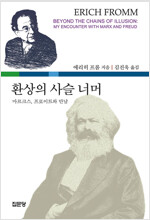
1962 <환상의 사슬을 넘어>


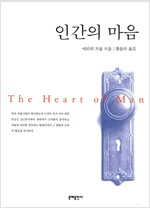
1964 <인간의 마음>


1976 <소유냐 존재냐>


1981 <볼복종에 대하여>


1989 <존재의 기술>


그밖의 번역본으로는 동서문화사판이 있는데, 다수의 제목이 기존 번역본들과 다르다.


두 종의 번역서에 수록된 작품들은 모두 7편이다.


<악에 대하여>(1964) -><인간의 마음>

<인생과 사랑>(1976)-><삶의 사랑을 위하여>

<희망의 혁명>(1968)

<불복종과 자유>(1981) -><불복종에 관하여>


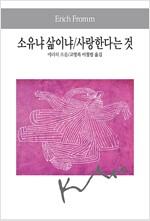
<소유냐 삶이냐>(1976) -><소유냐 존재냐>

<사랑한다는 것>(1956) -><사랑의 기술>

<자유에서의 도피>(1941) -><자유로부터의 도피>
- 접기
로쟈 2021-02-25 공감 (43) 댓글 (0)
Thanks to
공감
찜하기

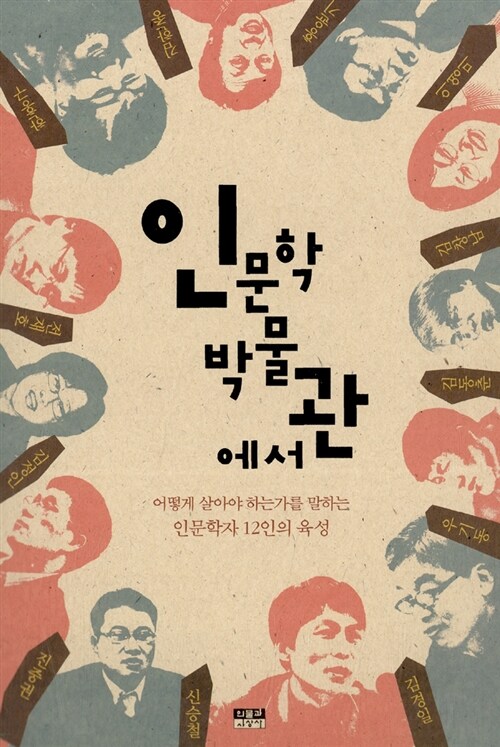
인문학 박물관에서 - 어떻게 살아야 하는가를 말하는 인문학자 12인의 육성 | 알라딘 2010

인문학 박물관에서 | 진중권 외 | 알라딘
인문학 박물관에서 - 어떻게 살아야 하는가를 말하는 인문학자 12인의 육성
김창남,진중권,홍윤기,김정인,김동춘,김경일,김한종,우기동,신승철,전재호,이영미,한홍구 (지은이)
인물과사상사2010-05-17


책소개
역사, 문화, 교육, 개인의 삶 등 사회 전반의 문제를 인문학적인 관점으로 바라본 12인 인문학자의 육성을 고스란히 담고 있는 책. 현장 인문학 강의의 느낌을 최대한 살린 이 책의 가장 큰 특징은 ‘우리 사회에 꼭 맞는’ 인문학적 사유를 펼쳐가는 과정을 생생하게 보여준다는 것에 있다. 지나치게 절제되거나 꾸며진 글을 통해 전하는 인문학적 사유와는 완전히 다른 통쾌함을 선사한다.

외국의 인문학 이론은 그 나라의 사회 현상을 설명한 것으로 우리 사회에 적용했을 때 매끄럽지 못한 느낌이고 또 여러 가지 문제를 야기하기도 한다. 이들 12인의 인문학자는 이 점에 동의하며 오늘날 한국 사회에서 일어나고 있는 주목할 만한 현상, 혹은 한국만이 가지고 있는 특수한 역사 등을 중심으로 ‘우리의 이론’을 풀어나간다.


목차


서문- 왜 ‘인문학박물관’일까

첫 번째 마당 : 진중권과 홍윤기의 이야기
우리 인문학의 어제와 오늘

두 번째 마당 : 김정인과 김한종의 이야기
근대적 학제의 도입과 우리 학문의 변화- 유니버시티University의 도입과 현대 한국 학문의 연관성

세 번째 마당 : 전재호와 한홍구의 이야기
근대적 이념의 도입이 우리 사유의 형성에 끼친 영향력

네 번째 마당 : 김창남과 이영미의 이야기
대중문화와 인문학, 어떻게 소통할 것인가?

다섯 번째 마당 : 김경일과 김동춘의 이야기
근대화는 지금 우리에게 어떤 영향을 미쳤는가?- 한국 사회의 근대화 과정과 한국 사회의 성립

여섯 번째 마당 : 신승철과 우기동의 이야기
신자유주의 시대에 인문학의 역할


책속에서


어떤 부분의 국가 발전이나 어떤 분야의 학문 발전보다도 각 개인이 자기 자신을 하나의 전인적 인간으로 놓고 인간으로서 삶을 설계하는 일이 꼭 필요합니다. 이런 측면에서 인문학은 인간 삶의 다양한 모습을 보여주는 기능을 수행할 수 있습니다. -홍윤기(본문 23쪽) 접기

지금 우리 현실에서 외국에서는 보지 못하는 일들이 벌어지고 있습니다. 이것을 제대로 무기화, 이론화한다면 우리 담론을 저들이 가져갈 수밖에 없지 않느냐 하는 생각이 들어요. 말하자면 한국의 후진성이 역설적으로 천재성을 낳은 것이죠. -진중권(본문 57쪽) 접기

교육은 기존의 사회 틀이나 체계에 문제를 느끼며 비판적 생각을 하고 자기만의 관점을 가질 수 있는 인간을 길러야 한다는 주장이 있습니다. 저는 이러한 관점이 기존의 틀을 바꿀 수 있다고 생각합니다.
-김한종(본문 101쪽)

저는 우리나라 사회 발전과 관련해 미국적인 길 외에 학문적, 정치적 상상력 자체가 극도로 제한되는 것이 가장 위험하다고 봅니다. 이런 풍토 속에서는 생산적인 학문 논쟁은 물론이고 학문적 입장의 동질성에 근거한 학맥 또는 학파가 형성되기 어렵습니다. -김정인(본문 96쪽) 접기

인문학의 기본정신이 성찰 아닙니까? 자기 역사의 가장 중요한 시점에 대해 뼈아프게 성찰하는 글을 읽어보신 적 있으세요? 이렇게 성찰이 없는 곳에서 어떻게 인문정신이 나올 수 있겠습니까? 성찰할 기회를 갖지 못했는데 어떻게 합리적인 보수가 나올 수 있겠습니까? -한홍구(본문 169쪽) 접기

저는 이론이나 입장이 경쟁을 통해 발전한다고 생각해요. 그런데 과거 보수 세력들은 그냥 권위주의 정권 보호 아래서 생존했죠. 건강한 사회가 되기 위해서는 좌·우 모두 필요한 것이고 서로 생산적인 경쟁이 필요한 것이 아닐까요? -전재호(본문 172쪽) 접기

문화적인 변화, 문화적인 새로운 창조는 자연스러움을 자연스럽지 않다고 느끼는 데서 시작됩니다. 낯설게 보고 ‘꼭 이렇게 할 필요 없잖아?’라고 반문하며 새로운 시도를 하는 곳에 문화적 발전과 창조가 존재합니다.
-김창남(본문 181쪽)

대중예술의 핵심은 작가가 아니라 수용자들이 느끼는 재미입니다. 그 재미가 왜 발생하느냐를 생각합니다. 당연하다고 생각하는 것을 당연하지 않다고 생각하는 것입니다. ‘재미있으니까 재밌지’가 아니라 ‘정말 늘 재밌어? 누구에게나 재미있어?’라고 따져보아야 합니다. -이영미(본문 199쪽) 접기

이제 이 지구화된 문명 위에서는 서구나 한국이나 같은 지평에서 대안을 이야기할 수 있는 시점에 놓이게 되었다고 봅니다. 그렇다면 우리는 근대의 완성을 목표로 할 것이 아니라 근대를 확실히 넘어선 시야를 가지고 우리 사회의 문제를 봐야 하지 않을까 생각합니다. -김동춘(본문 238쪽) 접기

우리 사회는 일상생활을 하고 있는 우리의 심리적인 선택에까지 개입하여 근대를 온 힘을 다해 쟁취해야 하는 것으로 상정하는 측면이 있습니다. 하지만 근대는 절대적인 선도, 반드시 따라잡아야 무엇도 아닌 복합적인 것들로 구성된 모순 결합체라고 할 수 있습니다. -김경일(본문 240쪽) 접기

경쟁으로 대표되는 신자유주의를 극복하는 인문학의 역할은 삶의 형태로 보면 전통적인 내재적 가치를 회복하는, 곧 사람의 가치를 회복하는 것이고 나아가 공동체적 사회의식을 가지고 공동체 사회를 꾸려가고자 하는 정신을 회복하는 것이라고 할 수 있습니다. -우기동(본문 279쪽)  접기

낮은 곳을 향하는 인문학의 정신은 기존에도 분명히 있었고 이제는 새로운 인문학의 출발점으로서 존재하는 것이 분명합니다. ‘가르침으로써 누군가를 깨우치게 만든다는 계몽’의 개념이 아니라 ‘이미 알고 있는 것을 사회관계 속에서 촉발시킨다’라는 개념입니다. -신승철(본문 289쪽)  접기
====

추천글

이 책을 추천한 다른 분들 :
한겨레
- 한겨레 신문 2010년 5월 22일 교양 새책
동아일보
- 동아일보 2010년 5월 29일 새로나온 책


저자 및 역자소개
김창남 (지은이)
저자파일
신간알림 신청

서울대학교 경영학과를 졸업하고 동 대학원 신문학과(현 언론정보학과)에서 석사와 박사 과정을 마쳤다. 1980년대부터 문화평론가로 활동해 왔으며 한국대중음악학회 회장, 한국대중음악상 선정위원장, 우리만화연대 이사, 서울문화재단 이사 등을 역임했다. 1996년부터 성공회대학교 미디어콘텐츠융합학부 및 문화대학원 교수로 재직하고 2025년 2월 정년퇴임했다. 현재 성공회대학교 명예교수로 활동하며 (사)더불어숲 이사장을 맡고 있다.

『대중문화의 이해』, 『한국대중문화사』, 『나의 문화편력기』, 『삶의 문화 희망의 노래』, 『대중문화와 문화실천』, 『신영복 평전: 더불어 숲으로 가는 길』 (공저) 등의 책을 썼고, 『김민기』, 『대중음악의 이해』, 『대중음악과 노래운동 그리고 청년문화』, 『통하면 아프지 않다』, 『희망을 통찰하다』, 『가는 길이 내 길이다』, 『상상력으로 미래를 연습하다』 등 여러 책을 엮었다. 접기

최근작 : <김민기 (양장)>,<신영복 다시 읽기>,<[큰글자도서] 대중문화의 이해 (워크북 포함)> … 총 52종 (모두보기)

진중권 (지은이)
저자파일
신간알림 신청


미학자, 평론가, 교수, 그리고 우리 시대 대표 논객이자 지식인으로서 이념과 정파를 뛰어넘어 권력의 ‘파수꾼’ 역할을 하고 있다.

조국 사태 이후 정권의 실정과 이를 비판하지 않고 입을 다문 지식인을 겨냥해 “이른바 ‘진보적’ 지식인들은 지배층이 되었다”고 비판했다. 이유는 “같은 상류층으로서 계급적 이해를 공유했기 때문”이며, “’이익 집단’으로서 진보는 승리했다. 하지만 ‘가치 집단’으로서 진보는 죽었다”라고 선언했다. 이후 『한번도 경험해보지 못한 나라(공저)』『진보는 어떻게 몰락했는가』『진중권 보수를 말하다』 등을 펴냈다.

서울대학교 미학과를 졸업하고, 동 대학원에서 「소련의 구조기호론적 미학」 연구로 석사 학위를 받았다. 독일 베를린자유대학교에서 언어 구조주의 이론을 공부했다. 귀국 후 사회 비판 평론가로 활동하면서 중앙대학교와 동양대학교에서 교수로 재직했다.

대표 저서로는 『미학 오딧세이』『춤추는 죽음』『네 무덤에 침을 뱉으마』『천천히 그림읽기』『시칠리아의 암소』『페니스 파시즘』『폭력과 상스러움』『앙겔루스 노부스』『레퀴엠』『빨간 바이러스』『조이한·진중권의 천천히 그림 읽기』『진중권의 현대미학 강의』『춤추는 죽음』『놀이와 예술 그리고 상상력』『첩첩상식』『호모 코레아니쿠스』『한국인 들여다보기』『서양미술사』『컴퓨터 예술의 탄생』『진중권의 이매진Imagine』『미디어아트』『교수대 위의 까치』『정재승+진중권 크로스(공저)』 등이 있다. 접기

최근작 : <네 무덤에 침을 뱉으마>,<선을 넘다>,<이것이 우리가 원했던 나라인가> … 총 180종 (모두보기)
SNS : http://twitter.com/unheim

홍윤기 (지은이)
저자파일
신간알림 신청

동국대 철학과 명예교수. 베를린 자유대학교에서 최우등점(summa cum laude)으로 철학 박사학위를 취득했다. 지은 책으로 《변증법 비판과 변증법 구도》(박사학위논문), 《하버마스의 사상》(공저), 《한국 도덕윤리 교육 백서》(편저) 등, 옮긴 책으로 하버마스의 《이론과 실천》, 《의사소통의 철학》 및 막스 베버의 《힌두교와 불교》 등 다수가 있다.

최근작 : <오랑캐꽃이 핀다 1~10 세트 - 전10권>,<[큰글자책] 오랑캐꽃이 핀다 10>,<[큰글자책] 오랑캐꽃이 핀다 4> … 총 54종 (모두보기)

김정인 (지은이)
저자파일
신간알림 신청

춘천교대 사회과교육과에 재직하며 한국 근현대 민주주의 역사와 대학사를 연구하고 있다. 참여연대 창립 멤버로 운영위원장을 역임했고, 한중일3국공동역사편찬위원회에 참여하는 중이다. 학문 후속 세대 양성을 위한 인문사회과학 아카데미인 필로버스를 운영하고 있다. 저서로는 『민주주의를 향한 역사』, 『독립을 꿈꾸는 민주주의』, 『모두의 민주주의』, 『대학과 권력』 등이 있다.

최근작 : <그러므로 내란은 끝나지 않았다>,<모두의 민주주의>,<한국 민주주의 100년, 가치와 문화> … 총 54종 (모두보기)

김동춘 (지은이)
저자파일
신간알림 신청


성공회대학교 명예교수이고, 비판적 사회학자로서 진실·화해를 위한 과거사정리위원회 상임위원으로 활동했다. 주요 논저로 『권력과 사상통제: 한국은 사상통제의 긴 터널에서 빠져나왔나』(역사공간, 2024), 『시험능력주의: 한국형 능력주의는 어떻게 불평등을 강화하는가』(창비, 2022), 『반공자유주의: 우리를 병들게 하는 낙인』(필요한책, 2021), 『전쟁과 사회: 우리에게 한국전쟁은 무엇이었나』(돌베개, 2000) 등이 있다.

최근작 : <분열의 시대와 사회통합>,<치안유지법 - 국가보안법 사상통제의 역사 100년>,<신영복 다시 읽기> … 총 81종 (모두보기)

김경일 (지은이)

한국학중앙연구원 명예교수. 서울대학교 사회학과와 동 대학원을 졸업하고, 박사학위를 받았다. 덕성여자대학교 교수를 거쳐 한국학중앙연구원 사회과학부에서 정년을 맞았다. 뉴욕주립대(빙햄턴)와 파리 인간과학연구소(Maison des Sciences de L’Homme)에서 수학했고(박사후과정), 도쿄대학 경제학부 객원연구원, 캘리포니아대학(버클리)과 워싱턴대학 교류교수 등을 역임했다. 긴 시간 한국 사회사, 사회사상, 역사사회학, 동아시아론 등에 관심을 기울여왔다.
주요 저서로 『일제 하 노동운동사』, 『이재유 연구』, 『지역 연구의 역사와 이론』, 『한국의 근대와 근대성』, 『동아시아의 민족 이산과 도시: 20세기 전반기 만주의 조선인』(공저), 『한국노동운동사 2, 일제 하의 노동운동: 1920-1945』, 『한국 근대 노동사와 노동운동』, 『여성의 근대, 근대의 여성』, Pioneers of Korean Studies(편저), 『이재유, 나의 시대 나의 혁명』, 『제국의 시대와 동아시아 연대』, 『근대의 가족, 근대의 결혼』, 『노동』, 『한국 근대 여성 63인의 초상』(공저), Modern Korean Labor: A Sourcebook(공편), 『신여성, 개념과 역사』, Korean Women: A Sourcebook(공편), 『동아시아 일본군 위안부 연구』(공저), 『근대 여성 12인, 나를 말하다: 자서전과 전기로 본 여성의 삶과 근대』, 『한국의 근대 형상과 한국학: 비교 역사의 시각』, 『한국의 민주화 운동에서 노동과 여성: 노동의 서사와 노동자 정체성』 등이 있다. 접기

최근작 : <한국학, 경계를 넘다>,<민중은 이야기한다>,<근대를 살다> … 총 41종 (모두보기)

김한종 (지은이)
저자파일
신간알림 신청


서울대학교 사범대학 역사교육과를 졸업하고, 같은 대학원에서 역사교육을 전공하여 석사학위와 박사학위를 취득했다. 한국교원대학교 역사교육과 교수로 재직했고, 현재는 명예교수이다. 역사교육 연구의 학문적 체계화와 사회적 적용을 목표로 역사인식과 역사적 사고, 역사수업과 교사, 역사교육과정과 교과서 등 역사교육의 이론적・실천적 문제들을 연구했으며, 역사교육을 둘러싼 정치·사회 문제의 본질을 밝히는 데도 힘쓰고 있다.
지은 책으로 《역사교육 강의》, 《역사적 상상과 역사교육》, 《역사교육으로 읽는 한국현대사》, 《역사교과서 국정화, 왜 문제인가》 등이 있고, 옮긴 책으로 《인류는 아이들을 어떻게 대했는가》, 《학교사로 읽는 일본근현대사》(공역), 《끊임없이 변화하는 과거》(공역) 등이 있다. 접기

최근작 : <역사교육 강의>,<역사적 상상과 역사교육>,<대한민국의 역사교육과정 2> … 총 67종 (모두보기)

우기동 (지은이)
저자파일
신간알림 신청

성균관대학교 대학원 철학과에서 "헤겔의 주객 동일성 고찰"(1985)로 석사 학위를, "유물변증법적 자연관"(1994)으로 박사 학위를 받았다. 현재 경희대학교 후마니타스칼리지·미래문명원 교수로 재직 중이다. 2005년부터 대학 강단을 벗어나 노숙인, 재소자, 지역 주민 등 소외 계층을 위한 인문학 강좌를 진행했고, 2013년부터는 서울시민대학 운영위원으로 참여하면서 일반 시민을 대상으로 하는 강좌를 기획했다. 최근에는 기후 위기, 인공지능AI 등 지구적 어젠다나 이슈를 통해 '세계시민 의식'에 관심을 두고 활동하고 있다. 주요 논문으로는 "소외 계층과 호흡하는 인문학"(2007), "마을과 시민"(2014) 등이 있고, 저서로는 《철학의 철학사적 이해》(공저, 돌베개, 1991), 《행복한 인문학》(공저, 이매진, 2008), 《인문학 박물관에서》(공저, 인물과사상사, 2010) 등이 있으며, 옮긴 책으로는 《철학연습》(미래사, 1986)이 있다. 접기

최근작 : <생활세계와 시민>,<한국 대학 시민교육의 매뉴얼>,<박물관에서 꺼내 온 철학이야기> … 총 8종 (모두보기)

신승철 (지은이)
저자파일
신간알림 신청


평생 연구자이자 활동가, 그리고 글 쓰는 사람으로 살다가 2023년 7월 세상을 떠났다. 생의 마지막 4년 동안 생태적지혜연구소를 만들고, 동료들이 저마다 숨은 역량을 풀어낼 수 있도록 북돋우며 돌보는 ‘연결자’ 일을 했다. 저서로 『기후전환사회』(2022), 『정동의 재발견』(2022), 『떡갈나무 혁명을 꿈꾸다』(2022), 『지구살림, 철학에게 길을 묻다』(2021), 『모두의 혁명법』(2019), 『탄소자본주의』(2018), 『구성주의와 자율성』(2017) 등 40여 권을 남겼다.

최근작 : <채식, 공존의 밥상>,<생태 슬픔>,<기후 협치> … 총 63종 (모두보기)

전재호 (지은이)
저자파일
신간알림 신청

서강대학교에서 철학과 정치학을 연구했고 학위 과정 중에는 하버드-엔칭 연구소의 연구원으로 재직했다. 그의 민족주의에 대한 다양한 접근과 관심은《반동적 근대주의자 박정희》와《1991년 5월 투쟁과 한국의 민주주의》(공저),《20세기 한국의 야만》(공저)에서도 드러나고 있다.

최근작 : <인문학 박물관에서>

이영미 (지은이)
저자파일
신간알림 신청


1961년 서울에서 태어나 고려대학교 국어국문학과와 같은 대학원을 졸업했다. 1984년부터 대중가요를 비롯한 대중예술, 민중가요, 연극, 등에 대한 평론과 연구를 해왔고, 한국예술종합학교와 성공회대 등에서 오랫동안 강의했다.
저서로는 『한국대중가요사』, 『한국대중예술사, 신파성으로 읽다』, 『대중예술본색』, 『흥남부두의 금순이는 어디로 갔을까』, 『신데렐라는 없었다』, 『마당극 양식의 원리와 특성』, 『대학로 시대의 극작가들』, 『동백아가씨는 어디로 갔을까』, 『세시봉 서태지와 트로트를 부르다』, 『광장의 노래는 세상을 어떻게 바꾸는가』, 『요즘 왜 이런 드라마가 뜨는 것인가』 등이 있다. 접기

최근작 : <정태춘 1>,<정태춘 2>,<[큰글자도서] 신데렐라는 없었다> … 총 55종 (모두보기)

한홍구 (지은이)
저자파일
신간알림 신청


서울대학교 국사학과와 동대학원을 졸업했다. 미국 워싱턴대에서 박사학위를 받았으며, 현재 성공회대학교 교양학부 교수로 있다. 평화박물관 건립추진위원회 상임이사와 양심에 따른 병역거부권 실현과 대체복무제도 개선을 위한 연대회의 공동집행위원장을 맡고 있으며, 국가정보원 과거사진 진실 규명을 통한 발전위원회 상근위원으로 활동하고 있다. 저서로 《대한민국史》 1~4권, 《한홍구의 현대사 다시 읽기》와 논문으로 〈상처 받은 민족주의〉 외 다수가 있다.

최근작 : <신영복 다시 읽기>,<대한민국사 1>,<유신> … 총 86종 (모두보기)


출판사 소개
인물과사상사
도서 모두보기
신간알림 신청

최근작 : <문해력을 위한 교양국어사전>,<네모 속에 펼쳐진 세상>,<심리를 알면 자녀 교육이 보인다>등 총 425종
대표분야 : 한국사회비평/칼럼 5위 (브랜드 지수 137,060점), 역사 14위 (브랜드 지수 236,626점)


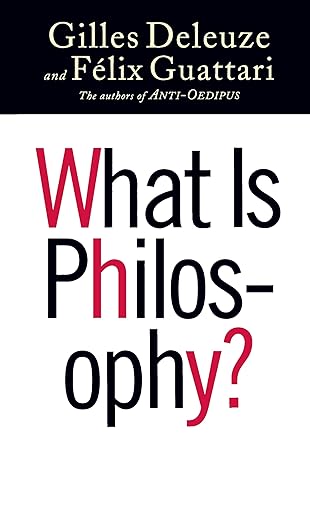
What Is Philosophy? - Deleuze, Gilles, Guattari, Felix, Tomlinson, Hugh, Burchell, Graham | 9780231079891 | Amazon.com.au | Books

What Is Philosophy? - Deleuze, Gilles, Guattari, Felix, Tomlinson, Hugh, Burchell, Graham | 9780231079891 | Amazon.com.au | Books

Kindle$23.82
Available instantly

Hardcover
$177.32

Paperback
$32.99


What Is Philosophy?
by Gilles Deleuze (Author), & 3 more Format: Paperback
4.6 4.6 out of 5 stars (131)
Part of: European Perspectives: A Series in Social Thought and Cultural Criticism (102 books)


Called by many France's foremost philosopher, Gilles Deleuze is one of the leading thinkers in the Western World. His acclaimed works and celebrated collaborations with Félix Guattari have established him as a seminal figure in the fields of literary criticism and philosophy. The long-awaited publication of What Is Philosophy? in English marks the culmination of Deleuze's career.

Deleuze and Guattari differentiate between philosophy, science, and the arts, seeing as means of confronting chaos, and challenge the common view that philosophy is an extension of logic. The authors also discuss the similarities and distinctions between creative and philosophical writing. Fresh anecdotes from the history of philosophy illuminate the book, along with engaging discussions of composers, painters, writers, and architects.

A milestone in Deleuze's collaboration with Guattari, What Is Philosophy? brings a new perspective to Deleuze's studies of cinema, painting, and music, while setting a brilliant capstone upon his work.
Read more

===


From other countries

Teri
5.0 out of 5 stars Deleuze and Guattari
Reviewed in Canada on 4 August 2016
Format: PaperbackVerified Purchase
A must read for all serious scholars....!
Report

Lars Wang
5.0 out of 5 stars Mindstretching
Reviewed in the United Kingdom on 11 April 2019
Verified Purchase
If you ever want to stretch your mind in all directions, this is the book. Remarkable !
Report

Amazon Customer
5.0 out of 5 stars Una obra visionaria
Reviewed in Mexico on 1 October 2020
Format: PaperbackVerified Purchase
Visión panorámica de nuestra época.
Report
Translate review to English

Brian C.
5.0 out of 5 stars Chaos first, order later...
Reviewed in the United States on 6 February 2012
Format: PaperbackVerified Purchase
I have only read the first section of this book so far (the section on philosophy) so my review will be limited to that section. I will be reading the rest of the book soon (hopefully) and will be adding to my review after I do. Before I get into the discussion of what D&G understand by philosophy I should say a few general words that I think will help in understanding the aim of this book.

Deleuze's ontology is based on a distinction between the virtual and the actual. In the simplest terms possible the virtual is a tendency and the actual are the various actualizations of that tendency. So to take an everyday example, love is a tendency, and its various actualizations include marriage, friendship, etc.. Deleuze's philosophical method is based on tracing tendencies back to the virtual rather than trying to define them in terms of their actualizations. So rather than trying to take all the particular forms of love that exist and trying to "abstract" something common about them all and using that to define the concept of love, Deleuze attempts to get a hold of the tendency which is expressed in all the different actualizations of a tendency which will exceed those actualizations.

It is necessary to understand that general ontology if you want to understand what D&G are up to in this book. They are attempting to determine what philosophy, science, and art are. What is the tendency that they express? Which also means, what can they become? Something like philosophy is not defined purely in terms of its past and present actualizations. Philosophy is creative. But D&G's decision to divide philosophy, science, and art from each other is based on their belief that they all express different tendencies (they can overlap with each other but they are essentially distinct). Similarly, when D&G distinguish philosophy from thought based on Figures (89) they are attempting to distinguish two different tendencies. They believe that philosophy is a distinct tendency which differs in nature from the wisdom traditions of the East. This is not necessarily a value judgment (Greek philosophy is better than Eastern religion; though D&G do favor the immanence of concepts over the transcendence of figures) but is simply an attempt to distinguish two things that are different in nature.

The fact that virtual tendencies are often "covered" by their actualizations means that we often do not divide reality up correctly. We lump some things together that do not belong together. D&G would argue that anyone who lumps Eastern wisdom traditions up with philosophy as it originated in Greece is not dividing reality up properly.

PHILOSOPHY

So what is philosophy for D&G? What defines it as a tendency? Philosophy is, for D&G, the creation of concepts. Philosophers have given various interpretations of their own activity over the years and most philosophers in the history of philosophy would probably take some issue with D&G's definition, but whether they THINK it is what they are doing or not, D&G would argue creating concepts is what philosophers are ACTUALLY doing when they are doing philosophy. D&G wonder, "What would be the value of a philosopher of which one could say, 'He has created no concepts; he has not created his own concepts'?" (6)

Philosophers may think they are discovering the truth, a truth that was already there, but what they are in fact doing is creating concepts which respond to specific problems. Plato invented the concept of the concept, or the Idea, but he then turned it into a transcendent truth which it was merely the duty of philosophers after him to "contemplate". It is a good thing for the history of philosophy that philosophers did not take Plato's advice and instead continued with the process of inventing concepts. Plato's concept of the Idea was actually a response to a specific problem, how to validate specific truth claims within a democratic society, how to tell impostors from the real thing, etc. but it was elevated to a transcendent truth.

The most radical claim that D&G make is that concepts must not be evaluated in terms of their "truth" but in terms of their ability to solve problems and open up new problems and avenues for thought. A concept is evaluated in terms of whether it is interesting, important, etc. and not in terms of whether it is true. This is an extremely radical claim. This means, for example, that when evaluating Plato's concept of Ideas we do not attempt to decide whether it is a true picture of reality or not but whether it solved the problems it was meant to solve, whether it was interesting, whether it opened up new avenues of thought, etc. (and from that standpoint Plato's invention was indeed a success on a monumental scale).

It is also important to realize that the concept does not pre-exist its creation. This is what D&G mean when they say, "The first principle of philosophy is that Universals explain nothing but must themselves be explained" (7). Philosophers have a tendency to project their concepts into the past as having some kind of priority. For example, Edmund Husserl invents the concept of the Transcendental Ego (which took over elements from the cogito of Descartes, the transcendental unity of apperception of Kant, etc.) but attempted to then turn the Transcendental Ego into the foundation of all knowledge. D&G are arguing that this kind of move is an illegitimate move. The Transcendental Ego is not a foundation of experience but was created from experience and other concepts and then projected as a foundation. The Universal (the concept of the Transcendental Ego) does not explain experience but itself has to be explained (i.e. the genesis of the concept has to be explained). D&G attempt to explain the process of concept formation rather than using concepts to explain.

Basically D&G argue that there are three elements to philosophy as the creation of concepts. 1) Concepts, which are always combinations of other concepts. This view is similar, in a way, to Hegel's view since Hegel also derives concepts from the combinations of other concepts (i.e. becoming is a combination of being and nothing, etc.) except that Hegel combines concepts in higher syntheses which sublate the previous concepts so that each new concept is in some sense "higher" than the previous concepts. Each concept becomes more concrete and more real as Hegel progresses in his Logic. D&G also believe that concepts are made from other concepts but there is no process of sublation or moving to a higher level. Everything happens on the same plane.

2) The Plane of Immanence. This is something like the presuppositions that are taken for granted in any philosopher's creation of concepts (something like Heidegger's pre-ontological understanding of Being). They also compare it to what they call the image of thought. There is a certain image of thought that is taken for granted. Concepts are created from out of this plane of immanence but it is not itself a concept. It is something like a necessary presupposition for concept creation but cannot be identified with concepts.

3) Conceptual personae. I am not quite as clear on the why a conceptual persona is necessary for the creation of concepts (if anyone can help enlighten me in that regard please feel free to respond to my review) but D&G seem to think that it is necessary to have some kind of "dramatic actor" for the dramatization of concepts (think of Socrates for Plato, Zarathustra for Nietzsche, etc.).

Before I bring this section to a close (I want to leave some room to discuss art and science after I read the relevant sections) I want to just say that D&G's vision of philosophy is a radically creative one which, I think, is why I like it so much. Philosophy is a process of creation just like art but it works in concepts rather than affects. That means the highest goal for the philosopher is not a mere "reflection" of the truth but is a creation of new, interesting, exciting concepts. It is a radical vision of philosophy and there are aspects I have some questions about (I am not sure if I am entirely willing to throw out "truth" as a normative concept for philosophy, or "reference" as a possibility for philosophical concepts) but it is a very exciting read.
Report

barryb
5.0 out of 5 stars deleuze's best presentation of his full position
Reviewed in the United States on 28 April 2013
Format: PaperbackVerified Purchase
Deluze is one of my favorite thinkers and I was already familiar with his work. This volume was supposed to be something that evolved just before his death and represented his comprehensive thought. I found it to be very comprehensive, presented in a logical order, and very accessible .

he doesn't give a vague answer; he tells us exactly what philosophy is; it has three specific steps: the pre-philosophical plane of immanence; the conceptual-persona; and finally, construction of the "constellation-event". He fills each area with substantial content and links the areas together.

one exciting aspect of the presentation is the way he enlists Hegel's concept of "counter-blow". With his theory of an extended plane; he articulates the eventual curves that evolve along this plane, and the "folding-back", that is a built-in function of the concept. These folds align borders that previously were separated. The fold creates retro-active zone-overlaps that modify structure. A great idea. Also, his idea of vertical and horizontal intersections of the plane are discussed towards the end of the book and also address the folding-back aspect (or being driven-back by moments that are outside "territory" or point-of-view. This is a very creative and powerful presentation that I felt offered significant "new" material that I'm glad I did not miss. Of course 5 stars. This presentation is superior to others who share the same motivational plane of immanence.
Report

Suzanne H.
5.0 out of 5 stars Great entry point for Deleuze & Guattari
Reviewed in the United States on 17 March 2023
Format: PaperbackVerified Purchase
I quite like the large inside margins and typeface. It's also the most accessible point for someone interested in D&G, but I imagine you already know that if you're shopping for this book.
Report

Yining
4.0 out of 5 stars Four Stars
Reviewed in the United Kingdom on 13 March 2016
Verified Purchase
Haven't read the whole book but will find more time to get along with Deleuze
Report

Robert Philbin
5.0 out of 5 stars Deleuze - Guattari on Philosophy, Excellent Read
Reviewed in the United States on 20 September 2010
Format: PaperbackVerified Purchase
Nicely reasoned work on the role of philosophy, science, and art in the human approach to organizing meaning in the material world. Deleuze is of course a key thinker in terms of understanding the current state of how we come to terms with origins and potentialities. It can be difficult at times because of translation and the unique terminology necessary to explore certain innovative concepts; but if you're not familiar with Deleuze, and want a fresh look at the subject, this is a good start.
Report

David Dilworth
4.0 out of 5 stars Deleuze in relation to Aristotle, Kant, and Peirce
Reviewed in the United States on 6 February 2019
Format: PaperbackVerified Purchase
Deleuze writes seriously and with stimulating French razzle-dazzle, the originality of which wears then when you rethink the great philosophers on the topics he addresses (e.g., in Aristotle and Kant). His major stress is on philosophers "creating philosophic concepts" on their own plane or plateau. He distinguishes this concept plane from the independent plane of scientific perception, and then frames a third independent plane of the qualitative affect (as in art works). He provides extensive phenomenological descriptions of all three planes. To some extent the style is of the "drive-by" variety, that is, alluding to other philosophers in quick apercus without stopping to articulating their positions in depth. His treatment of the plane of the qualitative affect, as in art, is very good, except that it is derivative from Peirce's category of Firstness, which Deleuze employs in his CINEMA 1 but with no reference to Peirce here. In effect, Deleuze has reversed Peirce's more logically elegant three categories of Firstness, Secondness, and Thirdness in his (Deleuze's) somewhat over-saturated sequential articulation of the domains of concept, perception, and affect.
Report

can b
5.0 out of 5 stars Best book ever
Reviewed in the United States on 13 July 2023
Format: PaperbackVerified Purchase
Absolutely great, I like the printing, as well.
Report

demarcation
5.0 out of 5 stars Intense
Reviewed in the United States on 22 March 2020
Format: PaperbackVerified Purchase
An intense yet important overview to Guattari and Deleuze’s starting themes. I’d say a must read for anyone getting into either D, G, or their collective works.
Report

Amazon Customer
5.0 out of 5 stars Five Stars
Reviewed in the United States on 29 October 2015
Format: PaperbackVerified Purchase
The quality is very good! Thanks you so much!
Report

Peter Oliphant
1.0 out of 5 stars If you liked Khalil Ghibran, you will swoon over this.
Reviewed in the United States on 11 May 2010
Format: PaperbackVerified Purchase
Here is the big picture: thought has "three great forms -- art, science, and philosophy...."(197) This three-part framework is not explicated, but these categories clearly refer to culture, leaving out distasteful areas of culture, such as technology, which are certainly merely "material."
To explain culture, the writers move back and forth between two varieties of positivism: intellectualistic positivism and anti-intellectual positivism. Intellectualistic positivism is the position associated with Hume, Hobbes, and Locke that reduces culture to ways of thinking, especially among intellectuals. Anti-intellectual positivism is the position associated with Malthus and Darwin, and that derives culture from some underlying biological forces.

The book is divided into two parts.

Part I says that "forms" of culture arise from composing one's feelings (art), referring to instants of experience by measuring motion (science), and forming concepts (philosophy). "Concept" is some entity of "thought." "Concept" is never defined but is catalogued by words like "fragmentary whole, plural," and "incorporeal." Concepts, references, and feelings make up "planes," also never defined, which are "immanent" for concepts, "referent" for science, and "monumental" for art.
The "plane of immanence" among the academic philosophers is the highest plane, of course:
"If the three ages of the concept are the encyclopedia, pedagogy, and personal commercial training, only the second can safeguard us from falling from the heights of the first into the disaster of the third -- an absolute disaster for thought, whatever its benefits might be, of course, from the viewpoint of universal capitalism." (12)

Philosophers communicate their concepts by "personae...leaping like Kierkegaard, dancing like Nietzsche, and diving like Melville." (71) Scientists communicate their references by "observers," like Maxwell's demon (129). Artists communicate their feelings by compositions. All these are variations on the theme of intellectualistic positivism, the center of which is the philosopher's acting like an atom, swirling about, intellecting concepts.

Part I closes with a digression on sociologistic positivism shading into radical anti-intellectualistic positivism. The digression is on "geophilosophy." The writers adopt a form of radical anti-intellectualistic positivism: animals form territories, abandon them, and recreate them. So "social fields are inextricable knots in which the three fields are mixed up so that in order to disentangle them, we have to diagnose real types or personae." (68) Geopolitics means that some concepts, observations, and compositions are good ones, because they are "territorialized" by relation to the values of a particular society, as among the ancient Greeks. They are "immanent."
But others are bad ones because they are "deterritorialized" by political domination. They are "transcendent." Transcendent geophilosophy is "imperial," and "paradigmatic, projective, hierarchical, referential" (89) like Chinese, Hindu, Jewish, Islamic "pre-philosophy." Immanent "geophilosophy" is "syntagmatic, connective, linking, and "consistent" (91). Because of transcendent geophilosophy, the "two great modern revolutions, American and Soviet, have turned out so badly." (100) We are in just a terrible state today, having damaged our environment with our transcendent concepts. "The Greeks lived and thought in Nature, but left Mind in the "mysteries," whereas we live, think, and feel in the Mind, in reflection, but leave Nature in a profound alchemical mystery that we constantly profane." (102)

Part II recovers from geopolitical environmentalism, and the writers return to science, portraying science as measurements or "functives...propositions in discursive systems" (117) in a "plane of reference" (127) among states, "enunciated" by..."partial observers." (129). While science has reference, philosophy has logic, which "wants to turn the concept into a function" (135), but is just the confrontation of opinions about "virtuals." Art has "composition," by which the artist memorializes his sensations, especially the unhappy depressed ones like Van Gogh, Woolf, Dickenson, and Klee. Here a variety of cultural idealism emerges, as the concepts and the compositions take over. We are treated throughout to many precious metaphors ("The philosopher is the friend of the concept") and obscure references ("Kant's hose suspenders") which show how piquant it is to be an intellect aware that "immanence is only immanent to itself." (48)
The last chapter, "From Chaos to the Brain," returns to the intellectual and anti-intellectual themes. Thought (intellectual) must be localized in the brain (organic, anti-intellectual), because opinions are an umbrella we put up to protect us from chaos. "The brain is the "junction" of the three planes: immanence of philosophy, reference of science, composition of art...." (217) In sum, "Art struggles with chaos...to render it sensory...science is perhaps inspired by a sinuous reptilian movement. (205) Philosophy struggles in turn with the chaos as undifferentiated abyss or ocean of dissemblance." (207)
Their position that the object world is grounded in chaos is really an assumption that science is impossible, because "chaos" has no intrinsic order. The book has an extensively commented bibliography of mostly continental writers in the footnotes and an index that valiantly substitutes a heroic catalogue of page references for definitions, since, in the end, they say concepts cannot be defined.
Report

grant
4.0 out of 5 stars Not bad
Reviewed in the United States on 20 August 2014
Format: PaperbackVerified Purchase
I'm not sure what to say about the book. I just don't seem to be interested in this one. It is well formatted, and enjoyable enough
Report

Gregory G.
3.0 out of 5 stars Disappointed, not an engaging read.
Reviewed in the United States on 16 August 2020
Format: PaperbackVerified Purchase
I read great reviews of this French author, but did not find this book, or maybe this translation very engaging.
Report

xp6203
2.0 out of 5 stars obviously, the size for white and black ones are of different standards.
Reviewed in the United States on 14 November 2013
Format: PaperbackVerified Purchase
size do not match label. size is too large. it has same size on shoulder and waist as medium, both are actual large size
Report
===


==


Review
[An] important, highly original challenging book....As a result, the success of Deleuze's argument that we are Leibnizan is, in turn, compelling evidence for Foucault's suggestion that our century is Deleuzian. Because the action indeed takes place inside, readers of this journal should not overlook this evidence.-- "Journal of Aesthetics and Art Criticism"

A pivotal work.-- "Times Literary Supplement"

A pleasure to read, this is a rigorous structural reflection of the philosophical concept and a genuine contribution to philosophy. Highly recommended.-- "Choice"

Multiple beings, deterritorialized Earth, chaotic brains, artistic sensations: with these ideas, Deleuze and Guattari reach out to future "friends" of the concept, tired of worn-out philosophical gestures or conceptual moves, offering them a sense and a taste of what it means to try out new concepts and set things again in motion.--John Rajchman "ArtForum International"
From the Back Cover
Deleuze and Guattari differentiate between philosophy, science, and the arts--seeing each as a means of confronting chaos--and challenge the common view that philosophy is an extension of logic. The authors also discuss the similarities and distinctions between creative and philosophical writing. Fresh anecdotes from the history of philosophy illuminate this book, along with engaging discussions of composers, painters, writers, and architects.
Read more

Top
About this itemSimilarFrom the BrandFrom the AuthorQuestionsReviewsWhat Is Philosophy?

Product details
ASIN ‏ : ‎ 0231079893
Publisher ‏ : ‎ Columbia University Press
Publication date ‏ : ‎ 23 May 1996
Edition ‏ : ‎ 1st
Language ‏ : ‎ English
Print length ‏ : ‎ 524 pages
==

==

==

==

==

2026/07/04

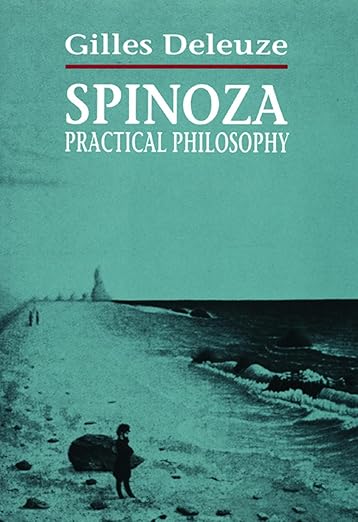
Spinoza: Practical Philosophy : Deleuze, Gilles, Hurley, Robert: Amazon.com.au: Books

Spinoza: Practical Philosophy : Deleuze, Gilles, Hurley, Robert: Amazon.com.au: Books


Gilles DeleuzeGilles Deleuze
Follow


Spinoza: Practical Philosophy
by Gilles Deleuze (Author), Robert Hurley (Translator) Format: Paperback
4.7 4.7 out of 5 stars (175)


Spinoza's theoretical philosophy is one of the most radical attempts to construct a pure ontology with a single infinite substance. This book, which presents Spinoza's main ideas in dictionary form, has as its subject the opposition between ethics and morality, and the link between ethical and ontological propositions. His ethics is an ethology, rather than a moral science. Attention has been drawn to Spinoza by deep ecologists such as Arne Naess, the Norwegian philosopher; and this reading of Spinoza by Deleuze lends itself to a radical ecological ethic. As Robert Hurley says in his introduction, "Deleuze opens us to the idea that the elements of the different individuals we compose may be nonhuman within us. One wonders, finally, whether Man might be defined as a territory, a set of boundaries, a limit on existence."

Gilles Deleuze, known for his inquiries into desire, language, politics, and power, finds a kinship between Spinoza and Nietzsche. He writes, ""Spinoza did not believe in hope or even in courage; he believed only in joy and in vision . . . he more than any other gave me the feeling of a gust of air from behind each time I read him, of a witch's broom that he makes one mount.

Gilles Deleuze was a professor of philosophy at the University of Paris at Vincennes. Robert Hurley is the translator of Michel Foucault's History of Sexuality.
Read less

About the Author
Gilles Deleuze (1925-1995) was a French philosopher whose writings influenced many philosophical disciplines such as literary theory, post-structuralism and postmodernism. He also taught philosophy at the University of Paris at Vicennes.

Robert Hurley was a translator for many French philosophers including Michael Foucault (History of Sexuality), Gilles Deleuze and George Bataille (Theory of Religion).

Product details
Publisher ‏ : ‎ City Lights Publishers
Publication date ‏ : ‎ 2 January 2001
Language ‏ : ‎ English
Print length ‏ : ‎ 130 pages
==
Translate all reviews to English
From Australia
There are 0 reviews from Australia
From other countries

Arihant Kumar
5.0 out of 5 stars Satisfied
Reviewed in India on 14 January 2025
Format: PaperbackVerified Purchase

Customer image
Customer image
Customer image
Customer image
Report

Autonomeus
5.0 out of 5 stars Useful and interesting, but not a comprehensive summary
Reviewed in the United States on 5 July 2023
Format: PaperbackVerified Purchase
I came to this little (130 pp) book, originally published in French in 1970, via Toni Negri's essays on Spinoza. The translation for the 1988 English edition from City Lights is by Robert Hurley. There are five very readable essays by Deleuze, including a very informative biography. But the main text is the "Index of the Main Concepts of the 'Ethics'," and it is less readable as it is a non-systematic summary of Spinoza's great work. The preface suggests reading Deleuze on Spinoza intuitively, like poetry. In that spirit, here are the passages that made the biggest impact on me -- the quotations are from Deleuze, not Spinoza, unless noted as such:

*** *** ***
ATTRIBUTE
"The Spinozan immanence is therefore no less opposed to emanation than to creation" (52).

EMINENCE
"If a triangle could speak, it would say that God is eminently triangular" -- Spinoza (63).

FREEDOM
"Freedom is always linked to essence and to what follows from it, not to will and what governs it" (70-71).

NECESSARY
"...[N]othing is possible in Nature; that is the essences of non-existing modes are not models or possibilities in a divine legislative intellect; there is nothing contingent in Nature" (94).

POWER
"One of the basic points of the 'Ethics' consists in denying that God has any power (potestas) analogous to a tyrant, or even an enlightened prince. God is not will, not even a will enlightened by a legislative intellect" (97).

"...[T]he power of God is two-fold -- a power of existing and producing, and a power of thinking and comprehending..." (103).

"The entire 'Ethics' presents itself as a theory of power, in opposition to morality as a theory of obligations" (104).

PROPRIA
"Ignorance of God's essence, that is, of his nature, has been constant... This is theology's basic error... God is endowed with anthropological and anthropomorphic properties, elevated to the infinite" (105).

SIGN
"...[T]he most serious error in theology consists precisely in its having disregarded and hidden the difference in nature between obeying and knowing, in having caused us to take principles of obedience for models of knowledge" (106).

SPINOZA'S EVOLUTION
"...[T]he 'Ethics' demonstrates a substantial identity [of God and Nature] based on the oneness of substance (pantheism)" (110-111).

SPINOZA AND US
"The important thing is to understand life, each living individuality, not as a form, or a development of form, but as a complex relation between different velocities, between deceleration and acceleration of particles. A composition of speeds and slownesses on a plane of immanence" (123).

"Affective capacity, with a maximum threshold and a minimum threshold, is a constant notion in Spinoza" (124).

"Spinoza's ethics has nothing to do with a morality; he conceives it as an ethology, that is, as a composition of fast and slow speeds, of capacities for affecting and being affected on this plane of immanence" (125).

*** *** ***
Deleuze found Spinoza inspirational. Negri finds Spinoza inspirational and continues to promote his philosophy. Through their writings, I find the 17th Century Spinoza inspirational enough to keep exploring.
Report

Randy Liewicki
4.0 out of 5 stars Spinoza
Reviewed in Canada on 29 May 2013
Format: PaperbackVerified Purchase
This text helped me understand Spinoza more than just reading an excert from Wikiapedia. I recommend it to expand your mind and to allow one to understand a great thinker.
Report

paul
5.0 out of 5 stars Entity relations.
Reviewed in the United Kingdom on 7 February 2014
Format: PaperbackVerified Purchase
Entity relations based on predicate logic, the method for human/computer database design and engineering. Interesting for the Spinozan dictionary and contextual information.
Report

Itzel
5.0 out of 5 stars Amazing
Reviewed in Mexico on 2 May 2024
Format: PaperbackVerified Purchase
Loved it. I have several books from Spinoza, but this one is a great introduction to his work.
Report

Shiraz Iqbal
5.0 out of 5 stars Five Stars
Reviewed in India on 15 May 2018
Format: PaperbackVerified Purchase
Received as described and on time
Report

Amazon Customer
5.0 out of 5 stars Enseña lo que es investigar el pensamiento de un filósofo
Reviewed in Mexico on 1 October 2020
Format: PaperbackVerified Purchase
Si se quiere conocer a Spinoza, esta investigación de Giles Deleuze ayuda en la exploración de las ideas del filósofo racionalista.
Report
Translate review to English

Pauline Rowe
5.0 out of 5 stars Five Stars
Reviewed in the United Kingdom on 20 May 2017
Format: PaperbackVerified Purchase
interesting starting point for thinking about Spinoza
Report

Harry Haller
5.0 out of 5 stars Good introduction to Spinoza
Reviewed in the United States on 18 January 2022
Format: PaperbackVerified Purchase
A great book, but a little odd. It has three parts, roughly equal length.

1. A biography of Spinoza

2. A few short essays. These are easy to read and simple, excellent for beginners. If you are more familiar with Spinoza and are looking for a more comprehensive evaluation you're better off seeking Deleuze's full length work on the subject, Spinoza: Expressionism in Philosophy.

3. Glossary of Spinoza's terms. These are summaries written by Deleuze and not just the definitions that Spinoza gives. Some of the entries are quite detailed, taking up multiple pages. They are enjoyable to read, but it may be difficult for beginners to follow along without having the context of them. This part best serves as a refresher while reading along with Spinoza's works.
Report

NAME Melani Palmer
5.0 out of 5 stars Must read for anyone interested in Spinoza or Deleuze.
Reviewed in the United States on 11 August 2019
Format: PaperbackVerified Purchase
This book has a great way of explaining the underlying ideas inside found in the sometimes dense writings of Spinoza. Additionally, there is an entire chapter dedicated to terms used in Spinoza to help you understand his writings more.
Finally, this book helps give insights into the foundation framework Deleuze uses in in later philosophical projects.
Report

Lin
5.0 out of 5 stars Five Stars
Reviewed in the United Kingdom on 31 July 2015
Format: PaperbackVerified Purchase
Excellent!
Report

Amazon Customer
5.0 out of 5 stars Short and sweet
Reviewed in the United States on 3 June 2023
Format: PaperbackVerified Purchase
got it :D arrived on time. Great reference for anyone studying Spinoza, the dictionary form is very helpful.
Report

K.M
4.0 out of 5 stars Four Stars
Reviewed in the United Kingdom on 7 March 2016
Format: PaperbackVerified Purchase
Very good!
Report

blade
5.0 out of 5 stars pretty good
Reviewed in the United States on 25 November 2023
Format: PaperbackVerified Purchase
like it
Report

relfte
3.0 out of 5 stars good few chapters
Reviewed in the United Kingdom on 26 August 2023
Format: PaperbackVerified Purchase
mainly a glossary of terms
Report

james durham
5.0 out of 5 stars light reading
Reviewed in the United States on 17 April 2021
Format: PaperbackVerified Purchase
this book is just one idealists critique of another, light afternoon reading, pairs well with cheap beer.
Report

Sereptie
5.0 out of 5 stars A concise and thoughtful biography of Spinoza paired with an ...
Reviewed in the United States on 4 August 2017
Format: PaperbackVerified Purchase
A concise and thoughtful biography of Spinoza paired with an important monograph of Spinoza's ethics. Deleuze brings in Nietzsche as a mediator to elaborate an approach towards ethics which privileges the body. I find this to be some of Deleuze's most engaging writing.
Report

Justin
2.0 out of 5 stars Opposite of Advert
Reviewed in the United States on 18 May 2026
Format: PaperbackVerified Purchase
This is the opposite of practical philosophy: It’s abstruse, cumbersome, wordy, and never really gets to a clear point. It’s about about about Spinozas ideas and will likely just sit on the shelf. This is why many academics get a bad Rap.
Report

Marcello Milanezi
1.0 out of 5 stars Review on quality of Kindle edition
Reviewed in the United States on 1 November 2022
Verified Purchase
Again, this review is not on the content, but on the so-called Kindle edition... This is not a kindle version, I don't know if it's even worthy of being called a PDF. Amazon should actually take this out of catalogue: it's a poor-job of scanning (!!!), and by that I mean scanning two pages per screen... A complete waste of money and time. Just asked for reimbursement and will try to import the physical version instead.
Report

Amazon Customer
3.0 out of 5 stars Very difficult
Reviewed in the United States on 28 September 2020
Format: PaperbackVerified Purchase
Writing is too difficult to follow. Not meant for ordinary readers.
Report

Matthew Osborn
5.0 out of 5 stars Very Helpful in Understanding Spinoza
Reviewed in the United States on 22 June 2017
Format: PaperbackVerified Purchase
Like the introduction says, there are parts that are difficult, but other parts just made so much sense to me and helped me understand my favorite philosopher better.
Report

Arturo
5.0 out of 5 stars Moral values explained
Reviewed in the United States on 15 February 2020
Format: PaperbackVerified Purchase
Beautiful !!! Thank you
Report

Roger Summers
5.0 out of 5 stars Understanding understanding positively
Reviewed in the United States on 5 March 2014
Format: PaperbackVerified Purchase
This book is essential for anyone who wants to understand Spinoza and this "Practical" song will have you returning often. Dig-it!
Report

Matthew Wilcox
5.0 out of 5 stars Five Stars
Reviewed in the United States on 14 February 2018
Format: PaperbackVerified Purchase
cheese and crackers.
Report

John Kydd
5.0 out of 5 stars Five Stars
Reviewed in the United States on 7 November 2016
Format: PaperbackVerified Purchase
Eloquent and compressed summary of Spinoza
Report

Amazon Customer
1.0 out of 5 stars The philological views interpretation were to academic for my ability ...
Reviewed in the United States on 7 February 2018
Format: PaperbackVerified Purchase
The philological views interpretation were to academic for my ability to appreciate what I had thought Voltier alluded and gave credence to Spinoza
Report


==


===

Affect 뜻, ‘영향’만 알면 독해에서 막힙니다|감동, 가장까지 뜻 정리

Affect 뜻, ‘영향’만 알면 독해에서 막힙니다|감동, 가장까지 뜻 정리

Affect 뜻, ‘영향’만 알면 독해에서 막힙니다|감동, 가장까지 뜻 정리

Affect 뜻은 단순히 ‘영향을 주다’에서 끝나지 않습니다. 이 단어의 핵심은 어떤 대상 쪽으로 힘이 작용해 상태를 바꾸는 그림입니다.
그래서 affect는 문맥에 따라 ① 영향을 주다 ② 감동시키다 ③ 가장하다 ④ 심리학 명사 ‘정동’까지 확장됩니다.
특히 시험에서는 effect와 헷갈리기 쉽기 때문에, affect는 ‘작용’, effect는 ‘결과’라는 기준으로 잡아야 합니다.


📌 이 글의 핵심 요약

  • affect의 핵심 이미지는 “대상 쪽으로 작용해 변화를 일으키다”입니다.
  • 가장 기본 뜻은 “영향을 주다”입니다.
  • 사람의 마음에 작용하면 “감동시키다, 마음을 움직이다”가 됩니다.
  • 표정·말투·태도를 일부러 만들어 보이면 “가장하다, ~인 체하다”가 됩니다.
  • effect는 보통 명사로 “결과, 효과”를 뜻하고, affect는 보통 동사로 “영향을 주다”를 뜻합니다.
  • 수능에서는 affect 자체보다 “무엇이 무엇에 영향을 주는가”라는 원인·결과 구조를 빠르게 잡는 것이 중요합니다.

Machinic Eros: Writings on Japan (Univocal) eBook : Guattari, Félix, Genosko, Gary, Hetrick, Jay: Amazon.com.au: Kindle Store

Machinic Eros: Writings on Japan (Univocal) eBook : Guattari, Félix, Genosko, Gary, Hetrick, Jay: Amazon.com.au: Kindle Store

Kindle
$34.79
Available instantly
Paperback
$44.85


Read sample


Machinic Eros: Writings on Japan (Univocal)
by Félix Guattari (Author), Gary Genosko (Editor), & 1 more Format: Kindle Edition


4.3 4.3 out of 5 stars (3)


See all formats and editions


The French philosopher Félix Guattari frequently visited Japan during the 1980s and organized exchanges between French and Japanese artists and intellectuals. His immersion into the “machinic eros” of Japanese culture put him into contact with media theorists such as Tetsuo Kogawa and activists within the mini-FM community (Radio Home Run), documentary filmmakers (Mitsuo Sato), photographers (Keiichi Tahara), novelists (Kobo Abe), internationally recognized architects (Shin Takamatsu), and dancers (Min Tanaka). From pachinko parlors to high-rise highways, alongside corporate suits and among alt-culture comrades, Guattari put himself into the thick of Japanese becomings during a period in which the bubble economy continued to mutate. This collection of essays, interviews, and longer meditations shows a radical thinker exploring the architectural environment of Japan’s “machinic eros.”
Read less


Print length

154 pages
Language

English


Top
About this itemQuestionsReviews
Machinic Eros: Writings on Japan (Univocal)


Product description

About the Author


Felix Guattari (19301992) was a French psychoanalyst, activist-intellectual, and philosopher known widely for his collaborations with Gilles Deleuze and Antonio Negri.

Gary Genosko is professor of communication at the University of Ontario Institute of Technology. His scholarship about Felix Guattari includesThe Guattari Reader, Felix Guattari: An Aberrant Introduction, Felix Guattari: A Critical Introduction, The Party without Bosses, Deleuze and Guattari Dictionary,andDeleuze and Guattari: Critical Assessments of Leading Philosophers.

Jay Hetrick is assistant professor of cultural studies at the American University in Dubai. He has published in the fields of twentieth-century art, continental aesthetics, and critical theory.


Product details
ASIN ‏ : ‎ B016VNDXJY
Publisher ‏ : ‎ Univocal Publishing
Accessibility ‏ : ‎ Learn more
Publication date ‏ : ‎ 1 November 2015