
Self, World, and Language: Robert Lowell's Life Studies
이홍필 (지은이)
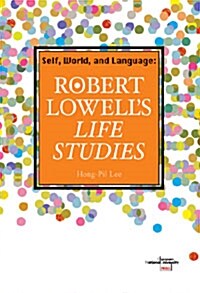
166쪽
===
책소개
로월의 작품들을 불란서 현대 철학자이자 심리학자인 메를로 뽕띠의 현상학을 통해서 접근, 분석한 로월 시 연구서.
목차
Preface ⅴ
Chapter 1. Introduction 1
1. Life Studies and Contemporary American Literature 12. Socio-Cultural Background of Mid-Century American Poetry 103. Theoretical Preparation 21
Chapter 3. The Self Incarcerated in the Family 57
Chapter 4. The Self Remapped in the World 92
Chapter 5. Madness, Tranquilization, and the Self 122
Chapter 6. “Skunk Hour”: Completing Life Studies 152
Bibliography 162
===
책속에서
Introduction
The only way of expressing emotion in the form of art is by finding an “objective correlative”; in other words, a set of objects, a situation, a chain of events which shall be the formula of that particular emotion; such that when the external facts, which must terminate in sensory experience, are given, the emotion is immediately evoked.(original italics)
The contemporary poet re-creates himself as a personality, an identifiable self within his poetry, that is, of course, a self who has been selected and heightened in the process, captured in essence, and so is not perhaps a full likeness of the author as a physical, workday person outside the poem yet could not be mistaken for someone else. . . . [w]e recognize a certain maganimous gesture in their acts of creation, a profoundly touching and human gesture through which the poet voluntarily stands exposed as “creation’s very self” before us. (ellipsis mine)
During this time, in fact, the Beats, the Confessional poets, the Black Mountain, New York, and Deep Image groups proposed a range of alternatives to the established mode, and they provided the leading sources of the new paradigms for poetry that became visible in the late fifties and early sixties. These clusters of poets differed from each other in fundamental ways and in some instances were mutually antagonistic; but they agreed in their renunciation of the well-made symbolist poem and in their search for poetic forms that could capture temporal immediacy, for the language of a breakthrough back into life. (emphasis mine)
저자 및 역자소개
이홍필 (지은이)
전남대학교 인문대학 영어영문학과 교수
최근작 : <Self, World, and Language: Robert Lowell's Life Studies>
출판사 제공 책소개
로월의 『인생연구』는 여러 해에 걸쳐서 발표된 후 한권의 시집으로 묶어진 것이지만, 세계 속에서의 시인의 자아탐색이라는 시집 전권에 흐르는 주제를 기승전결에 가깝게 구조화 시키고 있다. 흥미로운 것은 『인생연구』에 수록된 작품들의 상당수가 개별 작품으로서도 형식과 주제 양면에서 완결을 성취하고 있을 뿐만 아니라, 그것들을 전체적으로 묶어서 조망할 때에도 구성과 주제의 교호성(交互性)이 돋보인다는 사실이다.
로월의 회고에 따르면 종전의 자신의 창작 스타일에 일대 전환점을 주고자 하는 의도에서 쓰여진 것으로 되어 있다. 그러나 분명한 것은 창작 스타일 전체의 변모를 선언했지만, 새로운 스타일을 이용하여 일정한 기획 하에서 특정 주제와 구조로 단일 시집을 출판하겠다고 처음부터 염두에 둔 것은 아니었다는 점이다. 『인생연구』에 수록된 작품의 절반은 1958에서 1959년에 걸쳐 서로 다른 문학잡지들을 통해서 발표되었고, 1959년 4월에 비로소 한 권의 시집으로 나타났다.
『인생연구』는 20세기 문명과 문화에 대한 연구인 동시에 로월 자신의 자아 표현이자 자신에 관한 연구였다는 것을 보여준다. 이 시집의 전 작품들은 시인 자신의 시간으로 판명되는 「스컹크 시간」이라는 한 편을 향해서 일견 관련이 없어 보이는 작품들을 치밀하게 구성·배치되었으며, 그 결과 훌륭한 한 편의 단편소설이 이루어 내는 듯한 구성상의 짜임새와 완결성을 성취하는데 성공하였다고 할 수 있다. 미국 시의 역사에 있어서 성취도가 높고, 획기적인 전기를 제시한 시집이지만 국내에서는 로월의 『인생연구』에 대한 집중적인 저술은 전무한 상태이다. 따라서 본 연구는 국내의 로월 시 연구에 기여할 수 있을 것이라 판단된다. 아울러 이 저술은 로월의 작품들을 불란서 현대 철학자이자 심리학자인 메를로 뽕띠의 현상학을 통해서 접근, 분석하고 있기 때문에 로월 시의 이해와 연구에 새로운 지평을 제시할 수 있다고 사료된다.
one of my mentors in the United States, as he left for a college in Los Angeles, gave me a copy of John Ashbery’s A Wave as a gift. On the inside cover he wrote a note saying that he hoped I would become “a passionate and eloquent teacher of poetry.” About twenty years have passed since I completed my doctoral dissertation on Robert Lowell’s Life Studies, but a question has haunted me for a long time: whether I have taught my students successfully and lived up to my mentor’s wish. The answer is easy and I have come to the conclusion that I fell short of becoming “a passionate and eloquent teacher of poetry.” My fifteen years of teaching have given me a strong sense that I need to better my earlier understanding of Robert Lowell. Teaching American poets, particularly whenever I have encountered Lowell, I found myself attracted to his way of “life studies,” and this has brought me to reflect upon my own “life studies.” One benefit from reading Lowell’s Life Studies was that it helped me to take a deeper look at my own past. I believe that Lowell’s “life studies” were very successful in that he could expand his self to the extent that he was able to reconstruct his relationship with the members of his family.
My understanding of Maurice Merleau-Ponty’s phenomenology has helped me read Lowell’s reconstruction and expansion of his own world. Although my original interpretation of Lowell’s Life Studies through Merleau- Ponty’s phenomenology was written some twenty years ago, this time span has not caused me to alter the initial combination or its interpretation; rather I find that it rings truer and truer as the years go by. This recognition has lessened my hesitation at publishing my dissertation and has led me to revise the chapters one by one.
This present volume adopts Maurice Merleau-Ponty’s existential phenomenology and explores the self-investigation found in Robert Lowell’s Life Studies. It particularly seeks to explore the ways in which the poet arrived at a sense of identity through engaging the external forces of life such as family, society and culture. Merleau-Ponty’s ?tre-au-monde, a modification of Husserl’s intentionality, elaborates a theory of human communication which results from a complementary operation between the subject and the object. His thesis illustrates not only the possibility but the inevitability of the subject’s coexistence with others and with the external world. Merleau-Ponty’s phenomenology suggests a shared existence between the human subject and the world.
In Life Studies, Lowell places himself in the already- experienced world, i.e. the past. To position himself in the past is thus to re-experience and re-express his own self in language and to further question and seek out his identity in the world. I regard Lowell’s Life Studies as the poet’s personal perception of his past and as a journey toward an articulated discovery of his identity within the world of which Merleau-Ponty speaks. This book is a reading of Life Studies and focuses on the ways in which the poet examines the self by engaging himself with the external forces. These are the very forces, according to Merleau-Ponty, that the self must engage dialectically in order to come to a sense of its own subjectivity.
- The first chapter presents the theoretical background for a reading of Life Studies.
- In the second chapter, I examine the poet’s declaration of his journey as “down-to-earth,” which suggests his abandonment of his religion and reveals his view of human civilization.
- The third chapter deals with the fate of the poet’s self by situating his family in the context of American history and culture.
- Chapter Four addresses the self which grows through interacting with the world. I present the poet’s self in an ongoing dialogue with his family, especially treating the ways in which the poet comes to understand the world and forgives his parents and grandparents, with whom he once was strongly at odds.
- The fifth chapter seeks to explore how the poet’s self aggrandized itself through a re-experience of his personal afflictions.
- The final chapter, concentrating on “Skunk Hour,” examines how the poet created a reconciliation between the self and the tormenting world and how the poet’s perception of the world led to the expression and establishment of the self in the world.
요약: 현상학적 시선으로 읽는 로버트 로웰의 자아 탐색
이 책은 미국 고백시(Confessional Poetry)의 거장 로버트 로웰(Robert Lowell)의 대표 시집 <인생 연구>(Life Studies, 1959)를 입체적으로 분석한 학술 평론서이다. 저자 이홍필은 로웰의 시집이 단순히 파편화된 개인적 고백의 나열이 아니라, '세상 속에서 시인이 자아를 탐색해 나가는 긴밀한 서사 구조'를 지니고 있음에 주목한다. 특히 프랑스 현상학자 모리스 메를로퐁티(Maurice Merleau-Ponty)의 신체 현상학과 지각 이론을 방법론으로 삼아, 로웰의 시적 자아가 어떻게 신체와 언어를 통해 세계와 관계를 맺고 치유에 이르는지 추적한다. 책의 구성은 로웰의 자아 탐색 과정을 기승전결의 논리적 흐름에 따라 총 6개의 장으로 구조화하였다.
1. 신의 도시에서 인간의 도시로 (역사적·종교적 방황)
로웰은 보스턴의 명문가 출신으로 영청교도적 전통과 가문의 엄격한 규율 속에서 성장했다. 초기 작가 시절 그는 가문의 청교도주의에 반발하여 가톨릭으로 개종하는 등 영적 구원을 갈망했다. 저자는 로웰이 초기 시의 경직된 독단주의와 '신의 도시'라는 초월적 관념에서 벗어나, 고통스럽고 불완전한 '인간의 도시'인 역사적·현실적 세계로 내려오는 과정을 분석한다. 거대 담론과 종교적 도그마의 붕괴는 고백시로 이행하는 첫 번째 심리적 토대가 된다.
2. 가족이라는 감옥에 갇힌 자아 (가족사의 해부)
<인생 연구>의 핵심을 이루는 산문 <리비어 가 91번지>(91 Revere Street)와 중반부 시들은 로웰의 불우한 유년 시절과 부모에 대한 냉소적 기억을 다룬다. 무능하고 나약한 아버지와 강압적이고 지배적인 어머니 사이의 갈적은 로웰에게 깊은 정서적 외상을 남겼다. 저자는 로웰이 가족이라는 억압적 공간 안에서 자아가 어떻게 소외되고 갇혔는지를 밝혀낸다. 가문의 영광 이면에 감춰진 위선과 몰락을 폭로하는 과정은 자아 정체성을 찾기 위한 필연적인 통과의례이다.
3. 세계 속에서 재배치되는 자아와 광기 (정신병과 치유)
로웰은 평생 조울증(양극성 장애)에 시달렸으며, 맥클린 정신병원에 여러 차례 입원했다. 저자는 로웰의 광기가 단순히 병리적인 현상에 그치지 않고, 기만적인 현대 사회의 '차분함' 또는 '진정 상태'(Tranquilization)에 대한 신체적 저항이라고 해석한다. 메를로퐁티의 이론을 빌려, 로웰이 정신병동이라는 한계 상황 속에서 자신의 깨어진 신체와 감각을 재인식하고, 이를 통해 세계 속에서 자신의 존재를 새롭게 재배치(Remapped)하는 과정을 심도 있게 규명한다.
4. 스컹크의 시간: 자아 탐색의 완성
시집의 대미를 장식하는 명시 <스컹크의 시간>(Skunk Hour)은 자아 탐색의 절정을 보여준다. 어둡고 황량한 가을 밤, 시인은 정신적 고립감과 성적 소외감 속에서 "내 마음은 지옥이다"라고 울부짖는다. 그러나 쓰레기통을 뒤지는 어미 스컹크의 강인한 생명력을 목격하며 반전을 맞이한다. 저자는 이 순간을 메를로퐁티적 '살(Chair)'의 세계관, 즉 인간과 자연이 감각적으로 상호 침투하는 순간으로 읽어낸다. 로웰은 스컹크의 원초적 생명력을 통해 자신의 파편화된 자아를 수용하고, 마침내 세계와의 화해 및 자아 탐색의 완성을 이뤄낸다.
평론: 고백을 넘어 현상학적 실존으로 나아가는 언어의 힘
1. 텍스트의 유기적 구조화와 방법론적 독창성
이홍필의 <자아, 세계, 그리고 언어: 로버트 로웰의 인생 연구>가 지닌 가장 큰 미덕은 로버트 로웰의 <인생 연구>를 단순한 자조적 고백시 모음집이 아닌, 하나의 거대한 '서사적 유기체'로 읽어냈다는 점이다. 기존의 로웰 연구가 대개 전기적(Biographical) 사실에 의존하여 그의 정신병력이나 가족사에 초점을 맞췄다면, 이 책은 메를로퐁티의 현상학이라는 세련된 이론적 렌즈를 도입한다.
메를로퐁티의 지각 현상학은 주체와 객체, 정신과 신체의 이분법을 넘어 '세계-내-존재'로서의 인간을 강조한다. 저자는 이 이론을 통해 로웰이 겪은 정신적 분열과 고통을 병리적 단절이 아니라, 세계를 온몸으로 지각하려는 실존적 몸부림으로 격상시킨다. 영혼의 초월을 노래하던 시인이 어떻게 자신의 살과 피, 뇌척수액의 고통을 통해 세계와 다시 연결되는지 추적하는 시선은 매우 독창적이며 설득력이 높다.
2. 고백시의 정치성과 사회적 확장성 규명
저자는 로웰의 '고백'이 사적인 영역에 매몰되지 않고 어떻게 사회 역사적 맥락으로 확장되는지 명민하게 포착한다. 1950년대 미국 사회는 아이젠하워 행정부 아래 표면적으로는 풍요롭고 안정되어 보였으나, 내면적으로는 냉전의 공포와 획일주의적 억압이 지배하던 '진정제의 시대'였다.
이 책은 로웰이 자신의 가문과 정신병을 폭로하는 행위가 곧 미국 지배계급의 위선과 전후 자본주의 사회의 병폐를 고발하는 정치적 저항임을 밝힌다. 즉, 사적인 자아(Self)의 붕괴가 곧 그를 둘러싼 세계(World)의 붕괴를 반영하는 거울임을 증명함으로써, 고백시가 지닌 문학사적 가치를 한 단계 끌어올린다.
3. 아쉬운 점: 이론의 과잉과 언어 예술에 대한 집중 아쉬움
그러나 메를로퐁티의 현상학적 틀을 지나치게 엄격하게 적용하려다 보니, 때로는 시 텍스트 자체가 가진 고유한 문학적·언어적 아름다움이 이론의 분석 도구로 대상화되는 경향이 있다. 시집의 제목이기도 한 '언어(Language)'의 측면에 있어, 로웰이 시도한 자유시의 리듬감이나 운율의 변화, 단어의 중의성 등이 현상학적 지각 이론의 서사에 묻히는 아쉬움이 남는다. 또한 이론적 용어가 다소 반복되면서 일반 독자보다는 학술적 연구자를 위한 텍스트에 치중되어 있다는 인상을 준다.
4. 결론: 한국 영미시 학계의 소중한 자산
결론적으로 이홍필의 이 저서는 로버트 로웰이라는 거장의 텍스트를 한국 학자의 시선으로 치밀하게 해체하고 재조합한 수작이다. 문학을 인간 실존의 문제와 연결 지어 자아와 세계가 어떻게 언어를 통해 상호작용하는지 보여줌으로써, <인생 연구>를 읽는 새로운 지평을 열어주었다. 영미시 연구자뿐만 아니라 문학을 통해 자아를 치유하고 세계를 이해하고자 하는 모든 이들에게 깊은 통찰을 제공하는 묵직한 평론서이다.
이홍필의 <Self, World, and Language: Robert Lowell’s Life Studies>는 2010년 전남대학교출판문화원에서 나온 166쪽 분량의 영문학 연구서다. 저자는 전남대학교 영어영문학과 교수이며, 이 책은 로버트 로웰의 <Life Studies>를 “세상 속에서의 시인으로서의 자아 탐색”이라는 문제의식으로 읽는다. 공개 서지에 따르면 책은 2010년 2월 25일 출간되었고, <Life Studies and Contemporary American Literature>, <From the “City of God” to the “City of Man”>, <The Self Incarcerated in the Family>, <Madness, Tranquilization, and the Self>, <“Skunk Hour”: Completing Life Studies> 등 여섯 장으로 구성되어 있다.
이 책의 핵심은 로버트 로웰의 <Life Studies>를 단순한 고백시집으로 보지 않고, <자아가 세계와 관계 맺으며 언어 속에서 자신을 재구성하는 과정>으로 읽는 데 있다. 로웰의 <Life Studies>는 1959년에 출간되어 1960년 전미도서상 시 부문을 수상한 작품이며, 미국 현대시에서 “고백시”라는 용어가 널리 쓰이게 만든 결정적 시집으로 평가된다. M. L. 로젠털은 이 시집에 대한 평에서 “confessional poetry”라는 말을 사용했고, 이후 로웰은 실비아 플라스, 앤 섹스턴, 존 베리먼 등과 함께 고백시의 중심 인물로 자리 잡았다.
그러나 이홍필은 로웰을 “사적인 상처를 노출한 시인”으로만 읽지 않는다. 그는 모리스 메를로퐁티의 실존현상학, 특히 <être-au-monde>, 곧 “세계-내-존재”의 관점에서 로웰을 해석한다. 저자의 설명에 따르면 이 책은 로웰이 가족, 사회, 문화 같은 외부의 힘과 부딪히며 어떻게 정체성에 도달하는지를 탐구한다. 자아는 홀로 닫힌 내면이 아니라 세계와의 상호작용 속에서 생겨난다. 로웰에게 과거는 단순한 기억의 창고가 아니라, 언어를 통해 다시 체험되고 재구성되는 장소다.
첫 장은 이론적 준비다. 여기서 저자는 <Life Studies>를 20세기 중반 미국문학과 미국시의 배경 속에 위치시킨다. 전후 미국시는 한편으로는 신비평의 형식주의와 객관성의 요구 속에 있었고, 다른 한편으로는 개인적 체험, 정신질환, 가족사, 정치적 불안이 시의 중심으로 들어오는 전환기를 맞고 있었다. 로웰은 초기에는 엄격한 형식과 종교적·역사적 상징을 중시했지만, <Life Studies>에 이르러 더 낮고 직접적인 말투, 가족사, 병원 경험, 개인적 파탄을 시의 재료로 삼는다. 이 변화가 바로 이홍필이 말하는 “자아의 세계 진입”이다.
둘째 장은 “신의 도시”에서 “인간의 도시”로의 이동을 다룬다. 로웰은 초기 가톨릭적 상상력과 구원론적 세계관에서 출발했지만, <Life Studies>에서는 초월적 질서보다 인간의 실패, 역사, 몸, 가족, 병, 죄책감이 더 중요해진다. 이것은 단순한 종교 포기가 아니다. 오히려 로웰은 절대적 신학의 언어를 내려놓고 인간 세계의 불완전한 언어로 들어간다. 그래서 이홍필에게 로웰의 “down-to-earth”한 전환은 미학적 전환이면서 존재론적 전환이다. 시인은 하늘의 질서가 아니라 땅 위의 혼란 속에서 자신을 발견해야 한다.
셋째 장은 가족 속에 감금된 자아를 분석한다. <Life Studies>의 중요한 특징은 로웰이 자기 가족, 특히 보스턴 상류층 가문, 부모, 조부모, 가문적 기억을 집요하게 다시 쓴다는 점이다. 로웰에게 가족은 보호의 장소이면서 동시에 억압의 장소다. 부모의 불화, 계급적 허영, 전통의 무게, 혈통의 자부심은 모두 시인의 자아를 형성하면서도 가둔다. 이홍필은 이 가족사를 미국 역사와 문화의 축소판으로 읽는다. 곧 로웰의 사적 가족사는 미국 청교도 전통, 보스턴 귀족문화, 군사주의, 계급의식, 남성성의 위기와 연결된다.
넷째 장은 세계 속에서 다시 그려지는 자아를 다룬다. 이 대목에서 중요한 것은 로웰이 가족을 단순히 고발하지 않는다는 점이다. 그는 부모와 조부모를 비판하지만, 동시에 그들을 이해하고 용서하려 한다. 자아는 부모와의 단절을 통해서만 성립하는 것이 아니라, 그들과의 대화 속에서 재구성된다. 이홍필이 메를로퐁티를 끌어오는 이유도 여기에 있다. 자아는 독립된 정신이 아니라 타자와 세계를 통해 자신에게 돌아온다. 로웰의 시에서 가족은 상처의 원천이지만, 동시에 자아가 세계와 관계 맺는 최초의 장이다.
다섯째 장은 광기, 진정, 병원 경험을 다룬다. <Life Studies>의 고백성은 여기서 가장 강하게 드러난다. 로웰은 정신질환, 입원, 조증과 우울, 치료 경험을 시의 언어로 끌어들인다. 일반적으로 고백시는 “사적인 것을 너무 노출한다”는 비판을 받기 쉽다. 그러나 이홍필의 해석에서는 이 고백이 자기연민에 머물지 않는다. 고통은 자아를 파괴하지만, 동시에 자아가 자신을 다시 바라보게 하는 계기가 된다. 정신병원은 굴욕의 장소이지만, 거기서 시인은 허위의 영웅적 자아를 내려놓고 취약한 인간으로서 자신을 본다.
마지막 장은 유명한 시 <Skunk Hour>를 중심으로 <Life Studies>의 완성을 논한다. <Skunk Hour>는 로웰의 대표작 가운데 하나로, 황폐한 마을, 쇠락한 상류층, 성적 불안, 정신적 붕괴, 그리고 마지막의 스컹크 이미지가 결합된 작품이다. 이홍필은 이 시를 자아와 세계의 화해가 이루어지는 지점으로 본다. 여기서 화해란 낭만적 위안이 아니다. 세계는 여전히 어둡고 고통스럽다. 그러나 시인은 그 세계를 외면하지 않고, 그 속에서 자기 위치를 언어로 확정한다. 스컹크는 추하고 낮은 존재이지만, 바로 그 생존력 때문에 시인의 새로운 자기인식과 연결된다.
이 책의 장점은 분명하다. 첫째, 로웰의 <Life Studies>를 “고백시”라는 문학사적 표지에 가두지 않고, 자아·세계·언어의 철학적 문제로 확장한다. 둘째, 메를로퐁티의 현상학을 통해 로웰의 가족시, 병원시, 회상시를 일관된 구조로 읽어낸다. 셋째, 로웰의 사적 경험을 미국 역사와 문화의 문제로 연결한다. 따라서 이 책은 단순한 작품 해설서가 아니라, 현대시에서 “나”라는 말이 어떻게 성립하는가를 묻는 연구서다.
하지만 한계도 있다. 첫째, 현상학적 해석이 강하기 때문에 로웰의 정치성은 상대적으로 약하게 다루어질 가능성이 있다. 로웰은 베트남전 반대, 미국 제국성 비판, 공적 양심의 문제와도 깊이 연결된 시인이다. <Life Studies>가 주로 가족과 내면을 다룬다고 해도, 로웰의 자아는 냉전기 미국의 정치문화와 분리되기 어렵다. 둘째, “자아의 확장”과 “화해”라는 틀이 때로는 로웰의 폭력성, 자기중심성, 타인의 고통을 문학적 재료로 삼는 윤리 문제를 부드럽게 만들 수 있다. 실제로 후대 로웰 비평에서는 그가 사적인 편지와 가족사를 시에 사용하는 방식의 윤리성이 자주 논쟁된다.
전체적으로 이홍필의 책은 로웰을 읽는 좋은 입구다. 특히 <Life Studies>를 단순히 “정신병과 가족사를 고백한 시집”으로 읽는 독자에게, 이 책은 더 깊은 틀을 제공한다. 로웰의 시에서 자아는 고립된 내면이 아니라 가족, 역사, 병, 사회, 언어와의 충돌 속에서 만들어진다. 그 점에서 제목의 세 단어, <Self, World, and Language>는 정확하다. 로웰은 자기 자신을 말하려 했지만, 그 “자기”는 언제나 세계 속에 있었고, 그 세계는 언어를 통해서만 다시 살아났다. 이 책의 가치는 바로 그 복잡한 과정을 차분하게 추적한 데 있다.
Robert Lowell
Robert Lowell | |
|---|---|
 At the Grolier Poetry Bookshop in Harvard Square, 1965 | |
| Born | Robert Traill Spence Lowell IV March 1, 1917 Boston, Massachusetts, U.S. |
| Died | September 12, 1977 (aged 60) New York City, U.S. |
| Resting place | Stark Cemetery Dunbarton, New Hampshire, U.S. |
| Occupation | Poet |
| Education | Harvard University Kenyon College (BA) |
| Period | 1944–1977 |
| Genre | American poetry |
| Literary movement | Confessional poetry |
| Notable works | Lord Weary's Castle Life Studies For the Union Dead The Dolphin (1973) |
| Spouse | |
| Children | 2 |
Robert Traill Spence Lowell IV (/ˈloʊəl/; March 1, 1917 – September 12, 1977) was an American poet. He was born into a Boston Brahmin family that could trace its origins back to the Mayflower. His ancestors and contemporary family were important subjects in his poetry. Growing up in Boston also informed his poems, which were frequently set in Boston and the New England region.[1] Literary scholar Paula Hayes argues that, particularly in his early work, Lowell mythologized New England.[2]
Lowell stated, "The poets who most directly influenced me ... were Allen Tate, Elizabeth Bishop, and William Carlos Williams. An unlikely combination! ... but you can see that Bishop is a sort of bridge between Tate's formalism and Williams's informal art."[3] Lowell wrote in both formal, metered verse as well as free verse; his verse in some poems from Life Studies and Notebook fell somewhere in between metered and free verse.
After Life Studies (1959) was published, winning the 1960 National Book Award and featuring "a new emphasis on intense, uninhibited discussion of personal, family, and psychological struggles", he started to be considered an important part of the confessional poetry movement.[4][5] However, much of Lowell's work, which often combined the public with the personal, did not conform to a typical "confessional poetry" model. Instead, Lowell worked in a number of distinctive stylistic modes and forms over the course of his career.[5]
He was appointed the sixth Consultant in Poetry to the Library of Congress, where he served from 1947 until 1948.[6][7] In addition to the National Book Award, he won the Pulitzer Prize for Poetry in 1947 and 1974, the National Book Critics Circle Award in 1977, and a National Institute of Arts and Letters Award in 1947. He is "widely considered one of the most important American poets of the postwar era."[5] His biographer Paul Mariani called him "the poet-historian of our time" and "the last of [America's] influential public poets."[8]
Life
Family history

Lowell was born to United States Navy Cmdr. Robert Traill Spence Lowell III and Charlotte Winslow in Boston, Massachusetts. The Lowells were a Boston Brahmin family that included poets Amy Lowell and James Russell Lowell; clergymen Charles Russell Lowell Sr. and Robert Traill Spence Lowell; Civil War general and war hero Charles Russell Lowell III (about whom Lowell wrote his poem "Charles Russell Lowell: 1835-1864"); and the Federal Judge John Lowell.
His mother was a descendant of William Samuel Johnson, a signer of the United States Constitution; Jonathan Edwards, the Calvinist theologian (about whom Lowell wrote the poems "Mr. Edwards and the Spider", "Jonathan Edwards in Western Massachusetts", "After the Surprising Conversions", and "The Worst Sinner"); Anne Hutchinson, the Puritan preacher and healer; Robert Livingston (who was also an ancestor on Lowell's paternal side); Thomas Dudley, the second governor of Massachusetts; and Mayflower passengers James Chilton and his daughter Mary Chilton. Lowell's parents share a common descent from Philip Livingston, the son of Robert Livingston, and were sixth cousins.[citation needed]
As well as a family history steeped in Protestantism, Lowell had notable Jewish ancestors on both sides of his family,[9] which he discusses in Part II ("91 Revere Street") of Life Studies. On his father's side, Lowell was the great-great-grandson of Maj. Mordecai Myers (father of Theodorus Bailey Myers, Lowell's great-granduncle), a soldier in the War of 1812 and later mayor of Kinderhook and Schenectady;[9][10] and on his mother's side, he was descended from the German-Jewish Mordecai family of Raleigh, North Carolina, who were prominent in state affairs.[11]
Early years
As a youth, Lowell had a penchant for violence and bullying other children.[8][12]
Describing himself as an 8½-year-old in the prose piece "91 Revere Street", Lowell wrote that he was "thick-witted, narcissistic, thuggish".[13] As a teenager, Lowell's peers gave him the nickname "Cal" after both the villainous Shakespeare character Caliban and the tyrannical Roman emperor Caligula, and the nickname stuck with him throughout his life.[14] Lowell later referenced the nickname in his poem "Caligula", first published in his book For the Union Dead and later republished in a revised sonnet version for his book, Notebook 1967–1968.[15]

Lowell received his high school education at St. Mark's School, a prominent prep school in Southborough, Massachusetts. There he met and was influenced by the poet Richard Eberhart, who taught at the school, and as a high school student, Lowell decided that he wanted to become a poet. At St. Mark's, he became lifelong friends with Frank Parker, an artist who later created the prints that Lowell used on the covers of most of his books.[16]
Lowell attended Harvard College for two years. While he was a freshman at Harvard, he visited Robert Frost in Cambridge and asked for feedback on a long poem he had written on the Crusades; Frost suggested that Lowell needed to work on his compression. In an interview, Lowell recalled, "I had a huge blank verse epic on the First Crusade and took it to him all in my undecipherable pencil-writing, and he read a little of it, and said, 'It goes on rather a bit, doesn't it?' And then he read me the opening of Keats's 'Hyperion', the first version, and I thought all of that was sublime."[17]
After two years at Harvard, Lowell was unhappy,[18] and his psychiatrist, Merrill Moore, who was also a poet, suggested that Lowell take a leave of absence from Harvard to get away from his parents and study with Moore's friend, the poet-professor Allen Tate who was then living in Nashville and teaching at Vanderbilt University.[8]
Lowell traveled to Nashville with Moore, who took Lowell to Tate's house. Lowell asked Tate if he could live with him and his wife, and Tate joked that if Lowell wanted to, Lowell could pitch a tent on Tate's lawn; Lowell then went to Sears to purchase a tent that he set up on Tate's lawn and lived in for two months.[19][20] Lowell called the act "a terrible piece of youthful callousness".[20]
After spending time with the Tates in Nashville (and attending some classes taught by John Crowe Ransom at Vanderbilt), Lowell decided to leave Harvard. When Tate and John Crowe Ransom left Vanderbilt for Kenyon College in Ohio, Lowell followed them and resumed his studies there, majoring in classics, in which he earned an A.B., summa cum laude in 1940. He was elected to Phi Beta Kappa his junior year and was valedictorian of his class. He settled into the so-called "writer's house" (a dorm that received its nickname after it had accrued several ambitious young writers) with fellow students Peter Taylor, Robie Macauley and Randall Jarrell.[21]
Partly in rebellion against his parents, Lowell converted from Episcopalianism to Catholicism, and was for a time an editor at the Catholic publishing house Sheed and Ward.[22] He corresponded with literary critic, poet, and Catholic nun M. Bernetta Quinn.[23][24][25] Upon graduating from Kenyon, he worked on a master's degree in English literature at Louisiana State University and taught introductory courses in English for one year before the U.S. entered World War II.[8][26]
Political engagement
Lowell was a conscientious objector during World War II[27] and served several months at the federal prison in Danbury, Connecticut. He explained his decision not to serve in World War II in a letter addressed to President Franklin Roosevelt on September 7, 1943, stating, "Dear Mr President: I very much regret that I must refuse the opportunity you offer me in your communication of August 6, 1943 for service in the Armed Force."[28][29] He explained that after the bombing at Pearl Harbor, he was prepared to fight in the war until he read about the American terms of unconditional surrender that he feared would lead to the "permanent destruction of Germany and Japan."[29] Before Lowell was transferred to the prison in Connecticut, he was held in a prison in New York City that he later wrote about in the poem "Memories of West Street and Lepke" in his book Life Studies, inspired by a prison encounter with notorious gangster Lepke Buchalter.
While at Yaddo in 1949 Lowell became involved in the Red Scare and accused then director, Elizabeth Ames, of harboring communists and being romantically involved with another resident, Agnes Smedley. If Ames were not fired immediately, Lowell vowed to "blacken the name of Yaddo as widely as possible" using his connections in the literary sphere and Washington. The Yaddo board voted to drop all charges against Ames.[citation needed]

Lowell's letter to the president was his first major political act of protest, but it would not be his last. During the mid to late 1960s, Lowell actively opposed the Vietnam War.[12]
In response to American air raids in Vietnam in 1965, Lowell rejected an invitation to the White House Festival of the Arts from President Lyndon Johnson in a letter that he subsequently published in The New York Times, stating, "We are in danger of imperceptibly becoming an explosive and suddenly chauvinistic nation, and may even be drifting on our way to the last nuclear ruin."[30] Ian Hamilton notes that "throughout [1967], [Lowell] was in demand as a speaker and petition signer [against the war]. He was vehemently opposed to the war, but equivocal about being identified too closely with the 'peace movement': there were many views he did not share with the more fiery of the 'peaceniks' and it was not in his nature to join movements that he had no wish to lead."[31] However, Lowell did participate in the October 1967 March on the Pentagon in Washington, D.C. against the war and was one of the featured speakers at the event.[12] Norman Mailer, who was also a featured speaker at the rally, introduced Lowell to the crowd of protesters. Mailer described the peace march and his impression of Lowell that day in the early sections of his non-fiction novel The Armies of the Night.[32] Lowell was also a signer of the anti-war manifesto "A Call to Resist Illegitimate Authority" circulated by members of the radical intellectual collective RESIST.[33]
In 1968, Lowell publicly supported the Minnesota Senator Eugene McCarthy in his campaign for the Democratic nomination for president in a three-way primary against Robert F. Kennedy and Hubert Humphrey. Lowell spoke at numerous fundraisers for McCarthy in New York that year, but "[his] heart went out of the race" after Robert Kennedy's assassination.[34]
Teaching
From 1950 to 1953, Lowell taught in the Iowa Writers' Workshop, together with Paul Engle and Robie Macauley.[6][35] Later, Donald James Winslow hired Lowell to teach at Boston University, where his students included the poets Sylvia Plath, Anne Sexton, and George Starbuck.[36] Over the years, he taught at a number of other universities including the University of Cincinnati, Yale University, Harvard University, and the New School for Social Research.[6] Numerous poets, critics and scholars, including Kathleen Spivack, James Atlas, Helen Vendler, and Dudley Young, have written essays about Lowell's teaching style and/or about his influence over their lives.[37]
In 2012, Spivack also published a book, With Robert Lowell and His Circle, about her experience studying with Lowell at Boston University in 1959. From 1963 to 1970, Lowell commuted from his home in New York City to Boston to teach classes at Harvard.[5]
Scholar Helen Vendler attended one of Lowell's poetry courses and wrote that one of the best aspects of Lowell's informal style was that he talked about poets in class as though "the poets [being studied] were friends or acquaintances". Hamilton quoted students who stated that Lowell "taught 'almost by indirection', 'he turned every poet into a version of himself', [and] 'he told stories [about the poets' lives] as if they were the latest news.'"[38]
Influences
In March 2005, the Academy of American Poets named Life Studies one of their Groundbreaking Books of the 20th century, stating that it had "a profound impact", particularly over the confessional poetry movement that the book helped launch.[39][40] The editors of Contemporary Literary Criticism wrote that the book "exerted a profound influence on subsequent American poets, including other first generation confessionalists such as Sylvia Plath and Anne Sexton."[41] In a 1962 interview, Sylvia Plath stated that Life Studies had influenced the poetry she was writing at that time (and which her husband, Ted Hughes, would publish posthumously as Ariel a few years later): "I've been very excited by what I feel is the new breakthrough that came with, say, Robert Lowell's Life Studies, this intense breakthrough into very serious, very personal, emotional experience which I feel has been partly taboo. Robert Lowell's poems about his experience in a mental hospital, for example, interested me very much."[42][43] In an essay published in 1985, the poet Stanley Kunitz wrote that Life Studies was "perhaps the most influential book of modern verse since T. S. Eliot's The Waste Land."[6][44]
During the 1960s, Lowell was the most public, well-known American poet; in June 1967, he appeared on the cover of Time as part of a cover story in which he was praised as "the best American poet of his generation."[45][46] Although the article gave a general overview of modern American poetry (mentioning Lowell's contemporaries like John Berryman and Elizabeth Bishop), Lowell's life, career, and place in the American literary canon remained the article's focus.
Relationships

Lowell married the novelist and short-story writer Jean Stafford in 1940. Before their marriage, in 1938, Lowell and Stafford were in a serious car crash, in which Lowell was at the wheel, that left Stafford permanently scarred, while Lowell walked away unscathed.[47] The impact crushed Stafford's nose and cheekbone and required her to undergo multiple reconstructive surgeries.[8] The couple had a tumultuous marriage—the poet Anthony Hecht characterized it as "a tormented and tormenting one"—[48] that ended in 1948. Shortly thereafter, in 1949, Lowell married the writer Elizabeth Hardwick with whom he had a daughter, Harriet, in 1957. After Hardwick's death in 2007, The New York Times would characterize the marriage as "restless and emotionally harrowing," reflecting the very public portrait of their marriage and divorce as Lowell captured it in his books For Lizzie and Harriet and The Dolphin.[49][50][51] After 23 years of marriage to Elizabeth Hardwick, in 1970, Lowell left her for Caroline Blackwood. Blackwood and Lowell were married in 1972 in England where they decided to settle and where they raised their son, Sheridan. Lowell also became the stepfather to Blackwood's young daughter, Ivana,[52] for whom he would write the sonnet "Ivana," published in his book The Dolphin.[53]
Lowell had a close friendship with the poet Elizabeth Bishop that lasted from 1947 until Lowell's death in 1977. Both writers relied upon one another for critiques of their poetry (which is in evidence in their voluminous correspondence, published in the book Words in Air: the Complete Correspondence between Elizabeth Bishop and Robert Lowell in 2008) and thereby influenced one another's work.[54] Bishop's influence over Lowell can be seen at work in at least two of Lowell's poems: "The Scream" (inspired by Bishop's short story "In the Village") and "Skunk Hour" (inspired by Bishop's poem "The Armadillo"), and the scholar Thomas Travisano notes, more broadly, that "Lowell's Life Studies and For the Union Dead, his most enduringly popular books, were written under Bishop's direct influence."[55][56][57]
Lowell also maintained a close friendship with Randall Jarrell from their 1937 meeting at Kenyon College until Jarrell's 1965 death. Lowell openly acknowledged Jarrell's influence over his writing and frequently sought out Jarrell's input regarding his poems before he published them. In a letter to Jarrell from 1957, Lowell wrote, "I suppose we shouldn't swap too many compliments, but I am heavily in your debt."[58]
Mental illness
Lowell was hospitalized many times throughout his adult life due to bipolar disorder, the mental condition then known as "manic depression".[59] On multiple occasions, Lowell was admitted to the McLean Hospital in Belmont, Massachusetts, and one of his poems, "Waking in the Blue", references his stay in this large psychiatric facility.[60] While bipolar disorder was often a great burden to the writer and his family, it also provided the subject for some of Lowell's most influential poetry, as in his book Life Studies.[61] When he was 50, Lowell began taking lithium to treat the condition. Saskia Hamilton, the editor of Lowell's Letters, notes, "Lithium treatment relieved him from suffering the idea that he was morally and emotionally responsible for the fact that he relapsed. However, it did not entirely prevent relapses... And he was troubled and anxious about the impact of his relapses on his family and friends until the end of his life."[62]
Death
Lowell died from a heart attack in a taxicab in Manhattan on September 12, 1977, at the age of 60, while on his way to see his ex-wife, Elizabeth Hardwick.[63] He was buried in Stark Cemetery in Dunbarton, New Hampshire.[64]
Writing
1940s
Lowell's early poetry was "characterized by its Christian motifs and symbolism, historical references, and intricate formalism."[65] His first three volumes were notably influenced by the New Critics, particularly Lowell's former professors, John Crowe Ransom and Allen Tate.[5]
Lowell's first book of poems, Land of Unlikeness (1944) was also highly influenced by Lowell's conversion to Catholicism, leading Tate to call Lowell "a Catholic poet" in his introduction to the volume.[66] The book was published by a small press as a limited edition, but still received some "decent reviews" from major publications like Poetry and Partisan Review.[12][67]
In 1946, Lowell received wide acclaim[68][69][70][71] for his next book, Lord Weary's Castle, which included five poems slightly revised from Land of Unlikeness and thirty new poems. Among the better-known poems in the volume are "Mr. Edwards and the Spider" and "The Quaker Graveyard in Nantucket." Lord Weary's Castle was awarded the Pulitzer Prize in 1947. That year, Lowell also was awarded a Guggenheim fellowship.[5]
Randall Jarrell gave Lord Weary's Castle high praise, writing, "It is unusually difficult to say which are the best poems in Lord Weary's Castle: several are realized past changing, successes that vary only in scope and intensity--others are poems that almost any living poet would be pleased to have written ... [and] one or two of these poems, I think, will be read as long as men remember English."[68]
Following soon after his success with Lord Weary's Castle, Lowell served as the Consultant in Poetry to the Library of Congress from 1947 to 1948 (a position now known as the U.S. Poet Laureate).
1950s
In 1951, Lowell published The Mills of the Kavanaughs, which centered on its epic title poem and failed to receive the high praise that his previous book had received. Although it received a generally positive review in The New York Times, Randall Jarrell gave the book a mixed review.[72][73] Although Jarrell liked the shorter poems, he thought the epic title poem didn't work, stating ""The people [in 'The Mills of the Kavanaughs'] too often seem to be acting in the manner of Robert Lowell, rather than plausibly as real people act . . .I doubt that many readers will think them real."[73] Following The Mills of the Kavanaughs, Lowell hit a creative roadblock and took a long break from publishing.[12] However, by the end of the decade, he started writing again and changed stylistic direction with his next book of verse, Life Studies (1959), which won the National Book Award for poetry in 1960 and became the most influential book that Lowell would ever publish.[44][74][75] In his acceptance speech for the National Book Award, Lowell famously divided American poetry into two camps: the "cooked" and the "raw."[76] This commentary by Lowell was made in reference to the popularity of Allen Ginsberg and the Beat Generation poets and was a signal from Lowell that he was trying to incorporate some of their "raw" energy into his own poetry.[12][77]

The poems in Life Studies were written in a mix of free and metered verse, with much more informal language than he had used in his first three books.[5] It marked both a turning point in Lowell's career and a turning point for American poetry in general.[75] Because many of the poems documented details from Lowell's family life and personal problems, one critic, M. L. Rosenthal, labeled these poems "confessional" in a review of Life Studies that first appeared in The Nation magazine.[78] Lowell's editor and friend Frank Bidart notes in his afterword to Lowell's Collected Poems, "Lowell is widely, perhaps indelibly associated with the term 'confessional,'" though Bidart questions the accuracy of this label.[79] But for better or worse, this label stuck and led to Lowell being grouped together with other influential confessional poets like Lowell's former students W. D. Snodgrass, Sylvia Plath, and Anne Sexton.
1960s
Lowell followed Life Studies with Imitations (1961), a volume of loose translations of poems by classical and modern European poets, including Rilke, Montale, Baudelaire, Pasternak, and Rimbaud, for which he received the 1962 Bollingen Poetry Translation Prize. However, critical response to Imitations was mixed and sometimes hostile (as was the case with Vladimir Nabokov's public response to Lowell's Mandelstam translations).[80] In a review of Lowell's Collected Poems, the poet Michael Hofmann wrote that although he thought Life Studies was Lowell's best book, Imitations was Lowell's most "pivotal book," arguing that the book "marks the entry into his work of what one might term 'international style', something coolly open to not-quite-English."[81] In the book's introduction, Lowell explained that his idiosyncratic translations should be thought of as "imitations" rather than strict translations since he took many liberties with the originals, trying to "do what [his] authors might have done if they were writing their poems now and in America."[82]
Also in 1961, Lowell published his English translation of the French verse play Phèdre by 17th century playwright Jean Racine.[6] Lowell changed the spelling of the title of the play to Phaedra. This translation was Lowell's first attempt at translating a play, and the piece received a generally positive review from The New York Times. Broadway director and theater critic Harold Clurman wrote that Lowell's Phaedra was "a close paraphrase of Racine with a slightly Elizabethan tinge; it nevertheless renders a great deal of the excitement--if not the beauty--which exists in the original." Clurman accepted Lowell's contention that he wrote his version in a meter reminiscent of Dryden and Pope, and while Clurman conceded that the feel of Lowell's version was very different from the feel of French verse, Clurman considered it to be like "a finely fiery English poem," particularly in passages where "Lowell's muse took flame from Racine's shade."[83]

Lowell's next book of original verse For the Union Dead (1964) was widely praised, particularly for its title poem, which invoked Allen Tate's "Ode to the Confederate Dead."[84][85] Helen Vendler states that the title poem in the collection "honors not only the person of [the Civil War hero] Robert Gould Shaw, but also the stern and beautiful memorial bronze bas-relief [depicting Shaw and the all-black 54th Massachusetts Volunteer Infantry Regiment] ... which stands opposite the Boston State House."[86] Paula Hayes observes that, in this volume, "Lowell turned his attention toward ecology, Civil Rights, and labor rights ... often to the effect of combining the three concerns."[87] For the Union Dead was Lowell's first book since Life Studies to contain all original verse (since it did not include any translations), and in writing the poems in this volume, Lowell built upon the looser, more personal style of writing that he had established in the final section of Life Studies.[19] Lowell also wrote about a number of world historical figures in poems like "Caligula," "Jonathan Edwards in Western Massachusetts," and "Lady Raleigh's Lament," and he combined personal and public concerns in poems like the title poem and "Fall 1961" which addressed Lowell's fear of nuclear war during the height of the Cold War.[19]
In 1964, Lowell also wrote three one-act plays that were meant to be performed together as a trilogy, titled The Old Glory. The first two parts, "Endecott the Red Cross" and "My Kinsman, Major Molineux" were stage adaptations of short stories by Nathaniel Hawthorne, and the third part, "Benito Cereno," was a stage adaptation of a novella by Herman Melville. The Old Glory was produced off-Broadway at the American Place Theatre in New York City in 1964 and directed by Jonathan Miller. It won five Obie Awards in 1965 including an award for "Best American Play."[88][89] The play was published in its first printing in 1965 (with a revised edition following in 1968).
In 1967, Lowell published his next book of poems, Near the Ocean. With this volume, Lowell returned to writing more formal, metered verse. The second half of the book also shows Lowell returning once again to writing loose translations (including verse approximations of Dante, Juvenal, and Horace). The best-known poem in this volume is "Waking Early Sunday Morning," which was written in eight-line tetrameter stanzas (borrowed from Andrew Marvell's poem "Ode upon Cromwell's Return from Ireland")[90] and showed contemporary American politics overtly entering into Lowell's work. Ian Hamilton noted that "'Waking Early Sunday Morning' is now thought of as a key 'political poem' of the 1960s."[90]
Near the Ocean (1967)
During 1967 and 1968, Lowell experimented with a verse journal, first published as Notebook 1967-68 (and later republished in a revised and expanded edition, titled Notebook). Lowell referred to these fourteen-line poems as sonnets although they sometimes failed to incorporate regular meter and rhyme (both of which are defining features of the sonnet form); however, some of Lowell's sonnets (particularly the ones in Notebook 1967-1968) were written in blank verse with a definitive pentameter and a small handful also included rhyme. Regarding the issue of meter in these poems, Lowell wrote "My meter, fourteen line unrhymed blank verse sections, is fairly strict at first and elsewhere, but often corrupts in single lines to the freedom of prose."[91]
In the Notebook poems, Lowell included the poem "In The Cage," a sonnet that he had originally published in Lord Weary's Castle. He also included revised, sonnet versions of the poems "Caligula" and "Night-Sweat" (originally published in For the Union Dead) and of "1958" and "To Theodore Roethke: 1908-1963" (originally published in Near the Ocean). In his "Afterthought" at the end of Notebook 1967-1968, Lowell explained the premise and timeline of the book:
In this same "Afterthought" section, Lowell acknowledges some of his source materials for the poems, writing, "I have taken from many books, used the throwaway conversational inspirations of my friends, and much more that I idly spoke to myself." Some of the sources and authors he cites include Jesse Glenn Gray's The Warriors, Simone Weil's Half a Century Gone, Herbert Marcuse, Aijaz Ahmad, R. P. Blackmur, Plutarch, Stonewall Jackson, and Ralph Waldo Emerson.[91]
Steven Gould Axelrod wrote that, "[Lowell's concept behind the sonnet form] was to achieve the balance of freedom and order, discontinuity and continuity, that he [had] observed in [Wallace] Stevens's late long poems and in John Berryman's Dream Songs, then nearing completion. He hoped that his form ... would enable him 'to describe the immediate instant,' an instant in which political and personal happenings interacted with a lifetime's accumulation of memories, dreams, and knowledge."[92] Lowell liked the new form so much that he reworked and revised many of the poems from Notebook and used them as the foundation for his next three volumes of verse, all of which employed the same loose, fourteen-line sonnet form.
In 1969, Lowell made his last foray into dramatic work with the publication of his prose translation of the ancient Greek play Prometheus Bound by Aeschylus.[6] The play was directed by Jonathan Miller, who had previously directed Lowell's The Old Glory, at the Yale School of Drama.[93]
1970s
In 1973, Lowell published three books of sonnets. The first two, History and For Lizzie and Harriet, consisted of revised and reordered versions of sonnets from Notebook. History included poems that primarily dealt with world history from antiquity up to the mid-20th century (although the book did not always follow a linear or logical path and contained many poems about Lowell's friends, peers, and family). The second book, For Lizzie and Harriet, included poems that described the breakdown of his second marriage and contained poems that were supposed to be in the voices of his daughter, Harriet, and his second wife, Elizabeth. Finally, the last work in Lowell's sonnet sequence, The Dolphin (1973), which won the 1974 Pulitzer Prize, included poems about his daughter, his ex-wife, and his new wife Caroline Blackwood whom he had affectionately nicknamed "Dolphin." The book only contained new poems, making it the only book in Lowell's 1973 sonnet trilogy not to include revised and reordered poems from Notebook.
A minor controversy erupted when Lowell admitted to having incorporated (and altered) private letters from his ex-wife, Elizabeth Hardwick into poems for The Dolphin. He was particularly criticized for this by his friends Adrienne Rich[94] and Elizabeth Bishop.[59] Bishop presented Lowell with an argument against publishing The Dolphin. In a letter to Lowell regarding The Dolphin, dated March 21, 1972, before he'd published the book, Bishop praised the writing, saying, "Please believe that I think it is wonderful poetry." But then she stated, "I'm sure my point is only too plain ... Lizzie [Hardwick] is not dead, etc.--but there is a 'mixture of fact & fiction' [in the book], and you have changed [Hardwick's] letters. That is 'infinite mischief,' I think ... One can use one's life as material--one does anyway--but these letters--aren't you violating a trust? IF you were given permission--IF you hadn't changed them ... etc. But art just isn't worth that much."[95] Adrienne Rich responded to the controversy quite differently. Instead of sending Lowell a private letter on the matter, she publicly criticized Lowell and his books The Dolphin and To Lizzie and Harriet in a review that appeared in the American Poetry Review and that effectively ended the two poets' long-standing friendship.[96] Rich called the poems "cruel and shallow."[97]
Lowell's sonnets from the Notebook poems through to The Dolphin met with mixed responses upon publication, and critical consensus on the poems continues to be mixed. Some of Lowell's contemporaries, like Derek Walcott and William Meredith, praised the poems. Meredith wrote about Notebook: 1967–68, "Complex and imperfect, like most of the accomplishments of serious men and women today, Robert Lowell's Notebook 1967–68 is nevertheless a beautiful and major work."[98] But a review of History, For Lizzie and Harriet, and The Dolphin by Calvin Bedient in The New York Times was mostly negative. Bedient wrote, "Inchoate and desultory, the poems never accumulate and break in the great way, like a waterfall seen from the lip, more felt than seen. In truth, they are under no pressure to go anywhere, except to the 14th line. Prey to random associations, they are full of false starts, fractures, distractions."[99] The sonnets also received a negative review by William Pritchard in the Hudson Review.[8] Since the release of Lowell's Collected Poems in 2003, a number of critics and poets have praised the sonnets, including Michael Hofmann, William Logan, and Richard Tillinghast (though Logan and Hofmann note that they both strongly preferred the original Notebook versions of the sonnets over the revised versions that Lowell published in History and To Lizzie and Harriet).[100][101] Still the sonnet volumes have received recent negative responses as well. In an otherwise glowing review of Lowell's Collected Poems, A.O. Scott wrote, "The three sonnet sequences Lowell published in 1973 ... occupy nearly 300 pages, and reading them, one damn sonnet after the other, induces more stupor than rapture."[102] And in her review of the Collected Poems, Marjorie Perloff called the sonnet poems "trivial and catty," considering them to be Lowell's least important volumes.[103]
Lowell published his last volume of poetry, Day by Day, in 1977, the year of his death. In May 1977, Lowell won the $10,000 National Medal for Literature awarded by the American Academy and Institute of Arts and Letters,[104] and Day by Day was awarded that year's National Book Critics Circle Award for poetry. In a documentary on Lowell, Anthony Hecht said that "[Day by Day was] a very touching, moving, gentle book, tinged with a sense of [Lowell's] own pain and the pain [he'd] given to others."[105] It was Lowell's only volume to contain nothing but free verse. In many of the poems, Lowell reflects on his life, his past relationships, and his own mortality. The best-known poem from this collection is the last one, titled "Epilogue," in which Lowell reflects upon the "confessional" school of poetry with which his work was associated. In this poem he wrote,
In her article "Intimacy and Agency in Robert Lowell's Day by Day," Reena Sastri notes that critical response to the book has been mixed, stating that during the initial publication of the book, some critics considered the book "a failure" while other critics, like Helen Vendler and Marjorie Perloff, considered it a success. She also notes that in reviews of Lowell's Collected Poems in 2003, Day by Day received mixed responses or was ignored by reviewers. Sastri herself argues that the book is under-appreciated and misunderstood.[107] The book has received significant critical attention from Helen Vendler who has written about the book in essays and in her book Last Looks, Last Books: Stevens, Plath, Lowell, Bishop, Merrill (2010). In her essay "Robert Lowell's Last Days and Last Poems," she defended the book from attacks following its publication in reviews like the one written by the poet Donald Hall in which Hall called the book a failure, writing that he thought the book was "as slack and meretricious as Notebook and History which preceded it."[108][109] Vendler argued that most critics of the book were disappointed because Lowell's last book was so much different from any of his previous volumes, abandoning ambitious metaphors and political engagement for more personal snapshots. She wrote, "Now [Lowell] has ended [his career], in Day by Day, as a writer of disarming openness, exposing shame and uncertainty, offering almost no purchase to interpretation, and in his journal-keeping, abandoning conventional structure, whether rhetorical or logical. The poems drift from one focus to another; they avoid the histrionic; they sigh more often than they expostulate. They acknowledge exhaustion; they expect death." She praises some of Lowell's descriptions, particularly of impotence, depression, and old age.[109]
Posthumous publications
In 1987, Lowell's longtime editor, Robert Giroux, edited Lowell's Collected Prose.[110] The collection included Lowell's book reviews, essays, excerpts from an unfinished autobiography, and an excerpt from an unfinished book, tentatively titled A Moment in American Poetry.[111]
Lowell's Collected Poems, edited by Frank Bidart and David Gewanter, was published in 2003. The Collected Poems was a very comprehensive volume that included all of Lowell's major works with the exception of Notebook 1967-1968 and Notebook. However, many of the poems from these volumes were republished, in revised forms, in History and For Lizzie and Harriet. Soon after the publication of The Collected Poems, The Letters of Robert Lowell, edited by Saskia Hamilton, was published in 2005. Both Lowell's Collected Poems and his Letters received positive critical responses from the mainstream press.[112][113][114]
Lowell's Memoirs, including a previously unpublished youthful diary, were edited by Steven Axelrod and Grzegorz Kość in 2022.[115]
Tributes
In 2001, the alternative rock band They Might Be Giants wrote and recorded a song called "Robert Lowell" which uses Lowell's poem "Memories of West Street and Lepke" as the basis for the lyrics.[116][117]
Lowell's friendship with Elizabeth Bishop was the subject of the play Dear Elizabeth by Sarah Ruhl which was first performed at the Yale Repertory Theater in 2012.[118] Ruhl used Words in Air: The Complete Correspondence Between Elizabeth Bishop and Robert Lowell as the basis for her play.[119]
Lowell was a featured subject in the 2014 HBO documentary The 50 Year Argument about The New York Review of Books which Lowell and his second wife, Elizabeth Hardwick, were both involved in founding. Although Lowell was not involved with editing the review, he was a frequent contributor. Lowell is featured in voice-over, photographs, video, and Derek Walcott reads from an essay on Lowell that Walcott published in The New York Review of Books after Lowell's death.[120]
Bibliography

- Land of Unlikeness (1944)
- Lord Weary's Castle (1946)
- The Mills of The Kavanaughs (1951)
- Life Studies (1959)
- Phaedra (translation) (1961)
- Imitations (1961)
- Nathaniel Hawthorne, 1804-1864 (limited edition keepsake of centenary commemoration of Hawthorne's death), Ohio State University Press (1964)
- For the Union Dead (1964)
- The Old Glory (1965) (revised edition 1968)
- The Achievement of Robert Lowell: A Comprehensive Selection of His Poems, edited and introduced by William J. Martz, Scott, Foresman (1966)
- Near the Ocean (1967)
- R. F. K., 1925-1968 privately printed limited edition (1969)
- Notebook 1967-1968 (1969) (revised and expanded as Notebook, 1970)
- The Voyage & other versions of poems of Baudelaire (1969)
- Prometheus Bound (translation) (1969)
- Poesie, 1940-1970 (English with Italian translations), Longanesi (Milan), (1972)
- History (1973)
- For Lizzie and Harriet (1973)
- The Dolphin (1973)
- Selected Poems (1976) (Revised Edition, 1977)
- Day by Day (1977)
- The Oresteia of Aeschylus (1978)
- Collected Prose (1987)
- Collected Poems (2003)
- Selected Poems (2006) (Expanded Edition)
- Memoirs. New York: Farrar, Straus and Giroux. 2022.[121]
References
- Hamilton, Ian. Robert Lowell: A Biography. Faber & Faber, 1982.
- Hayes, Paula. Robert Lowell and the Confessional Voice. New York: Peter Lang Publishing, 2013. p. 37.
- Kunitz, Stanley. "Talk with Robert Lowell." The New York Times. October 4, 1964. p. BR34.
- National Book Award Website "National Book Awards – 1960"
- "Robert Lowell (1917-1977)." Contemporary Literary Criticism. Ed. Jeffrey W. Hunter. Vol. 124. Detroit: Gale Group, 2000. p 251.
- "Robert Lowell". The Poetry Foundation. Retrieved May 30, 2013.
- "Poet Laureate Timeline: 1953-1960". Library of Congress. 2008. Retrieved December 19, 2008.
- Mariani, Paul. Lost Puritan: A Life of Robert Lowell. New York: W. W. Norton & Company, 1996. 10.
- "Beyond Wikipedia: Notes on Robert Lowell's Family" Archived November 17, 2012, at Wikiwix Nicholas Jenkins: Arcade. May 7, 2010. Accessed November 16, 2012.
- New York Council of Humanities Archived July 30, 2013, at the Wayback Machine
- "Myer Myers: Jewish Silversmith in Colonial New York". absolutearts.com. May 26, 2005. Accessed November 16, 2012.
- Hamilton, Ian. Robert Lowell: A Biography, Faber & Faber, 1982.
- Lowell, Robert. "91 Revere Street." Life Studies. New York: FSG, 1959. 28.
- Mariani, Paul. Lost Puritan: A Life of Robert Lowell. New York: W. W. Norton & Company, 1996. p. 20.
- Lowell, Robert. "Caligula". For the Union Dead. New York: Farrar, Straus & Giroux, 1964. pp. 49–51.
- Parker, Diantha. "Robert Lowell's Lightness", Poetry Magazine. November 25, 2010.
- Brooks, Cleanth and Robert Penn Warren. "Robert Lowell." Robert Lowell: Interviews and Memoirs. Michigan: University of Michigan Press, 1988. p. 38.
- "Robert Lowell Poets of Cambridge, USA". Archived from the original on September 4, 2012. Retrieved September 29, 2006.
- Voices and Visions Series on Lowell - http://www.learner.org/resources/series57.html?pop=yes&pid=601
- Interviewed by Frederick Seidel (1961). "The Art of Poetry No. 3, Robert Lowell". The Paris Review. Winter-Spring 1961 (25). Paris Review. Retrieved May 30, 2013.
- McAlexander, Hubert H. (1999). "Peter Taylor: The Undergraduate Years at Kenyon". The Kenyon Review. 21 (3/4): 43–57. JSTOR 4337918.
- Robert Lowell @ Poets.org
- Ripatrazone, Nick (2023). "Sister Mary Bernetta Quinn: Woman of Letters". The Habit of Poetry: The Literary Lives of Nuns in Mid-century America. 1517 Media. doi:10.2307/j.ctv2xkjp9p.7. ISBN 978-1-5064-7112-9. JSTOR j.ctv2xkjp9p.
- "Mary Bernetta Quinn Papers, 1937-1998". Wilson Special Collections Library of UNC-Chapel Hill.
- "Sister Mary Bernetta Quinn papers". Beinecke Rare Book and Manuscript Library of Yale University.
- "U of Illinois - Robert Lowell Bio Sketch". Archived from the original on January 30, 2012. Retrieved January 31, 2012.
- "Draft Dodgers and Dissenters," Time Magazine, November 14, 1943, p. 12
- "Robert Lowell's Letter to FDR". Dialog International. Retrieved May 30, 2013.
- Hamilton, Saskia, ed. The Letters of Robert Lowell. New York: Farrar, Straus, and Giroux, 2005, pp. 37-39.
- Hamilton, Ian. Robert Lowell: A Biography, Faber & Faber, 1982, p. 322.
- Hamilton, Ian. Robert Lowell: A Biography, Faber & Faber, 1982, p. 362
- Mailer, Norman. The Armies of the Night. New York: New American Library, 1968.
- Barsky, Robert F. Noam Chomsky: A Life of Dissent. Cambridge: M.I.T. Press, 1998. <"Marching with the Armies of the Night". Archived from the original on January 16, 2013. Retrieved June 24, 2014.>
- Mariani, Paul. Lost Puritan: A Life of Robert Lowell. New York: W. W. Norton & Company, 1996, p. 362.
- Bellamy, Joe David Literary luxuries: American writing at the end of the millennium, University of Missouri Press, 1995; ISBN 978-0-8262-1029-6, p. 113.
- Bryan Marquard (September 24, 2010). "Donald Winslow, professor at BU; specialized in life writing; at 98". The Boston Globe. Archived from the original on January 13, 2012. Retrieved December 16, 2010.
- Meyers, Jeffrey, ed. Robert Lowell: Interviews and Memoirs. Ann Arbor: University of Michigan Press, 1988.
- Hamilton, Ian. Robert Lowell: A Biography, Faber & Faber, 1982. p. 352
- Academy of American Poets. Groundbreaking Books: Life Studies. 2005.Poets.org Archived May 29, 2010, at the Wayback Machine
- Independent Publisher article on Groundbreaking Books feature
- Contemporary Literary Criticism. Ed. Jeffrey W. Hunter. Vol. 124. Detroit: Gale Group, 2000. p 253.
- Orr, Peter, ed. "The Poet Speaks - Interviews with Contemporary Poets Conducted by Hilary Morrish, Peter Orr, John Press and Ian Scott-Kilvert" Archived June 17, 2020, at the Wayback Machine. London: Routledge and Kegan Paul, 1966.
- A Brief Guide To Confessional Poetry from Academy of American Poets' Website Archived May 9, 2013, at the Wayback Machine
- Kunitz, Stanley. Next-to-Last Things: New Poems and Essays. Boston: Atlantic Monthly Press, 1985.
- Time Cover
- "The Poets: A Second Chance." No Author listed. Time Magazine. June 2, 1967.
- "Jean Stafford - Internet Accuracy Project". Accuracyproject.org. Retrieved May 30, 2013.
- Voices and Visions Video Series. Robert Lowell
- Lehmann-Haupt, Christopher. "Elizabeth Hardwick, Writer, Dies at 91. The New York Times. December 4, 2007.
- Lowell, Robert. For Lizzie and Harriet. Farrar, Straus, & Giroux, 1973.
- Lowell, Robert. The Dolphin. Farrar, Straus, & Giroux, 1973.
- Saner, Emine (December 4, 2010). "Ivana Lowell: So, who was my father?". The Guardian. ISSN 0261-3077. Retrieved January 10, 2020 – via www.theguardian.com.
- Bidart, Frank. "Notes." Robert Lowell: Collected Poems. New York: Farrar, Straus, and Giroux, 2003. 1137.
- Words in Air: The Complete Correspondence Between Elizabeth Bishop and Robert Lowell. Ed. Thomas Travisano and Saskia Hamilton. New York: Farrar, Straus, & Giroux, 2008. xviii
- Lowell, Robert. Collected Poems. New York: Farrar, Straus, & Giroux, 2003.
- Lowell, Robert. Collected Prose. New York: Farrar, Straus, & Giroux, 1987.
- Travisano, Thomas. "Introduction." Words in Air: The Complete Correspondence Between Elizabeth Bishop and Robert Lowell. New York: Farrar, Straus, & Giroux, 2008. xviii.
- Lowell, Robert. Letters. "To Randall Jarrell." October 11, 1957. NY: FS&G, 2005. 296.
- Helen Vendler phone interview on Robert Lowell and Elizabeth Bishop audio podcast from The New York Review of Books. Accessed September 11, 2010
- "Poetry Landmark: McLean Hospital in Belmont, MA." Academy of American Poetry. Poets.org Archived May 10, 2013, at the Wayback Machine
- Stossel, Sage. "The Difficult Grandeur of Robert Lowell". The Atlantic. June 18, 2003
- Hamilton, Saskia. "Introduction: 'I Was Naked Without My Line-Ends.'" The Letters of Robert Lowell. New York: Farrar, Straus, & Giroux, 2005. xvii.
- Gorney, Cynthia (September 14, 1977). "Poet Robert Lowell, Pulitzer Prize Honoree, Dies". The Washington Post. Retrieved February 19, 2022.
- Bouchard, Gary (July 31, 2013). "A Visit to Robert Lowell's Dunbarton Gravestone". Back Porch Pages. Saint Anselm College. Archived from the original on February 20, 2022. Retrieved February 19, 2022.
- Contemporary Literary Criticism. Ed. Jeffrey W. Hunter. Vol. 124. Detroit: Gale Group, 2000. p 252.
- Tate, Allen. "Introduction." The Land of Unlikeness. Cummington Press, 1944.
- Mariani, Paul. Lost Puritan: A Life of Robert Lowell. New York: W. W. Norton, 1994. 119.
- Jarrell, Randall. "From the Kingdom of Necessity." No Other Book: Selected Essays. HarperCollins, 1999. p. 208-215.
- Bogan, Louise. "Books." The New Yorker. November 30, 1946.
- Warren, Austin. "A Double Discipline." Poetry, August 1947.
- Mariani, Paul. Lost Puritan: A Life of Robert Lowell. New York: W. W. Norton, 1994.
- Poore, Charles. "Books of the Times." The New York Times. 12 May 1951. p 15.
- Jarrell, Randall. "A View of Three Poets." Partisan Review. November/December 1951, 696.
- "National Book Awards – 1960". National Book Foundation. Retrieved 2012-03-02.
(With acceptance speech by Lowell and essay by Dilruba Ahmed from the Awards 60-year anniversary blog.) - Groundbreaking Poets: Life Studies. No author listed Archived May 29, 2010, at the Wayback Machine
- "Robert Lowell accepts the 1960 National Book Award for Poetry for Life Studies, The National Book Foundation". Nationalbook.org. Archived from the original on January 1, 2011. Retrieved May 30, 2013.
- Cane, Tina. "The Raw and the Cooked: Robert Lowell and the Beats." Academy of American Poets Archived July 27, 2013, at the Wayback Machine
- Rosenthal, M. L. "Poetry as Confession." Our Life in Poetry: Selected Essays and Reviews. Persea Books: New York, 1991.
- Bidart, Frank, editor. (2003) "On Confessional Poetry." Robert Lowell Collected Poems. New York: Farrar, Straus, and Giroux. p. 997.
- Nabokov, Vladimir, "On Adaptation". The New York Review of Books, December 4, 1969 and Strong Opinions, McGraw-Hill Book Company, 1973.
- Hofmann, Michael. "His Own Prophet." London Times Book Review. 11 Sept. 2003.
- Lowell, Robert. Imitations. New York: Farrar, Straus, & Giroux, 1961.
- Clurman, Harold. "Ignorance is a Betrayal of Pleasure." The New York Times 28 May 1961. BR5.
- Doherty, Paul. "The Poet as Historian: 'For The Union Dead' by Robert Lowell." Archived August 7, 2013, at the Wayback Machine Concerning Poetry 1.2 (Fall 1968).
- Williamson, Alan. Pity the Monsters: The Political Vision of Robert Lowell Archived August 7, 2013, at the Wayback Machine. Yale University Press, 1974.
- Vendler, Helen. The Given and the Made: Strategies of Poetic Redefinition Archived August 7, 2013, at the Wayback Machine (Cambridge, MA: Harvard UP, 1995), 13-17.
- Hayes, Paula. Robert Lowell and the Confessional Voice. New York: Peter Lang, 2013. p. 23.
- Publisher's play synopsis
- Obie Awards for 1965
- Hamilton, Ian. Robert Lowell: A Biography, Faber & Faber, 1982. p 327.
- Lowell, Robert. Notebook 1967-1968. Farrar, Straus, & Giroux. New York: 1968. p. 160.
- Axelrod, Steven Gould, Robert Lowell: Life and Art, Princeton University Press, 1978. Retrieved from Poetry Foundation bio on Lowell
- Fergusson, Fracis. "Prometheus at Yale." New York Review of Books. 1967.
- Axelrod. Stephen. "Lowell's Comeback?" The New England Quarterly Vol. 77, No. 2. June 2004.
- Words in Air: the Complete Correspondence between Elizabeth Bishop and Robert Lowell. Ed. Thomas Travisano and Saskia Hamilton. New York: Farrar, Straus, and Giroux, 2008. pp. 707-708.
- Spivack, Kathleen. With Robert Lowell and His Circle. Boston: Northeastern University Press, 2012.
- Mariani, Paul. Lost Puritan: A Life of Robert Lowell. New York: W. W. Norton & Company, 1996. 423.
- Meredith, William. "Notebook 1967-68." The New York Times. 15 June 1969. p. BR1.
- Bedient, Calvin. "Visions and Revisions-Three New Volumes by America's First Poet." The New York Times. 29 July 1973. p. BR15.
- Hofmann, Michael (September 11, 2003). "Michael Hofmann reviews 'Collected Poems' by Robert Lowell, edited by Frank Bidart and David Gewanter · LRB 11 September 2003". London Review of Books. 25 (17). Lrb.co.uk. Retrieved May 30, 2013.
- "The achievement of Robert Lowell by Richard Tillinghast". The New Criterion. Retrieved May 30, 2013.
- AO Scott's Collected Poems review on Slate "A Life's Study: Why Robert Lowell is America's most important career poet". Slate magazine. June 20, 2003.
- "Marjorie Perloff's Collected Poems Review". Archived from the original on November 17, 2012. Retrieved February 5, 2013.
- Lowell's obit in NY Times 9/13/1977
- Voices and Visions Video Series. Robert Lowell. 1988.
- Lowell, Robert. Collected Poems. Edited by Frank Bidart and David Gewanter. New York: Farrar, Straus, & Giroux, 2003. p. 838.
- Sastri, Reena. "Intimacy and Agency in Robert Lowell's Day by Day." Contemporary Literature Volume 50, Number 3, Fall 2009 pp. 461-495
- Hall, Donald. "Robert Lowell and the Literature Industry." PN Review 8, Volume 5. July–September 1979. Retrieved from www.pnreview.co.uk
- Vendler, Helen, "Robert Lowell's Last Days and Last Poems." Robert Lowell: A Tribute. Edited by Rolando Anzilotti. Pisa: Nistri-Lischi, 1979. 156-171.
- Lowell, Robert. Collected Prose. New York: FS&G, 1987.
- Giroux, Robert. Introduction. Robert Lowell: Collected Prose. New York: FS&G, 1987.ix.
- "The Passions of Robert Lowell" June 26, 2005 New York Times. Accessed September 18, 2010
- Collected Poems:The Whole Lowell June 29, 2003 New York Times. Accessed September 18, 2010
- "A Life's Study: Why Robert Lowell is America's most important career poet". Slate magazine. June 20, 2003. Accessed September 18, 2010
- Lowell, Robert; Axelrod, Steven Gould; Kość, Grzegorz (2022). Memoirs. New York: Farrar, Straus and Giroux. ISBN 978-0-374-25892-4.
- They Might Giants Wiki. Retrieved from tmbw.net
- They Might Be Giants (2000). "Robert Lowell" (recording)
- Collins-Hughes, Laura. "Elizabeth Bishop and Robert Lowell's Letters." Boston Globe. November 23, 2012. Accessed from onstage
- Graham, Ruth. "Lettering the Stage." Retrieved from www.poetryfoundation.org
- Hayes, Dade. Review: Scorsese Hits the Books with HBO's The 50 Year Argument. Retrieved from www.forbes.com
- Briefly reviewed in the September 5, 2022 issue of The New Yorker, p.59.
Further reading
- Hamilton, Ian. Robert Lowell: A Biography, Faber & Faber, 1982.
- Jamison, Kay Redfield (2017). Robert Lowell: Setting the River on Fire. A study of Genius, Mania, and Character. New York: Alfred A. Knopf. ISBN 978-0-307-70027-8.
- Lowell, Robert. Collected Poems. New York: Farrar, Straus and Giroux, 2003.
- Mariani, Paul. Lost Puritan: A Life of Robert Lowell. New York: W. W. Norton & Company, 1996.
- Schoenberger, Nancy. Dangerous Muse: The Life of Lady Caroline Blackwood, Nan A. Talese, 2001. ISBN 978-0385489799
- Hamilton, Saskia, editor. The Letters of Robert Lowell. Farrar, Straus & Giroux, 2005.
- Travisano, Thomas and Saskia Hamilton, eds. Words in Air: The Complete Correspondence Between Elizabeth Bishop and Robert Lowell. Farrar, Straus & Giroux, 2008.
- Hamilton, Saskia, editor. The Dolphin Letters, 1970-1979: Elizabeth Hardwick, Robert Lowell, and Their Circle. Farrar, Straus & Giroux, 2019.
External links

- Robert Lowell Papers at the Harry Ransom Center
- Audio recordings of Robert Lowell Archived October 22, 2017, at the Wayback Machine, from the Woodberry Poetry Room, Harvard University
- Robert Lowell at Find a Grave
- A Mania For Phrases. The Voices and Visions Series (Robert Lowell Episode). New York Center for Visual History, 1988.
- "Epilogue" by Robert Lowell at the Poetry Foundation.
- Articles on Lowell at Modern American Poetry, University of Illinois. Accessed 2010-09-11
- Frederick Seidel (Winter–Spring 1961). "Robert Lowell, The Art of Poetry No. 3". The Paris Review. Winter-Spring 1961 (25). Retrieved September 11, 2010.
로버트 로웰
로버트 로웰 Robert Traill Spence Lowell IV | |
|---|---|
 | |
| 본명 | 로버트 트레일 스펜스 로웰 4세 |
| 로마자 표기 | Robert Traill Spence Lowell IV |
| 출생 | 1917년 3월 1일 |
| 사망 | 1977년 9월 12일 |
| 성별 | 남성 |
| 국적 | 미국 |
| 학력 | 하버드 대학교, 캐니언 대학교, 루이지애나 주립 대학교 |
| 직업 | 시인 |
| 종교 | 가톨릭 |
| 상훈 | 퓰리처상, 전미국도서상 |
로버트 로웰(Robert Traill Spence Lowell IV, 1917년 3월 1일 ~ 1977년 9월 12일)은 미국의 시인이다.
현대 미국 시단의 중심적 시인의 한 사람. 보스턴의 명문 출신으로 하버드, 캐니언, 루이지애나 주립(州立) 각 대학(各大學)에서 공부하였다. 퓨리터니즘이 강한 지방의 출신이나 카톨릭으로 개종하여 이 양자의 요소가 작품에 두드러지게 나타나 있다. 제1시집 <상이(相異)한 나라>(1946)에 이어 <위어리 경(卿)의 성>(1946)으로 퓰리처상(賞)을 받았고, <인생연구>(1959)로는 전미국도서상(全美國圖書賞)이 수여되었다. 작품 스타일은 대담하며 극적 요소를 가지고 있고, 기발한 것을 찾지 않는 전통적인 맛이 있으나 우화(寓話)의 풍부한 매력을 발산하고 있다. 프랑스 시 등을 영역한 <모방(模倣)>(1961)도 있다. 그는 또한 반전 사상가(反戰思想家)로도 알려져 있다.
외부 링크

- A Mania For Phrases. The Voices and Visions Series (Robert Lowell Episode). New York Center for Visual History, 1988.
- "Epilogue" by Robert Lowell at the Poetry Foundation.
- (영어) 로버트 로웰 - 월드캣
- Audio recordings of Robert Lowell, from the Woodberry Poetry Room, 하버드 대학교
- Articles on Lowell at Modern American Poetry, University of Illinois 보관됨 2008-12-23 - 웨이백 머신. Accessed 2010-09-11
- 로버트 로웰 - 파인드 어 그레이브
- Frederick Seidel (Winter–Spring 1961). “Robert Lowell, The Art of Poetry No. 3”. 《The Paris Review》. 2010년 9월 11일에 확인함.
ロバート・ローウェル
ロバート・ローウェル Robert Lowell | |
|---|---|
 | |
| 生誕 | 1917年3月1日 |
| 死没 | 1977年9月12日(60歳没) |
ロバート・ローウェル(Robert Lowell、1917年3月1日 - 1977年9月12日)はアメリカ合衆国の詩人。ローエル、ロウエルとも。
経歴
ボストン生まれ。母方の先祖はピルグリム・ファーザーズにさかのぼれる名家であり、父方の家系は軍人や実業家、政治家を輩出した家柄[1]。詩人J・R・ローウェル、女流詩人A・ローウェルの家系に属する1人である。
ハーバード大学を中退し、当時ニュー・クリティシズムの拠点となっていたケニオン大学を卒業。ボストン大学、ハーバード大学で教え、第二次大戦時徴兵拒否で投獄される。1967年にはベトナム反戦集会で自作の詩を朗読する。著書に「不似の国」(’44年)、ピュリッツァー詩賞受賞「ウィアリー卿の城」(’46年)、全米図書賞受賞「人生研究」(’59年)、「ノートブック」(’69年)、「歴史」、ピュリッツァー賞受賞「ドルフィン」(’73年)、「日毎に」(’77年)などがあり、J.R.ローウェルの子孫でランサム(John Crowe Ransom)の教え子である[2]。
『ウィアリー卿(きょう)の城』(1946)でピュリッツァー詩賞を受け、第二次世界大戦後のアメリカ詩壇の中心的存在となった。初期の詩風は難解で修辞的だが、『人生研究』(1959)以降は平易な口語調に近づいた。内容も大胆に自伝的、告白的で、シルビア・プラス、アン・セクストンなどの詩風に大きな影響を与えた。『連邦軍死者に捧(ささ)ぐ』(1964)、『海のほとり』(1967)、『ノート・ブック67―68年』(1970)などの詩集のほかに、訳詩集『模倣』(1961)や、ホーソンとメルビルの短編から取材した三部作の詩劇『むかしの栄光』(1965)がある[3]。
脚注
- “詩はどこまで自由になれるか ロバート・ローエル詩集『その日その日』を読む 中上哲夫”. www.interq.or.jp. 2020年10月11日閲覧。
- 「ロバート ローエル」『20世紀西洋人名事典』。 エラー: {{Cite Kotobank}}の使用で
|access-date=が指定されていません。 - 新倉俊一「ローウェル(Robert Lowell)」『日本大百科全書(ニッポニカ)』。 エラー: {{Cite Kotobank}}の使用で
|access-date=が指定されていません。
外部リンク
- A Mania For Phrases. The Voices and Visions Series (Robert Lowell Episode). New York Center for Visual History, 1988.
- "Epilogue" by Robert Lowell at the Poetry Foundation.
- 図書館にあるロバート・ローウェルに関係する蔵書一覧(英語) - WorldCatカタログ
- Articles on Lowell at Modern American Poetry, University of Illinois. Accessed 2010-09-11
- Lowell's grave site at findagrave.com.
- Frederick Seidel (Winter–Spring 1961). “Robert Lowell, The Art of Poetry No. 3”. The Paris Review 2010年9月11日閲覧。.
로버트 로웰 Robert Lowell | |
|---|---|
| |
| 탄생 | 1917년 3월 1일 |
| 사망 | 1977년 9월 12일 (60세) |
로버트 로웰 ( Robert Lowell , 1917년 3월 1일 - 1977년 9월 12일 ) 은 미국 시인 . 로엘 , 로웰 모두.
경력
보스턴 출생. 어머니의 조상은 필그림 퍼더스 로 거슬러 올라가는 명가이며, 아버지의 가계는 군인 이나 사업가 , 정치가 를 배출한 가문 [ 1 ] . 시인 J·R·로웰 , 여류 시인 A·로웰 의 가계에 속하는 1명이다.
하버드 대학 을 중퇴하고 당시 뉴 크리티시즘 의 거점이었던 케니언 대학 을 졸업. 보스턴 대학 , 하버드 대학 에서 가르쳐 제2차 대전시 징병 거부 로 투옥된다. 1967년 에는 베트남 반전집회 에서 자작의 시를 낭독한다. 저서에 '불사의 나라'('44년), 퓰리처 시상 수상 '위어리 경의 성'('46년), 전미 도서상 수상 '인생 연구'('59년), '노트북'('69년), '역사', 퓰리처상 수상 '돌고래'('73년) JR 로웰 의 후손으로 랜섬 ( John Crowe Ransom )의 가르침이다 [ 2 ] .
'위어리 경의 성'(1946)에서 퓰리처 시상을 받았고, 제2차 세계대전 후 미국 시단의 중심적 존재가 되었다. 초기 시풍은 난해로 수사적이지만 『인생연구』(1959) 이후는 평이한 구어조에 가까워졌다. 내용도 대담하게 자전적, 고백적이고 실비아 플러스 , 앤섹스턴 등 시풍에 큰 영향을 주었다. 『연방군 사자에게 봉우』(1964), 『바다의 은행』(1967), 『노트북 67―68년』(1970) 등의 시집 외에 번역시집 『모방』(1961)과 호손 과 멜빌 의 단편에서 취재한 3 부작 3 ] .
각주
- “ 시는 어디까지 자유롭게 될 수 있을까 ?
- 「로버트 로엘」 「20세기 서양인 명사전」. 오류: { { Cite Kotobank } } 사용에 지정되지 않았습니다.
|access-date= - 신쿠라 슌이치「로웰(Robert Lowell)」 「일본 대백과 전서(닛포니카)」. 오류: { { Cite Kotobank } } 사용에 지정되지 않았습니다.
|access-date=
외부 링크
- A Mania For Phrases . The Voices and Visions Series (Robert Lowell Episode). New York Center for Visual History, 1988.
- "Epilogue" by Robert Lowell at the Poetry Foundation .
- 도서관에 있는 로버트 로웰에 관련된 장서 일람 (영어) - WorldCat 카탈로그
- Articles on Lowell at Modern American Poetry, University of Illinois . Accessed 2010-09-11
- Lowell's grave site at findagrave.com .
- Frederick Seidel (Winter–Spring 1961). “Robert Lowell, The Art of Poetry No. 3” . The Paris Review 2010년 9월 11일에 확인함. .
Life Studies
 First edition | |
| Author | Robert Lowell |
|---|---|
| Cover artist | Frank Parker |
| Language | English |
| Publisher | Farrar, Straus & Giroux |
| Publication date | 1959 |
| Publication place | United States |
| Preceded by | The Mills of The Kavanaughs |
| Followed by | Imitations |
Life Studies is the fourth book of poems by Robert Lowell. Most critics (including Helen Vendler, Steven Gould Axelrod, Adam Kirsch, and others) consider it one of Lowell's most important books, and the Academy of American Poets named it one of their Groundbreaking Books.[1] Helen Vendler called Life Studies Lowell's "most original book."[2] It won the National Book Award for Poetry in 1960.[3]
Publication
Life Studies was first published in London by Faber & Faber. This was to allow for it to be entered for selection by the Poetry Book Society, one condition being that the first edition must be British. Because of the rush to release the book in Britain, the British first edition does not include the "91 Revere Street" section. The first American edition was published in 1959 by Farrar, Straus and Cudahy based in New York City.
Content
Part I of the book contains four poems that are similar in style and tone to the poems of Lowell's previous books, The Mills of the Kavanaughs and Lord Weary's Castle. They are well-polished, formal in their use of meter and rhyme, and fairly impersonal. This first section can be interpreted as a transition section, signaling Lowell's move away from Catholicism, as evidenced by the book's first poem, "Beyond the Alps," as well as a move away from the traditional, dense, more impersonal style of poetry that characterized Lowell's writing while he was still a practicing Catholic and closely associated with New Critical poets like Allen Tate and John Crowe Ransom. Notably, at a 1963 poetry reading at the Guggenheim Museum, Lowell introduced his reading of "Beyond the Alps" by stating that, "[the poem was] a declaration of my faith or lack of faith."[4]
Part II contains only one piece which is titled "91 Revere Street" and is the first (and only) significant passage of prose to appear in one of Lowell's books of poems. It centers, with intricate detail, on Lowell's childhood when his family was living in Boston's Beacon Hill neighborhood at 91 Revere Street. The piece, which is the longest one in the book, also focuses on his parents' marriage as well as young Lowell's relationship with his parents, other relatives, and his childhood peers. Notable characters in the piece include Lowell's great-grandfather Mordecai Myers and his father's Navy buddy, Commander Billy Harkness.
"91 Revere Street" also sets the stage for the portraits of his family members in the book's final section. According to Ian Hamilton, one of Lowell's unofficial biographers, this section was begun as a potentially therapeutic assignment suggested by Lowell's therapist. Lowell also stated that this prose exercise led him to the stylistic breakthrough of the poems in Part IV.[5] The apartment at 91 Revere Street in Beacon Hill still exists and is noted by a Boston historical marker as Lowell's childhood home.
Part III contains odes to four writers: Hart Crane, Delmore Schwartz, George Santayana, and Ford Madox Ford. At the time that Lowell published these poems, only Schwartz was still alive, and with the exception of Hart Crane, Lowell knew all of them personally and considered them to be mentors at different stages of his career.
Part IV contains the majority of the book's poems and is given the subheading of "Life Studies." These poems are the ones that critics refer to as "confessional." These "confessional" poems are the ones that document Lowell's struggle with mental illness and include pieces like "Skunk Hour", "Home After Three Months Away" and "Waking in the Blue." However, the majority of the poems in this section revolve around Lowell's family with a particular emphasis on the troubled marriage of his parents (as Lowell established in Part II). Lowell's maternal grandfather, Arthur Winslow, also receives significant attention in poems like "Dunbarton" and "Grandparents."
Critical response
M. L. Rosenthal wrote a review of Life Studies, entitled "Poetry as Confession" which first applied the term "confessional" to Lowell's approach in Life Studies, and led to the name of the school of Confessional poetry. For this reason, Life Studies is viewed as one of the first confessional books of poetry, although some poets and poetry critics such as Adam Kirsch[6] and Frank Bidart[7] question the accuracy of the confessional label. However, no one questions the book's lasting influence. The prominent poet Stanley Kunitz noted this tremendous influence when he wrote, in a 1985 essay, "Life Studies. . .[was] perhaps the most influential book of modern verse since T. S. Eliot's The Waste Land." [8]
In a 1962 interview with Peter Orr, Sylvia Plath specifically cited Lowell's Life Studies as having had a profound influence over the poetry she was writing at that time (and which her husband would publish posthumously as Ariel a few years later), stating, "I've been very excited by what I feel is the new breakthrough that came with, say, Robert Lowell's Life Studies, this intense breakthrough into very serious, very personal, emotional experience which I feel has been partly taboo. Robert Lowell's poems about his experience in a mental hospital, for example, interested me very much."[9]
The website for the Academy for American Poets states that, "Lowell's work in Life Studies had an especially profound impact that is discernible not only in the poetry of his direct contemporaries, such as Sylvia Plath and Anne Sexton, but also in the treatment of biographical detail by countless poets who followed."[10] John Thompson in The Kenyon Review supports this contention stating that, "For these poems, the question of propriety no longer exists. They have made a conquest: what they have won is a major expansion of the territory of poetry."[11]
Footnotes
- "Poets.org". Archived from the original on 2010-05-29. Retrieved 2007-07-29.
- Helen Vendler Lecture on Lowell. Poets.org. 18 November 2009
- "National Book Awards – 1960". National Book Foundation. Retrieved 2012-02-25.
(With acceptance speech by Lowell and essay by Dilruba Ahmed from the Awards 60-year anniversary blog.) - Lowell, Robert and John Berryman. Guggenheim Poetry Reading. New York: Academy of American Poets Archive, 1963. 88 minutes.
- Hamilton, Ian. Robert Lowell: A Life. New York: Faber & Faber, 1982.
- Kirsch, Adam, The Wounded Surgeon: Confession and Transformation in Six American Poets New York: W. W. Norton, 2005.
- Bidart, Frank. "On Confessional Poetry." The Collected Poems of Robert Lowell. 2003.
- Kunitz, Stanley. Next-to-Last Things: New Poems and Essays. Boston: Atlantic Monthly Press, 1985.
- Orr, Peter, ed. "The Poet Speaks - Interviews with Contemporary Poets Conducted by Hilary Morrish, Peter Orr, John Press and Ian Scott-Kilvert". London: Routledge and Kegan Paul, 1966. Archived 2021-03-17 at the Wayback Machine
- "Groundbreaking Poets: Life Studies. No author listed". Archived from the original on 2010-05-29. Retrieved 2007-07-29.
- Thompson, John, "Two Poets", Kenyon Review 21 (1959) pages 482 – 490.
