

Want to Read
Buy on Kobo
Rate this book
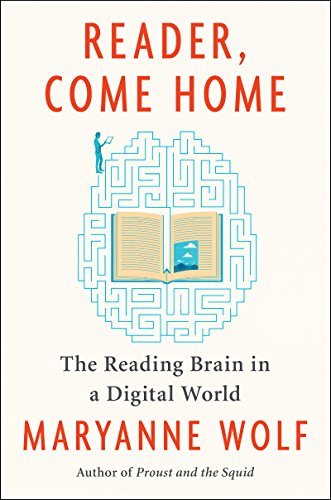
Reader, Come Home: The Reading Brain in a Digital World
Maryanne Wolf
3.89
4,506 ratings785 reviews
The author of the acclaimed Proust and the Squid follows up with a lively, ambitious, and deeply informative book that considers the future of the reading brain and our capacity for critical thinking, empathy, and reflection as we become increasingly dependent on digital technologies.
A decade ago, Maryanne Wolf’s Proust and the Squid revealed what we know about how the brain learns to read and how reading changes the way we think and feel. Since then, the ways we process written language have changed dramatically with many concerned about both their own changes and that of children. New research on the reading brain chronicles these changes in the brains of children and adults as they learn to read while immersed in a digitally dominated medium.
Drawing deeply on this research, this book comprises a series of letters Wolf writes to us—her beloved readers—to describe her concerns and her hopes about what is happening to the reading brain as it unavoidably changes to adapt to digital mediums. Wolf raises difficult questions, including:
Will children learn to incorporate the full range of "deep reading" processes that are at the core of the expert reading brain?
Will the mix of a seemingly infinite set of distractions for children’s attention and their quick access to immediate, voluminous information alter their ability to think for themselves?
With information at their fingertips, will the next generation learn to build their own storehouse of knowledge, which could impede the ability to make analogies and draw inferences from what they know?
Will all these influences, in turn, change the formation in children and the use in adults of "slower" cognitive processes like critical thinking, personal reflection, imagination, and empathy that comprise deep reading and that influence both how we think and how we live our lives?
Will the chain of digital influences ultimately influence the use of the critical analytical and empathic capacities necessary for a democratic society?
How can we preserve deep reading processes in future iterations of the reading brain?
Who are the "good readers" of every epoch?
Concerns about attention span, critical reasoning, and over-reliance on technology are never just about children—Wolf herself has found that, though she is a reading expert, her ability to read deeply has been impacted as she has become, inevitably, increasingly dependent on screens.
Wolf draws on neuroscience, literature, education, technology, and philosophy and blends historical, literary, and scientific facts with down-to-earth examples and warm anecdotes to illuminate complex ideas that culminate in a proposal for a biliterate reading brain. Provocative and intriguing, Reader, Come Home is a roadmap that provides a cautionary but hopeful perspective on the impact of technology on our brains and our most essential intellectual capacities—and what this could mean for our future.
GenresNonfictionSciencePsychologyEducationBooks About BooksTechnologyAudiobook
...more
272 pages, ebook
First published August 7, 2018
Original title
Reader Come Home: The Reading Brain in a Digital World
This edition
Format
272 pages, ebook
Published
August 14, 2018 by Harper
ISBN
9780062388797 (ISBN10: 0062388797)
ASIN
0062388797
More editions
ebookHarper2018
More information
Book statistics
Fewer details



1270 people are currently reading


13735 people want to read
About the author

Maryanne Wolf16 books293 followers
Follow
Maryanne Wolf received her doctorate from Harvard University in the Department of Human Development and Psychology in the Graduate School of Education, where she began her work on the neurological underpinnings of reading, language, and dyslexia. Professor Wolf was awarded the Distinguished Professor of the Year Award from the Massachusetts Psychological Association, and also the Teaching Excellence Award from the American Psychological Association.
Show more
Readers also enjoyed
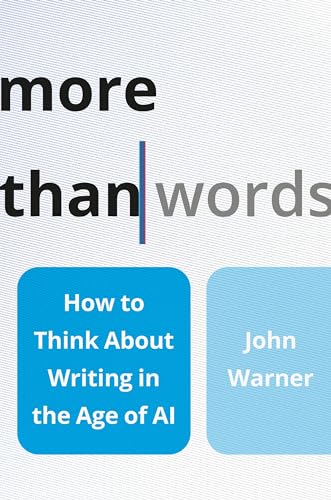
More Than Words: How to Think About Writing in the Age of AI
John Warner
4.05
374
Filters
Displaying 1 - 10 of 785 reviews

Carmen
2,025 reviews2,425 followers
Follow
April 10, 2019
The unsettling reality, however, is that unbeknownst to many of us, including until recently myself, there has begun an unanticipated decline of empathy among our young people. 50
This quote is a good jumping-off point for the review - it not only demonstrates Wolf's "OMG, think of the CHILDREN!" pov but also shows of her writing ability or lack thereof.
Wolf never uses 15 words where she can use 60. She never uses a 'common' word when she can use a longer, lesser-known one.
Her whole schtick is that 'modern people' and 'younger generations' can't appreciate or get through older, verbose, dense books. She sees her verbose, dense, long-winded form of writing as a moral triumph. It's almost as if she's saying that if you think reading her writing is a slog, you are a poor, unfortunate person whose brain has been rotted by Twitter.
But no matter what she personally believes, the writing in this book is very hard to get through. And not because Wolf is a virtuous throwback to the time when people (in her opinion) relished reading Middlemarch. It's because it's unnecessarily wordy and lengthy.
Will new readers develop the more time-demanding cognitive processes nurtured by print-based mediums as they absorb and acquire new cognitive capacities emphasized by digital media? For example, will the combination of reading on digital formats and daily immersion in a variety of digital experiences - from social media to virtual games - impede the formation of the slower cognitive processes such as critical thinking, personal reflection, imagination, and empathy that are all part of deep reading? Will the mix of continuously stimulating distraction of children's attention and immediate access to multiple sources of information give young readers less incentive either to build their own storehouses of knowledge or to think critically for themselves?
In other words, through no intention on anyone's part, will the increasing reliance of our youth on the servers of knowledge prove the greatest threat to the young brain's building of its own foundation of knowledge, as well as to a child's desire to think and imagine for him- or herself? Or will these new technologies provide the best, most complete bridge yet to ever more sophisticated forms of cognition and imagination that will enable our children to leap into new worlds of knowledge that we can't even conceive of in this moment of time? Will they develop a range of very different brain circuits? If so, what will be the implications of those different circuits for our society? Can an individual reader consciously acquire various circuits, much like bilingual speakers who read different scripts? 8
I mean, you can understand what she's saying, but I'd be lying if I said reading this book was enjoyable.
Which is unfortunate. Wolf is smart. She loves reading. She has some valid points. But working through this bog is a job of work. I can't see many people finishing this, I see a lot of DNFs. Perhaps it would have been better as an article or in the hands of an author who is more concise.
Let's get to the content.
Wolf believes adults ability to read "deeply" and critically is being damaged by the Internet, social media, etc. etc. She is even more afraid of what being raised in a world that embraces technology is doing to the children.
That's the crux of the book.
You need only examine yourself. Perhaps you have already noticed how the quality of your attention has changed the more you read on screens and digital devices. Perhaps you have felt a pang of something subtle that is missing when you seek to immerse yourself in a once favorite book. Like a phantom limb, you remember who you were as a reader, but cannot summon that "attentive ghost" with the joy you once felt in being transported somewhere outside the self to that interior space. It is more difficult still with children, whose attention is continuously distracted and flooded by stimuli that will never be consolidated in their reservoirs of knowledge. This means that the very basis of their capacity to draw analogies and inferences when they read will be less developed. Young reading brains are evolving without a ripple of concern by most people, even though more and more of our youths are not reading other than what is required and often not even that: "tl;dr" (too long; didn't read). 2
While I agree with Wolf that digital media are changing the way people think, see the world, and read, I do not have as dire or alarmist an outlook as she does.
She seems to think we are in an immediate crisis because people don't want to read Moby-Dick or, The Whale anymore. I hate to break it to her, but even in the 1970s a lot of people didn't want to read Moby Dick. So... yeah.
I agree with her that people spend too much time on screens, and it's probably not good for children to be on-screen TO THE EXTENT they are much of today in first-world countries, but I still see people reading and enjoying reading. Yes, even children.
She also very much disparages e-books. She says reading on a Kindle or Nook isn't as good for your brain as reading a print book. I'm less radical. It's true - there are advantages to reading print. I find it easier to remember where important passages are in a print book. However, I don't find e-books to be less immersive than print books - which is one of Wolf's claims. I can still be transported into a magical book-world while reading on my Kindle.
In this book, Wolf is fleshing out the ideas presented in Proust and the Squid: The Story and Science of the Reading Brain. If that book left you scratching your head, this is going to give you more information about her ideas and why she has them.
Which is far from saying this is a science-based text. Wolf is no Mary Roach. She does talk about studies done, but only a few and only in passing.
Her basic tenets are:
- Reading increases empathy. Young people are not as empathetic nowadays because they read less.
- Reading strengthens your ability to focus and concentrate. Young people have more attention deficit disorders because they don't read as much as young people did in the past.
- Older people are becoming stupider as technology rots their brains losing their abilities to think critically and focus attention due to their increased time on-screen.
I worry that we are one quick step removed from recognizing the beauty in what is written. I worry that we are even closer to the stripping away of complex thoughts when they do not fit the memory-enfeebling restriction on the number of characters used to convey them. Or when they are buried in the last, least read, twentieth page of a Google search. The digital chain that leads from the proliferation of information to the gruel-thin, eye-byte servings consumed daily by many of us will need more than societal vigilance, lest the quality of our attention and memory, the perception of beauty and recognition of truth, and the complex decision-making capacities based on all these atrophy along the way. 85
I really take issue with some of her points, though.
It is fair to say that a generation of young people raised on the Internet and Twitter, simultaneously flooded with volumes of words and accustomed to expending only 140 characters to write their thoughts, would have a difficult time appreciating this sentence or reading Melville or Eliot, much less the 150 to 300-plus words in a typical sentence by Proust. 90
This makes me angry. One, some people don't want to read Proust today. Guess what? A lot of people in 1962 didn't want to read Proust, either! Some people think classic books are boring. I don't think you can blame that on the Internet. "Little Timmy doesn't want to read Moby Dick because of Twitter!!!!" No, he doesn't want to read it because he thinks it's fucking boring. This isn't some new phenomenon. I work with some highly educated liberal-arts people and even I would be hard-pressed to find even two who have read Middlemarch. I can't really blame that on Twitter.
Older people's hand-flapping and screeching about "young people" is misguided, in my opinion. And also not a new opinion. Every single generation thinks younger people are horrible, stupid, amoral wasters who can't appreciate the books, music, and type of work the older generation values. Doesn't matter if it's 1919 or 2019. *shrug*
I agree with Wolf that the increase of time spent on-screen for children and adults affects their brains. However, a.) this is inevitable, and b.) perhaps it's not the END OF TIMES that we think it is. Who knows what the future holds? Even Wolf admits that there's no stopping digital advancements and the increase of digital media in our daily life. She clings to the old ways harder than I do, but does sensibly suggest pairing digital life with analog life and creating a generation of people who are, in a sense, "bilingual" - able to move critically and analytically through both print and digital content.
While she seems afraid of what digital content does to human beings, I'd like to point out that reading is still a huge thing. Whether you are reading The New York Times online or in print is not really as big of a deal as she makes it out to be, IMO. You are still reading a long, well-researched article. Whether you choose to enjoy the latest Jodi Picoult book on your Nook or in print is your decision. It's still reading a book. You still get the benefits of reading. While some people will prefer print books for a variety of reasons - and that's perfectly okay - it amuses me that she treats e-readers like the death of critical thought. I think e-readers are great. I read some books digitally and some physically. Both are fine. I slightly prefer physical books, but I don't mind digital books and I don't feel like reading on my Kindle stops me from being transported into the world the author is creating for me.
Also, perhaps instead of being a brain-destroying and soul-destroying thing, new technology might be wiring our brains differently... because we are on the cusp of a new age. Of course, people fear it - and with good reason! - but perhaps video games and social media are actually preparing youth for what the future will be like and what the future will value. That might be terrifying - and it is terrifying in some ways! - but it might also not be the horror apocalypse people are envisioning.
I'm an optimist.
Tl;dr Wolf seems to be experiencing fear and anxiety brought on by our modern digital age. This is understandable. One could even say it is justified. However, I don't think reading is dying. I don't think critical thinking is in it's end days. The idea that people in the past were learned, rational, critical thinkers who had great focus and concentration is frankly suspect to me.
It's true that digital life is changing the way humans think and behave. This can be bad and have negative outcomes. But it's hardly the apocalyptic horror that Wolf seems to think it is. Look at Goodreads. We have people reading books right now and offering their critical analyses on them - FOR FUN! I mean, it's mind-boggling if you think about it.
I wouldn't advise reading this nor Proust and the Squid: The Story and Science of the Reading Brain. Wolf's writing style just makes it not worth it. That's just my opinion.
P.S. She talks about other books in here, like Anna Karenina. She's not as horrible a spoiler as someone like Will Schwalbe or Katarina Bivald, but there are some books that I feel like she gives spoilers for - mostly classics. You're warned.
ETA: April 10, 2019: "My two grown sons and I limit phone use when we're together, but the communication that technology affords us when we're apart is a gift. One of my sons is an artist, and he shares his creative process with me by sending photos or videos. When he created a seven-foot Venus de Milo sculpture out of 130 metal isosceles triangles, for example, I felt I understood his work so much better after seeing the process unfold - how he used geometry to configure things, welded the pieces together, experimented with variegated shades of gray to paint it. I never could have gotten that from a phone call. As a neuroscientist who is often worried about technology's impact, I think it's important not to let tech detract from our interactions when we're together. The key is to find an intentional and thoughtful balance." Real Simple, March 2019
american-author non-fiction published2018
...more
167 likes
83 comments
Like
Comment

Lisa
1,108 reviews3,290 followers
Follow
October 11, 2018
Dear Fellow Reader,
In the spirit of the book, allow me to address you in the old-fashioned way of a personal letter, directly pointing at You, Goodreads Reader, who by your very presence on this site already embrace the new biliterate reading brain Maryanne Wolf suggests for our digital era. I have a faible for Wo(o)lfs in literature, and after Virginia and Christa, Maryanne is the third bright star in my collection of influential Wolfs. Reading her Proust and the Squid: The Story and Science of the Reading Brain was a revelation to me, and I remain endlessly fascinated by the science behind what happens in the brain while one reads a string of sentences and makes sense of them. That alone is a magical story, well worth exploring in depth.
But the magic of the reading brain is in danger, and Nothingness has invaded the Literate World, figuratively speaking. Invaded by an army of devices, all created to divert our attention from the deep concentration required to read complex, deep stories in sophisticated language, we slowly but steadily give up some of the magic power of true, full literacy. And with that concentration we lose all the secondary benefits of immersion into the world of reading: vivid imagination, critical thinking skills, empathy, reliable internal knowledge. Depending more and more on external knowledge - "checkable facts" - we lose context and framework, and ultimately our literary judgment and capacity to express ourselves. We don't know what we don't know anymore. And Socrates turns in his grave.
Maryanne Wolf shows a dire truth from a scientific point of view, and I dare say no teacher is surprised at her findings. What are we to do about our distractive technology though? It is here to stay, like so many other "fastfood" features of modern life. We can't turn back time, and we don't want to either. But to lose our literary brain to a flood of random information that we skim through without reflection, that can't be the end of the story either, can it? Our brain was never made for reading, and an acquired skill like literacy can of course be lost again, but at an immense cultural and social cost. So what are we to do? As teachers? As parents? As consumers of digital media and books?
The biliterate brain is Wolf's suggestion: a deliberate, careful "bilingual" training in different ways of reading and in reflective use of print and screen reading - depending on purpose and context. To fully immerse children in the pleasure of storytelling, print media are far better suited than reading on a screen, for various linguistic and social reasons. But to search for specific information or to train a dyslexic child with the high amount of repetition required to reach the intended goal of cracking the reading code, a computer may be the wisest choice.
Finding a balance, not choosing one over the other medium, that is the path out of the dark forest of confusion. We can't deny we are at a moment of a massive paradigm change in our reading society. But we can move with care, or jump blindly.
Dear Fellow Reader, rarely have I read a more passionate plaidoyer for preserving one of our most amazing achievements as a species!
To the ability to read Henry James and Thomas Mann and Marcel Proust with pleasure and understanding!
Sincerely,
A Wolf Fan
Show morenonfiction persuasive
149 likes
16 comments
Like
Comment

Manny
Author 48 books16.1k followers
Follow
November 19, 2024
I've seen a lot of speculation about the bad effect that smartphones and social media might be having on people's thinking; the other day, I asked clever o1-preview if it could recommend anything which looked at it in more depth, and this book was top of its list. I've just finished it; Reader, Come Home doesn't answer all my questions, but it's better than anything else I've seen so far and agrees well with my own informal observations. Thank you, o1-preview!
Maryanne Wolf is an expert on reading and literacy who's been studying the issues for a long time from both practical and theoretical angles. She argues persuasively that digital media is having a much larger effect on us than we realise: people are losing the ability to read in a deep and engaged way, and many dangerous things are associated with that shift. Your first reaction might be that her claims are exaggerated (surely it can't be that bad?) or elitist (people's reading tastes have always changed over time, who cares if no one wants to read Proust any more?)
But it seems to be rather worse than a reluctance to read Proust. Wolf starts off by reminding us of a critical difference between listening and reading. We are biologically programmed to pick up spoken language just from being around people who talk, and almost all children do that automatically; it's been that way for many tens of thousands of years, perhaps longer. But reading is a very recent addition to our repertoire, and it's not innate. If people aren't taught how to read, they usually can't do it. It's a skill that's correspondingly easy to lose.
Since, until recently, it was taken for granted that almost all educated people would read, and that the people who couldn't read would generally want to, it's also easy to underestimate how important reading is to our culture. It teaches us to concentrate our attention and memory; less obviously, I was interested to see Wolf focussing on the idea that it teaches us empathy. We read fiction and we identify with the characters in the book, who may be very different from us. That makes us more inclined to try to understand a larger range of people on their own terms. They may be different, but our reading suggests to us that different people may also be admirable in their own way. Not least, careful reading helps us build us a common world-view that we share with all the other people who've read the books we appreciated.
None of this is more than suggestive on its own, but it does give a framework for making sense of what we see around us. Starting with data measurable with standard psychological tests, Wolf says that studies over the last couple of decades show dramatic declines in working memory (no longer "seven plus or minus two", but now more like "four plus or minus one"), average attention span (down from ten minutes to five), and empathy (reduced by 40%). It's harder to pin down, and she doesn't talk about it explicitly, but I receive the strong impression that people are more likely to believe things that obviously are not true. It is still astonishing to me that QAnon could be taken seriously by a large proportion of the US population; even Flat Earthism, once a synonym for gullibility and idiocy, has acquired a substantial following. If people don't read properly, they fail to acquire a stable frame of reference. And people are not reading. Wolf cites more studies showing that two-thirds of all US fourth-graders cannot read proficiently. If you haven't reached proficiency by then, the rest of your education is unlikely to yield results.
As you can see, I found this material, which takes up the first half of the book, extremely interesting. In the second half, Wolf suggests fixes, organised around the idea of helping children to strike a happy balance between print books and digital media. I was less impressed by this. It sounded like good advice for prosperous upper middle class parents who want their children to thrive, but these are not the key demographic; it seems unlikely that it will help children from poorer families. I would say that much more radical measures are needed. Australia is currenting mooting a social media ban for children under 16, with the platform providers responsible for enforcing the rules. If that succeeds, it could be a substantial step in the right direction, but I wonder if it's actually feasible.
As other reviewers have pointed out, the book is written in a way that sometimes comes across as a bit annoying. I am not crazy either about Wolf's skills as a prose stylist. But she has her heart in the right place, and she knows a great deal about these vital questions, so I wasn't bothered. It's couple of hundred pages and doesn't take long to get through. I strongly recommend looking at it.
A final thought that came to me while I was writing this review. I have often wondered who the mysterious "elites" are that Donald Trump teaches his followers to oppose. It didn't seem to make any sense. He's a billionaire, most of them are poor. What do they have in common? Who are the "elites" they both hate so much?
I think they are people who can read.
life-is-proust science
76 likes
28 comments
Like
Comment

Rose Rosetree
Author 15 books467 followers
Follow
August 10, 2025
Usually this reader isn't easily overwhelmed, but with this treasure chest of a book -- this truly life-changing book -- it's hard for me to know which gems to pull out first.
Okay, how about this? No question, this is hands down the best book I've read all year. Actually, it's one of my favorites ever. At my blog, I've never recommended any other author's book so often; and I've enthusiastically recommended it to family, friends, and even many of my clients.
BUT WHY?
For decades now (both as a reader, and also as a writer) I've worried about how people are reading. College graduates and grad school grads -- even among them -- I've noticed such changes in how much. and how thoughtfully. people around me seem to be reading.
Maryanne Wolf's gave me a conceptual model. More than that, she brought me hope.
YES, HOPE
You see, I love reading so much. It's the one thing I've always been good at in life, the one thing this late bloomer learned earlier than most folks (age three). Reading opens treasure chests of knowing -- and sometimes also human hearts -- to me.
Much as I love people, and have built my career around learning from them, as well as about them, I'll admit this: Reading is always there for me, as one of life's dependable ways to keep on finding the freshness deep down things. Reading, to me, means the possibility of learning every single day, learning at least a little something.
Despite accepting that reading-and-writing don't matter as much to most people... as to me... for decades I've felt as if witnessing the slow-motion death of literacy. (Right now, putting words to this experience, I keep blinking back a stream of tears.)
MARYANNE DESCRIBES THE SOLUTIONS SHE'S FOUND
Not content with cataloging today's reading problems and their causes, how many solutions Maryanne Wolf brings to this worldwide, varied... well, I was going to use the word "tragedy" but now I won't, since "Reader, Come Home" has brought me great hope that this tragedy can be averted.
Also important: Seems to me, Maryanne Wolf's ingenuity in this book is matched only by her depth of understanding about reading. (Confession, I didn't understand the elegant neuroscience she presented, but that's not the author's fault. Science isn't my thing in this lifetime, although I often admire it. And yes, I'm fully Covid-vaxxed.)
From the first page, I began to fall in like with this book, so I wasn't going to stop reading due to my own limitation.
Overall, this is an amazingly accessible book: The organization, the style, the tone, and especially that sweetness, like a lovingkindness for all the world's readers. I can hardly believe that the average rating for this book here on Goodreads isn't at least TEN STARS!
WOLF IS A TRUE PROFESSIONAL AT BRINGING LITERACY TO THIS WORLD
One last point: The part about "Magister Ludi"? Not just the humility and candor involved -- no spoiler coming from me about any of that -- but I will share how the biggest impact of that part, for me, involves my own love of all the books I've read by Hermann Hesse, and especially this particular title.
Not only was "Magister Ludi" my favorite of them all but, just last year, I gave my best friend a copy for her birthday. Could there be higher praise of an author's book?
And now I know that Maryanne Wolf, Reader, understands another one of my favorite books ever.
Yes, by that I mean my favorite book of Hesse's that she appreciates, and also Maryanne has given me a new favorite book, this one that she has written.
nonfiction writing
50 likes
18 comments
Like
Comment

فادي
651 reviews732 followers
Follow
March 13, 2022
منحاز لكل كتاب يتحدث عن القراءة والكتب، وأسعدُ حين تقع عيني على أفكار غير مألوفة لأشياء أصبحت تقليدية ومملة.
القراءة؛ ذلك الفعل التعبدي التأملي الصامت الذي يمارسه ملايين الناس كل يوم، حين تتطلع على تفاصيله العلمية، وكيف تتغيّر بنية دماغك بالقراءة تشعر بالذهول.
الكتاب عبارة عن رسائل وفصول متصلة، الفصول الأولى كانت ممتعة لي عكس الفصول الأخيرة التي خصصتها الكاتبة للحديث عن مستقبل القراءة للأطفال وكيف يمكننا أن نصنع لهم عالماً غير حالم وسط هذه الفوضى الرقمية التي تأكل أوقاتنا وتركيزنا.
من أجمل أفكار الكتاب تقسيم مراحل القارئ إلى 3 مراحل:
1- المرحلة الأولى وهي التي يكون فيها متلذذاً بالاستكشاف والتعرف على العوالم الغريبة.
2- الثانية حين يندمج ويتأثر بآراء الآخرين ويعيش في قصصهم.
3- الثالثة حين يعتكف على ما قرأه بالتأمل والتدبر وصنع عالم خاص له من القراءة.
أزعجني قليلاً كثرة الهوامش باللغة الإنكليزية - ولو وضعت في آخر الكتاب لكانت خيراً -
الترجمة حلوة وسلسة.
Show moreعالم-الكتاب-والقراءة
37 likes
Like
Comment

Bon Tom
856 reviews63 followers
Follow
November 20, 2019
This whole book is a tribute to something called Deep Reading. That's the skill, real magic you once had, probably as a child, when membership in local library meant entry to the worlds beyond the senses. That was your first pay-per-view service. Except, you didn't have to pay for any cheap shit entertainment, and you didn't actually view. You imagined. Hours passed. You ventured into the story and you came back, changed, more creative, with new materials for real, organic play under the sun and blue sky with your friends.
Years passed and somehow, along the way, you lost that magic. You sit with the book and you're not going anywhere. Is it less interesting? Not capable of engaging you with its simple words and static, monochromatic "display"?
Maybe it's not so much that, I mean, you not being able to concentrate. Maybe it's you not being able to stop paying attention to other stimuli, that offer readily available dopamine shut. We all live in information feed with seemingly indubitable relevance for our own lives that we can't escape illusion something bad will happen if we just, simply - disconnect. Even for a while.
E-books are great, but how many of us are able to ignore all the other content on the device and their siren's call? And the sheer availability of the e-books in today's market make you wanna skimm through them just to ingest more of them. Not digest, mind you. You're not digesting anything this way. You are suffering from content malabsorption syndrome here. It's passing through you like shit through a goose.
It's the curse of skimming through all the gigabytes of information you're flooded with today that's plaguing you. Technology, SMS, Twitter reduced our brains to thinking that 140 character chunks are all that's necessary to convey the meaning. Everything more than that: TLDR (too long, didn't read). How many times do you read that in forums? People freely admit their attention span is on the squirl on crack level, and they're proud of it.
Enter the Deep Reading. It's all about connecting: what you know with what you read, what you read with what you feel, what you feel with what you think, and what you think with how you conduct your life.
Pretty deep huh? Didn't count, but I believe it's within 140 character limit so even the most attention challenged millenial should dig that. So read-deeply. It's the only way to raise above the average.
non-fiction
38 likes
1 comment
Like
Comment

B.
Author 3 books5 followers
Follow
November 8, 2019
I do not recommend this book.
I actually disliked it so much in fact – thought it was so biased and self-righteously written – that I was driven to create a special “not-recommended” tab for my bookshelf on Goodreads.
I’m going to start my review with “letter four” from the middle of this book. Letter four is truly, deeply bad. This author’s elitism cannot be excused. It all started earlier as she constantly addresses the reader with “we, the expert readers” know/believe/trust/expect/etc. I understand ingratiating yourself with your audience, but this author’s judgmental tone was a lot to take, especially when it came over and over again in quick progression.
She presents the fact that people – on average – now read about 100k words a day. Let that sink in. That’s a good-sized novel a day! That number is way up, she says, and is in fact more than people have ever read before. But she also argues that it is a bad thing because all of that readings doesn’t come in huge, dense passages that you have to spend hours decoding. She doesn’t concede the fact that your average person has never read that way from today through time in memoriam. The very fact that people are reading that much means that people are more literate than ever, even if it isn’t deep reading. There are stats out there today that say that the average person consumes more information on a single day than an educated person from the middle ages consumed in a year. It is such a culturally biased idea to think that the average person, who is indeed reading more than at any time in history, is going to be worse because the top 1% of readers might be reading somewhat less complicated materials. She has no idea what an average reader is, clearly, as she panders to her “expert readers.”
She does (what she herself calls) an unscientific study of three best-selling novels from today, and three from a century ago – all of which are on her bookshelf at home. She says she doesn’t know about how to evaluate them, and shouldn’t draw conclusions, and then after skimming them draws the conclusion that new novels have shorter sentences and less hard-to-understand thoughts and phrases, and that is bad. She also neglects to say anything about what “best seller” constitutes sales- and readership-wise, and who could read/afford books in those disparate time periods. Once again, she is only considering the very most literate of people from 100 years ago, and comparing them to your average reader today.
Here is a passage from the book that she believes exemplifies good writing:
“Italo Calvino wrote about this a single, unalterable sentence: ‘For the prose writer, success consists in felicity of verbal expression, which every so often may result from a quick flash of inspiration, but as a rule involves a patient search for the mos juste for the sentence in which every word is unalterable, the most effective marriage of sound and concepts, concise, concentrated, and memorable.’”
Let’s be clear on something here: this sentence isn’t concise. It isn’t concentrated. It isn’t memorable. It is written in such a way as to be dense for denseness’s sake. It actually disproves her point about “good” writing and in fact exemplifies some of the problems with older writing in the minds of the modern reader: it is dry, boring, and purposefully confusing.
She has a long passage where she talks about her (former) favorite novel – a dry, byzantine Pulitzer prize winner from decades ago, where long passages are nothing more than meditations of monks as they continually ascend and descend stairs. She chastises herself for not liking it – not being able to read it in fact – in a (once again unscientific and yet conclusion-rich) study of her own making decades after she read it for the first time. She said she didn’t have the patience for it because of all the screen reading she does. Well, maybe. But maybe it was also a favorite book because of the prestige it held at the time for a student trying to get a terminal degree and justify her reading to herself. Also: reading tastes change with the times and some things don’t age well. But it was her fault for no longer having the patience… to me, this whole pursuit seemed distasteful as well as elitist.
She seems to be trying to grapple with her own elitism in the following passage:
‘Some of you, no doubt, will think that I protest too much, and that only the elite parts of any population will miss the shelves of older books and poems that pass out of favor with clockwork regularity age after age, generation after generation. But it the very opposite of elitism that propels my worries. I write this book and conduct my research today only because of the dedication of my parents and of a few deeply committed teachers from The School Sisters of Notre Dame in a two room eight grade school house gave me a reason as a child to read the great literature of the past. Only those books prepared me not to leave the coal miners and farmers in my tiny Midwestern town, but to understand each of those still dear people, and the world outside of El Dorado, Illinois in whole new ways.’
First off, you were right, only the elite parts of society will care. Full stop. Second, if you have to point out you are not elitist and do so by saying you’re the very opposite, I would suggest you go back and really think about your motives, because more often than not, the lady *doth* protest too much. You cite your non-elitism by talking about a small school presumably with a low teacher to student ratio, dedicated teachers, literate parents (who were professionals), and the expectation of leaving everything behind for a better life in a better place. You say that only by reading were you able to understand the “still dear people” (who couldn’t possibly understand their town without reading Ulysses) you so smarmily smirk at in the rearview mirror. Gross.
She says that kids these days are lacking a knowledge base. *Her* references are not being internalized anymore, and that makes her worry about her kids (who can code, but don’t know the literary references she expects in order to be considered educated by herself and the people who educated her).
She says that “teachers” [citation needed] are mad because students don’t want to learn old books anymore (as if most students ever did). “Professors” are mad that their old popular classes can’t be taught anymore for lack of demand (boo-hoo, they have to work more and create a vital education experience for which they are being paid). My take on all of this is that in today’s world kids speak up and want interesting things to learn and aren’t automatons like the author’s generation was often expected to be.
But probably the most ridiculous part of this letter is when she castigates herself for not writing perfectly in every office communication and every personal letter she writes. She castigates herself for not reading all the things like the New Yorker (which ‘actually matter’ in her own words) and instead reading journals and summations and noting things that she should probably read more thoroughly later, but probably won’t. She castigates herself for reading more now to be informed than immersed. Because unless it is hard to understand you can gain no value from it, I guess.
I feel like this letter is just a letter in self-hate that she’s stapled onto the backs on those less-educated than she. OK Boomer.
Letter Seven I find especially dubious as she cites a disproven study saying that children of poor or minority backgrounds hear far fewer words growing up. In fact it has been shown that this study is biased. Poor and minority parents keep quiet with a researcher sitting in their living room because they are afraid of being judged and having the researcher report something to CPS. Rich and white parents speak more verbosely in order to show off and prove themselves to the academics. If you take the researcher out of the home and install cameras/microphones, all of these differences disappear. This is institutional racism showing up in the original study. She is furthering institutional racism by citing this study.
This is a recent book, and with this author using a biased and disproven study in her work makes me question anything else she has to say on the matter.
Letter Eight is all politics and opinion. She talks about how (deep) reading is necessary to be a good citizen. She states, ‘We conflate information with knowledge, knowledge with wisdom with resulting diminution of all three.’ Good line. And I don’t disagree. She also says that we need to reeducate all citizens to process information vigorously across all media. Here in lies another thing that I don’t think she understands about herself, her motivations, and her writing.
This obviously Boomer author (who in letter six was condemning a “Millennial mother” for being worried about reading to her kid, and not instinctively knowing what to do, but coming to her for help – I guess shame on you?) doesn’t realize that it isn’t the child’s fault that democracy is crumbling and people don’t have attention spans anymore. Boomers don’t seem able to handle TV (Fox News), let alone the internet (Breitbart). They were the ones always complaining about how those mediums would rot your brain, and now they are the ones who are destroying democracy and believing every conspiracy theory. I truly believe it takes a generation or two to understand what to do with new technology – and teach the kids a generation or two later – in order to deal with “new” technology. She is so hopped up on this because she and her generation are often unable to make the jump successfully.
And like any Boomer, she says that, ‘this is our generation’s hinge moment.’ Whose, now? Who is this book meant for? It is meant for the (I’d argue) overly-educated, self-righteous, non-reflective, panicking, ageing generation of people on the out, who do not understand the world anymore and are terrified and yet still narcissistically myopic. And believe that everything they’ve done and experienced is the only possible way to live life. And they damn will enforce it exactly like that on every generation to come. Ever.
But what’s worse than all of this is her final thoughts on how to fix democracy. We need to ‘recognize and acknowledge the capacity for reflective reasoning in those that disagree with us.’ This may sound great to her Boomer ears, but the problem with the opposition is some people are being purposefully ignorant and rely on the a priori rational of hard core right wing religion. It is counter to being a deep reader to argue that “everybody has a point that is valid.” It is apologist nonsense and shouldn’t be tolerated. It is the reason that we are in this mess. It is a failing of an older generation, not today’s children. Stop projecting this on to today’s children.
She closes: ‘Readers are guardians’ - good readers like us, of course… so much self-aggrandizing bull.
Her take away on how to lead a good reading life: Festina Lente, or hurry slowly. Well I will leave you instead with my own latin expression you could take a note of: quiquid Latine dictum sit altum videtur.
I try to give authors a lot of room. I am trying to write myself, and I know how difficult and personal it is. But this book is something else. Something that deserves to not be read. Something that deserves to go away.
As of today, I’ve read 89 book so far in 2019. There are 215 total books on my Goodreads profile listed as read or currently reading. Of all of these books, I’ve only deemed 6 to be “not-recommended.” When going over all the books I’ve read since 2014 when I started keeping track, I could only come up with six that really had no redeeming value.
Let me put this into more perspective: I didn’t even include Left Behind on this list. That is a truly terrible book – it is terribly written, has terrible plotting and characterization, and utilizes and promotes terrible theology. In fact, I think a lot of it is bad for a person to read because of both the horror and the righteousness it inspires in its target market, the “true believers” of the Evangelical far right. That said, that book did give me an insight into a former friend I grew up with, and without it, I would have far less empathy (and actual sympathy) for people of this persuasion. So even Left Behind has its merits in the right context, and isn’t on this list. That’s saying something.
I dislike Reader, Come Home that much.
There are a lot of books and articles (sorry if that isn’t deep enough reading for you) that contain anything of merit that this book might hold. But a lot of them come without the judgement, elitism, baggage, and extremely boring summary of how the brain reads (it is good, dense stuff I’m sure she loves – it is an instant sleep-inducer for the rest of us).
Dear Reader, stay away.
*Audiobook
books-from-2019 nonfiction-read not-recommended
32 likes
Like
Comment

Rose
91 reviews8 followers
Follow
ReadFebruary 12, 2024
DNF. I'd probably enjoy this far more as a podcast series...which I'm sure says something damning about my brain the digital world.
I don't dispute that Wolf has very valid concerns about our brains' development in the digital age but this reads like a shallow literature review. Telling me what Wendell Berry, Marcel Proust, Emily Dickinson, and Deitrich Bonhoeffer thought and said is great. Just not all on one page. Almost every page in this book has a pithy quote or anecdote from three or four different literary/historical figures and it's just so tiresome I can't continue.
Some positives:
- Maryanne Wolf has a warm and compassionate voice, so she's easy to like as a writer even if you don't agree with some of her conclusions
- Neuroscientific evidence about the way our brains develop and react when we engage in deep reading (versus the short bursts of information we read from the internet)
- Valuable discussion about inequality of access to technology
What I didn't care for:
This book reminded of a line from Upstart Crow when David Mitchell's Shakespeare says,
"Young people have such short attention spans these days. And with publishing, kids have instant entertainment in the pockets of their puffling pants. Oh, you see them hanging around together, hunched over a book of 14-line iambic pentameter, thumbing away, transfixed like zombies. Not talking to each other. Not interacting socially. Lost to the world. "Get off your book of sonnets!" cry parents up and down the land. "You'll develop a hunch!" I do worry about how their brains will develop with so little variation of stimulus to challenge their imagination.".
Show more
28 likes
Like
Comment

Kathryn Bashaar
Author 2 books109 followers
Follow
March 15, 2019
I kind of proved this book's point by my reaction to it. First, I felt like Wolf was taking too long to make her point in each "letter" (each chapter is written in the form of a letter to her reader). I am used to business communication, which is all about bullet points, visuals and not wasting your executive's time. Second, I skipped the chapters about children because I am not a teacher, nor currently the parent of a young child.
Which just proves her point. I am a voracious reader and yet even I have lost patience with long texts. I want to get the to point. I have a harder and harder time immersing myself in a long book, story, or essay. When she listed the symptoms of losing your attention span for deep reading, I had every single one. I was very disturbed by that.
What disturbed me even more was the very good argument that Wolf makes for the peril that this decline poses to our democracy. People who don't take on the role of an "other" by reading fiction, tend to be less empathetic and less willing to tolerate opposing points of view. People who can't read deeply and critically, can't think deeply and critically and are susceptible to manipulations & bunkum. Does any of this sound familiar?
Social media is where fingers usually point when critics lament the decline of reading and attention span, and Wolf definitely points that finger. But, as I read, another culprit occurred to me: the business world. I am a middle manager, and a lot of my job has to do with communicating, both up and down. The people above me absolutely will not tolerate lengthy texts. Whatever I have to say, must be said in 2-3 PowerPoint slides and conveyed in a 30-minute meeting. The people who report to me must understand their subject matter deeply, and I must understand it pretty deeply. The people I report to only have to understand the bullet points and graphs on the PowerPoint slide, and ask a few questions. And, on this basis, they make decisions about staffing, spending, and strategies. Working in this environment 40+ hours per week, for the past many years, has conditioned me to think that the bullet-point style of communication, because it is efficient, is the best. I'm starting to question that after reading this book. We are awash in information, but lacking in knowledge and wisdom.
24 likes
6 comments
===
From other countries
H-T
5.0 out of 5 stars The reading brain
Reviewed in Germany on 9 October 2019
Format: PaperbackVerified Purchase
An interesting non-fiction book with important content. Requires concentration and a high level of English competence. Fascinating research presented well ... causes me to reflect on my use of digital devices.
A point made on the first page: ... "human beings were never born to read" - THAT's something to think about!
3 people found this helpful
Report
Gratitude
5.0 out of 5 stars Importance de la lecture dans nos vies
Reviewed in Canada on 4 January 2024
Format: PaperbackVerified Purchase
L’a bi-compétence du cerveau face au livre et au numérique
Report
Translate review to English
Wellwisher
5.0 out of 5 stars Very boring...waste of money and time
Reviewed in India on 27 May 2022
Format: PaperbackVerified Purchase
The content doesn't have any weightage...no connection between sentences.
Read reviews before buying this book and wasting money
Customer image
Customer image
One person found this helpful
Report
Anne Clarke
5.0 out of 5 stars Wonderful book about Reading
Reviewed in the United Kingdom on 2 January 2020
Format: HardcoverVerified Purchase
This is a ‘must read’ for anyone who is interested in the reading process and what can go wrong. A bible for anyone who works with Dyslexia.
Report
Tammie Rachell Largent
5.0 out of 5 stars A Brilliant Exploration of the Reading Mind
Reviewed in the United States on 1 November 2025
Format: PaperbackVerified Purchase
Reader, Come Home by Maryanne Wolf is an extraordinary blend of science, language, and love for reading. It explores what happens in the brain when we read and how digital habits are changing the deep, reflective thinking that books once nurtured. For anyone who values both neuroscience and literature, it is a rare and rewarding combination.
Wolf writes with clarity and care, guiding readers through the complex processes of the reading brain without losing the wonder of what it means to read at all. Each chapter feels like a conversation between science and story, showing how reading shapes empathy, focus, and the ability to think deeply.
The book’s strength lies in how it connects research to lived experience. Wolf explains the brain’s plasticity, the cost of constant distraction, and the importance of preserving slow reading as a form of thought. Her reflections remind readers that literacy is not only about decoding words but about cultivating attention, imagination, and understanding.
It is one of my favorite books because it speaks equally to the intellect and the heart. For anyone who reads to learn, to reflect, or to feel fully human, Reader, Come Home is essential and unforgettable.
Report
Alicia Crumpton
5.0 out of 5 stars What's at Stake
Reviewed in the United States on 20 August 2024
Format: PaperbackVerified Purchase
Wolf, M., & Stoodley, C. J. (2018). Reader, come home: The reading brain in a digital world. Harper.
Maryanne Wolf is a scholar, teacher, and advocate for children and literacy. She is the Director of the Center for Dyslexia, Diverse Learners, and Social Justice at the UCLA Graduate School of Education and Information Studies.
In nine letters addressed directly to the reader, Wolf explores "facts about reading and the reading brains, whose implications will lead to significant cognitive changes in you, the next generation, and possibly our species." It's a worthwhile exploration given how "reading brain circuits are shaped and developed by both natural and environmental factors, including the medium in which reading is acquired and developed." Since humans have to learn to read and the process of doing so develops neural pathways within our brain, she asks what happens when children do not read. Wolf cites research and studies that describe symptoms and potential consequences. Symptoms of exposure to a digital world include distraction, loss of attention holding capacity, addiction, and lack of cognitive patience (too long, didn't read phenomena). Potential consequences include loss of empathy, inability to reflect, meditate, or contemplate, and a loss of cognitive flexibility. She concludes with what's at stake: "any version of the digital chain hypothesis, strong or weak, poses threats to the use of our most reflective capacities if we remain unaware of this potential, with profound implications for the future of a democratic society. The atrophy and gradual disuse of our analytical and reflective capacities as individuals are the worst enemies of a truly democratic society, for whatever reason, in whatever medium, in whatever age."
This book is like a smorgasbord of topics and themes related to reading, effects of reading due to exposure to digital technology, research, and quotes pertinent to our understanding of the importance of reading.
Customer image
3 people found this helpful
Report
heather
5.0 out of 5 stars Reference resource. Kind reminder.
Reviewed in Canada on 9 February 2020
Format: HardcoverVerified Purchase
Borrowed '"Reader, Come Home" from local library. Read every day; have no patience with books not my cuppa' tea. Nose in a book all my long life; even so, sense the world it is a'changing. This book gently, artistically focuses on what I may be forever missing if I am not made more aware of the cost of change. Maryanne Wolf has beautifully, effectively expressed how books have impacted my life, she details what is at stake in the new world of readership. Definitely a " Keeper" in my home library. Condition of book A+; shipping prompt and on time.
One person found this helpful
Report
Claire
5.0 out of 5 stars Well researched
Reviewed in the United Kingdom on 8 June 2019
Format: HardcoverVerified Purchase
Really informative, accessible and engaging.
Report
ck
5.0 out of 5 stars On Time and Great Condition
Reviewed in Canada on 30 August 2020
Format: HardcoverVerified Purchase
Item arrived quickly and was in great condition. Thank you
Report
Margaret Scriver
5.0 out of 5 stars Eye opening!
Reviewed in Canada on 8 March 2020
Format: KindleVerified Purchase
A must read for parents and teachers!
Report
===
