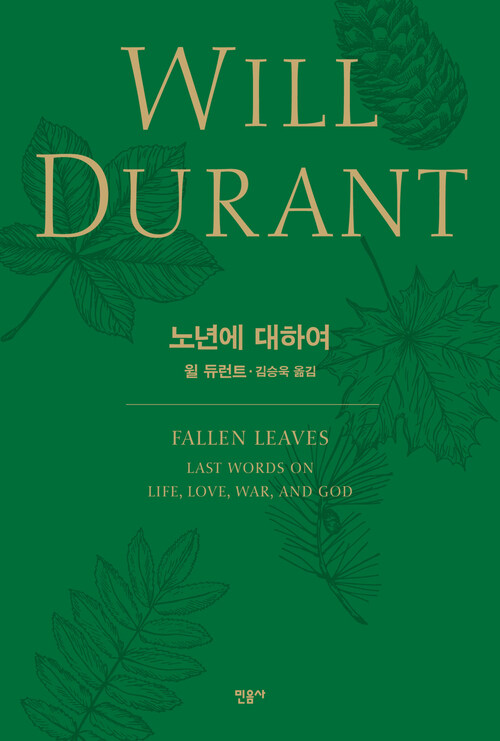
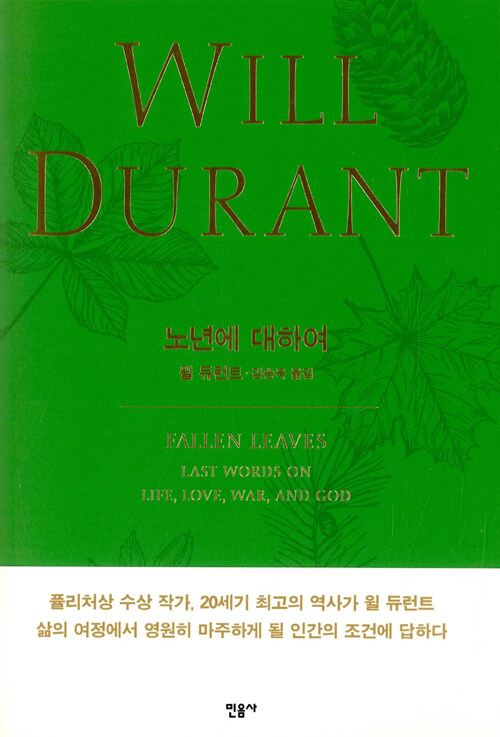
Praised as a “revelatory” book by The Wall Street Journal, this is the last and most personal work of Pulitzer Prize–winning author and historian Will Durant, discovered thirty-two years after his death.
The culmination of Will Durant’s sixty-plus years spent researching the philosophies, religions, arts, sciences, and civilizations from across the world, Fallen Leaves is the distilled wisdom of one of the world’s greatest minds, a man with a renowned talent for rendering the insights of the past accessible. Over the course of Durant’s career he received numerous letters from “curious readers who have challenged me to speak my mind on the timeless questions of human life and fate.” With Fallen Leaves, his final book, he at last accepted their challenge.
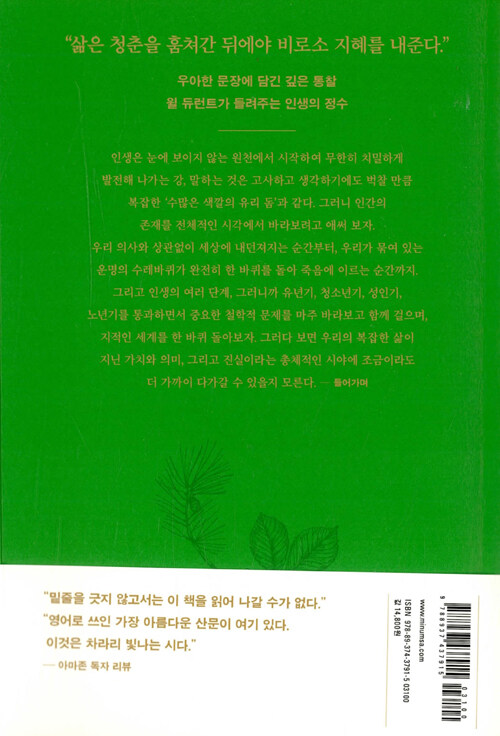
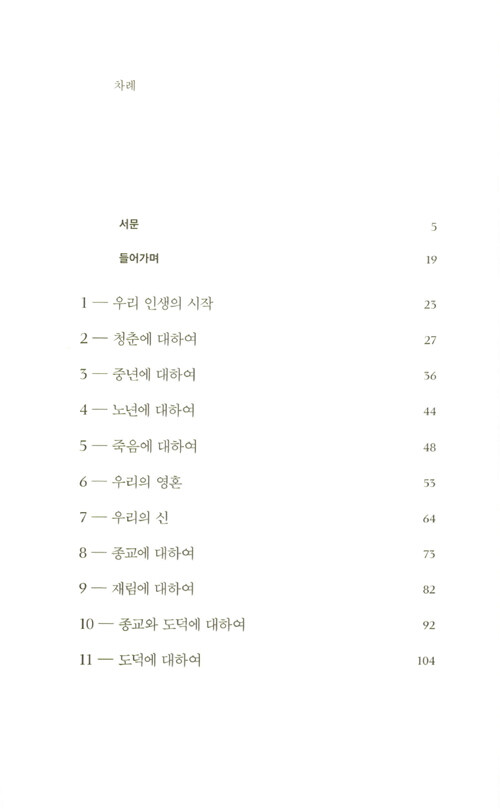
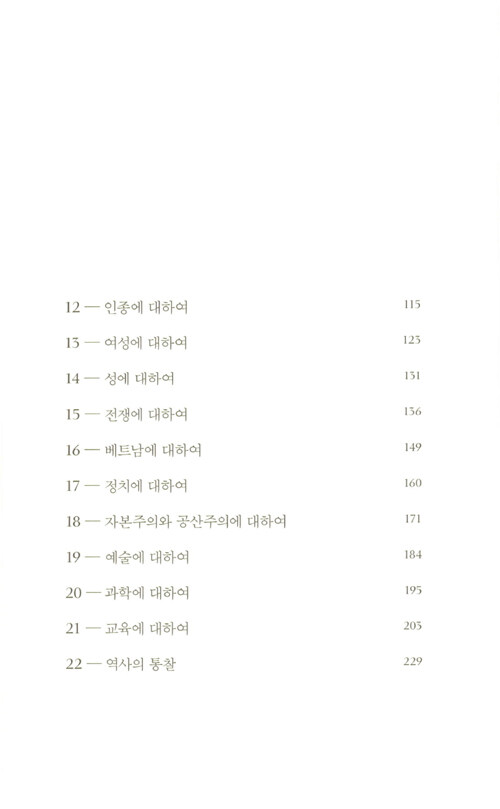
In twenty-two short chapters, Durant addresses everything from youth and old age to religion, morals, sex, war, politics, and art. Fallen Leaves is “a thought-provoking array of opinions” (Publishers Weekly), offering elegant prose, deep insights, and Durant’s revealing conclusions about the perennial problems and greatest joys we face as a species. In Durant’s singular voice, here is a message of insight for everyone who has ever sought meaning in life or the counsel of a learned friend while navigating life’s journey.
Print length 208 pages
Language
English Publication date
22 December 2015
+
 Lessons of History
$14.69$14.69
Product description
Review
"Fallen Leaves is in some ways a slight book. But it is also a revelatory one. Most of Durant's work is about the thoughts and actions of others. Fallen Leaves is very much about the thoughts of Will durant concerning—well, almost everything. You'll find short essays on childhood, old age, death, war, politics, capitalisn, art, sex, God and morality. ... Above all, Fallen Leaves is a portrait of a sensibility. ... Durant was a remarkable specimen of that nearly extinct species, a civilized liberal of wide learning and even wider sympathy for the fundamentals of human aspiration." ― The Wall Street Journal
"Short but persuasive commentaries on a diversity of topics from a respected scholar of humanity." ― Kirkus Reviews
"Some passages, such as his observations on youth and middle age, are personal and specific, while others, such as his ruminations on the existence of God, border on philosophy. . . . [And others] still carry a beneficial sting, such as his thoughts on war and nationalism and his plea for racial harmony (Durant’s civil rights advocacy dated back to 1914). . . . a thought-provoking array of opinions." ― Publishers Weekly
“Some of his musings are provocative, even outrageous…this is a work that demands we think, and it is a worthy conclusion to a long and distinguished career.” ― Booklist
"The book serves as a distillation of wisdom from a distinguished scholar, rendered in elegant prose." ― The New Criterion
About the Author
Will Durant (1885–1981) was awarded the Pulitzer Prize (1968) and the Presidential Medal of Freedom (1977). He spent more than fifty years writing his critically acclaimed eleven-volume series, The Story of Civilization (the later volumes written in conjunction with his wife, Ariel). A champion of human rights issues, such as the brotherhood of man and social reform, long before such issues were popular, Durant’s writing still educates and entertains readers around the world.
Excerpt. © Reprinted by permission. All rights reserved.
Fallen Leaves CHAPTER ONE
OUR LIFE BEGINS
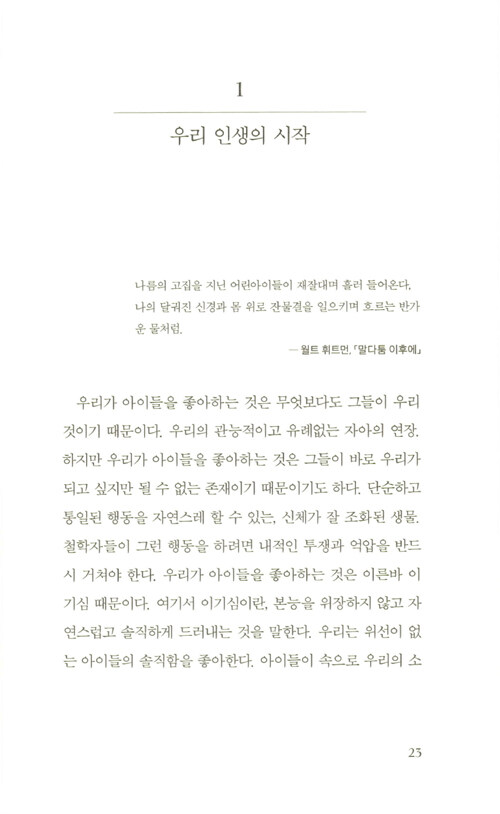
A group of little children with their ways and chatter flow in,
Like welcome rippling water o’er my heated nerves and flesh.
—WALT WHITMAN, “AFTER THE ARGUMENT”
We like children first of all because they are ours; prolongations of our luscious and unprecedented selves. However, we also like them because they are what we would but cannot be—coordinated animals, whose simplicity and unity of action are spontaneous, whereas in the philosopher they come only after struggle and suppression. We like them because of what in us is called selfishness—the naturalness and undisguised directness of their instincts. We like their unhypocritical candor; they do not smile to us when they long for our annihilation. Kinder und Narren sprechen die Wahrheit—“Children and fools speak the truth”; and somehow they find happiness in their sincerity.
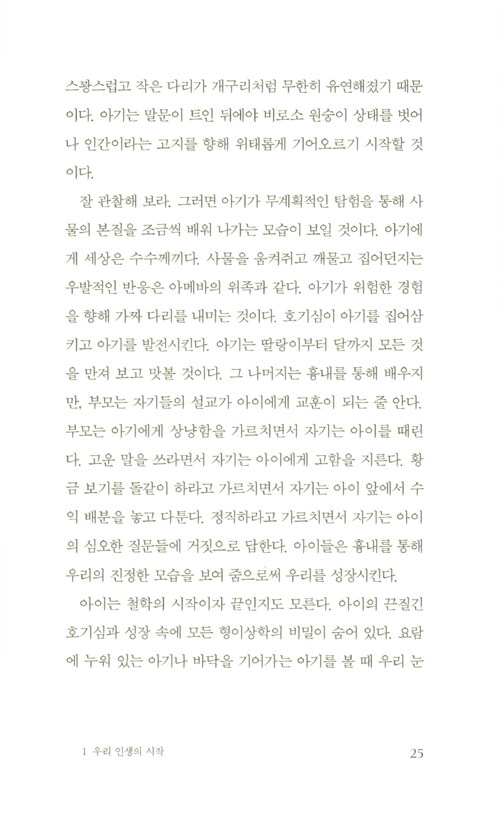
See him, the newborn, dirty but marvelous, ridiculous in actuality, infinite in possibility, capable of that ultimate miracle—growth. Can you conceive it—that this queer bundle of sound and pain will come to know love, anxiety, prayer, suffering, creation, metaphysics, death? He cries; he has been so long asleep in the quiet warm womb of his mother; now suddenly he is compelled to breathe, and it hurts; compelled to see light, and it pierces him; compelled to hear noise, and it terrifies him. Cold strikes his skin, and he seems to be all pain. But it is not so; nature protects him against this initial onslaught of the world by dressing him in a general insensitivity. He sees the light only dimly; he hears the sounds as muffled and afar. For the most part he sleeps. His mother calls him a “little monkey,” and she is right; until he walks he will be like an ape, and even less of a biped, the womb-life having given his funny little legs the incalculable flexibility of a frog’s. Not till he talks will he leave the ape behind, and begin to climb precariously to the stature of a human being.
Watch him, and see how, bit by bit, he learns the nature of things by random movements of exploration. The world is a puzzle to him; and these haphazard responses of grasping, biting, and throwing are the pseudopodia, which he puts out to a perilous experience. Curiosity consumes and develops him; he would touch and taste everything from his rattle to the moon. For the rest he learns by imitation, though his parents think he learns by sermons. They teach him gentleness, and beat him; they teach him mildness of speech, and shout at him; they teach him a Stoic apathy to finance, and quarrel before him about the division of their income; they teach him honesty, and answer his most profound questions with lies. Our children bring us up by showing us, through imitation, what we really are.
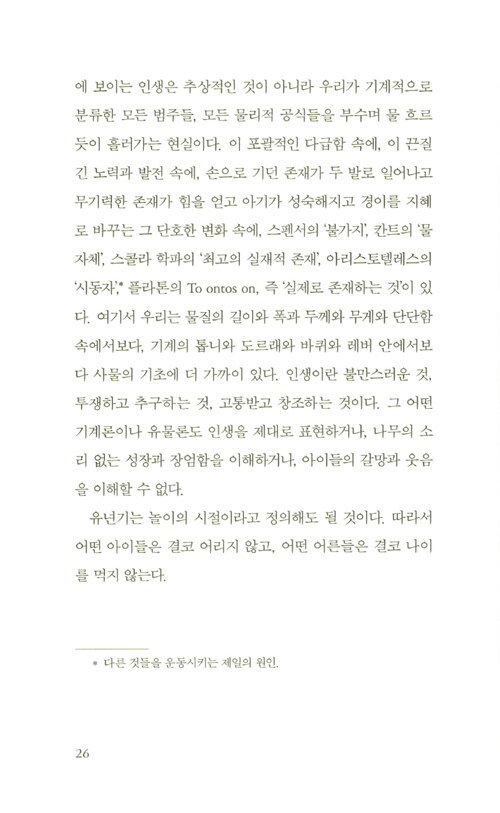
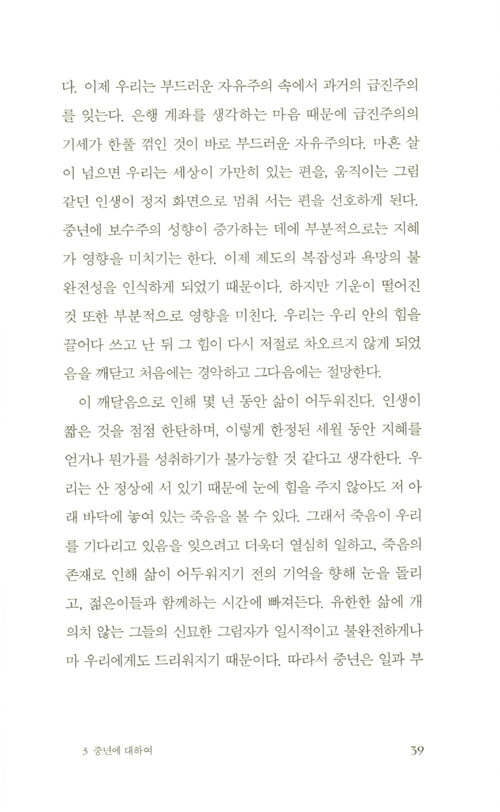
The child might be the beginning and the end of philosophy. In its insistent curiosity and growth lies the secret of all metaphysics; looking upon it in its cradle, or as it creeps across the floor, we see life not as an abstraction, but as a flowing reality that breaks through all our mechanical categories, all our physical formulas. Here in this expansive urgency, this patient effort and construction, this resolute rise from hands to feet, from helplessness to power, from infancy to maturity, from wonder to wisdom—here is the “Unknowable” of Spencer, the Noumenon of Kant, the Ens Realissimum of the Scholastics, the “Prime Mover” of Aristotle, the To ontos on, or “That Which Really Is,” of Plato; here we are nearer to the basis of things than in the length and breadth and thickness and weight and solidity of matter, or in the cogs and pulleys and wheels and levers of a machine. Life is that which is discontent, which struggles and seeks, which suffers and creates. No mechanistic or materialistic philosophy can do it justice, or understand the silent growth and majesty of a tree, or compass the longing and laughter of children.
Childhood may be defined as the age of play; therefore some children are never young, and some adults are never old.
Read less
Product details
ASIN : 1476771553
Publisher : Simon & Schuster; Reprint edition (22 December 2015)
Language : English
Paperback : 208 pages
ISBN-10 : 9781476771557
ISBN-13 : 978-1476771557
Dimensions : 22 x 15 x 2.5 cmBest Sellers Rank: 212,309 in Books (
See Top 100 in Books)123 in
Historical Essays (Books)633 in
Modern Western Philosophy1,446 in
EssaysCustomer Reviews:
4.5 out of 5 stars
344About the author
Follow authors to get new release updates, plus improved recommendations.
Follow
Will DurantWilliam James Durant was born in North Adams, Massachusetts, in 1885. He was educated in the Roman Catholic parochial schools there and in Kearny, New Jersey, and thereafter in St. Peter’s (Jesuit) College, Jersey City, New Jersey where he graduated in 1907, and Columbia University, New York. For a summer in 1907 he served as a cub reporter on the New York Journal, but finding the work too strenuous for his temperament, he settled down at Seton Hall College, South Orange, New Jersey, to teach Latin, French, English, and geometry (1907-11). He entered the seminary at Seton Hall in 1909, but withdrew in 1911 for reasons which he has described in his book Transition. He passed from this quiet seminary to the most radical circles in New York and became (1911-13) the teacher of the Ferrer Modern School, an experiment in libertarian education. In 1912 he toured Europe at the invitation and expense of Alden Freeman, who had befriended him and now undertook to broaden his borders. Returning to the Ferrer School, he fell in love with one of his pupils, resigned his position, and married her (1913). For four years he took graduate work at Columbia University, specializing in biology under Morgan and Calkins and in philosophy under Woodbridge and Dewey. He received the doctorate in philosophy in 1917, and taught philosophy at Columbia University for one year. Beginning in 1913 at a Presbyterian church in New York, he began those lectures on history, literature, and philosophy which, continuing twice weekly for over thirteen years, provided the initial material for his later works. The unexpected success of The Story of Philosophy (1926) enabled him to retire from teaching in 1927, and is credited as the work that launched Simon & Schuster as a major publishing force and that introduced more people to the subject of philosophy than any other book. Thenceforth, except for some incidental essays and Will’s lecture tours, Mr. and Mrs. Durant gave nearly all their working hours (eight to fourteen daily) to The Story of Civilization. To better prepare themselves they toured Europe in 1927, went around the world in 1930 to study Egypt, the Near East, India, China, and Japan, and toured the globe again in 1932 to visit Japan, Manchuria, Siberia, Russia, and Poland. These travels provided the background for Our Oriental Heritage (1935) as the first volume in The Story of Civilization. Several further visits to Europe prepared for Volume II, The Life of Greece (1939) and Volume III, Caesar and Ch
Volume III, Caesar and Christ (1944). In 1948, six months in Turkey, Iraq, Iran, Egypt, and Europe provided perspective for Volume IV, The Age of Faith (1950). In 1951 Mr. and Mrs. Durant returned to Italy to add to a lifetime of gleanings for Volume V, The Renaissance (1953); and in 1954 further studies in Italy, Switzerland, Germany, France, and England opened new vistas for Volume VI, The Reformation (1957). Mrs. Durant’s share in the preparation of these volumes became more substantial with each year, until in the case of Volume VII, The Age of Reason Begins (1961), it was so great that justice required the union of both names on the title page. And so it has been on The Age of Louis XIV (1963), The Age of Voltaire (1965), Rousseau and Revolution (1967), for which the Durants were awarded the Pulitzer Prize (1968), and The Age of Napoleon (1975). The publication of The Age of Napoleon concluded five decades of achievement and for it they were awarded the Presidential Medal of Freedom (1977). Throughout his life, Will Durant was passionate in his quest to bring philosophy out of the ivory towers of academia and into the lives of laypeople. A champion of human rights issues, such as the brotherhood of man and social reform, long before such issues were popular, Durant’s writing still educates and entertains readers around the world, inspiring millions of people to lead lives of greater perspective, understanding, and forgiveness.
Top reviews
Top review from Australia

The Late Reviewer4.0 out of 5 stars It's from Will Durant.Reviewed in Australia on 7 November 2020
Verified Purchase
I'd like to review this based on the astonishing output and contribution to understanding that Mr Durant (and his wife) offered to the world. And, perhaps, that's in the title: It's from Will Durant and therefore you know this is going to come from someone with a lot of knowledge and wisdom to draw on. But...
OK, the book is short. It's 22 chapters but those are rather short. They are thematically based: On Old Age, On God, On Death. Mr Durant was quite old at the time of writing and so, I suppose, there's a limit to the interest to those on the youngish side to this material. For any of us that perhaps struggled with the issues of Hamlet in junior high, the problem will be the same: the messages here will resonate more with older readers than for those on the < side of 40 (a generalisation.)
Glad to have the book and nice to have the reflections of someone who has thought long and hard about life (and history) to offer some final thoughts on life. And, with that, a quote from the book:
Life is that which can hold a purpose for three thousand years and never yield. The individual fails, but life succeeds. The individual is foolish, but life holds in its blood and seed the wisdom of generations. The individual dies, but life, tireless and undiscourageable, goes on, wondering, longing, planning, trying, mounting, longing.
Brilliant.
One person found this helpful
Helpful
ReportSee more reviewsTop reviews from other countries

Ashok Krishna
5.0 out of 5 stars This Book is a Gem! <3Reviewed in India on 17 December 2020
Verified Purchase
“There was a time when I…”
“In our days…”
“In my days it used to be better…”
These are some of the utterances through which the elderly people alienate themselves from the others and start appearing like a bore. Nope, I am not talking against their privilege to that common nostalgia. It is how they start harping on about how things were different and better in ‘their days’ that drives people away. But not every old person becomes a bore though. Some of them, through their immense experience and wisdom, gathered through the many long decades, help the younger people get a better perspective on the things around.
Like Mr. Durant, who speaks to us through this book, from behind the veils of Death.
In his long life of 96 years, Mr. Durant had seen more than the most of us can even imagine. To put his life span in perspective, he was born on the same year when Louis Pasteur found the first vaccine and breathed his last in 1981, when NASA’s Space Shuttle took its first orbital flight. In this period, he had seen empires peak in glory and plummet to pieces, revolutions in Russia, the reshaping of Europe, two World Wars, man’s glorious landing on the Moon, eradication of smallpox, advent of digital era and so much more. Let that sink in!!!
Not just his age, Mr. Durant was a brilliant and prolific writer too. His books on history and philosophy have become some of the essential works in their respective fields. So, when a man like William James
Durant leaves some unpublished manuscripts for posterity to benefit, I couldn’t let go of the opportunity to grab that book.This book is a gem. It is not philosophy or a chronological listing of events. This is Mr. Durant letting us know his very personal opinions about various aspects of human life – from love to life, from war to democracy, from education to religion. He has delved into all the aspects of human life, from birth to death and all other things in between. Page upon page, one could feel the yearnings of a grand old man who had seen the past and who hopes for a better, improved future, without ever sounding ‘in our days things used to be better…’!
Time flies but Truth stays. All our lives, fancies, dreams, hopes, pains, desires, wars, religions, reasons, ramblings, glorious achievements, crippling pains, fantasies are all but transient, swirling eddies that forever rise and fall in the cosmic deluge. But there are certain truths that stay ever relevant, from the first human to the day of his/her final descendant. Mr. Durant has tried to recall such truths in this book. He was one who had known that history repeats itself, sometimes even after we learn from it. He was also aware that some Truths remain untouched even amidst that flux. This book is his recounting of such truths, so that we, the lesser mortals may learn and benefit from it.
In his words “in the train of life it is the old who yield their seats to the young”. The grand old man, which such a beautiful understanding of the cycle of Life, has left behind this work of wisdom by ruminating on the past, gleaning all the timeless principles of life and putting them on paper. If you are a history / philosophy aficionado, who isn’t averse to listening to and learning from the old people, this book is for you!
Read less

7 people found this helpful
Report
Rudy Krueger
5.0 out of 5 stars If OnlyReviewed in Canada on 19 October 2016
Verified Purchase
At seventy years I know this priceless collection of thought is wasted on the young. Some day the pace of evil influence will be quicker than that which comes against it. This nearly happened several times in the recent past. Then nd this form of humanity will disappear because it failed to balance liberty and discipline.
2 people found this helpful
Report
Theodore A. Rushton
5.0 out of 5 stars Never read this book with a highlighter in hand!Reviewed in the United States on 14 January 2015
Verified Purchase
This delightful book sums up a lifetime of work by a very wise man who adroitly studied and recorded the follies, faults, faiths and fantasies of many civilizations.
Three conclusions are obvious: (1) history reflects the era in which it was written, and thus is never objective; and (2) no one has the wisdom or insight to predict the future; and (3) you will be amazed at the progress we've made since the 1970s.
That said, it is easier to predict the future than to be sure about the past. The future deals with hopes and fears, the past is filled with debates, insults and rebuttals. Some writers comfort or scare people about the future, which generally sets minds at ease by promising readers that their lives have meaning. Others recall old stories, which often sets everyone's mind at unease by explaining how the past could have been better.
In essence, this book boldly asserts, "I have studied the past, now here's what you must do for the future."
Good luck. Those willing to abandon individuality for any moral certainty are already Jesuits or slaves. Durant offers eugenics as a hope for the future and at least a semi-nativist answer to "unsuitable" immigration.
He doesn't seem to understand that today's marvelous world was created by people, flawed as they were in his judgment, who made good choices in response to irrational and unpredictable events. Somehow, despite the pessimism of the wise, slowly but surely, people and society improves.
So what are the benefits of this almost half-a-century old review? Several: the writing is elegant, clear and concise. It is packed with quotable wisdom based on his observations, summaries and ideas which created his wisdom.
In that it is a gem, a book never to be read with a highlighter in hand - - for if so, almost every page will shine with lines of bright colours to emphasize ideas to remember, massage and modify as times change. It's how Durant wrote this book, a decade or more to collect and create a concise summary of the best of his decades of scholarship.
The book expresses the long lifetime of ideas of a wise man. Good readers will use his observations to nake sense of events as they happen; great readers will stand on the shoulders of his wisdom for insight into the future.
Read more
38 people found this helpful
Report
R.U.
5.0 out of 5 stars As good as describedReviewed in Spain on 22 April 2016
Verified Purchase
The booked arrived before the given time. The book is better shape than it was described. I am really happy with the price, shipping charges and time of delivery.
Reportjoseph abboud
4.0 out of 5 stars you'll be highlighting sentences in every chapterReviewed in France on 31 January 2016
Verified Purchase
it's not everyday that you get to read such a lesson about life which not only relies on personal experience but also challenges you to scrutinize your own past and think about what is yet to come.
ReportDisplaying 1 - 10 of 174 reviews
Profile Image for Kathy Cowie.
Kathy Cowie
900 reviews
20 followers
Follow
February 9, 2016
3.5 stars -
Will Durant was an American writer, historian and philosopher. Over the course of his life, people asked for his personal take on things, and this book is the culmination of those thoughts. I thoroughly enjoyed reading this; a nice mix of timeless thoughts and ideas best understood in the context of the times.
I don’t usually quote from books I read for pleasure, but I found myself highlighting different parts — some for the lyrical writing or truisms, and others for the (thankfully) dated concepts.
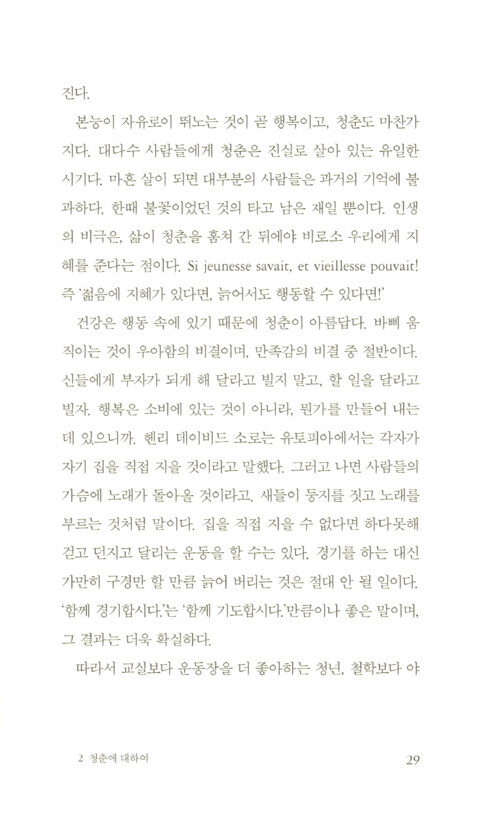
Durant writes that youth, “is learning to read (which is all that one learns in school), and is learning where and how to find what he may later need to know (which is the best of the arts that he acquires in college). Nothing learned from a book is worth anything until it is used and verified in life; only then does it begin to affect behavior and desire. It is Life that educates, and perhaps love more than anything else in life”.
After that, I was a little taken aback by his thoughts on education. “As for the girl, it will avail her nothing to know a foreign language, archeology, and trigonometry, if she cannot manage a home, a husband, and a child; fidelity is nourished through the stomach, and good pies do more for monogamy than all the languages that have ever died. One tongue is enough for any woman, and a good mother is worth a thousand PhDs.” So of course after reading that I have to find out about his wife, and writing partner, Ariel. Here’s the shortform Wiki on her: came to the US from the Ukraine, attended the Ferrer Modern School, where Will taught. No note on whether she graduated, but Will resigned his post to marry her — she was fifteen at the time. They married on Halloween, 1913, and died within two weeks of each other in 1981. So, I’m not sure how someone who shared a Pulitzer with his wife reconciles that kind of thinking, but, to be fair, the part about the pies is totally spot on.
I can’t end on that quote, because then you won’t think I liked this book, and I truly did, despite what that says about my feminist tendencies. Here is a sentence of beauty to mull over, “Civilization is a fragile bungalow precariously poised on a live volcano of barbarism.” Too depressing? How about a suggestion he offers? “No one has a right to bring a child into the community without having passed tests of physical and mental fitness to breed.” Ok, maybe that would be bad; not sure if I would have passed, especially given what my doctor liked to call my “advanced maternal age”.
What I really loved about this book is that while it felt at times like poetic musings, it was, for the most part, simple, concise and focused. There are short little essays on each topic, so the book will probably not keep you up late at night on the edge of your seat. But each time you come back to it, you will be glad to be back in his company again.
fiction
kindle-book
netgalley
...more
22 likes
Like
Comment
Profile Image for Bryan Neuschwander.
Bryan Neuschwander
264 reviews
10 followers
Follow
August 19, 2015
I suspect the author of the sweeping eleven-volume series The Story of Civilization (1935-1975) is right about this:
"An effective approach to the problem of war will proceed, not by large and generous emotions, but by the specific study and patient adjustment of specific causes and disputes. Peace must be planned and organized as realistically as war--with provision for every factor, and prevision for every detail. This cannot be done in an occasional moment stolen by statesmen from internal affairs; it requires the full-time attention of first-rate minds" (97).
It's pretty intriguing that Durant so respected Jesus and his teaching and that as he pondered the work of his life, he reflects,
"If I could live another life, endowed with my present mind and mood, I would not write history or philosophy, but would devote myself to establishing an association of men and women free to have any tolerant theology or no theology at all, but pledged to follow as far as possible the ethics of Christ, including chastity before marriage, fidelity within it, extensive charity, and peaceful opposition to any but the most clearly defensible war" (45).
I find it incredibly sad that Durant apparently could not find his proposed "fellowship of semi-saints" in the church, which is certainly meant to freely "follow as far as possible the ethics of Christ," though not merely through their own will to power. If I could have a conversation over coffee with Durant, could I convincingly connect the morality of Jesus' teaching and the beauty of his person--in both his invitation and his challenge--in a way that leads us back through theology rather than away from it? Would we hear Jesus calling, saying "this way is life, come and see"?
15 likes
Like
Comment
Profile Image for Barry Belmont.
Barry Belmont
118 reviews
24 followers
Follow
July 26, 2016
A person will always be of their time and place even if they've synthesized so perfectly the times and places of so many others. Here, Will Durant, who I love as an author beyond measure, lays out his personal thoughts on many things worth having thoughts on, indeed almost everything worth having thoughts on. And as with anyone's personal thoughts on matters there is a lot to agree and disagree with here. Durant has a gift with words and a talent for connections. His joy is unsurpassed and his love is for all humankind. But he, like all others, is a person of his time. So if we should find that a man born before the turn of two previous centuries should have thoughts on matters that might not be fully our own, how far should we begrudge him? This work is intimate and loving, born from a place deeply personal. If it does nothing more than give me a better picture of one of our greatest authors it will have served its humble purpose well.
And what more can we really ask of it?
15 likes
Like
Comment
Profile Image for Risha.
Risha
137 reviews
43 followers
Follow
December 20, 2016
This is one tricky book to review. The content is like a pendulum of ideas; it shifts from highly conservative to surprisingly liberal in a matter of paragraphs (not even pages).
Some chapters are very well-written while others - especially the one on women - might leave the feminist in you shocked, and frankly, a bit flabbergasted. I was afraid my disappointment and anger at the highly conservative ideas about women might unfairly bring down my opinion of the entire book (because there are some authentically great suggestions in here).
I would like to add, though, that this was written some 30 odd years ago but it released in 2016.
So, instead of letting my feminist side cloud my judgement, I've decided to rate each chapter to get an average rating for the book.
Our Life Begins - 4 stars
On Youth - 4.5 stars
On Middle Age - 3.75 stars
On Old Age - 3.75 stars
On Death - 2.75 stars
Our Souls - 3.5 stars
Our Gods - 3.75 stars
On Religion - 2.75 stars
On a Different Second Advent - 3.75 stars
On Religion and Morals - 4 stars
On Morality - 3.75 stars
On Race - 3 stars
On Women - 0 Stars
On Sex - 2.5 stars
On War - 3 stars
On Vietnam - 3 stars
On Politics - 3 stars
On Capitalism and Communism - 4 stars
On Art - 1 star
On Science - 2.5 stars
On Education - 2.5 stars
On the Insights of History - 2.5 stars
Average: 3.1 stars
Having said all this, I have to mention the eloquence, grace and dignity with which the writer constructs phrases to form coherent ideas.
10 likes
Like
Comment
Profile Image for Ali.
Or
39 reviews
11 followers
Follow
December 1, 2015
"I know that life is in its basis a mystery; a flowing river from an unseen source and in its development an infinite subtlety; a "a dome on many-colored glass", too complex for thought , much less for utterance.
And yet the thirst for unity draws me eternally on. To chart this wilderness of experience and history, to bring into focus the future, the unsteady light of the past, to bring into significance and purpose the chaos of sensation and desire, to discover the direction of life's majestic stream and thereby in some measure, perhaps, to control its flow: this insatiable metaphysical lust is one of the noble aspects of our questioning race. Our grasp is greater than our reach; but therefore our reach is made greater than that grasp."
Such words form the preamble of book, which is rich with Durant's experience of a lifetime. His views and ideas all into one book, written at the age of 95 years! From the vision of a philosopher looking back on his life and his work on civilizations! Answering the questions which have both confronted and bothered many. Fallen Leaves are Durant's Last Words on Life, Love, God and War. He charters various territories in the sublimest of essays which leave the reader engrossed and pondering. Wondering how Durant is able to speak so freely and accurately to the reader. A must read for every person! Enough said already. (Durant's original lesson as brevity itself)
8 likes
Like
Comment
Profile Image for Ahla Ahsanian.
Hello Ahsanian
87 reviews
Follow
October 17, 2022
In these strange and scary days, between the amount of sadness and anger and confusion and fear of passivity and fear of being active:) this book was my refuge and place of learning.
It was like I am asking all my questions to a wise and humble person and he is answering me kindly.
Some of Will Durant's views (especially regarding women) were very different from my point of view. But the whole book was still very enlightening. About art, politics, education and science, very detailed and deep explanations were written, but understandable for everyone.
I will definitely go back to parts of the book and read again to understand more fully...
6 likes
Like
Comment
Profile Image for Ashok Krishna.
Ashok Krishna
373 reviews
55 followers
Follow
December 17, 2020
“There was a time when I…”
“In our days…”
“In my days it used to be better…”
These are some of the utterances through which the elderly people alienate themselves from the others and start appearing like a bore. Nope, I am not talking against their privilege to that common nostalgia. It is how they start harping on about how things were different and better in ‘their days’ that drives people away. But not every old person becomes a bore though. Some of them, through their immense experience and wisdom, gathered through the many long decades, help the younger people get a better perspective on the things around. Like Mr. Durant, who speaks to us through this book, from behind the veils of Death.
In his long life of 96 years, Mr. Durant had seen more than the most of us can even imagine. To put his life span in perspective, he was born on the same year when Louis Pasteur found the first vaccine and breathed his last in 1981, when NASA’s Space Shuttle took its first orbital flight. In this period, he had seen empires peak in glory and plummet to pieces, revolutions in Russia, the reshaping of Europe, two World Wars, man’s glorious landing on the Moon, eradication of smallpox, advent of digital era and so much more. Let that sink in!!!
Not just his age, Mr. Durant was a brilliant and prolific writer too. His books on history and philosophy have become some of the essential works in their respective fields. So, when a man like William James Durant leaves some unpublished manuscripts for posterity to benefit, I couldn’t let go of the opportunity to grab that book.
This book is a gem. It is not philosophy or a chronological listing of events. This is Mr. Durant letting us know his very personal opinions about various aspects of human life – from love to life, from war to democracy, from education to religion. He has delved into all the aspects of human life, from birth to death and all other things in between. Page upon page, one could feel the yearnings of a grand old man who had seen the past and who hopes for a better, improved future, without ever sounding ‘in our days things used to be better…’!
Time flies but Truth stays. All our lives, fancies, dreams, hopes, pains, desires, wars, religions, reasons, ramblings, glorious achievements, crippling pains, fantasies are all but transient, swirling eddies that forever rise and fall in the cosmic deluge. But there are certain truths that stay ever relevant, from the first human to the day of his/her final descendant. Mr. Durant has tried to recall such truths in this book. He was one who had known that history repeats itself, sometimes even after we learn from it. He was also aware that some Truths remain untouched even amidst that flux. This book is his recounting of such truths, so that we, the lesser mortals may learn and benefit from it.
In his words “in the train of life it is the old who yield their seats to the young”. The grand old man, which such a beautiful understanding of the cycle of Life, has left behind this work of wisdom by ruminating on the past, gleaning all the timeless principles of life and putting them on paper. If you are a history / philosophy aficionado, who isn’t averse to listening to and learning from the old people, this book is for you!
6 likes
Like
Comment
Glenn
49 reviews
1 follower
Follow
February 3, 2015
Since college I always wanted to read his 11 volume "Story of Civilization", so when I saw Fallen Leaves in the local library I immediately recognized the authors name. I was thinking that anyone who took 40 years to research and write the story of all human time, would probable have something interesting to say in a couple hundred pages. I was not disappointed. Consider also that he lived through two world wars, the depression and two presidential assassinations. Durant was born the same time as my grandfather (1885) and he died the same year as my dad (1981). Fallen Leaves was found and published 30+ years after his death, so you would assume no personal agenda or attempt to burnish a legacy. The essays are a summary of a long life's thoughts about stuff that matters, presented humbly, without guile, matter of factly, with no attempt to settle scores. Plenty to disagree with (he is left wing for sure), but that is overshadowed by respect and admiration for his achievements. I was hoping to find some recordings of him in person; there is an out of print documentary of Durant which I haven't been able to locate. The best essays in the book are his thoughts on childhood ("only children and fools tell the truth"), science (lauds and limits) and education (providing the means for one to control, enjoy and understand their life). So many quotable gems throughout the whole book that I ordered a personal copy to re-read and highlight profusely rather than succumbing to the temptation of defacing the library copy.
6 likes
Like
Comment
Profile Image for Nikola Jankovic.
Nikola Jankovic
587 reviews
121 followers
Follow
October 28, 2022
Two months ago, I came across the History of Civilization set on a website . Reduced from 48,000 RSD to 18,000 RSD, and next to me there is no one who will stop me from clicking "Buy". Now there are those thirty kilograms and 15,000 pages, bending my upper bookshelf. My daughter asked me the other day if I had read the first book.
I didn't, but I started with Eastern civilizations and they - they promise. That's why I was interested in what else was written by an author who is capable of seeing things in that way. This is a collection of his personal essays on the important things in life - on history, philosophy, religion, art, love, society, politics, growing up and aging. Reflections of the witnesses of progress from 1885, the time when they rode horses as the main means of transportation, until 12 years after man's landing on the moon.
How are your essays? Well, when he writes about history, he mostly refrains from personal opinion. There are too many of those comments here - in fact, that's the idea of the book - so if you don't agree with some of his views on important things (for example, how he laments the decline of Catholicism among the intellectual elite of the West, which affects other topics as well), don't even the whole can really delight you.
non-fiction
of-literature
philosophy
5 likes
Like
Comment
Profile Image for Ci.
There
960 reviews
6 followers
Follow
May 7, 2016
Durant's writing in this book has a highly lyrical, declarative quality. The contents are ruminating thoughts widely ranged on life, history and philosophy. Its style shares little with that of the more measured, conversational style of Montaigne, or a carefully developed arguments as that of a Seneca.
Durant's philosophical anchor is a Life Force with an agnostic slant toward religious beliefs. His own philosopher is Spinoza, and his scientists are Darwin and other evolutionary scholars. His philosophy seems to be deeply embedded in the modernity and a historical positivism.
read-fail-20
5 likes
Like
Comment
Displaying 1 - 10 of 174 reviews
====
Top reviews from the United States
Theodore A. Rushton
5.0 out of 5 stars Never read this book with a highlighter in hand!
Reviewed in the United States on January 14, 2015
Verified Purchase
This delightful book sums up a lifetime of work by a very wise man who adroitly studied and recorded the follies, faults, faiths and fantasies of many civilizations.
Three conclusions are obvious: (1) history reflects the era in which it was written, and thus is never objective; and (2) no one has the wisdom or insight to predict the future; and (3) you will be amazed at the progress we've made since the 1970s.
That said, it is easier to predict the future than to be sure about the past. The future deals with hopes and fears, the past is filled with debates, insults and rebuttals. Some writers comfort or scare people about the future, which generally sets minds at ease by promising readers that their lives have meaning. Others recall old stories, which often sets everyone's mind at unease by explaining how the past could have been better.
In essence, this book boldly asserts, "I have studied the past, now here's what you must do for the future."
Good luck. Those willing to abandon individuality for any moral certainty are already Jesuits or slaves. Durant offers eugenics as a hope for the future and at least a semi-nativist answer to "unsuitable" immigration.
He doesn't seem to understand that today's marvelous world was created by people, flawed as they were in his judgment, who made good choices in response to irrational and unpredictable events. Somehow, despite the pessimism of the wise, slowly but surely, people and society improves.
So what are the benefits of this almost half-a-century old review? Several: the writing is elegant, clear and concise. It is packed with quotable wisdom based on his observations, summaries and ideas which created his wisdom.
In that it is a gem, a book never to be read with a highlighter in hand - - for if so, almost every page will shine with lines of bright colours to emphasize ideas to remember, massage and modify as times change. It's how Durant wrote this book, a decade or more to collect and create a concise summary of the best of his decades of scholarship.
The book expresses the long lifetime of ideas of a wise man. Good readers will use his observations to nake sense of events as they happen; great readers will stand on the shoulders of his wisdom for insight into the future.
Read less
38 people found this helpful
Helpful
Report
Richard
4.0 out of 5 stars A wise man can learn...
Reviewed in the United States on July 30, 2016
Verified Purchase
An unexamined life is not worth living. Here is one of our great historians reflecting back over 60 plus years of historical research and philosophical wonderings. A little daunting in places, but still a good read. --- The keeper passage in this book: It is a mistake to think that the past is dead. Nothing that has ever happened is quite without influence at this moment. This present is merely the past rolled up and concentrated in this second of time. You too, are your past; often your face is your autobiography; you are what you are because of what you have been; because of your heredity stretching back into forgotten generations; because of every element of environment that has affected you, every man or woman that has met you, every book that you have read, every experience that you have had; all these are accumulated in your memory, your body, your character, your soul. And so it is with a city, a country, a race; it is its past, and cannot be understood without it. It is the present, not the past, that dies; this present moment, to which we give so much attention, is forever flittering from our eyes and fingers into that pedestal and matrix of our lives which we call the past. It is only the past that lives.
Therefore I feel that we of this generation give too much time to news about the transient present, too little to the living past. We are choked with news, and starved of history. We know a thousand items about the day or yesterday, we learn the events and troubles and heartbreaks of a hundred peoples, the policies and pretensions of a dozen capitals, victories and defeats of causes, armies, and athletic teams --- but how, without history, can we understand the events, discriminate their significance, sift out the large from the small, see the basic currents underlying surface movements and changes, and foresee the result sufficiently to guard against fatal error or the souring of unreasonable hopes?
"History," said Lord Bolingbroke, quoting Thucydides, "is philosophy teaching by example." And so it is. It is the laboratory, using the world for its workshop, man for material, and records for its experience. A wise man can learn from other men's experience; a fool cannot learn even from his own. History is other men's experience, in countless number through many centuries. By adding some particles of that moving picture to our vision we may multiply our lives and double our understanding.
Read less
6 people found this helpful
Helpful
Report
See more reviews
Top reviews from other countries
Ashok Krishna
5.0 out of 5 stars This Book is a Gem! <3
Reviewed in India on December 17, 2020
Verified Purchase
“There was a time when I…”
“In our days…”
“In my days it used to be better…”
These are some of the utterances through which the elderly people alienate themselves from the others and start appearing like a bore. Nope, I am not talking against their privilege to that common nostalgia. It is how they start harping on about how things were different and better in ‘their days’ that drives people away. But not every old person becomes a bore though. Some of them, through their immense experience and wisdom, gathered through the many long decades, help the younger people get a better perspective on the things around. Like Mr. Durant, who speaks to us through this book, from behind the veils of Death.
In his long life of 96 years, Mr. Durant had seen more than the most of us can even imagine. To put his life span in perspective, he was born on the same year when Louis Pasteur found the first vaccine and breathed his last in 1981, when NASA’s Space Shuttle took its first orbital flight. In this period, he had seen empires peak in glory and plummet to pieces, revolutions in Russia, the reshaping of Europe, two World Wars, man’s glorious landing on the Moon, eradication of smallpox, advent of digital era and so much more. Let that sink in!!!
Not just his age, Mr. Durant was a brilliant and prolific writer too. His books on history and philosophy have become some of the essential works in their respective fields. So, when a man like William James Durant leaves some unpublished manuscripts for posterity to benefit, I couldn’t let go of the opportunity to grab that book.
This book is a gem. It is not philosophy or a chronological listing of events. This is Mr. Durant letting us know his very personal opinions about various aspects of human life – from love to life, from war to democracy, from education to religion. He has delved into all the aspects of human life, from birth to death and all other things in between. Page upon page, one could feel the yearnings of a grand old man who had seen the past and who hopes for a better, improved future, without ever sounding ‘in our days things used to be better…’!
Time flies but Truth stays. All our lives, fancies, dreams, hopes, pains, desires, wars, religions, reasons, ramblings, glorious achievements, crippling pains, fantasies are all but transient, swirling eddies that forever rise and fall in the cosmic deluge. But there are certain truths that stay ever relevant, from the first human to the day of his/her final descendant. Mr. Durant has tried to recall such truths in this book. He was one who had known that history repeats itself, sometimes even after we learn from it. He was also aware that some Truths remain untouched even amidst that flux. This book is his recounting of such truths, so that we, the lesser mortals may learn and benefit from it.
In his words “in the train of life it is the old who yield their seats to the young”. The grand old man, which such a beautiful understanding of the cycle of Life, has left behind this work of wisdom by ruminating on the past, gleaning all the timeless principles of life and putting them on paper. If you are a history / philosophy aficionado, who isn’t averse to listening to and learning from the old people, this book is for you!
Read less
Customer image
7 people found this helpful
Report
Rudy Krueger
5.0 out of 5 stars If Only
Reviewed in Canada on October 19, 2016
Verified Purchase
At seventy years I know this priceless collection of thought is wasted on the young. Some day the pace of evil influence will be quicker than that which comes against it. This nearly happened several times in the recent past. Then nd this form of humanity will disappear because it failed to balance liberty and discipline.
2 people found this helpful
Report
R.U.
5.0 out of 5 stars As good as described
Reviewed in Spain on April 22, 2016
Verified Purchase
The booked arrived before the given time. The book is better shape than it was described. I am really happy with the price, shipping charges and time of delivery.
Report
joseph abboud
4.0 out of 5 stars you'll be highlighting sentences in every chapter
Reviewed in France on January 31, 2016
Verified Purchase
it's not everyday that you get to read such a lesson about life which not only relies on personal experience but also challenges you to scrutinize your own past and think about what is yet to come.
Report
John Ryan
4.0 out of 5 stars Enjoyable, but not a masterpiece.
Reviewed in the United Kingdom on December 11, 2014
Verified Purchase
I discovered Will Durant about a year and a half ago; since then he has been by far my favourite writer and historian. Over the course of three intensive months, I read his entire eleven volume Story of Civilisation from start to finish; I have read his other smaller works multiple times. This has been a personal journey; personal because Durant has done much to shape my mind and outlook, but personal also because I have yet to meet another person who has even heard of Durant, let alone read one of his books (I live in England).
There are two facets to Durant’s brilliance. Firstly, and this is what makes his Story of Civilisation such a masterpiece, he has an enormously cultivated mind, able to synthesise knowledge and make perspicacious judgements, and knows how to present digestible and clear information. Secondly, Durant has by far the greatest prose style I have ever seen. It has the erudition and wit of Gibbon whilst maintaining greater clarity and simplicity; it has the hyperbole of Macaulay without falling into his exaggeration and bias; it has the romanticism of Carlyle without becoming farcical. Durant merges passion and power in his writings with clarity and restraint. For newcomers to his work, perhaps start by reading some of his more famous quotes online; there will be at least one gem of that calibre on every single page of any of his books.
That then, is Durant. He can be called a Romantic; to read his works shows an immense passion for history and philosophy that idealises its subject (witness his treatment of Christ, Spinoza and Napoleon). He has no overarching philosophy; he lost religion and political radicalism in his youth, and thus his judgements on all subjects are his own. Tucked away in his autobiography, there is a quote that summarises Durant’s outlook –‘to believe in nothing and worship everything’. It is this fusion of pragmatism and idealism that gives Durant his unique perspectives; it is his utter confidence (reminiscent of Churchill) in what he writes that makes it refreshing; it is his wit and style that makes him so readable.
Ok, on to the book at hand. I have been looking forward to its release for months, and I suppose ultimately, it is what I expected. The book is Will Durant’s prose style in all its glory, but not much else. There is little you will learn from the book; there is no research, there isn’t really even any systematic argument. The book takes the format of twenty two essays, each presenting Durant’s views on certain issues – youth, sex, war, and so on. As much of a Durant lover as I am, the shortness of each essay means he could not develop the ideas as he did in The Mansions of Philosophy. For his essay on race, he details some of the racial problems America was seeing, and then concludes in one paragraph the answer is education. It just feels slightly truncated and weak. His prose is there (and his prose means that I for one will reread it man times) but his unbridled genius is not.
Still, its good fun. Liberalism is ‘radicalism softened with the consciousness of a bank account’; ‘a man is as old as his arteries, and as young as his ideas’; ‘the tragedy of life is that it gives us wisdom only when it has stolen youth’; there are many more. Durant is more reactionary in this work than his earlier books; he often seems to be falling into the idea that things were better in the old days; some of the ideas he defends are ideas that only a ninety year old could hold – chastity before marriage, hard labour in prisons. Much of what he writes on women will be seen with a mischievous smile by his fans and with horror by newcomers. His writing on death is poignant, given that he knew the end was near; ‘soon I shall echo Caesar’s Jam satis vixi – “I have already lived enough”. You will not be bored, at any rate.
For fans of Durant, this is another book to add to the collection; it is immensely readable, of course, the essays are each only a few pages and thus can easily be read again and again whenever one has a short time to kill. For newcomers to Durant, it is not perhaps one to start off with; it has great interest to those who already know Durant, yet it is not his finest work (start with the Lessons of History and the Story of Philosophy, then if you can get a hold of it read The Mansions of Philosophy and his Autobiography. Then start the eleven volumes). Like his posthumous ‘Heroes of History’, it is good, but it is not necessarily great. Well done John Little for publishing this work; I don’t know how many people will buy it; I am, so far, the only reviewer. I dream of a day when his complete works, with all his writings and letters, will be published in one set, but without demand, there won’t be supply. For the few of us who still treasure him, this book adds another 180 pages to the over ten thousand that sits on the shelves. We gratefully accept this book; there will be no more lost manuscripts. It will make no impression in the vast multitude of books published this year, perhaps it does not deserve to. But as another reviewer once put it, time spent with such a man cannot be wasted.
Read less
12 people found this helpful
Report
====







 전자책 미리 읽기
 8.7 100자평(0)리뷰(3)


 Audiobook
 Audible sample