영성, 몸-마음, 젠더, 생태, 평화 Scapbook

Spirituality, Mind-Body, Gender, Ecology, Ageing, Peace, Scrapbook (in English and Korean)

2021/06/30

Meeting for Learning 2018 – 2019 Information | Quaker Learning Australia

Meeting for Learning 2018 – 2019 Information | Quaker Learning Australia


Quaker Learning Australia
Quakers for Peace
Skip to content

Home
News
Meeting for Learning
Children and Young People
Courses and Resources
Contact QLA
← New Information about Meeting for Learning 2018 – 2019


Meeting for Learning 2018 – 2019 Information
Posted on December 12, 2017 by Robin Mclean


Meeting for Learning: Where?

The 2018 Retreat will be held at New Norcia north of Perth in Western Australia

Accommodation and Cost


Each participant will have a private bedroom for the 6 nights. All accommodation, meals and a resource book are included in the price, which will be $850. You may apply for financial assistance through your Regional Meeting. Talk with your Clerk or Ministry Convener if you are considering registering for the course and applying for support.

When?

Monday 17 September to Sunday 23 September 2018.

How to apply – for this or a future year

The Retreat is open to Members, Attenders and others in sympathy with the Quaker way.

If you think this retreat might be for you, please take these steps:
Talk to a previous participant in your local Meeting, or your Regional Meeting clerk, to ask about their experience.
Write to Fiona Gardner gardner@latrobe.edu.au expressing your interest in participating. If possible this should be by February 2018

The WA Contact Person is Ann Zubrick qzubrick@wantree.com.au

Please click here to download the Meeting For Learning 2018 – 2019 Brochure.

Meeting for Learning

A time for living in a Quaker Community


An intensive exploration of Quaker life experiences.
Spiritual nurture in community guided by three or four facilitators.
Friends reflecting on what it is to study, worship and be transformed by the Spirit.
Quaker processes practised faithfully in everyday life.
The year-long program begins and ends with two six-night residential retreats.
Forming a listening group for support in living with intention through the year between.
Facilitators continue their nurture through the year with contact as needed.

Retreat Weeks at New Norcia, WA
17 – 23 September, 2018
Similar dates, 2019


Meeting for Learning is an Australia Yearly Meeting program, hosted in 2018/19 Western Australia Regional Meeting under the care of Quaker Learning Australia.

 Go to qlau@quakers.org.au for more learning and resource options.

Quaker Meeting for Learning
is a year-long program book-ended by week-long residential retreats. It is an extended time to explore the Spirit and learn about Quaker ways, together with members and attenders from around Australia. Sometimes others from different faith communities join Meeting for Learning. For most of the year-long program, you remain part of your regular community. Residential retreats give the opportunity for you to commence and complete this journey by sharing experiences with others.

Themes for the retreats alternate; participants can start with either. The 2018 Retreat will focus on our individual inner journey. In 2019 the Retreat will focus on the spiritual life of our faith community.

Listening to ourselves and each other is a practice which often leads to deep insights, transformation and discernment. Much time is devoted to deepening listening skills among other practices that are based on Friends’ long history of spiritual nurture and faith in action.

A feature of each retreat is a mid-week silent day and night. Some participants feel nervous about this beforehand, and then find that extended silence in community is an enriching experience. A facilitator is always available during the Silent Day for reflection or conversation.

Between retreats your learning processes go on with a Support Group that you choose from your local Meeting and/or from friends and family. You will select members for your group who will listen, empathise and encourage while you give attention to specific areas of your life where you can feel the spirit moving. Local members of support groups regularly report how gratifying it is to share with the participant. Sharing this journey is then a rich part of the next Retreat.

The size of the group at each retreat is up to 12 participants, who are guided by three or four volunteer facilitators during the retreat. The facilitators provide reading materials, sessions, exercises and pastoral guidance to assist each participant’s spiritual journey. The resources provided allow retreatants to develop their knowledge of Quaker writings and beliefs, and to reflect on their own journey. Each day allows time for discussion, exploration, rest and reflection. During the retreat, some activities are carried out as a whole group, some are conducted in small groups and some exercises are undertaken as a personal activity. Structured and unstructured time is included in the retreat.

Some quotes from previous participants

  • The first retreat was the safest, most nurturing, most healing group of that size that I had experienced – thanks to the skilled and loving facilitators, Fiona Gardner, Sue Wilson, Jenny Spinks and Catherine Heyward, and the openness and courage of the participants. In addition to stimulating, and sometimes challenging, individual and collective spiritual exercises and explorations, I received emotional/spiritual support from daily Meetings for Worship, and facilitators and participants alike. Practising compassionate listening in a spiritual context in small groups, and being listened to in the same way, was a privilege. I felt a sense of belonging that has been rare in my life, and I left the retreat encouraged, inspired and on a high.

  • As a result of the year-long process I began the second retreat more nurtured, relaxed and open than I had on the first. I felt even more affirmed and, yes, loved. I left, not on a high this time, but with a fullness of mind, heart and soul that continues to sustain me.

  • Meeting for Learning was a turning point in my Quaker life, not only the retreats, also working with my support team for the year and these people still play an important role in my spiritual growth.

This entry was posted in Meeting for Learning. Bookmark the permalink.


Posted by Sejin at June 30, 2021
Email ThisBlogThis!Share to XShare to FacebookShare to Pinterest
Labels: deepening, Fiona Gardner, Quaker retreat, volunteer

원불교 논산교당 고세천 교무 - 토론토 교당 설립에 관하여

On Fri, Mar 26, 2021 at 1:26 PM 으라차차 <kose1000@hanmail.net> wrote:

세진님. 건강히 잘 지내셨습니까? 원불교 논산교당 고세천 교무입니다.


최근들어 일선 이남순 어머님 책 "나는 이렇게 평화가 되었다" 책을 다시 보고 있습니다. 2남 2녀가 어머님에 대한 추억의 글이을 책에 기재했는데 그중 캐나다 원불교 역사 연혁에 포함될 내용이 있는데 세진님의 글에서 단초를 발견할 수 있습니다. 페이지 250 ~ 251


원불교 재단법인 인가 캐나다에 포교사 주재 보장

원불교신문 |1974.10.25|

캐나다에 새 원음이 싹트기 시작했다. 해외포교문제연구소에 의하면 8월 22일 「토론토윈부디스트 템플」이라는 이름의 재단법인 인가를 캐나다 주정부로부터 받았다. 이로 인해 캐나다에서의 본교 포교활동은 물론 원불교 포교사로서의 신분을 보장받게 된 것이다. 이는 캐나다 주재 교포 이남순, 박성철씨 부부의 원력으로 지난 6월부터 방 한 칸을 빌어 법회를 보아오면서 주선한 것이다. 캐나다 교도들은 조속한 시일 내로 교무파견을 원하고 있다.

원불교신문 webmaster@wonnews.co.kr

이런 기사가 나옵니다. 그런데 250페이지 중간부분 책 내용중에 
그리고 1975년에 북한을 방문한 일이 일어나지 않았더라면 아마도 우리 집은 원불교 집회 장소가 되었을 것이고 우리 가족 모두 거기 동참하게 되었을 수도 있었을 것이다. 
그러니까 북한을 방문하고 나서 집을 원불교 집회 장소로 제공하는 일이 틀어졌나요? 왜냐면 원불교 토론토 교당 연혁에는 이남순, 박성철(법호 화타원, 법명 이화중) 부부가 법인을 만들었다는 말이 없어서요.

또 한가지 여쭙고 싶은 것은 251 페이지 이남순 어머니 시댁 아주머니가 원불교 교단의 중요한 일원으로 활동하고 있다고 되어있는데 혹시 이름을 알 수 있을까요. 이런 점은 원불교 토론토 교당 초창기 연혁에 아주 중요한 부분이어서 그 공적을 자세히 기록해 놓아야 할듯해서 여쭙습니다. 원불교 기록에는 이런 이야기가 나오지 않아서요. 아마 세진님이 이 부분을 책에 언급하지 않았다면 아무도 몰랐을 것입니다. 그냥 묻혀버렸을 거예요. 하지만 이렇게 라도 단초를 언급해 주셔서 원불교 캐나다 초창기 교화의 생생한 모습을 볼 수 있게되었습니다. 참으로 감사하고 장한 일입니다. 그리고 어머니 아버지가 캐나다 토론토 교당의 발전에 큰 공헌을 하신점도 드러났지요.


--------- 원본 메일 ---------

보낸사람: Sejin Gmail <eatallday@gmail.com>
받는사람: 으라차차 <kose1000@hanmail.net>
날짜: 21.03.26 12:40 GMT +0900
제목: Re: [원불교 고세천 교무] 세진님. 오랫만입니다.

고세천 교무님,

안녕하십니까. 그리고 반갑습니다.
제가 쓴 부분을 자세히도 읽으셨군요.

큰집 아주머니라는 분은 시인 박용철의 부인 임정희 (임정관) 입니다.

큰집이라는 것은 저희 할아버지가 박용철의 아버지의 동생이라는 의미입니다.
임정희 아주머니와 그 아들 박종달 (의사, 박인원), 두분 다 원불교에 열심이었던 것으로 알고 있씁니다.

임정희 아주머니 덕분에 제가 1974년에 한국을 무전여행한다고 찾아갔을 때 영선선원에서 2주간을 보내는 기회를 얻었습니다. 당시의 영산선원은 촌에 집 두채에 교실겸, 기숙사겸으로 이용하던 시대였습니다. 그래도 교무가 되려고 교육을 받던 젊은이들과 알게 된 것이 저에게 깊은 인상을 남겼었습니다.

오늘은 바빠서 다음에 사진을 몇장 보내드리겠습니다.

박세진

박용철 부인 임정희가 나오는 기사를 찾아보았습니다.

'순수파 시인' 박용철 유작시 모두 공개
https://www.chosun.com/site/data/html_dir/2004/02/27/2004022770202.html

박용철 시인, 원불교소촌교당 관계
https://blog.daum.net/won84d/11022255

----
On Fri, Mar 26, 2021 at 2:34 PM 으라차차 <kose1000@hanmail.net> wrote:

네. 세진님의 친가도 대단한 집안이네요. 주로 어머님을 통해서 외가집 분위기만 들었었는데 오늘 새롭게 알았습니다. 알면 알수록 재미가 있습니다. 다음에는 친가에 대한 이야기를 좀 해주세요. 저도 책을 좋아하고 글 쓰는 것도 좋아하지만 세진님 2남 2녀의 글솜씨도 대단합니다. 참 훌륭한 집안입니다.


어머님 관련 소중한 자료를 찾았습니다. 공유합니다. - eatallday@gmail.com - Gmail


어머님 관련 소중한 자료를 찾았습니다. 공유합니다.

으라차차

Jun 28, 2021, 12:27 PM (2 days ago)


to me


대용량파일 2개 (13.93MB) ~ 2021.07.28 (30일 보관, 100회 다운로드 가능)


  KakaoTalk_4.jpg (6.73MB)


  KakaoTalk_5.jpg (7.2MB)


어머님과 아버님이 원불교 해외교화 역사에서 중요한 역활을 하셔서 그 공덕이 아주 큰데 지금은 묻혀버린 느낌이 있습니다. 왜냐면 기록과 자료가 없어서 입니다. 하지만 파일 첨부한 것처럼 자료를 찾았습니다. 어머님 일생에 대해 세진님이 책 "나는 이렇게 평화를 찾았다" 에서 밝힌 자료와 "작은 거인 백상원교무" 책에서 퍼즐이 맞추어 주었습니다.

세진님이 알고 계셔야 할 것 같아 기쁜 마음에 올립니다.


-----


Sejin Gmail <eatallday@gmail.com>

11:03 AM (28 minutes ago)


to 으라차차


고세천 교무님께,


어머니에 관계된 자료를 발굴해 주셔서 감사드립니다.
1974년 정도에는 임정관 아주머님과 어머니 사이에서 편지왕래가 자주였던 것이 제가 자서전 준비단계에서 읽은 것을 기억하고 있습니다. 원불교 모임에 대한 이야기가 있었습니다.


언제인가 다시 한번 찾아보아야겠습니다.


토론토 교당 이야기와 직접관계된 것은 아니지만 원불교와 관계된 아야기가 또 하나 있습니다.
동생 박유진이 70년대 말에 옥스포드 대학원에서 국제적 영성단체 에미서리와 만나게 되었는데요.
80년대에 가서 미국 콜로라도 덴버에 있는 에머서리 본부 영성공동체에 들어가서 약 25년(?) 살게 됩니다.
그런데 에미서리가 80년대 후반에는 한국에서도 모임이 시작되었는데, 거기에 원불교 교무님들도 참석했던 것 같습니다. 그러면서 한국 에미서리 멤버들이 콜로라도 에니서리 공동체를 방문하기도 하고 1년 등 장기 체류하기도 하고 그럽니다. 그 중에는 원불교와 관계된 분들도 있었던 것으로 압니다.


사진 1: 유진님. 어머니. 한국. 년도는 1990년 정도?
사진 2: 1995년 토론토 교당. 중간 줄 왼쪽이 어머니.


박세진


----
Posted by Sejin at June 30, 2021
Email ThisBlogThis!Share to XShare to FacebookShare to Pinterest
Labels: 원불교

What It Means to Be a Marxist

What It Means to Be a Marxist
BY
RAMSIN CANON
We can only change the world if we understand the actual forces around us. Marxism gives us the tools to do just that.

----

It’s unfortunate that there isn’t a better word for “Marxism.” Marx himself famously once said that he himself was “not a Marxist” if certain askew interpretations of his theories of historical materialism and capitalism were “Marxist.” Part of the problem is that the theories and processes that Marx helped create are too big to fall under a single -ism; Marx was a philosopher (and sort of historian) of political economy, that is, the study of production and trade in relationship to laws, customs, and human systems, whose theories helped inform numerous other disciplines and practices: economics, sociology, history, literature, and practical politics, among others.

The closest analogy that I can think of is to what we would today call “Darwinism,” the theories of nineteenth-century biologist Charles Darwin. Darwin didn’t invent biology, paleontology, genetics, or any of the numerous disciplines and practices that are informed by “Darwinism.” And in fact, there are many aspects of classical “Darwinism” — the theories and conclusions arrived at by Darwin and his immediate disciples — that have been outright revised or rejected by people who today would still consider themselves “Darwinists.” Since Darwin published On the Origin of Species and The Descent of Man, hundreds if not thousands of scientists and philosophers have expanded on and improved Darwin’s theories (the so-called “modern synthesis”) — obviously a necessity since during Darwin’s lifetime there was no deep concept of molecular genetics.

It’s useful to think of Marxism the same way. Marxism is not a detailed plan for how to create socialism. Marxism isn’t a moral philosophy, in the way that the Enlightenment philosophers and their progeny — like John Rawls — tried to build up moral systems from first principles to determine what is the most “fair.” It does not instruct us to engage in violent insurrection.


Marx, through his analysis of human society, gave us an understanding of the laws governing how society develops and how we can understand the process of history. His theories of alienation and class struggle inform us as to the causes of human misery and the obstacles to human flourishing. This is the “historical materialism” that is the strongest single thread of his work. Historical materialism is, simply stated, the theory that human societies develop according to how the “forces of production” are ordered, and that the features of a society will, ultimately, relate back to the ordering of the forces of production. People will “relate” to the system of production as a class. Therefore, the core conflict in society has been between classes on opposing sides of the systems of production — this is the dialectical part of his theory.

Just as Darwin was not the first “evolutionist,” Marx was not by any means the first socialist. And as with Darwin and the word “evolution,” “socialism” meant something fairly different before Marx came along. Socialism was basically a moral system, sometimes rooted in Christian values, utopian in character and justified based on what was “fair” or “just.” Marx and Engels spent much of their active years differentiating their theories from prior theories of “utopian” socialism built on moral persuasion — Engels going as far as to publish a book-length pamphlet on it.

Darwin revolutionized existing theories of “evolution” by introducing the concept of natural selection over geologic time — he should better be remembered for the theory of natural selection than evolution; the early title of his book Origin of Species was Natural Selection. In the same way, Karl Marx took existing historical and philosophical analysis of human society and political economy and applied an objective approach, from which he developed the theory of historical materialism/dialectical materialism.

What Marxism teaches us is simply to approach the questions of society from a material basis: how does human life persist? Through production of the goods and services needed to live. How are these things produced under capitalist society? Through exploitation of the labor of the working class, that is, by requiring one class of people to sell their labor as a commodity to another class to produce values. What is the result of this system? That workers are “alienated” from their labor, meaning from much of their waking life, constantly required to produce more and more with an ever-precarious access to the means of subsistence.

If we want to engage in political competition and analysis of what Marx would have called “political economy,” there isn’t an alternative to Marxism that has anything near its explanatory power or guidance. That said, I understand the caution many socialists or social democrats may have to subscribing to “Marxism”: Marx’s focus on class “struggle,” the “overthrow” of the capitalist class, and the “dictatorship of the proletariat,” all of which may strike modern American ears as prescriptions for violence and authoritarianism.

It’s important to understand what Marx meant by these things.

The class struggle doesn’t necessarily mean barricades in the streets and summary execution of plutocrats. That these things can result from struggle is a historical fact; but the “struggle” Marx is talking about is the social and political competition between classes, which is always present: whether in the form of wage demands, petitions, law changes, strikes, noncompliance, all the way up to armed revolt. In the Manifesto, Marx describes how sometimes, the capitalists will cave in to demands made via demonstrations and strikes; other times, they will resist until concessions are forcibly extracted. Only the relative strength of the sides determines the nature of the struggle. The whole point of Marx’s method is to understand that the struggle is inherent to the capitalist system; it is objective. How socialists choose strategically to win the struggle depends on many factors, including the avenues available to them to win changes to the system — this is subjective. Whether we like it or not, the way commodities are produced under capitalism will always require struggle between the classes; workers want more, capitalists want them to have less and less.

As for “overthrow,” Marx looks at how previous systems of production were ended and changed into new forms: from hunter-gatherer to militarized, to slave chiefdoms and kingdoms, to feudalism, and then to capitalism. It is true that these transitions were generally marked by periods of violent competition; but (just like with Darwinism) historical study has showed that the violent outbursts were not the chief or only means of change. In fact, decades, sometimes centuries, of smaller changes accumulated over time to put stress on existing systems and bring about major changes. This is especially true of capitalism, which arose in Europe not all at once after the French beheaded enough nobles, but took place over an extended period beginning as far back as the fourteenth century. The growth of state-like kingdoms, “free” trading cities, incremental changes in technology, improvements in communications and logistics, and changes in legal systems eroded the basis of feudalism; the French Revolution was one part of a much longer and broader process of change.

Perhaps most misunderstood is the idea of the “dictatorship of the proletariat,” which comes from the Manifesto and a work called Critique of the Gotha Program, but is often interpreted according to the later theories of Vladimir Lenin. The dictatorship of the proletariat does not mean revolutionary terror against class enemies and the death of freedom. It means something very simple: look around you. Do you see how in “free market” democracies, political power is monopolized (or nearly monopolized) by the ownership class? The “dictatorship” of the proletariat just flips this. For Marxists, the dictatorship of the proletariat simply means a period where political power is held in common for the sole benefit of the working class. Getting to this point requires the working class to realize it is in fact a single class, and acting in its own interests. That this be accompanied by violent revolution isn’t necessary.

Dictatorship is bad. We live under a form of dictatorship today: a dictatorship on behalf of the capitalist class. This doesn’t mean working-class people have zero freedoms; it means that the states we live in are specifically organized to protect the capitalist system of social relations. Some people can own the means of production and the rest of us have to sell our labor to survive. The dictatorship of the proletariat just inverts this: it organizes the state to preserve the common ownership of the means of production.

Marx and Engels were critical of moral and “fairness” arguments for socialism because they were ahistorical; they lacked a truly rational basis, and were therefore just formed by ruling-class ideology. This isn’t unique to Marx, either: a contemporary philosopher, Bernard Williams (no socialist himself) is among the definitive moral philosophers who rejects the idea that we can reason our way to morality. Historically, the forces of production — the thing that determines human flourishing — had never been reordered through moral argument; it had required engaging in struggle — in political competition. Marx was not trying to provoke people into violence. He was merely exposing and acknowledging that the forces of production create a class struggle, which will resolve in a change to the forces of production.

As socialists post-Marx, as with biologists post-Darwin, we merely accept the material reality of the system in which we live. The forces of production rest on exploitation to extract “surplus value” and requires commodifying labor, which alienates workers. Struggle is inherent to the capitalist system. Only when workers become conscious of themselves as a class and act on their own behalf will they act to affirmatively end the system. There isn’t really a deep question of morality here; this isn’t about fairness. It is about the struggle between those who control their own destiny and are not alienated from their means of subsistence (capitalists) and those who want this condition for themselves, but are kept from it (the working class).

A word about violence. Like most people, I abhor violence. Violence degrades its perpetrators as it harms its victims. Marx does not prescribe violence, although he does treat it as an obviously common outcome of periods of dramatic change in the forces of production — that is, in periods of “overthrow.” We need to ask ourselves whether major social change has ever avoided violence, and where that violence came from. Consider the US Civil Rights Movement, treated in historical memory as the best example of change from “nonviolence.” But wasn’t there violence? The fact is that the state, and individuals, reacted to the demands of black Americans with violence. There was violence during the Civil Rights Movement; it just wasn’t meted out on a large scale by those demanding their rights. And once those demands were won, there was “violence” of another sort — when the state prosecuted and rounded up hate groups, like the Klan for example, that was a sort of state “violence” we would consider appropriate. Not to mention that attacks on freedom fighters, whether they were freedom riders, civil rights lawyers, or a person protecting their home from a lynch mob, always entailed violence.

And what about the labor movement? From private guards to local police to the federal army, violence was regularly called down on those engaging in struggle to win rights in the workplace. The US labor movement, in fact, was particularly marked by violence, even over its European counterparts, especially in the mountain west where mining and energy concerns regularly called down armed forces to break strikes. Struggle for the workers were strikes and noncompliance; the reaction was violence.

In historical struggle, those clinging to the system under attack are the first to resort to violence. To be a Marxist doesn’t require belief in an armed uprising to bring about a new world, in violent change or authoritarianism. It just means acknowledging as a fact something that already exists: the class struggle. The tactics and strategies workers employ to achieve class consciousness and act to end the exploitative system are ours to determine.

Why contemporary socialism is entwined with Marxism is this understanding of how history moves and how it will move, based not on the moral arguments we make, but on the objective conditions we live in. Workers will not struggle against abstract principles but against living human beings with material interests. In his Eighteenth Brumaire of Louis Napoleon, Marx wrote that “men make their own history, but they do not make it as they please.” We can only change the world if we truly understand the actual forces around us. If we want to change the world, we need to be in it, to build from it; to truly be in it, we need to understand it. That makes us Marxists.

Republished from Midwest Socialist.
Posted by Sejin at June 30, 2021
Email ThisBlogThis!Share to XShare to FacebookShare to Pinterest

Why is Georgism, or geoism, not the correct alternative to modern capitalism? - Henry George's suggestion

Why is Georgism, or geoism, not the correct alternative to modern capitalism? - Henry George's suggestion

PROFESSOR OF ECONOMICS, AUTHOR, RADIO HOST, SPEAKER
RICHARD D. WOLFF

Home / Ask Prof. Wolff
WHY IS GEORGISM, OR GEOISM, NOT THE CORRECT ALTERNATIVE TO MODERN CAPITALISM?
Henry George
posted by HENRY GEORGE | 40pt
February 19, 2018

Hello Professor, I listened to your interview on Chapo Trap House and related to your experiences with university-taught economics. I am an economics major myself, about to graduate, and also dissatisfied with the limited scope of questions modern economics courses try to answer. My personal search for answers did not bring me to Marx, however. They brought me to Henry George and what I consider a better alternative to the status quo, geoism. To me, geoism lacks what I consider the inherent authoritarianism in Marxism. Those things not created by people, location and natural resources/forces, obviously belong to society as a whole. But the things that take individual motivation and effort to exist, "Capital", should belong to those that create it. Without the profit/wage motive, why should anyone put in the extra effort it takes to do the necessary but more skilled work of organizing production? The only other realistic mechanism I can think of to achieve this is a threat of violence by those who have monopolized power through other means than capitalism. This is why I feel that the only "successful" revolutionary socialist experiments have devolved into dictatorships that suppress political and individual rights. There are no other motivations for an individual to put in the extra effort of skilled labor/effort other than a sense of love and duty to society, which seems like a flimsy thing to hang a whole economic system on. The socialization of natural resources, natural forces, land, and location avoid this issue of motivation. They exist outside the effort of individuals and therefore should not be owned privately. Their value comes from society, and should therefore be returned to it. The private theft of socially created wealth that Henry George describes is a much more compelling theory of inequality and poverty than anything I have read from a Marxist perspective. I will admit I have not dived as deep into Marxism as I have Georgism, but I found it hard to explore Marx thoroughly without that question of authoritarianism constantly in the background of my mind. Do you have an explanation that could prove me wrong? Thank you

Do you like this suggestion?


SHOWING 23 REACTIONS
How would you tag this suggestion?
 Upvote  Downvote
Add comment (optional)
SIGN IN WITH
 or
SIGN IN WITH EMAIL
Email Address
Password
Remember me
 or Create an account
Roy Langston
Roy Langston commented 7 months ago
It seems “Henry George” has asked Prof Wolff, yet Prof Wolff is not answering. I wonder why?

To “Henry George,” I would note that the problem with socialism/Marxism/communism is not that they are necessarily authoritarian, but that they are necessarily unjust and thus economically inefficient. Capitalism outperforms socialism in material prosperity for working people because when socialists steal factories, there are fewer factories available for production; but when capitalists steal land, the amount of land available for production stays exactly the same. Workers just have to pay the capitalists for permission to use it.

Socialists like Prof Wolff don’t understand that the only reason employers can exploit workers is that landowners first deprived the workers of their options, and thus their bargaining power. The emergence of capitalist exploitation had to await the Enclosures, which forced formerly economically independent working people off the land and into the cities, where they had to offer their labor to employers on whatever terms they could get, or starve to death. Socialist ideology misinterprets this fact of economic history as being caused by private ownership of the factory rather than the land. It thus consists in blaming the factory owner for what the landowner did to the worker — while capitalist ideology consists in blaming the worker for it.
Roy Langston
Roy Langston tagged this with upvote 7 months ago
William Navarre
William Navarre commented 1 year ago
I’m very interested in this question myself, since I too consider Georgism and the Single Tax to be the proper solution.

I think the question does have an error, though. The author asks about the

&gt; more skilled work of organizing production?

I think he is confusing what George calls interest with what George calls “wages of superintendence.”

Interest is the reward for allowing others to use their capital.

The wage of superintendence is the reward for allocating that capital well.
William Navarre
William Navarre tagged this with upvote 1 year ago
Randall Burns
Randall Burns commented 1 year ago
There is a lot positive to be said in support of George’s writings. I personally consider Henry George to be the greatest economic journalist and popular writer of all time. A lot of Henry George’s inspiration came from John Stuart Mill, who many modern economists pay lip service to without having read seriously. George gets written off as a minor intellectual figure, but that is much harder to do with Mill and Mill’s daughter saw George as Mill’s intellectual heir. One important counter to the practicality of the Mill/George program is Hong Kong. Hong Kong relied on land taxes heavily during much of its economic development. However, large urban real estate interests successfully worked to get their tax rates lowed/frozen which brings up the question of why and how, given that this program(administered largely by students of Mill) seemed to be working fairly well? Hong Kong still relies on creative use of emininent domain to fund their public transit system-if you google unique genius Hong Kong you will find a good atlantic article on that. What find in terms of reading economists, George and Mill are often either ignored or poorly understood.
Randall Burns
Randall Burns commented 1 year ago
There is a lot positive to be said in support of George’s writings. I personally consider Henry George to be the greatest economic journalist and popular writer of all time. A lot of Henry George’s inspiration came from John Stuart Mill, who many modern economists pay lip service to without having read seriously. George gets written off as a minor intellectual figure, but that is much harder to do with Mill and Mill’s daughter saw George as Mill’s intellectual heir. One important counter to the practicality of the Mill/George program is Hong Kong. Hong Kong relied on land taxes heavily during much of its economic development. However, large urban real estate interests successfully worked to get their tax rates lowed/frozen which brings up the question of why and how, given that this program(administered largely by students of Mill) seemed to be working fairly well? Hong Kong still relies on creative use of emininent domain to fund their public transit system-if you google unique genius Hong Kong you will find a good atlantic article on that. What find in terms of reading economists, George and Mill are often either ignored or poorly understood.
Randall Burns
Randall Burns commented 1 year ago
There is a lot positive to be said in support of George’s writings. I personally consider Henry George to be the greatest economic journalist and popular writer of all time. A lot of Henry George’s inspiration came from John Stuart Mill, who many modern economists pay lip service to without having read seriously. George gets written off as a minor intellectual figure, but that is much harder to do with Mill and Mill’s daughter saw George as Mill’s intellectual heir. One important counter to the practicality of the Mill/George program is Hong Kong. Hong Kong relied on land taxes heavily during much of its economic development. However, large urban real estate interests successfully worked to get their tax rates lowed/frozen which brings up the question of why and how, given that this program(administered largely by students of Mill) seemed to be working fairly well? Hong Kong still relies on creative use of emininent domain to fund their public transit system-if you google unique genius Hong Kong you will find a good atlantic article on that. What find in terms of reading economists, George and Mill are often either ignored or poorly understood.
Randall Burns
Randall Burns commented 1 year ago
There is a lot positive to be said in support of George’s writings. I personally consider Henry George to be the greatest economic journalist and popular writer of all time. A lot of Henry George’s inspiration came from John Stuart Mill, who many modern economists pay lip service to without having read seriously. George gets written off as a minor intellectual figure, but that is much harder to do with Mill and Mill’s daughter saw George as Mill’s intellectual heir. One important counter to the practicality of the Mill/George program is Hong Kong. Hong Kong relied on land taxes heavily during much of its economic development. However, large urban real estate interests successfully worked to get their tax rates lowed/frozen which brings up the question of why and how, given that this program(administered largely by students of Mill) seemed to be working fairly well? Hong Kong still relies on creative use of emininent domain to fund their public transit system-if you google unique genius Hong Kong you will find a good atlantic article on that. What find in terms of reading economists, George and Mill are often either ignored or poorly understood.
Randall Burns
Randall Burns tagged this with upvote 1 year ago
Rob Lowry
Rob Lowry commented 1 year ago
So you think the markets can’t exist without capitalism? Fear of violence is the only way to get things done? Your problem with Georgian is that it’s not violent and oppressive enoug
Posted by Sejin at June 30, 2021
Email ThisBlogThis!Share to XShare to FacebookShare to Pinterest

When Marx Attacked The Single Tax | Merion West

When Marx Attacked The Single Tax | Merion West

When Marx Attacked The Single Tax

Darren Iversen

06/02/2019
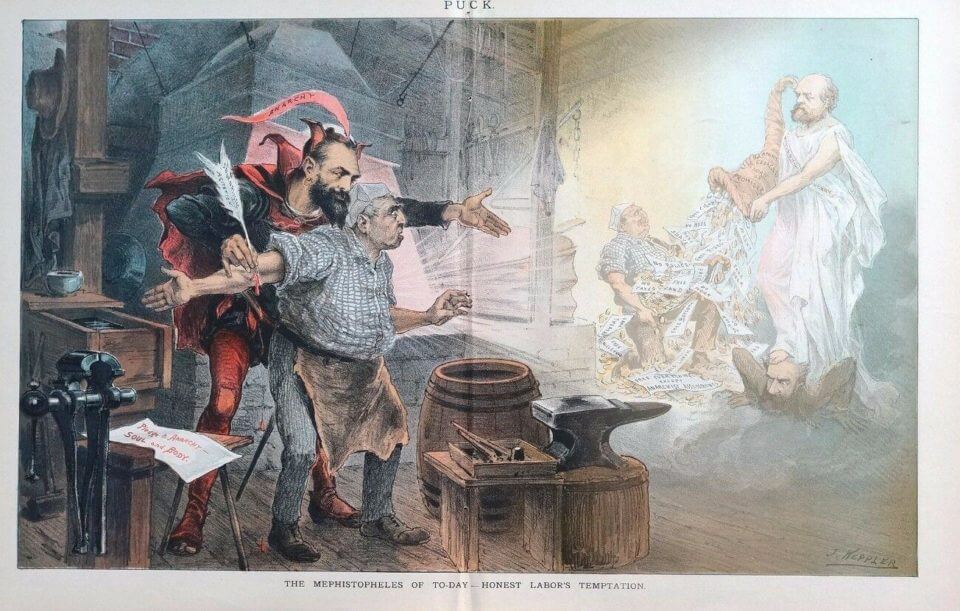
(Puck magazine, Oct 20, 1886 – Henry George, Mephistopheles of Today – Honest Labor’s Temptation)
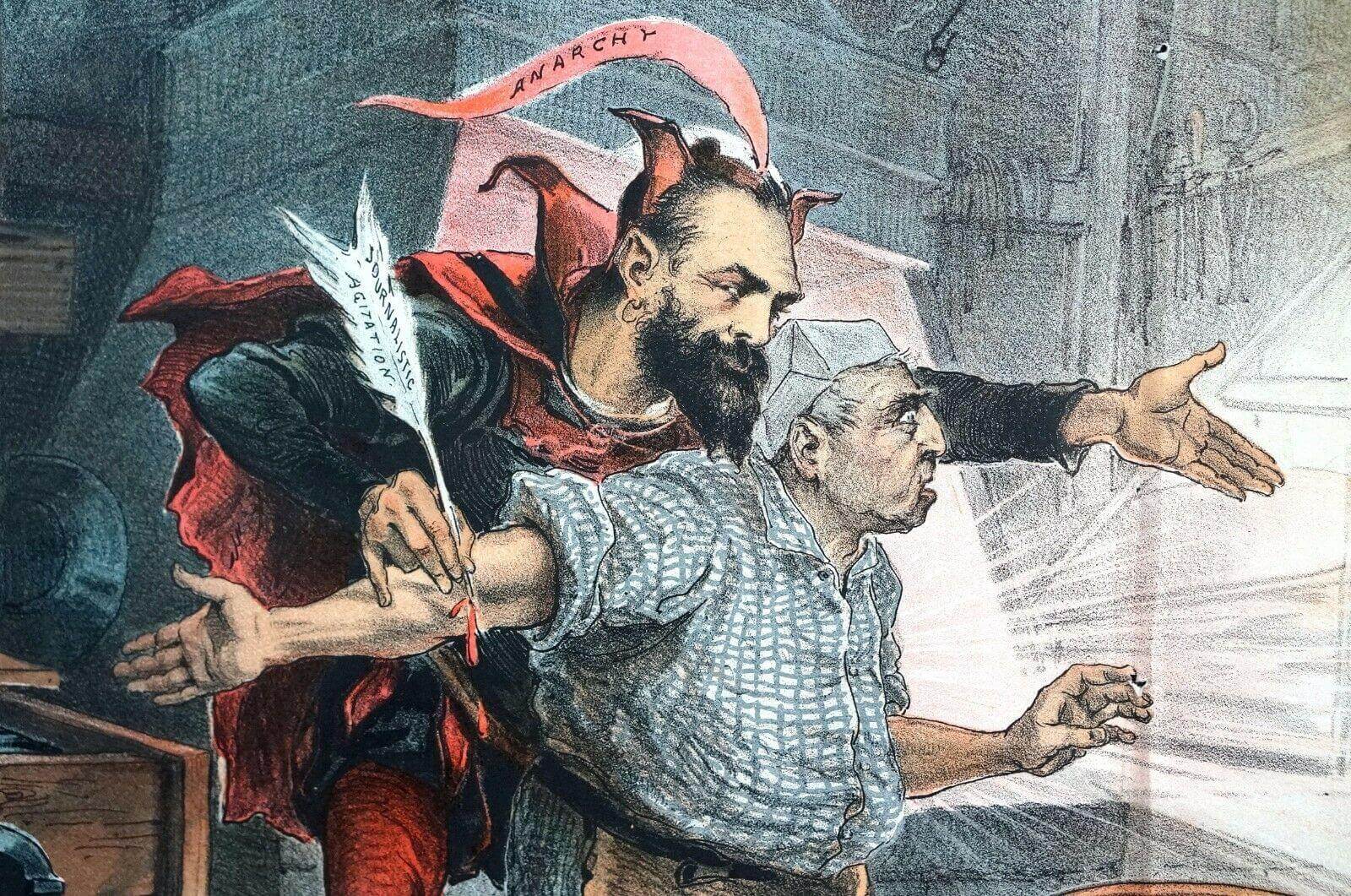
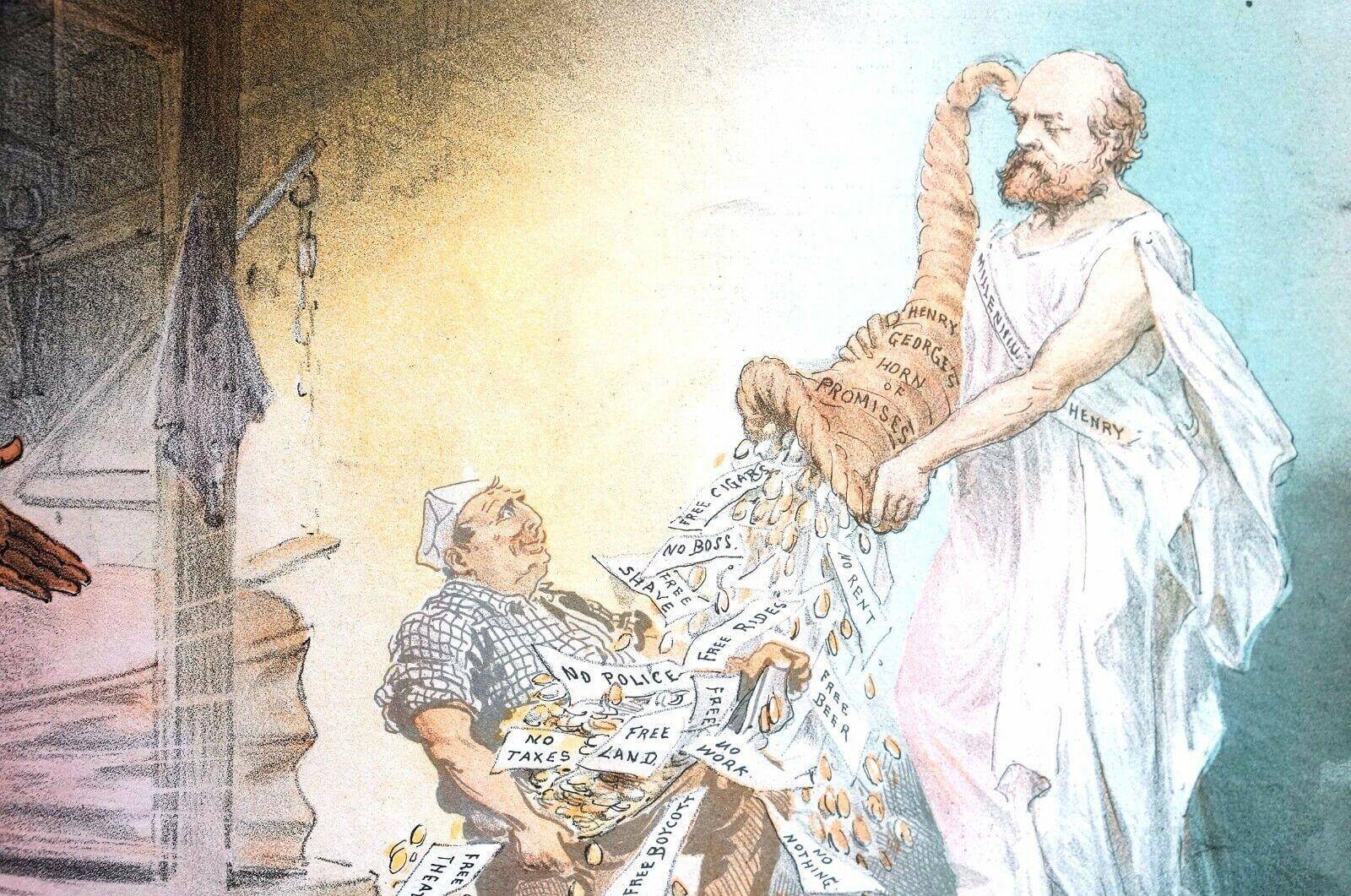
“Georgism dissolves socialism; it is pro-worker and pro-capital at the same time. This is impossible for the socialist who believes to his core that labor can only win if capital loses.”


Preface

“When Karl Marx died in 1883, there must have been dozens of Englishmen who had argued about Henry George for every one who had even heard of the Prussian Socialist.” —Roy Douglas, Land, People and Politics—The Land Question in the United Kingdom 1878-1952 (1976) (p48)

“When I was swept into the great Socialist revival of 1883, I found that five sixths of those who were swept in with me had been converted by Henry George.”—George Bernard Shaw, Tribute to the Work of Henry George (1904)

“Little as Henry George intended it, there can be no doubt that it was the enormous circulation of his Progress and Poverty which gave the touch that caused all seething influence to crystallize into a popular Socialist Movement.”—Sidney Webb, Socialism in England (1889)

“George’s book, indeed, had a more dramatic effect upon British political thought than any work published during the last century. It dominated the minds of the Radical wing of the Liberal Party just as it galvanized into action those who had been groping towards a socialist commonwealth. It even achieved the undoubted feat of making Karl Marx a popular author, for chapters of Das Kapital were published and read as sequels to Progress and Poverty.” —H. Russell Tiltman, J. Ramsay Macdonald (1929)

Introduction

Henry George (1839-1897) is most famous today for having been forgotten. As a journalist in San Francisco, he had witnessed the ending of the American frontier and had long puzzled over why unemployment and poverty, as if by some unknown law, occurred everywhere. He had experienced both, and wrote about the time he’d almost attempted robbery to feed his young family. He went on to become the leader of a movement and toured and spoke across continents.

His signature work, Progress and Poverty: An Inquiry into the Cause of Industrial Depressions and of Increase of Want with Increase of Wealth: The Remedy (1879) started to sell in very large numbers in 1881. Karl Marx received several copies, one from a regular correspondent in America.


Marx wrote to Friedrich Adolph Sorge In Hoboken [London,] 20 June, 1881:

Before your copy of Henry George arrived I had already received two others, one from Swinton and one from Willard Brown; I therefore gave one to Engels and one to Lafargue. Today I must confine myself to a very brief formulation of my opinion of the book. Theoretically the man is utterly backward! … His fundamental dogma is that everything would be all right if ground rent were paid to the state. (You will find payment of this kind among the transitional measures included in The Communist Manifesto too.)

When reading Progress and Poverty, Marx was faced with the charge that he had mistaken a symptom for the disease. While Marx claimed that Capital exploits Labor, George argued that Monopoly—land monopoly—exploits both Labor and Capital.

The outcry against “Capital” on the part of financed labour advocates tends to disguise an older and more formidable enemy of Labou …a system which is in reality the parent of capitalism and all its works and pomps. The capitalist is the objective agency whereby the worker is made to surrender to profit what a just system of wealth distribution would award his labour, but the efficient cause of this underpaid sweat and toil is found in the laws which enable an idle interest to tax both capital and labour.

—Michael Davitt, The Single Tax, Vol 1 No. 1 June 1894

George’s interpretation was phenomenally popular. It penetrated down into the body politic. It explained working class poverty and unemployment, as well as “landlordism” and the resultant land wars in Ireland, Scotland, and elsewhere. It declared that the project to end slavery was not complete: chattel slavery had been abolished, but industrial slavery remained. George made frequent speaking tours and left in his wake scores of Land Reform societies and Single Tax clubs. His proposals radically influenced both Labor and Liberal politics at local and national level in many countries, especially in the United States and Great Britain.

It’s little wonder that Marx was irked. “George … has the repulsive presumption and arrogance which is displayed by all panacea-mongers without exception,” Marx wrote.

It has to be said that Marx was absolutely right. The Single Tax thesis does claim that, “Everything would be alright if ground rent were paid to the state.” It is an astonishing claim, facile on the surface, a panacea: that poverty, inequality, and unemployment are all caused by a tax system fatally incompatible with capitalism and all fixable by doing no more than modernizing that system.

Some captious critics… damn Geofiscalism as a “panacea.” The word betrays a curiously warped mindset: who would damn a solution for the very reason that it is a solution?

—Mason Gaffney, Answer to Futilitarians (1998)

Geofiscal reform would substitute all existing taxes with a Land Value Tax (LVT). This would target the rent of land i.e. that portion of land’s value that does not arise from the labor of the owner. It falls into two categories, natural resources (such as the value of crude oil) and location value (People, of course, pay to live in desirable places; a plot in New York City has a different market value, a higher rent, than one in say, Trenton).

For Marx, land had no special theoretical place; it was one form of capital, a means of production. For George, following classical economics, land was distinct from labor and capital and of equal importance. Land is not capital because it cannot be manufactured; it has no production cost. Land is in fixed supply, vulnerable to monopoly. Land is, in fact, a precondition of labor and capital. We must all “monopolize” a certain amount of land in order to exist. Demand for land is guaranteed; it is a captive market, and we all bid for land. You cannot say these things about capital.

Land monopoly is thus, according to George, a very significant thing. The landowner, as land monopolist, knowing that both capital and labour must bid for land, will always have the power to cream off the wealth they produce, leaving just enough to keep them bidding. The wealth that they generate has the effect of bidding up land values; successful economies have high land values. This effect can be seen everywhere today. Monopoly, not capital is the cause of unemployment, poverty and inequality, and monopoly on land is, by far, the largest monopoly. The land market (so rarely discussed) drives the economy; the boom bust cycle is the land market cycle.

Modern capitalism, as we interpret it, failed to develop along sound and normal lines owing to a very simple reason. This was the failure, in post-feudal times, to collect land values for revenue and the consequent creation of a population permanently unable to buy the wealth it produced. …

All values in the long run accrue as rent and although the superstructure of modern capitalism conceals the fact, vast accumulations of finance capital depend finally on land values. … What the Marxists call surplus value … is an effect of land values accruing privately.

—Henry George and Karl Marx, a talk given by Frank McEachran (1936)

How then, does Marx answer this? In the same letter, after listing some of the precursors to George, he writes:

All these “socialists” … have this much in common that they leave wage labour and therefore capitalist production in existence and try to bamboozle themselves or the world into believing that if ground rent were transformed into a state tax all the evils of capitalist production would disappear of themselves. …

The whole thing is therefore simply an attempt, decked out with socialism, to save capitalist domination and indeed to establish it afresh on an even wider basis than its present one. …

There is no refutation. For Marx, H. George was simply ‘the capitalist’s last ditch.’

… he ought to have put the question to himself in just the opposite way: How did it happen that in the United States, where, relatively … the land was accessible to the great mass of the people, … capitalist economy and the corresponding enslavement of the working class have developed more rapidly and shamelessly than in any other country!

The American economy is modeled on the English system of land ownership—i.e. land value is privatized and untaxed. In the United States, the advance of that system was greatly accelerated because there were no institutions, no established commons, i.e. insufficient population to resist the forces of acquisition. (A.J. Nock’s Our Enemy the State contains a fascinating “Geoist” chapter on the American revolution as the contest to control the economic rent of the new territories.)

To be fair, Marx was aging and probably ill at this time. Is there a more substantive Marxist or socialist critique of Georgism elsewhere? Playwright and Fabian socialist George Bernard Shaw was drawn into politics after hearing George speak in London. Why did he eventually reject Georgism?

If we outgrew Progress and Poverty in many respects, so did he himself too; and it is, perhaps, just as well that he did not know too much when he made his great campaign here; for the complexity of the problem would have overwhelmed him if he had realized it … An Englishman grows up to think that the ugliness of Manchester and the slums of Liverpool have existed since the beginning of the world. George knew that such things grow up like mushrooms, and can be cleared away easily enough when people come to understand what they are looking at and mean business. His genius enabled him to understand what he looked at better than most men; but he was undoubtedly helped by what had happened within his own experience in San Francisco as he could never have been helped had he been born in Lancashire …

—G.B. Shaw, Tribute to the Work of Henry George (1904)


Note that just two years later a Liberal government, propelled by a popular land reform movement—the same one in fact, continued from the 1880’s—and led by David Lloyd George and Winston Churchill, attempted to implement George’s land value tax. It was quite a fight. Shaw underestimated the citizens of Manchester and Liverpool and perfectly illustrates what Roger Scruton calls the, “relentless negativity of the left.”

In another piece on George, Shaw descends into metaphor and minimization:

… in short, of the entire real content of his formula, he seemed to have forgotten everything. What is wrong in society, he rightly argued, had its origin in private appropriation of land. Abolish private appropriation of land, he proceeded, and everything will come right again. This is exactly the reasoning of the peasant who believes that the infallible cure for hydrophobia is shooting the dog…

[The] Single tax levied by Unsocial Democracy is about as possible as watering the streets without wetting them …

Even a dialectical victory for him can only, in the face of the facts, be a reductio ad absurdum of his proposition… Mr. George’s calculation is a piece of sheer economic naiveté; and a very little study of the situation would have shown him that we are too far gone in democracy to make it possible to extend taxation without a corresponding extension of State organization of labour.

—G.B. Shaw, The Hyndman-George Debate, International Review, August 1889

This is no different to Marx. George’s theory is accepted as sound but is somehow trivial and redundant: the Single Tax would work but it will “always be stopped” by “the powers that be” etc.

The point is this: Georgism is a threat to the very basis of socialism. Georgism dissolves socialism; it is pro-worker and pro-capital at the same time. This is impossible for the socialist who believes to his core that labor can only win if capital loses.

George actually felt bound to attack the Socialism he himself had created; and the moment the antagonism was declared, and to be a Henry Georgite meant to be an anti-Socialist, some of the Socialists whom he had converted became ashamed of their origin, and concealed it; while others, including myself, had to fight hard against the Single Tax propaganda.

—G.B. Shaw, Tribute to the Work of Henry George

In 1887, the United Labour Party, with George its leader, broke with its socialist members. No doubt there were several reasons for this, one being the American-individualist convictions of Georgites, another, the need to counter the unceasing socialist/communist/anarchist smear campaign. But for George the fundamental theoretical incompatibilities with socialism could not be ignored. In his newspaper The Standard, he laid out his critique of “Marxian or German” socialism:

This indisposition or inability to analyse, to trace things to their root, and distinguish between the primary and the secondary, the essential and the accidental, is the vice of the whole socialistic theory. The socialist sees that under the conditions that exist today in civilized societies, the laborer does not get the fair reward of his labor, and that the tendency of the competition between laborers is, despite the augmentation of productive power, to force wages to the minimum of a bare livelihood. But, instead of going further and asking the reason of this, he assumes it to be inherent in the “wage system”, and the natural result of free competition. As the only remedy for these evils, he would put an end to the “wage system,” and abolish competition by having the ownership of all capital (including land) assumed by the state. …

The utter impracticability and essential childishness of such a scheme as this is largely disguised to the believers in socialism by a curious pretense of scientific research and generalization, and much reference to the doctrine of evolution. …

Ignoring the essential distinction between land and capital, regarding land as but one of the means of production, of no more importance than steam engines or power looms, and looking to the direction and employment of labor by the state as the only mode of securing an equitable distribution of wealth, socialists do not appreciate the wide and far-reaching consequences which would flow from the simple reform [the Single Tax] that would put all men upon an equality with regard to natural opportunities, and which by appropriating its natural revenue for the support of the state would make possible the freeing of production from all the imposts and restrictions that now hamper it. …


Frederick Engels, the coadjutor of Marx in founding this German school of socialism, has recently written a tract on the labor movement in America as a preface to a new edition of his “Condition of the Working Classes in England in 1884”:

“What the socialists demand implies a total revolution of the whole system of social production; what Henry George demands leaves the present mode of social production untouched.”

The difference is, in fact, even greater than Herr Engels represents it. We do not propose any such violent and radical change as would be involved in the formal resumption of land by society at large, and the letting of it out to individuals. We propose to leave land in individual possession as now, merely taking, in the form of a tax, as nearly as may be, the equivalent of that value which attaches to land by reason of the growth and advance of society. …

This simple yet radical reform would do away with all the injustice which socialists see in the present conditions of society, and would open the way to all the real good that they can picture in their childish scheme of making, the state the universal capitalist, employer, merchant, and shopkeeper. …

Let the socialists come with us, and they will go faster and further in this direction than they can go alone; and when we stop they can, if they choose, try to keep on. But if they must persist in bringing to the front their schemes for making the state everything and the individual nothing, let them maintain their socialistic labor party and leave us to fight our own way. …

—Henry George. Socialism And The New Party, The Standard (August 6 1887)

What would the twentieth century have looked like had the Marxists become Georgists? And why was the Prophet of San Francisco forgotten?.

Darren Iversen is a productivity specialist in England.
Posted by Sejin at June 30, 2021
Email ThisBlogThis!Share to XShare to FacebookShare to Pinterest
Labels: Roger Scruton

marxism - Henry George vs. Karl Marx - Philosophy Stack Exchange

marxism - Henry George vs. Karl Marx - Philosophy Stack Exchange
Henry George vs. Karl Marx
Asked 1 year, 9 months ago
Active 1 year, 8 months ago
Viewed 569 times

5


I recently came across some of Marx's critique of Georgism, and was wondering where else the theories of these two thinkers conflict. Georgism to me certainly seems to have a slight materialist bent to it, along with the desire to prevent alienation of labour, and thus I wonder whence came Marx's main oppositions to George.

This was the criticism I read:

Karl Marx considered the Single Tax platform as a regression from the transition to communism and referred to Georgism as "Capitalism’s last ditch".Marx argued that, "The whole thing is ... simply an attempt, decked out with socialism, to save capitalist domination and indeed to establish it afresh on an even wider basis than its present one." Marx also criticized the way land value tax theory emphasizes the value of land, arguing that, "His fundamental dogma is that everything would be all right if ground rent were paid to the state."

If anybody could enlighten me on the philosophical incompatibilities between these two men, I would greatly appreciate it!

marxism
materialism
Share
Improve this question
Follow
edited Oct 4 '19 at 9:06
asked Sep 30 '19 at 11:09

october
11133 bronze badges
Do you have the source for the quote? – Mark Andrews Oct 1 '19 at 5:31
1
Basically we have an economist and reformer compared to an economist and philosopher (the Hegelian background of Marx is fundamental to understand its thought) and a revoulutionary (also if only an harmchair one). – Mauro ALLEGRANZA Oct 1 '19 at 8:20 
i fwiw think 'reformer' is key here. what happened to the stackexchange user gordon? he would probably be great on this. fwiw, i've more or less given up on 'alienation': no-one really cares! – user38026 Oct 1 '19 at 10:30

@MarkAndrews three sources here: Marshall, Alfred, Principles of Economics. 1920. Library of Economics and Liberty. 

Andelson, Robert V. "Henry George and The Reconstruction Of Capitalism". Retrieved 14 January 2014. Marx, Karl. "Letters: Marx-Engels Correspondence 1881". www.marxists.org. Retrieved 9 October 2017. – october Oct 2 '19 at 1:20 
@MauroALLEGRANZA: Can he really be an armchair revolutionary if he can harm chairs? ;). – Mozibur Ullah Oct 2 '19 at 6:37
Add a comment
1 Answer

5

Welcome, October !

Some contrasts between Marx and George are drawn out in an article by John Haynes Holmes. Holmes' plain and sometimes undiscerning lack of sympathy for Marx and extolling of George, and his over-use of exclamation marks, do not prevent some helpful points from being made:

It is unlikely, had Karl Marx and Henry George ever met, or ever studied profoundly one another's thought, that they would have agreed even on small matters. It is true that they were stirred by the same sentiment, a horror of poverty; that they were fixed in the same conviction, that poverty is a product of social injustice and therefore unnecessary; that they were dedicated to the same resolve, to correct injustice and abolish poverty. But in their understanding of the problem and their remedy of its evil, they were as far apart as the two poles. 
Marx with his Socialism and George with his Single Tax moved in precisely opposite directions. 
Rivals for two generations in the same great field of economic and political reform, they were molded as though by destiny to fundamental differences. 

John Haynes Holmes, 'Henry George and Karl Marx: A Plutarchian Experiment', The American Journal of Economics and Sociology, Vol. 6, No. 2, Essays in Honor of Francis Neilson, Litt. D., On the Occasion of His Eightieth Birthday (Jan., 1947), pp. 159-167: 160.)

...

Industry and agriculture

Holmes points out a crucial difference of background between Marx and George. George belonged to a still predominantly agricultural America, Marx to a rapidly industrialising Europe :

In this contrast of scene and setting, we discover a central contrast between these two men. Marx saw clearly the menace of capitalistic monopoly; George saw as clearly the menace of land monopoly. Marx focused his attention primarily on the factory, and only incidentally and accidentally on the land on which the factory was built and from which it drew its substance;2 George focused his attention on the land, and only incidentally and accidentally on the factory which stood upon the land. Marx never penetrated to the land as the ultimate source of all wealth; George did not follow through to the factory, and the whole system of which it was the baleful symbol, as a supplementary and very potent instrument of exploitation.

Marx was not fundamental, as George was fundamental. Henry George was really getting down to the bottom of things! But the Single Tax will never reach to the top of things, never compass the whole area of social ill, until it has grappled at first hand not only with land ownership, but with monopoly control of production, finance capitalism, international cartels, and imperialistic wars. Our civilization, as it has developed through a hundred years, is neither agricultural nor industrial; it is both. Therefore must any reform, adequate to save our civilization, solve the problem of land and machine together. There is something more than chance in the dramatic circumstance that in the same age, and in the same way, two books captured the imagination of the American people-Henry George's "Progress and Poverty" (1879), and Edward Bellamy's "Looking Back- ward" (1888). (Holmes: 162-3.)

Materialism and God

ANOTHER CONTRAST. Karl Marx was a materialist, and based his whole philosophy upon the hard and fast doctrine of economic determinism, or "the materialistic conception of history." This attitude of mind was in part a reflex from Marx's strangely perverted hostility to religion, and in part also the result of the philosophical materialism which was rampant in the thought of Europe in Marx's formative years. It led to a new interpretation of the historical process which is of the greatest value. No one can write or read the story of mankind in the traditional pre-Marxian sense ever again! But it involved also a complete neglect of the moral and spiritual forces which indubitably play an important, perhaps the decisive role in the drama of human events, and thus persuaded Marx to surrender history to the gaunt and grim necessity of a mechanistic fatalism, and to project collapse or revolution as the denouement of our age. It contributed as well to his scorn for men, and his repudiation of democracy as the means of social advance. 

Henry George, on the other hand, was a religious man. Reared under the training of a religious family, he preserved to the end of his days, and in all his activities, an intense and moving religious consciousness. This did not mean any particular devotion to the rites and ceremonies of the church- on the contrary, his attacks upon the church for its failure to vindicate the law of righteousness among men were as vigorous as they were unanswerable. Neither did his religion take any special forms of pietistic practice or theological belief. With George, as with all great prophets, religion was a rule of life and an utter dedication to mankind. It was a recognition of and a reverence for God's will, a resolute determination that this will shall be done upon the earth, and a high sense of responsibility that this determination should not fail. "The religious spirit," writes Dr. Geiger,3 "was to him always the crusading spirit.... He led the attack upon the land monopoly in almost the spirit of a holy war; his economic postulates were the sacraments of a religion that was to make all men brothers and God a father whose ways could now be understood." I know of nothing more touching, in all the range of our American literature, than that famous passage in "Progress and Poverty" where George seems to have completed his great argument for the Single Tax. Through hundreds of pages he has made his way through the economics of rent, wages, interest, taxation, and at last has come to his conclusions. "My task is done," he writes. But it is not done! The pen sweeps on. "The thought still mounts. The problems we have been considering lead into a problem higher and deeper still." And George soars, in these last pages, like an aeroplane into the stratosphere, into a discussion of the meaning of life as "absolutely and inevitably bound by death." "Progress and Poverty" is the only treatise on political economy I know which ends with a statement of faith in the immortality of the soul. In this, George found assurance of those "eternal laws" which must at last bring vindication to the cause of truth.

It was this religious aspect of George's nature which enabled him to bring a solution to the baffling problem of a society which produces poverty in exact ratio to its production of wealth. It cannot be made too plain that Karl Marx, for all his exhaustive and exhausting examination of data and analysis of trends, had no remedy for a sick world. He simply awaited what he regarded -as the inevitable catastrophe which must overtake a capitalistic civilization, and tried to prepare the workers to take over the ruins, to become the heirs of chaos, and thus, through seizure of power amid disaster, to control the future in their own interest. Henry George saw no need of catastrophe. He had a remedy for the sickness of this world. He had a program which would save it in time, and thus prevent the calamity of the passing of one more civilization, which he saw as clearly and terribly as his Socialistic rival. What wonder that, when he had written the last page of his masterpiece, "in the dead of night, when (he) was entirely alone, (he) fell on (his) knees and wept like a child. The rest was in the Master's hands." This was a feeling, he wrote, which never left him. "It has been to me a religion, strong and deep." (Holmes: 164-5.)

The tried and the untried

ONE FINAL CONTRAST between these two men-and this not in their characters but their fates! 

The Marxian philosophy has had a chance to prove itself. "In the time of the breaking of nations," at the weakest point of the capitalistic-imperialistic system which was Russia, came revolution. The Bolsheviki, devout Marxians, were able at the critical moment in 1917 to seize power, and to use it to rear a Socialistic, or rather a collectivistic society. This society has now been in existence for thirty years, and has exercised supreme control during this period over a nation of 180,000,000 souls. It has been able to do exactly what it wanted to, or, if thwarted or opposed, has hacked its way ruthlessly toward its goal. Everything has been changed from Tsarism to Marxism, yet everything remains strangely the same. Poverty still prevails, tyranny still rules, exploitation still is rife. The revolution, as a revolution, has failed-and all for the lack of what Karl Marx never recognized- namely, liberty! The Soviets have sacrificed liberty, we are told, for security- somewhat, perhaps, as the dog on the bridge over the brook dropped his jawful of meat, to grab the other and larger piece of meat he saw reflected in the stream. There is no liberty in the new Russia-and there is no security. For the simple reason that liberty is the only real security! We are safe-as safe as we can be on this uncertain globe, and amid the manias of men!-only while we are free. It is because the Russians are not free that they are the most suspicious, apprehensive, and fearful people in the world today, and have failed thus to win their goal. Marxism has been tried, and for lack of liberty has been found wanting.

Georgism has not been tried. Nor would George want it tried by any imposition of authority. Liberty is essential to its whole meaning. George would free the land that man may himself be truly free. The world awaits therefore not an abrogation, nor even abridgement, but rather an ultimate extension of democracy. No sudden, least of all violent, revolution will accomplish this end; only the slow fulfilment of the truth, like the rising of the tide. (Holmes: 165-6.)

edited Sep 30 '19 at 14:23
answered Sep 30 '19 at 14:16

Geoffrey Thomas♦
34.7k44 gold badges3131 silver badges132132 bronze badges
Add a comment
Posted by Sejin at June 30, 2021
Email ThisBlogThis!Share to XShare to FacebookShare to Pinterest

[Friends of Korea] What if I hadn't served in Peace Corps Korea?

[Friends of Korea] What if I hadn't served in Peace Corps Korea?[Friends of Korea] What if I hadn't served in Peace Corps Korea?
Posted : 2021-06-29 13:40
Updated : 2021-06-29 17:53


Greg Engle, right, at his landlord's 60th birthday party, or "hwangab," in Hongcheon in 1980, after drinking "way too much apple moonshine." / Courtesy of Greg Engle

By Greg Engle

I was a Peace Corps Tuberculosis Control Volunteer in 1980 and 1981, right up until the Peace Corps closed its program in Korea after 15 years.


Greg Engle's TB control office at the Hongcheon health center, 1980. / Courtesy of Greg Engle

Following 10 weeks of language, cultural and job training at the Sejong Hotel in Chuncheon, my wife Maureen and I were sent to Hongcheon, Gangwon Province. I was a tuberculosis control worker, and Maureen worked in the maternal child health ward of the county health center.

Our ability to speak Korean was only slightly better than Koreans' ability to understand us or believe that an American could speak or even attempt to speak Korean. One day, while registering a halmoni (grandmother) as a TB patient, I asked her a series of basic questions, with her daughter serving as interpreter, although both of us at least thought we were speaking Korean. The halmoni kept tugging on her daughter's skirt. Finally the daughter asked her mother what she wanted, and the old woman asked, "Where did you learn to speak English?"

After a year of living in rural Korea I came away with three strong impressions: First, Koreans are extremely hospitable to Americans. They taught me it was better accepting their sincere hospitality than resisting it. Americans value being independent and not imposing on other people, but cross-culturally, that's not an approach that generates trust and friendship.

Greg Engle's musical tribute to Peace Corps Korea


Second, Koreans are very hardworking. Our health center was across the street from a brickyard. Each day, out my office window, I could see the young and old making bricks by hand. Outside our rented room, a new house was under construction, and women as old as my grandmother were carrying heavy loads of bricks on large wooden frames up to the second story of the new house, day in and day out, tirelessly. The basis of Korea's economic miracle, I thought, was those old women making and carrying bricks. They inspired me whenever my energy and resolve were flagging.

The third factor that really impressed me was the determination of Korean parents to get their children the best education possible.
The students were dutifully responsive to their parents' efforts, hopes and wishes, studying hard to achieve their educational goals. They were hungry to learn English, and naturally, an American seemed to them like a prime opportunity. Not a day went by when at least one student ― often many more ― asked me if I would "English conversation" them. I wish Americans and students around the world were so determined and insightful. When giving remarks on development around Africa, I have emphasized the absolute importance of education in the development process and pointed to Korea as a glowing example of its success.


Greg Engle, right, visits the Korean Folk Village in Icheon in 1981 with Baek Moo-hyun, second from left, a doctor at the health center where Engle worked who now runs a plastic surgery clinic in Seoul, and Engle's wife Maureen, second from right. / Courtesy of Greg Engle

I joined the U.S. Foreign Service after leaving the Peace Corps and Korea. As a diplomat, I often thought about Korea and how it changed me, positively influencing the way I represented the United States. Sometimes I wondered what my life and diplomatic service would have been like had I not lived and worked in a Korean community.

I would not have been as effective and informed as a diplomat. I would have lacked both a working-level knowledge and awareness of the development process, beyond the confines of a bustling and prosperous capital city. In the early 1980s, Seoul was not like the rural areas only miles away, and many people in Seoul were not personally aware of the differences. This was also true in many African countries.

If I hadn't continued to watch Korea's economic success after I left, I would have had less faith that a country could develop so quickly and extensively. In many developing countries, citizens and foreign observers ― including development workers ― sometimes became discouraged with the rate of progress and started to lose hope. With greater optimism, I could direct their attention to Korea's development and the obstacles it surmounted as it became a global economic powerhouse. Many local experts were well aware of Korea's impressive development and the role of education in its success.

Ethiopians told me Korea was their development model and were prioritizing education as a national goal. When I was country director in Ethiopia, Korea had its own "Peace Corps" (KOICA) there. I was proud that American Peace Corps Volunteers and KOICA Volunteers designed and implemented joint projects. We were still working and growing together, as we were when I was a Peace Corps Volunteer in Korea.

Without my Korea experience, I would not have had a clear impression of what "hard work" meant in the development process. In my experience, Korea harnessed that cultural attribute more effectively in the cause of development. I perceived less of a "dependency syndrome" and the steady refrain, "You have to do something for us." If I hadn't served in Korea, I might have fallen victim to this way of thinking that could stand in the way of these countries' viable, stable development.

Some of the ways Korea affected and shaped me were more subtle, but no less profound. Koreans' veneration for older people was explicit. How they cared for older relatives was admirable and made an impression on me. After completing my Peace Corps service, I lived across the street from a retirement home. Often I would see elderly parents walk out of the building with their adult children and wave as their children drove away. It was sad to see and was something I might not have noticed had I not lived among Koreans.


Greg Engle and his wife Maureen, right, meet with Dr. Baek Moo-hyun and his wife Kim Mi-sun, left, during the 2018 U.S. Peace Corps Volunteers Revisit to Korea program. / Courtesy of Greg Engle
---
For many Peace Corps Volunteers, these experiences never leave us. It was an immense privilege to live in Korea and one that changed me and, I hope, made me a better person and a more effective diplomat.


Retired Ambassador Greg Engle teaches part time at the University of Texas at Austin and is on the board of directors of Friends of Korea. He served a Peace Corps Volunteer in Hongcheon, Gangwon Province, from 1980 to 1981. He is an award-winning singer-songwriter. Visit englemusic.com or friendsofkorea.net for more information.
Posted by Sejin at June 30, 2021
Email ThisBlogThis!Share to XShare to FacebookShare to Pinterest
Labels: volunteer
Newer Posts Older Posts Home
Subscribe to: Comments (Atom)

Directory Page

  • Home

Blog Archive

  • ▼  2025 (742)
    • ▼  December (61)
      • 人生の短さについて 他2篇 (古典新訳文庫) | セネカ, 中澤 務 |本 | 通販 | Amazon
      • 진리란 무엇인가 | 이기동 | 알라딘 2015
      • 하늘의 뜻을 묻다 | 이기동 | 알라딘 2005
      • The Art of Loving by Erich Fromm
      • 이신(李信) “깨달음이 있는 신앙” < 당당뉴스 2023
      • 김현진 [나의 공동체운동 이야기 17] - 브루더호프 공동체 탐방 [1-17]
      • Reader, Come Home: The Reading Brain in a Digital ...
      • How to Understand What You Read: 17 Easy Tips & St...
      • How to Read Effectively: Boost Focus, Speed & Rete...
      • How We Read Now: Strategic Choices for Print, Scre...
      • changing reading habits.
      • Proust and the Squid: The Story and Science of the...
      • 황금률 | 권수경 | 알라딘2025
      • Jim’s Essays – Jim and Nancy Forest
      • An Orthodox Resource Book on War, Peace and Nation...
      • What to do about Confucianism - The Korea Times
      • This is What a 'Real' Yoga Body Looks Like. | elep...
      • Energy medicine - Wikipedia
      • 에너지의학 - 위키백과
      • List of topics characterized as pseudoscience - Wi...
      • Vibrational Medicine: Subtle-Energy Therapies : ...
      • 이병철 죽음 공부를 마치고 - 파동의학, バイブレーショナル・メディスン
      • 思想史家が読む論語―일본의 논어 읽기 - 배움을 구하다 | 子安 宣邦고야스 노부쿠니
      • 疼くひと (単行本) | 松井 久子 |本 | 通販 | Amazon
      • 조현 이남곡 인터뷰 5
      • 공자가 말한 ‘서(恕)’란 무엇인가? ― 인(仁)의 실천 원리로서의 서 - kk88.kr
      • 임영웅, 트로트 가수 맞냐고? 가슴 꽂히는 가사 보면 안다 | 중앙일보
      • 정동 (Affect) (심리학) - 위키백과
      • 조현 이남곡 인터뷰 3-4 요약 및 평론, 3-4 비교
      • 조현 이남곡 인터뷰 4 20251206
      • [[Wayfaring: A Guide to Guidance - Larry Lynn Sou...
      • bringing hospitality to education
      • A principal's Brief But Spectacular take on bringi...
      • 조현 이남곡 인터뷰 3 20251206
      • 조현 이남곡 인터뷰 2 20251206
      • 조현 이남곡 인터뷰 1 20251206
      • 남민전 이남곡 - Google 검색
      • 논어를 연찬하다 | 이남곡 | 2025
      • 논어, 삶에서 실천하는 고전의 지혜 | 이남곡 | 2017
      • 진보를 연찬하다 | 이남곡 | 2009
      • 합작과 연정은 시대정신이다 | 이남곡 | 2016
      • [Sejin님의 서재] : 알라딘 이남곡
      • Literary critics reveal their favorite books of 2025
      • 목민심서 한번 읽어 보지 않겠는가 | 우리학교 사회 읽는 시간 | 임승수 | 알라딘
      • 나의 무엇이 책이 되는가 | 임승수 | 알라딘
      • 새로운 끝으로 - 최원영 이야기 2025
      • About Todd Perelmuter
      • [전도서 9:9] 허무하고 짧고 덧없는 인생과 세상이므로...
      • [[The Road to Emmaus: Pilgrimage as a Way of Life ...
      • The Road to Emmaus: Pilgrimage as a Way of Life – ...
      • 두 개의 논어 | 한형조 | 알라딘
      • Books by Jim Forest | Goodreads
      • [[Writing Straight with Crooked Lines: A Memoir: F...
      • [[Loving Our Enemies: Forest, Jim: 2014
      • [[제임스 H. 포레스트, [원수를 친구로 만들기> (1988)
      • Internet Archive: Forest, Jim
      • The Long Loneliness: The Autobiography of Dorothy ...
      • All Is Grace: A Biography of Dorothy Day - 2011 - ...
      • Dorothy Day | Britannica
      • Dorothy Day - Wikipedia
      • 이렇게 왔다가 이렇게 갈 수는 없다 | 아지즈 네신 | Aziz Nesin
    • ►  November (15)
    • ►  October (46)
    • ►  September (116)
    • ►  August (94)
    • ►  July (139)
    • ►  June (61)
    • ►  May (30)
    • ►  April (17)
    • ►  March (83)
    • ►  February (68)
    • ►  January (12)
  • ►  2024 (1394)
    • ►  December (21)
    • ►  November (40)
    • ►  October (47)
    • ►  September (82)
    • ►  August (105)
    • ►  July (93)
    • ►  June (46)
    • ►  May (76)
    • ►  April (191)
    • ►  March (241)
    • ►  February (245)
    • ►  January (207)
  • ►  2023 (4088)
    • ►  December (154)
    • ►  November (141)
    • ►  October (313)
    • ►  September (371)
    • ►  August (552)
    • ►  July (584)
    • ►  June (523)
    • ►  May (480)
    • ►  April (341)
    • ►  March (180)
    • ►  February (212)
    • ►  January (237)
  • ►  2022 (3375)
    • ►  December (192)
    • ►  November (159)
    • ►  October (154)
    • ►  September (162)
    • ►  August (358)
    • ►  July (445)
    • ►  June (517)
    • ►  May (560)
    • ►  April (327)
    • ►  March (204)
    • ►  February (78)
    • ►  January (219)
  • ►  2021 (3270)
    • ►  December (154)
    • ►  November (223)
    • ►  October (374)
    • ►  September (316)
    • ►  August (252)
    • ►  July (286)
    • ►  June (272)
    • ►  May (302)
    • ►  April (338)
    • ►  March (316)
    • ►  February (212)
    • ►  January (225)
  • ►  2020 (2422)
    • ►  December (228)
    • ►  November (385)
    • ►  October (417)
    • ►  September (270)
    • ►  August (214)
    • ►  July (71)
    • ►  June (161)
    • ►  May (141)
    • ►  April (98)
    • ►  March (142)
    • ►  February (84)
    • ►  January (211)
  • ►  2019 (1234)
    • ►  December (85)
    • ►  November (8)
    • ►  October (98)
    • ►  September (228)
    • ►  August (50)
    • ►  July (76)
    • ►  June (52)
    • ►  May (55)
    • ►  April (111)
    • ►  March (64)
    • ►  February (152)
    • ►  January (255)
  • ►  2018 (587)
    • ►  December (157)
    • ►  November (28)
    • ►  October (22)
    • ►  September (82)
    • ►  August (59)
    • ►  July (13)
    • ►  June (40)
    • ►  May (53)
    • ►  April (48)
    • ►  March (66)
    • ►  February (18)
    • ►  January (1)
  • ►  2017 (188)
    • ►  December (14)
    • ►  November (19)
    • ►  October (4)
    • ►  September (55)
    • ►  August (11)
    • ►  July (38)
    • ►  June (1)
    • ►  April (16)
    • ►  March (11)
    • ►  February (7)
    • ►  January (12)
  • ►  2016 (987)
    • ►  December (53)
    • ►  November (111)
    • ►  October (267)
    • ►  September (70)
    • ►  August (11)
    • ►  July (41)
    • ►  June (92)
    • ►  May (153)
    • ►  April (123)
    • ►  March (66)
  • ►  2015 (6)
    • ►  August (2)
    • ►  July (3)
    • ►  February (1)
  • ►  2013 (1)
    • ►  October (1)

Search This Blog

Labels

  • Ibn Arabi (4)
  • ??? (1)
  • "Body keeps" (643)
  • "centering prayer" (62)
  • "contemplative life" (53)
  • "de Ropp" (2)
  • "Esoteric Christianity" (27)
  • "holy obedience" (30)
  • "inner chapters" (5)
  • "inner christianity" (4)
  • "Sejin Pak" (13)
  • "Shall We Live" (4)
  • "spiritual care" (33)
  • "spiritual practice" (298)
  • "study bible" (8)
  • "김시천 노자 강의 " (27)
  • "의식과 본질" (262)
  • "일본으로 건너간 연오랑" (5)
  • [Directory (2)
  • [spiritual journey (1)
  • [아직도 가야 할 길> 요약 (5)
  • ** (222)
  • *** (2)
  • 120 (2)
  • A.C. Graham (9)
  • Abhidharma (119)
  • Acupuncture (1)
  • adhidhamma (161)
  • AFSC (100)
  • ageing (55)
  • Ajita (3)
  • Alastair McIntosh (1)
  • Aldous Huxley (102)
  • Amartya Sen (13)
  • Ambedkar (30)
  • American (1)
  • Andrew B. Newberg (1)
  • anger (4)
  • Anil Seth (5)
  • Anne Bancroft (4)
  • Anne Marie Schimmel (16)
  • Anthony Manousos (3)
  • archetype (1)
  • Arthur Versluis (4)
  • Aurobindo (1)
  • Australia (5)
  • Australian soul (1)
  • Australian spirituality (1)
  • AVP (10)
  • Basham (4)
  • Beatrice Tinsley (10)
  • Before (4)
  • before triology (4)
  • Bessel A. van der Kolk (1)
  • Bessel Van Der Kolk (19)
  • Beyond Majority Rule (6)
  • beyul (13)
  • bhagavad gita (39)
  • Bible as literature (14)
  • Bill Devall (11)
  • biography (5)
  • body (2)
  • Body remembers (17)
  • Body Score (9)
  • bodymind (16)
  • Brain (1)
  • Brian Greene (5)
  • Brief History of Everything (8)
  • Buddha (3)
  • Buddhism (3)
  • C. S. Lewis (165)
  • calling (1)
  • Cambridge Companion to Quakerism (5)
  • Camino (1)
  • Care (1)
  • Carl Jung (170)
  • Carl Jung unconscious (65)
  • Cārvāka (2)
  • Change We Must (3)
  • Charlotte Kasl (11)
  • Chi (2)
  • Chikako Ozawa-de Silva (7)
  • Choan-Seng Song (6)
  • Chopra (3)
  • Chris Hedges (1)
  • Christian mysticism (3)
  • Christian pacifism (8)
  • Christian Zen (16)
  • Christianity Made in Japan (15)
  • Christopher Irsherwood (4)
  • Christopher Isherwood (9)
  • Claude Swanson (10)
  • compassion (44)
  • Confucianism (1)
  • contemplative (102)
  • Contemplative Practices (21)
  • cooperative (1)
  • Courage to Teach (1)
  • Course in Miracles (14)
  • Creel H G (10)
  • critics (4)
  • cult (5)
  • Dalai Lama (38)
  • Damasio (26)
  • Daniel Keown (1)
  • Dao (129)
  • Daoism (62)
  • dark matter (4)
  • David Bohm (73)
  • David Karchere (7)
  • David R. Hawkins (16)
  • death (9)
  • Deep Ecology (85)
  • Deepak Chopra (4)
  • deepening (50)
  • Dhammapada (85)
  • Diarmuid O'Murchu (8)
  • DISCIPLINE (3)
  • divine design (13)
  • divine ground (42)
  • Divine Light (1)
  • Doctor Zhivago (8)
  • Doctrine of the Mean (14)
  • Dogen (109)
  • Donald W. McCormick (15)
  • Donna J. Haraway (12)
  • Dorothee Solle (7)
  • Dr Wayne W Dyer (4)
  • dying (1)
  • ecology (2)
  • Ehrenreich (25)
  • Einstein (50)
  • Elton Trueblood (7)
  • emdr (24)
  • Emerson (159)
  • Émile Zola (1)
  • Emissaries (25)
  • Emissaries of Divine Light (2)
  • emotion (1)
  • emotionalism (1)
  • energy (1)
  • Energy medicine (2)
  • Engaged Buddhism (86)
  • Enneagram (11)
  • Enomiya-Lassalle (8)
  • Erwin Schrodinger (9)
  • Eternal Promise (1)
  • Ethics for the new millennium (12)
  • existential Jesus (5)
  • faith (50)
  • Feminism (1)
  • Fenelon (3)
  • fingarette (8)
  • Fiona Gardner (15)
  • Fit (2)
  • Forgiveness (1)
  • Francis S Collins (6)
  • Fusus Al-Hikam (1)
  • Gandhi (29)
  • gardening (1)
  • Garfield (12)
  • Garma Chang (13)
  • Gloriavale (3)
  • God (5)
  • Goddess (1)
  • Goddesses (2)
  • Great Courses (93)
  • Great World Religions (1)
  • Gretchen Rubin (5)
  • Grundtvig (61)
  • Grundtvig2 (3)
  • Gut (2)
  • gut microbiome (23)
  • Hakuin (3)
  • Hans-Georg Moeller (14)
  • happiness chemicals (1)
  • Hari Prasad Shastri (3)
  • Head & Heart Together (311)
  • Headspace (1)
  • healing (2)
  • Healing Touch (2)
  • Health (1)
  • Heinrich (9)
  • Henri Nouwen (22)
  • Heup-young Kim (2)
  • Hew Len (4)
  • Hindu (12)
  • Hinduism (69)
  • History of Christian Thought Tillich (14)
  • Ho’oponopono (4)
  • Hoʻoponopono (11)
  • holy indifference (42)
  • holy spirit (99)
  • Homosexuality (8)
  • how to know god (2)
  • Huayen (102)
  • Humor (5)
  • Huston Smith (86)
  • Huxley (1)
  • Hwa Yen (101)
  • Hwa Yen Buddhism (101)
  • Hwayen (102)
  • Hyun Ju Kim (1)
  • Ibn Al-Arabi (2)
  • Ibn Arabi (133)
  • Identity (1)
  • Ikeda (7)
  • ikigai (32)
  • Ilchi (61)
  • Ilia Delio (11)
  • India (17)
  • Indian (16)
  • Indian Cultural History (4)
  • Indian materialism (2)
  • Indian philosophy (81)
  • Indian philosopy (1)
  • indifference (99)
  • indigeneous (4)
  • Inner light (1)
  • Integral theory (11)
  • integrative (2)
  • Integrative Medicine (2)
  • Interbeing (53)
  • interspirituality (4)
  • Intimate Empire (1)
  • Intro 해설 (2)
  • Ishida Baigan (1)
  • Ishvara (1)
  • Islam (421)
  • Israel (1)
  • J Quaker (3)
  • Jamese Forest (8)
  • Japan Quaker (50)
  • Japanese Buddhism (3)
  • Japanese philosophy (72)
  • Jean Améry (7)
  • Jesus (1)
  • Jim Forest (8)
  • Johan Galtung (6)
  • John B Cobb Jr (24)
  • John Carroll (5)
  • John Howard Yoder (2)
  • John Lennon (24)
  • John Lie (1)
  • John O'Donohue (7)
  • John Woolman (19)
  • Joseph Goldstein (1)
  • K. M. Sen (2)
  • Kabat-Zinn (93)
  • Kamiya Mieko (10)
  • Kang-nam Oh (50)
  • Karen Armstrong (37)
  • Karl Rahner (50)
  • Karma (17)
  • Kelly [Book] (1)
  • ken wilber (26)
  • Kenneth Boulding (50)
  • Ki (2)
  • Kohei Saito (8)
  • Komjathy (7)
  • Komjathy. Daoist Tradition (17)
  • Korea (1)
  • Korea Quaker (126)
  • Korean Buddhism (11)
  • kukai (45)
  • Lakota (1)
  • Lame Deer (1)
  • leading (2)
  • Lecture Mystic Traditions (12)
  • Leonard Swidler (10)
  • Lessons In Truth (12)
  • Lessons In Truth Book (13)
  • Life force (10)
  • LIght (1)
  • lokāyata (4)
  • Losing Ourselves (2)
  • Lotus Sutra (28)
  • Louis Massignon (7)
  • Luke Timothy Johnson (21)
  • M. Scott (1)
  • Marcus J Borg (10)
  • Marie De Hennezel (7)
  • Marina Schwimmer (4)
  • Mark Mullins (18)
  • Mark W. Muesse (1)
  • Mary Baker (12)
  • Mary Baker Eddy (39)
  • Mary Magdalene (7)
  • materialism (2)
  • Matt Haig (3)
  • Matthieu Ricard (18)
  • Meaning (1)
  • Meaning of Life (15)
  • Medicine (2)
  • Meditation (1)
  • Meeting for Learning (26)
  • Meister Eckhart (60)
  • Mennonite (91)
  • Merton (1)
  • meta religion (3)
  • Michael Talbot (6)
  • Mieko Kamiya (4)
  • mindbody (11)
  • mindfulness (542)
  • mindfulness* (7)
  • Moana (3)
  • Mondragon (1)
  • Montgomery (5)
  • Moral action (1)
  • Mu Soeng (5)
  • Muhammad (1)
  • Mukunda Rao (11)
  • mystical (1)
  • mysticism (4)
  • Nagarjuna (4)
  • Naikan (31)
  • namarupa명색 (2)
  • name of the rose (6)
  • Namgok Lee (124)
  • Namgok Lee 이남곡 (97)
  • Nana Veary (3)
  • Native Indian (1)
  • Nei Gong (33)
  • Neil MacGregor (1)
  • New Thought (81)
  • Nietzsche (2)
  • Nishida Kitaro (1)
  • NK (68)
  • Noah (4)
  • Noble Strategy (51)
  • Non-Believer (1)
  • Non-Duality (1)
  • non-theism (1)
  • Non-violence (1)
  • nontheism (1)
  • nontheism nontheistic (57)
  • Nontheist Quakers (59)
  • nontheistic (1)
  • nuclear power (100)
  • Nyaya (1)
  • Os Cresson (17)
  • Osho (10)
  • Oxford Handbook of World Philosophy (10)
  • Panentheism (1)
  • Panikkar (5)
  • Pankaj Mishra (4)
  • Paramahansa Yogananda (5)
  • Parker Palmer (60)
  • Parkere Palmer selection (14)
  • Patanjali (14)
  • Peace (14)
  • peace studies (5)
  • People of the Lie (2)
  • perennial (118)
  • perennial phil (1)
  • Perennial Philosophy (1)
  • Perennial Philosophy Bk (33)
  • PerennialSufi (19)
  • Phenomenon of Man (10)
  • Phil Gulley (17)
  • Philip Sheldrake (6)
  • Philo Kalia (1)
  • Philo Kalia 심광섭 (32)
  • Pierre Claverie (5)
  • pilgram (198)
  • Pilgrimages in Japan (1)
  • plague virus pendemic (15)
  • Pleiadian (15)
  • pneuma (48)
  • Prabhavananda (8)
  • prayer (1)
  • pseudoscience (1)
  • psyche (149)
  • qi (1)
  • Qigong (96)
  • Quaker (33)
  • Quaker Australia (1)
  • Quaker indigenous (1)
  • Quaker missionary (1)
  • Quaker retreat (133)
  • Quaker retreat projects (36)
  • Quaker studies (5)
  • Quaker Sufi (35)
  • Quaker universalism (29)
  • Quakerism (65)
  • Quakersufi (2)
  • Quantum mysticism (12)
  • Qui Gong (33)
  • Radhakrishnan (2)
  • Ramakrishna (4)
  • Real Zen for Real Life (13)
  • Rebellion (1)
  • reiki (32)
  • Reincarnation (52)
  • religion (4)
  • Religions of the Axial Age (2)
  • René Girard (1)
  • Rene Guenon (16)
  • Rex Ambler (1)
  • Riane Eisler (4)
  • Richard Rohr (39)
  • Richard Smoley (7)
  • Rick Hanson (1)
  • Rinpoche (55)
  • Road less travelled (7)
  • Robert E. Buswell (13)
  • Robert Powell (10)
  • Robert Wright (42)
  • Rodney Stark (2)
  • Roger Scruton (20)
  • Romain Rolland (6)
  • Rumi (159)
  • SA (2)
  • sabda (2)
  • Śabda Brahman (1)
  • Sacred Texts (9)
  • Sallie B. King (52)
  • Samkhya (6)
  • Samsara (4)
  • Sankara (10)
  • Satish Kumar (15)
  • scandal (3)
  • Schleiermacher (7)
  • Schweitzer (8)
  • science spirituality (125)
  • Scott Jeffrey (7)
  • Scott Peck (44)
  • sefirot (8)
  • SGI (41)
  • shade (1)
  • Shankara (10)
  • Shanti Sadan (1)
  • Sheeran (7)
  • Shingon (51)
  • Shingon Buddhism (1)
  • Shinji Takahashi (8)
  • Shinto (12)
  • Shoko Yoneyama (4)
  • Shri Shankara (1)
  • shusaku endo (18)
  • Soil (5)
  • Song of God (9)
  • Spinoza (147)
  • spirit (1)
  • spirit possession (1)
  • spiritual gift (5)
  • spiritual practice (100)
  • Spirituality (213)
  • SQ 21 (2)
  • Starseeds (6)
  • Stefan Zweig (59)
  • Stephen Batchelor (48)
  • Stephen Cope (4)
  • Stephen Mitchell (1)
  • Steve Smith (5)
  • Steve Taylor (55)
  • Steven Katz. (1)
  • Subhash C. Kashyap (1)
  • Sue Hamilton (3)
  • Sufism (334)
  • Sufism and Taoism (4)
  • Sufism Intro (24)
  • Sumanasara (9)
  • Sun Myung Moon (45)
  • Swami Bhaskarananda (2)
  • Swami Mukundananda (1)
  • Swami Rama (9)
  • Swami Tadatmananda (6)
  • Swami Vivekananda (14)
  • Swedenborg (3)
  • Tae-Chang Kim (4)
  • Taechang Kim (36)
  • Tagore (32)
  • Tai Chi (2)
  • Taichi (1)
  • Tajalli (3)
  • Tao (3)
  • Tao Te Ching translation (12)
  • Taoism (148)
  • Taoism_Intro (15)
  • Teilhard de Chardin (32)
  • Tenzin Palmo (7)
  • Testament of Devotion (9)
  • Testment of Devotion (1)
  • Ṭhānissaro (13)
  • The "Philosophy of the Daodejing" (2)
  • The Body Keeps (2)
  • The Chosen TV drama (10)
  • The Courage to Teach (7)
  • The Meaning of Life (1)
  • The Razor's Edge (9)
  • The Road Less Traveled (2)
  • The Springs of Contemplation (1)
  • The Unity of Being (16)
  • The Way of Chuang Tzu (1)
  • The Yoga Sūtras of Patañjali (7)
  • Thich Nhat Hanh (210)
  • third Jesus (1)
  • Thomas Berry (20)
  • Thomas Kelly (1)
  • Thomas Mann (2)
  • Thomas Merton (160)
  • Thomas Moore (9)
  • Thomas R. Kelly (126)
  • Thomas Raymond Kelly (1)
  • Thomas Sowell (6)
  • Thoreau (100)
  • Tibet (1)
  • Timothy Morton (30)
  • Tolstoy (43)
  • Toshihiko Izutsu (113)
  • Toshihiko Izutsu Sufism And Taoism (50)
  • transcendentalism (63)
  • Transpersonal (61)
  • trauma (104)
  • Tuesdays with Morrie (6)
  • Tulshuk Lingpa (4)
  • U. G. Krishnamurti (19)
  • Uddalaka (3)
  • Umberto Eco (6)
  • unconscious (1)
  • unification (1)
  • unitarian (3)
  • unitive knowledge of God (64)
  • Unity (2)
  • Unity Church (2)
  • universalism (1)
  • upanishads (7)
  • Ursula K. Le Guin (1)
  • Val Plumwood (9)
  • Ved Mehta (10)
  • Vedanta (22)
  • Vibrational Medicine (2)
  • Vicki Mackenzie (1)
  • Vipassanā (36)
  • Vivekananda Biography (4)
  • Volunteer (23)
  • volunteer (240)
  • Waḥdat al-wujūd (19)
  • Wahiduddin (5)
  • Wakamatsu Eisuke (1)
  • Wayne Teasdale (4)
  • Welch Jr. (50)
  • Well (1)
  • Western Sufism (2)
  • When Nietzsche Wept (7)
  • Wherever You Go (1)
  • Wild God (2)
  • Will Durant (8)
  • Witness Lee (7)
  • Yalom (26)
  • Yamaga Sokō (1)
  • Yasuo Yuasa (20)
  • Yijing (1)
  • Yoga (93)
  • Yoga sutra (9)
  • Yoga Sutras of Patanjali (9)
  • Yuval Noah Harari (2)
  • zen (1)
  • Zen Buddhism (1)
  • Zhuangzi (5)
  • 가미야 미에코 (11)
  • 강민창 (2)
  • 강상중 (3)
  • 강유원 (1)
  • 개벽의 사상사 (1)
  • 격물궁리 (33)
  • 경의 敬義 (1)
  • 고인수 (3)
  • 공 空 (100)
  • 공 空 sunyata (12)
  • 공공철학 (78)
  • 공해 (42)
  • 관념론 (43)
  • 관음 (62)
  • 교토학파 (45)
  • 구카이 (15)
  • 국선도 (54)
  • 권근 (1)
  • 권나영 (1)
  • 귀신사생론 (1)
  • 그룬트비 (61)
  • 근친상간 incest (3)
  • 기공 호흡법 (5)
  • 기세춘 (14)
  • 기수련 (66)
  • 기철학 (10)
  • 기측체의 (1)
  • 기치료 (41)
  • 기학 (2)
  • 길희성 (9)
  • 김동춘 (12)
  • 김복기 (1)
  • 김상일 (33)
  • 김상준 (3)
  • 김성갑 (5)
  • 김성례 (11)
  • 김성수 (45)
  • 김승혜 (17)
  • 김시천 (35)
  • 김연숙 (3)
  • 김영민 (12)
  • 김용옥 (13)
  • 김용환 (44)
  • 김정현 (3)
  • 김조년 (62)
  • 김종건 (3)
  • 김지하 (100)
  • 김태영 (2)
  • 김태완 (3)
  • 김태창 (118)
  • 김태창 일기 (14)
  • 깊은 강 (7)
  • 깊은강 (2)
  • 깨달음 (148)
  • 나우웬 (5)
  • 남명 조식 (7)
  • 내관법 (10)
  • 노길명 (10)
  • 노자 (100)
  • 농업 (44)
  • 니시타니 케이지 (1)
  • 니체 (4)
  • 다다 마헤슈와라난다 (1)
  • 다산 (1)
  • 다카하시 신지 (30)
  • 단군 (2)
  • 단월드 (71)
  • 단학 (3)
  • 달라이 라마 (2)
  • 대장암 Bowel cancer (6)
  • 대종경 (1)
  • 대행스님 (6)
  • 데이비드 호킨스 (16)
  • 덴마크 (62)
  • 도덕경 (317)
  • 도마복음 (1)
  • 도법 (181)
  • 도법2 (5)
  • 도사카 준 (4)
  • 도승자 (2)
  • 도영인 (2)
  • 동경대전 (1)
  • 동양포럼 (46)
  • 동학 (2)
  • 들뢰즈 (4)
  • 러시아적 (3)
  • 로고스 (92)
  • 로카야타 (2)
  • 류경희 (9)
  • 마고 (1)
  • 마성 (8)
  • 마스노 슌묘 (6)
  • 마음공부 (124)
  • 마이스터 엑카르트 (13)
  • 만달라 (85)
  • 만달라 만다라 mandala (67)
  • 메이지의 그늘 (5)
  • 명리학 (1)
  • 명상 (787)
  • 모리시타 나오키 (4)
  • 모리오카 마사히로 (11)
  • 목민심서 (1)
  • 몸은 기억한다 (18)
  • 몸은 안다 (13)
  • 몽골생태영성순례 (5)
  • 무교 (1)
  • 무당 (133)
  • 무묘앙 (26)
  • 문선명 (66)
  • 문선명 사상 (1)
  • 문선명 통일교 (108)
  • 문수신앙 (5)
  • 문화영 (33)
  • 미생물 (103)
  • 밀의 종교 (1)
  • 밀의종교 (1)
  • 바가바드 기타 (44)
  • 박규태 (1)
  • 박길수 (1)
  • 박미라 (5)
  • 박보희 (11)
  • 박석 (36)
  • 박석 인문학 (1)
  • 박성수; 연오랑 (1)
  • 박성준 (23)
  • 박영재 (6)
  • 박재찬 (6)
  • 박정미 (4)
  • 박진여 (13)
  • 반성과 행복 (1)
  • 백낙청-박맹수-김용옥 (6)
  • 백승종 (18)
  • 버스웰 (2)
  • 벌레 이야기 (1)
  • 법구경 (33)
  • 법륜 (48)
  • 법화경 (21)
  • 베단타 (3)
  • 보은 (1)
  • 보현TV (3)
  • 부도지 (1)
  • 부모은중경(父母恩重經) (4)
  • 북한 (68)
  • 북한농업 (44)
  • 북한지리 (5)
  • 불광선인(佛光仙人) (1)
  • 불교 (2)
  • 불교와 기독교 (1)
  • 불필스님 (1)
  • 비통한 자들을 위한 정치학 (6)
  • 빌게이츠 (5)
  • 빙의 (1)
  • 산수화(山水畵) (4)
  • 산자야 (5)
  • 삼국유사 (1)
  • 삼족오 (21)
  • 상카라 (10)
  • 상키야 (6)
  • 생명 (1)
  • 생명농업 (5)
  • 샤만 (1)
  • 샤먼 (1)
  • 샹카라 (10)
  • 서경덕 (19)
  • 서정록 (14)
  • 선과 그리스도교 (2)
  • 선도 (6)
  • 선도체험기 (2)
  • 선도회(禪道會) (3)
  • 선옥균 (2)
  • 선옥균 악옥균 (6)
  • 성덕도 (21)
  • 성령 (150)
  • 성리학 (1)
  • 성학십도 (1)
  • 세피로트 sefirot (15)
  • 소노 아야코 (4)
  • 소태산 (148)
  • 소학 (60)
  • 송규 (7)
  • 송기득 (1)
  • 송정산 (6)
  • 송천성 (6)
  • 수련문화 (24)
  • 수선재 (20)
  • 수피즘 (118)
  • 수행 (101)
  • 숭산 (21)
  • 슈테판 츠바이크 (34)
  • 스콧 펙 (35)
  • 스티브 테일러 (8)
  • 스피노자 (3)
  • 신기통 (5)
  • 신내림 (25)
  • 신라불교 (1)
  • 신비 종교 (1)
  • 신비주의 종교 (1)
  • 신선사상 (1)
  • 신은희 (4)
  • 심광섭 (32)
  • 심광섭 신비주의 (4)
  • 심상 (40)
  • 심중식 (9)
  • 아나밥티스트 (42)
  • 아비달마 (50)
  • 아비담마 (100)
  • 아지타 (3)
  • 아직도 가야 할 길 (14)
  • 아카마쓰 아키히코 (1)
  • 야규 마코토 (66)
  • 야기 세이이치 (1)
  • 야마기시 (12)
  • 야마기시즘 (19)
  • 양명학 (47)
  • 양생도인법 (1)
  • 어윤형 (2)
  • 에너지 의학 (2)
  • 에노미야 라쌀 (8)
  • 엔도 슈사쿠 (37)
  • 역경 (11)
  • 연오랑 (1)
  • 영성 (1)
  • 영성 신학 (2)
  • 영혼의 탈식민지화 (16)
  • 예술신학 (1)
  • 오강남 (71)
  • 오구라 기조 (28)
  • 오대산 (5)
  • 오비츠 료이치 (4)
  • 오카다 다카시 (8)
  • 오카다 타카시 (11)
  • 와카마쓰 에이스케 (2)
  • 와카마츠 에이스케 (2)
  • 외경 畏敬 (2)
  • 요가 (1)
  • 우리는 누구인가 (13)
  • 웃다라카 (3)
  • 원불교 (239)
  • 원자력 (42)
  • 원전 (79)
  • 원주민 영성 (2)
  • 원톄쥔 (7)
  • 원효 (254)
  • 위안부 (124)
  • 유교페미니즘 (1)
  • 유동식 (72)
  • 유사역사학 (7)
  • 유사종교 (30)
  • 유상용 (15)
  • 유지 크리슈나무르티 (22)
  • 윤정현 (13)
  • 윤홍식 (1)
  • 윤회 (67)
  • 율려 (1)
  • 은혜철학 (9)
  • 의식과 본질 (14)
  • 의식의 단계 (149)
  • 의식의 지도 (3)
  • 이기상 (28)
  • 이나모리 가즈오 (5)
  • 이나모리 카즈오 (6)
  • 이남곡 (122)
  • 이대섭 (2)
  • 이도흠 (20)
  • 이만열 (1)
  • 이명권 (5)
  • 이병철 (87)
  • 이부영 (21)
  • 이븐 아라비 (1)
  • 이슈바라 (1)
  • 이승헌 (102)
  • 이시다 바이간 (1)
  • 이시형 (8)
  • 이신(李信) (7)
  • 이은선 (43)
  • 이인우 (4)
  • 이정배 (65)
  • 이정우 (7)
  • 이종만 포럼 (6)
  • 이종철 (3)
  • 이종희 (11)
  • 이즈쓰 도시히코 (98)
  • 이즈쓰 토시히코 (1)
  • 이찬수 (111)
  • 이청준 (1)
  • 이케다 (20)
  • 이키가이 (32)
  • 이해인 (28)
  • 이행우 (17)
  • 이현주 (38)
  • 이황 (12)
  • 인도철학 (50)
  • 인류세 (57)
  • 인중무과론 (1)
  • 인중유과론 (1)
  • 일리아 델리오 (11)
  • 일본 이데올로기론 (4)
  • 일본 주자학 (1)
  • 일본 철학 (1)
  • 일본불교 (5)
  • 일본인식 (1)
  • 일본적 영성 (16)
  • 일본종교 (1)
  • 일본철학 (10)
  • 일지 (39)
  • 잃어버린 초월 (1)
  • 임건순 (10)
  • 임상 종교사 (20)
  • 임천고치(林泉高致) (7)
  • 입학도설 (1)
  • 자천의학 (5)
  • 장 아메리 (7)
  • 장내미생물군 (23)
  • 장자 (364)
  • 장태원 (2)
  • 장회익 (1)
  • 재산 (1)
  • 적의 계보학 (14)
  • 전생 (21)
  • 전창선 (2)
  • 정경희 (3)
  • 정리 (6)
  • 정산종사 (1)
  • 정세윤 Sea-Yun Pius Joung (6)
  • 정약용 (3)
  • 정웅기 (5)
  • 정창용 (2)
  • 정채현 (1)
  • 정호진 (5)
  • 조선사상사 (11)
  • 조성택 (30)
  • 조성환 (121)
  • 종교간 대화 (5)
  • 주역 역경 I Ching (122)
  • 주요섭 (18)
  • 죽음 (31)
  • 죽음 공부 (9)
  • 중용 (14)
  • 지구유학 (1)
  • 지두 크리슈나무르티 (1)
  • 지성수 (9)
  • 진언종 (51)
  • 창가학회 (45)
  • 천부경 (101)
  • 천지인 (1)
  • 천황가 (2)
  • 초기불교 (77)
  • 최민자 (29)
  • 최재목 (16)
  • 최준식 (68)
  • 최진석 (11)
  • 최한기 (82)
  • 최현민 (32)
  • 출가의 공덕 (4)
  • 츠시모토 소군 (5)
  • 친밀한 제국 (1)
  • 침구 (48)
  • 침구학 (14)
  • 카르마 (16)
  • 카마다 토지 (9)
  • 카미야 미에코 (10)
  • 칼 라너 (2)
  • 켄 윌버 (19)
  • 쿠바 (3)
  • 퀘이커 (197)
  • 큐바농업 (17)
  • 크리슈나무르티 (1)
  • 크릴 (8)
  • 타오 (1)
  • 탈원전 (8)
  • 태허설 (1)
  • 텅비움 (2)
  • 통불교 (11)
  • 통일교 (77)
  • 퇴계 (1)
  • 투리야 turiya (5)
  • 트라우마 (116)
  • 파동의학 (1)
  • 파커 파머 (6)
  • 팔정도 (31)
  • 폴 틸리히 (34)
  • 풍류신학 (10)
  • 플럼우드 (1)
  • 하늘을 그리는 사람들 (1)
  • 하늘철학 (1)
  • 하인리히 (5)
  • 한국 메노나이트 (42)
  • 한국 퀘이커 (105)
  • 한국선도 (4)
  • 한국철학 (1)
  • 한국퀘이커 (116)
  • 한스-게오르크 묄러 (1)
  • 한윤정 (99)
  • 한자경 (21)
  • 한형조 (1)
  • 함석헌학회 (1)
  • 허우성 (26)
  • 허호익 (40)
  • 혜강 (1)
  • 호모 쿠란스 (5)
  • 홍대선 (2)
  • 홍신자 (7)
  • 홍인식 (9)
  • 화엄 (102)
  • 화엄 華嚴 (102)
  • 화쟁 (10)
  • 화쟁2 (1)
  • 화쟁기호학 (1)
  • 환단고기 (37)
  • 훈육 (3)
  • アルボムッレ・スマナサーラ (15)
  • グルントヴィ (40)
  • バイブレーショナル・メディスン (1)
  • フーゴ・ラッサール (8)
  • 不倫 (8)
  • 井筒俊彦 (87)
  • 対本宗訓 (5)
  • 希修 (150)
  • 幻(환) (2)
  • 惠崗 (1)
  • 日本思想 (1)
  • 柳生真 (1)
  • 森岡 正博 (12)
  • 湯浅 泰雄 (1)
  • 神谷美恵子 (16)
  • 空海 (41)
  • 聖德道 (19)
  • 若松 英輔 (24)
  • 訓育 (3)
  • 論語 (4)
  • 論語. 이남곡 (1)
  • 高橋信次 (9)

About Me

My photo
Sejin
View my complete profile

Translate

Simple theme. Theme images by luoman. Powered by Blogger.