2025/07/17

Understanding Russia - YouTube

(1) Understanding Russia - YouTube


Understanding Russia


by Mag - Vit
Playlist•24 videos•1,171 views
2
3
4
5
6
7
8
9
10
11
12
13
14
15
16
17
18
19
20
21
22
23
24

Pushkin: Why the Father of Russian Literature Is Still Underrated in the West | Polyglottist Language Academy

Pushkin: Why the Father of Russian Literature Is Still Underrated in the West | Polyglottist Language Academy


Pushkin: Why the Father of Russian Literature Is Still Underrated in the West
Apr 17

Who Was Alexander Pushkin?


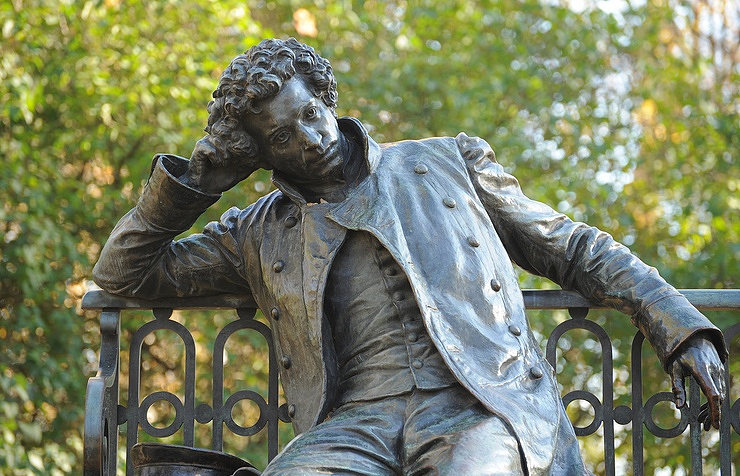
Alexander Sergeyevich Pushkin (1799–1837) was a poet, playwright, and novelist whose work laid the foundation for modern Russian literature. Often compared to Shakespeare in terms of cultural influence, Pushkin transformed the Russian language, making it more accessible and expressive.

He was also a pioneer of literary realism and tackled themes ranging from love, freedom, and honor to political oppression and identity. His life was as dramatic as his works—ending in a fatal duel at the age of 37 over the honor of his wife.

Despite his short life, Pushkin wrote prolifically: narrative poems, fairy tales, historical dramas, satirical verse, and his masterpiece novel in verse, Eugene Onegin.

Why Pushkin Matters in Russian Culture

To understand Russian culture without understanding Pushkin is like trying to understand American culture without knowing about Shakespeare or the Founding Fathers.

Pushkin is:

Taught in every Russian school from a young age


Quoted in everyday speech


Seen as the father of the Russian literary language


A symbol of Russian identity and pride


Much like how Shakespeare shaped English, Pushkin revolutionized the Russian language. Before him, Russian literary works were written in a highly formal, Church-Slavonic style that didn’t reflect the way people actually spoke. Pushkin introduced a lively, elegant, and modern Russian that combined high art with colloquialism. His influence can be felt in every Russian writer who came after him—from Tolstoy to Bulgakov to Akhmatova.

Why Is Pushkin Underrated in the West?

Despite his immense influence in Russia, Pushkin remains something of a literary shadow figure in the West. There are a few reasons why:

1. Translation Challenges

Pushkin’s genius lies not just in what he said, but how he said it. His poetry is rhythmically perfect, rich in wordplay, and infused with musicality. These qualities are notoriously difficult to translate into English.

Take Eugene Onegin, for example. It’s written in a unique stanza form now called the “Onegin stanza”—a sonnet-like structure with a specific rhyme scheme and meter. Only a handful of English translators have attempted to preserve this structure, and even fewer have succeeded without sacrificing meaning or tone.

As a result, much of Pushkin’s artistry is lost in translation, leaving English readers with a watered-down version of his brilliance.

2. Overshadowed by His Successors

Tolstoy and Dostoevsky followed in Pushkin’s footsteps, building on the literary foundations he laid. Their novels were more easily translated and their themes—existentialism, morality, psychology—resonated strongly with Western audiences.

Because of this, Western readers often discover Russian literature through these later giants, without realizing they’re walking a path Pushkin paved.

3. Cultural Distance


Pushkin’s references, humor, and politics are deeply rooted in early 19th-century Russian society. Without cultural context, Western readers can miss the layers of meaning in his work. In Russia, these references are second nature. In the West, they often require footnotes—and not everyone likes footnotes.
Pushkin’s Greatest Works You Should Know

If you’re new to Pushkin, here are some essential reads:

Eugene Onegin

A novel in verse that captures the disillusionment of Russian aristocracy, the fragility of love, and the depth of the human spirit. It’s Pushkin’s magnum opus and arguably the cornerstone of modern Russian literature.

The Queen of Spades

A haunting short story about obsession, fate, and gambling. It showcases Pushkin’s mastery of suspense and economy of language.

Boris Godunov

A historical drama that combines political intrigue with philosophical introspection. Later adapted into an opera by Mussorgsky.

The Bronze Horseman

A poetic tribute to Saint Petersburg, infused with myth, love, and the relationship between the individual and the state.

Ruslan and Ludmila

A playful, fantastical epic that blends Russian folklore with satire. It helped popularize fairy tale motifs in Russian literature.

Pushkin’s Legacy in Russia Today

Pushkin is not just studied—he's celebrated. His birthday (June 6) is recognized as Russian Language Day. Statues of him stand in nearly every major Russian city. Streets, squares, and even metro stations bear his name. Lines from his poetry are inscribed on buildings, quoted in songs, and referenced in political speeches.

He's also a unifying figure across generations and ideologies. Whether tsarist, Soviet, or modern-day Russia, Pushkin has remained a constant cultural touchstone.

Why the West Should Rediscover Pushkin

So why should Western readers make the effort to explore Pushkin?

To Understand Russian Literature: Without Pushkin, there’s no Tolstoy, no Chekhov, no Nabokov. He’s the root of the tree.


To Discover Incredible Poetry: Even in translation, Pushkin’s work is charming, thoughtful, and moving.


To Bridge Cultures: In a time of global misunderstanding, reading Pushkin is a window into the Russian soul—its humor, sadness, complexity, and warmth.


To Challenge Ourselves: Pushkin’s works ask the big questions—about love, honor, fate, freedom—in ways that still resonate today.

Learning Russian Opens the Door to Pushkin’s World

Reading Pushkin in English is a good start—but reading him in Russian is a revelation. His wordplay, rhythm, and nuance are best appreciated in the original language.

At Polyglottist Language Academy, we offer engaging, flexible Russian classes that help you build the skills to enjoy authors like Pushkin in their original form. Whether you're a total beginner or brushing up your skills, our Russian classes—available online and in-person in Berkeley, San Francisco, Oakland, and San Jose—can guide you on your journey into Russian literature and culture.

Conclusion: Pushkin Deserves a Place in the Global Canon

Alexander Pushkin isn’t just Russia’s greatest poet—he’s a literary giant whose work still feels fresh, powerful, and relevant today. It’s time the West gave him his due.

If you’re ready to dive deeper into Russian language and literature, don’t wait. Discover Pushkin. Learn Russian. Connect with a culture that has produced some of the world’s most brilliant minds and beautiful works.

Your journey starts with a single word—perhaps one written by Pushkin himself.
Explore More on Russian Language and Culture

If you enjoyed this article, check out these other posts from the Polyglottist Language Academy blog:

The Real Russia Behind the Fiction: How Accurate Are the Novels?


How to Start Reading Russian Literature Without Getting Overwhelmed


How Russian Lit Helps You Understand the Russian Soul


The Most Confusing Russian Words and How to Use Them Correctly


The Russian Alphabet Hack: Learn Cyrillic in 1 Hour

And don’t forget—exploring Russian literature is even more rewarding when you learn the language. Join a Russian class today and start your own Pushkin journey!

Why Pushkin Is Called The Greatest Russian Poet? - Poemshubs.com

Why Pushkin Is Called The Greatest Russian Poet? - Poemshubs.com

Poem > Poet > Why Pushkin Is Called the Greatest Russian Poet?


Why Pushkin Is Called the Greatest Russian Poet?
written by Amy 02/07/2024


Alexander Pushkin, often revered as the father of Russian literature, holds a central place in the pantheon of literary giants. His influence on Russian poetry and prose is profound, earning him the accolade of the greatest Russian poet. This article explores the life, works, literary contributions, cultural impact, and enduring legacy of Alexander Pushkin, examining why he is celebrated as Russia’s preeminent literary figure.

Highlighted Contributions of Alexander Pushkin

1. Early Life and Education

Alexander Sergeyevich Pushkin was born on June 6, 1799, in Moscow, into a noble family with strong literary and artistic traditions. From an early age, Pushkin displayed a remarkable talent for poetry and writing, mastering Russian and European literary classics under the guidance of private tutors. His education laid the foundation for his future literary endeavors and shaped his poetic style, blending classical Russian forms with European influences.

2. Literary Style and Innovation

Pushkin’s poetic style is characterized by its lyrical elegance, emotional depth, and profound humanism. He pioneered the use of everyday language in Russian poetry, moving away from the ornate and artificial conventions of the time. Pushkin’s ability to capture the nuances of human emotions and depict Russian life with authenticity revolutionized Russian literature, influencing generations of writers and poets:

“I loved you: and, it may be, from my soul
The former love has never gone away,”


3. Evolution of Russian Language

Pushkin’s mastery of language extended beyond poetry; he played a crucial role in shaping modern Russian prose. His works, including novels such as “Eugene Onegin” and “The Captain’s Daughter,” introduced a natural and conversational style that departed from the formal traditions of the past. Pushkin’s linguistic innovations contributed to the development of a distinctly Russian literary language, laying the groundwork for future literary movements and writers:

“It is time, my friend, time, my beauty, it is time,
Say goodbye, my friend, goodbye, my beauty, goodbye,
O weep, weep, weep, weep, o you
There are no more tears”

4. Exploration of Themes and Subjects

Pushkin’s works encompass a wide range of themes, from love and romance to history, politics, and social satire. His poetry often reflects his own experiences and observations, offering profound insights into the human condition and Russian society. Pushkin’s exploration of universal themes through a uniquely Russian lens resonates with readers of all ages and backgrounds, ensuring the enduring relevance of his works:


“Do not trust the mirror, trust your face,
A mirror gives the heart of the world:
Worthy of him, was for yourself
I wish myself, my friend:
It was necessary that you were a friend,
So that I was told that I am a friend.”

5. Cultural and National Identity

Pushkin’s writings played a pivotal role in shaping Russian cultural and national identity during a time of social and political upheaval. His poetry celebrated Russian history, folklore, and traditions, fostering a sense of pride and unity among his fellow countrymen. Pushkin’s advocacy for cultural authenticity and artistic independence laid the groundwork for the flourishing of Russian literature in the 19th and 20th centuries:


“And before me, in a light,
The bright city stood,
And I and my faithful friend
We arrived at the mountains”

Literary Techniques in Pushkin’s Poetry

1. Versatility in Forms


Pushkin excelled in various poetic forms, from the lyrical romance to the epic narrative poem. His ability to adapt classical forms to Russian language and themes demonstrated his mastery of poetic technique and versatility as a writer. Pushkin’s command of rhyme, meter, and rhythm enriched his poetry, creating a harmonious blend of form and content:

“When the evening is falling,
And the day has passed,
In the hour of darkness,
In the night of my dreams,”


2. Symbolism and Imagery

Pushkin’s use of symbolism and imagery enriched his poetry with layers of meaning and visual evocation. He employed vivid descriptions of nature, seasons, and human emotions to evoke mood and atmosphere. Pushkin’s symbolic use of colors, landscapes, and natural elements enhanced the emotional and thematic depth of his poetry, resonating with readers on a profound level:

“The snowstorm began to howl,
And I’m weak, the road is long,
Our work is a day, a night, and an hour,
And life is a thin moment,”

3. Narrative and Characterization

In narrative poems such as “Eugene Onegin,” Pushkin showcased his skill in character development and storytelling. He created memorable characters with complex motivations and emotions, weaving their lives into the fabric of Russian society. Pushkin’s keen understanding of human psychology and social dynamics enriched his narratives, making them both compelling and insightful:


“One morning at the break of dawn,
In a green valley, near a young oak,
We sat down, sister, you and I,
Under the thick shadow”

Cultural Impact and Legacy of Pushkin
1. Influence on Russian Literature


Pushkin’s influence on Russian literature cannot be overstated. He inspired a generation of writers, poets, and intellectuals to explore new literary forms and themes. Pushkin’s emphasis on artistic freedom and creative expression laid the foundation for the Russian literary renaissance of the 19th century, influencing writers such as Tolstoy, Dostoevsky, and Chekhov:

“The brave for a long time is not a right,
Our speech is the truth, our speech is the truth,
For us, the truth, the great, the great, the great,
The great, the great, the great, the great”


2. Cultural Icon and National Hero

Pushkin occupies a revered place in Russian culture as a national hero and cultural icon. His birthday, June 6, is celebrated annually as Russia’s National Day of Russian Language and Literature. Pushkin’s legacy as the founder of modern Russian literature and the embodiment of artistic genius continues to inspire pride and admiration among Russians and literary enthusiasts worldwide:

“With a sword and a bright helmet,
And the ground was waiting for him,
To the door, and you will see,
You will see, what a dream”
3. Global Recognition

Beyond Russia, Pushkin’s works have been translated into numerous languages and continue to be studied and admired for their literary merit and universal themes. His poetry transcends cultural and linguistic barriers, resonating with readers across the globe and ensuring his enduring popularity and relevance:


“And the forest will be forever silent,
In the summer morning, the meadow is not torn,
The young man is sick of the heart,
He has not been killed by a whirlwind.”

Conclusion: Pushkin’s Enduring Legacy

In conclusion, Alexander Pushkin is rightfully hailed as the greatest Russian poet, revered for his lyrical genius, innovative spirit, and profound impact on Russian literature and culture. Through his poetic works, Pushkin captured the essence of Russian identity, explored universal themes with depth and sensitivity, and paved the way for future generations of writers and poets. Pushkin’s legacy continues to enrich the literary landscape, inspiring admiration and scholarly inquiry into the depths of human experience and artistic expression:

“And the sun is in the air,
And the days are long,
I will take my friends,
I will take my friends”
You Might Be Interested In